The Beauty of Being is the Truth of a Woman

This week, I am participating in August McLaughlin’s Beauty of a Woman Blog Fest (IV). It is an honor to support boaw-logo-2015-originalAugust in her tireless work to help women recognize how remarkably beautiful they are—just as they are.

The beauty of a woman is in her having the freedom to be who she is, free to evolve as the unique human she was born to be.

The unfolding of the beauty of a woman knows no barriers for it is within her body to give life, should she choose. In this, she is one with the earth.

Yet, the world of a woman is not equal in opportunity or access. That we still cannot find equanimity in the most basic difference between human beings—gender—speaks volumes about where we are and how far we have to go.

If we cannot equally support men and women in their pursuit of living their truth–and what else is beauty–how we can possibly eliminate the other labels that diminish each one of us?

We are one, each of us a unique thread, our own blend of beauty that is our moment in the tapestry of existence. That the beauty of a woman unfolds with all other human beings is the only opportunity she ever needs.

Perhaps beauty is the key to the door of equality that we cannot seem to unlock. Far too often beauty has been seen as a barrier rather than as an avenue to equanimity.

I died for beauty, but was scarce
Adjusted in the tomb,
When one who died for truth was lain
In an adjoining room.

He questioned softly why I failed?
“For beauty,” I replied.
“And I for truth, -the two are one;
We brethren are,” he said.

And so, as kinsmen met a night,
We talked between the rooms,
Until the moss had reached our lips,
And covered up our names.

~Emily Dickinson~

We are one in our humanness more than we are separate. Unique, yes, but we are not diminished by each other. Rather, we are truly increased. Our truth is our beauty—our path.

As of yet, we are not comfortable in our beauty so we cannot lie down with our truth. We are not yet on the path of equanimity but that we have not given up is to our credit.

To realize the full potential of humanity is to see the beauty in every woman as her truth, her unique contribution to the worldwide web of human beings.  There is no one path for everyone but for everyone there is a path.

Once you realize that the road is the goal and that you are always on the road, not to reach a goal, but to enjoy its beauty and its wisdom, life ceases to be a task and becomes natural and simple, in itself an ecstasy.

~ Sri Nisargadatta Maharaj ~

In the ecstasy of life lies equanimity.

Path in Mic 0713

(The Blog Fest runs  through March 1, 2015. You can read other blog fest posts here. )

An Interlude…of Sorts

This post appears a bit late. It is an interlude of sorts–an interruption of my usual posting schedule—to revisit St. Mark's 0215some recent travel along the north coast of Florida, beginning the first weekend in February.

For me, the first weekend signals the promise of spring. If nothing else, this first weekend is the WHO festival–Wildlife Heritage and Outdoors–at one of my favorite places, St. Mark’s Lighthouse and Wildlife Refuge.

Each year, spring’s promise seems a bit soggier and maybe even a bit colder but  my memory is less sharp. I always remember the previous spring as warmer but then, I seem to A Winter's Day 0215require warmer temperatures.

This year’s WHO festival kicked off a week of exploring. A dear friend had come to visit. It was a true vacation, our visit of north Florida, its Gulf coast, its rivers and an occasional inhabitant.

We enjoyed winter temperatures—I complained; she did not–but the promise of spring never left either one of us.

It is one of the many treasures of long friendships that in seeing new lands, old lands are remembered, different as each is. In the discovering, memory relays moments long forgotten. In the creation of new memories, the old is perhaps even more golden.

We grew up knowing rivers of the Rocky Mountains, clear and chatty, sometimes white in their rapids. In north Florida we visited blackwater rivers mostly, their own southern brew of organic acids and tannins.

ochlocknee river 0215


On a particularly brisk day we “went down upon” the Suwannee River; she is deep enough that steamboats once paddled her strong currents. In these days, wooden gliders afford the visitor a comfortable seat for reflection.

The Ochlockonee River (“yellow waters”) intersects with the Dead River, perhaps so named because its movement isWho Has My Back 0215 barely perceptible. Together, the two make their way to the Gulf of Mexico.

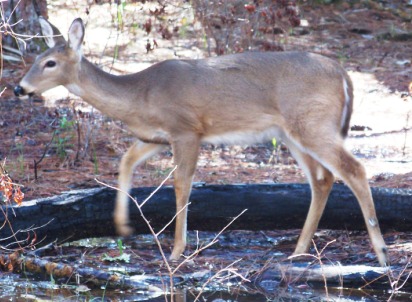
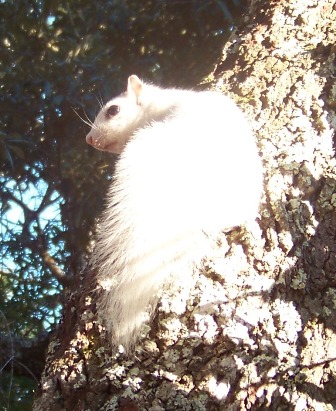
The Ochlockonee State River Park is one of the most pristine parks I have visited in Florida and is particularly rich in wildlife, some whose existence were unknown to me such as the white squirrel.

The “history” of the white squirrel is rich and varied, sometimes involving King Charles of Spain (1499) while other explanations are more scientific and involve gene mutation. We enjoyed all the brochure stories and went in search of the white squirrel.

After some time on our own, we decided to ask a park ranger. Memories of past searches reminded us we might not be in the right location but we were among the live oaks, prime squirrel territory regardless of color.

What we did not have was a bag of chips to shake. Yet, we are a resourceful duo and are not given to giving up. While I rested, my friend walked among the live oaks, crinkling a bit of cellophane from a tissue package.

It was only as we began to drive away that we spotted a bit of white at the base of a live oak. It did not move—we almost did—before it did. While the squirrel snacked on acorns— aware of our underwhelming presence—we worked with the digital overload of our cameras.

For me, focus is always a challenge. Mine is the “aim, shoot, and hope” philosophy of photography. That may be why I prefer shots of the sea for no matter where I focus, there is always a wave.

large waves 0215

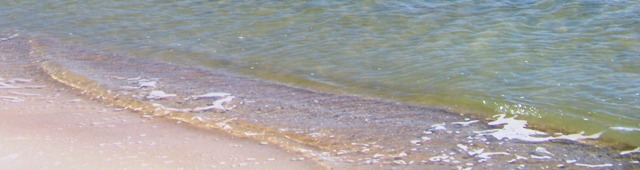
On some days the Gulf chopped, white capping in stark contrast to its tannic underbelly. Near the lighthouse of St. Mark’s, spring seemed a distant promise.  Off the shores of St. George, a barrier island, the clear Gulf waters lazily made their way to shore as if to say spring is on its way in its own time—as always.

Nary a wave 0215

On Monday, February 23, this blog is participating in the Beauty of a Woman BlogFest, which my next post will feature. On March 1, regular Sunday blog posts will return. For now, let’s enjoy the interlude.

Every Day 0215


What the Heart Reveals in a Beat

“I feel your anger in your pulse.”

Yet again my acupuncture physician revealed my heart to me. Immediately, she ignored my statement of “I’m okay” and began listening to my pulse.  She always seems to know when to dismiss my words for what my heart has to say.

It is not that I am being deliberately dishonest. My mind says I am fine but as Dr. Gold keeps reminding me, the pulse of my body–my heart—reveals the truth, no matter what that may feel like.

This time Dr. Gold showed me how to feel the anger in my pulse. I was stunned at feeling this bubble, this thickened middle of a single beat. I remember my mind flashing the word “sadness” but I focused only on the beat of my heart.

Currently, my life is one of movement, so much stirring and shifting physically and emotionally. It is exciting, this palpable energy I am discovering through traditional Chinese medicine, this literal listening to the beat of my heart.

Lake Ella Fountain 0115

I feel as if I am sitting with a trusted friend for I am. It is a friend that allows my mind to reflect on but not to linger in what has passed. It is a lifeline for revisiting anger.

This broadening of the beat of my heart takes me first to the movie, Selma, and then to 1965 as I remember it. That August I would change labels—no longer just a child but now a teenager as well.

The Beatles had already arrived. The Civil Rights Act had passed. Lyndon Johnson had been elected president by the largest landslide in history. Martin Luther King recently received the Nobel Peace prize.

But what the movie Selma awakened in me was the feeling of that time.  Even in the sparsely populated, high-plains desert of Wyoming, it was obvious momentous change was on the horizon.

For all Americans this energy would explode into their living rooms mostly on black and white television screens for it was an anger of black and white.

The heartbeat of the Civil Rights movement was palpable after just one moment of watching televised events in Selma and the subsequent protests. It was energy, it was hope, and ultimately, it became a movement for all faiths and for all races as the five-day March on Montgomery would show the world.

There was a belief that we would overcome. And the fact that President Johnson used those very words in his televised speech on the Voting Rights Act shocked many and angered some.

black and white in nature 0115

Fifty years later, we still fall short but ”tolerance, like any aspect of peace, is forever a work in progress, never completed, and if we’re as intelligent as we like to think we are, never abandoned” (Octavia Butler September 1, 2000 NPR interview with Scott Simon).

We may be struggling “to be the change we seek”—maybe that is the never-ending human struggle–sometimes a great cause and other times, a true movement.

Our world is now even smaller as we meet one another screen to screen on a daily basis—connected is the word bandied about—we are faced with all we are and are not. We are a work in progress, ever in motion.

For a moment, we can reflect on but not bring forward the hope of another time. We move along with the real pulse of life all around us, a collective heartbeat. And if we are angry, that is our pulse. It is our truth.

What if we all learn to listen to the heartbeat of our anger? It is more calming, this expanding of a heartbeat, than you may think for it is the truth of what one feels. In knowing the truth we find our way to compassion and possibly tolerance, once again taking up the banner of believing we will overcome.

What kind of world might be possible if we turn to our hearts for the truth, for the real pulse of our lives? Are we intelligent enough to try?

peace offering 0115

Note: Tom Michael, who walked the miles from Selma to Montgomery, writes a thoughtful and powerful essay on that time. You will find it here.

Finding Refuge on the Eve of the Winter Solstice

It is early morning on the eve of the winter solstice, neither dark nor light but both—in a way. Even for north Florida, it is cold. I have the car heater on low as I drive to St. Mark’s Wildlife Refuge on the Gulf of Mexico.

It is perfect winter solstice weather.

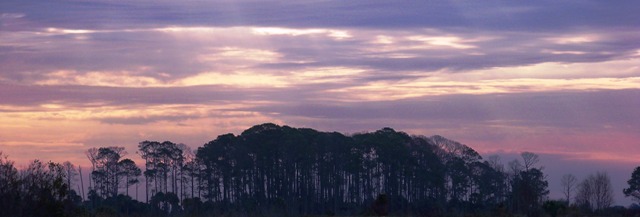
Winter Solstice Skies 1214

The solstice celebrates the dark during a season given to light, a reminder that in light there is always dark. Yin-Yang. Oneness.

And there is the inherent stillness of the solstice. The increasingly dark and deepening autumnal sleep culminates in the pivotal moment of the winter solstice.

After this day, every dawn will mean more light and less night, as slumber gives way to the awakening of the spring solstice.

Every year, I write these words or similar ones regarding the winter solstice in the northern hemisphere. Usually, I celebrate the event with a walk around Waverly Pond but this has not been a year of “doing things as usual,” even holiday traditions.

Rather, it has been a year of firsts. Some may mean new traditions for me, among them driving to St. Mark’s on the eve of the solstice. Perhaps more than any other season of my life, I am immersed in transformation.

It is not surprising that I am drawn to the Refuge where transformation is in evidence everywhere.

Areas of longleaf pine stand stark in their burnt orange and black beauty against gray, morning skies. Wiregrass is the color of wheat ready to harvest.

Quiet of the marshes 1214

It is the season for prescribed or controlled burning, a matter of survival for the longleaf and wiregrass ecosystems. They depend upon the transformation fire brings–first alight with flame and then, darkness.

Transformation always involves the falling away of things we have relied on,

and we are left with the feeling that the world as we know it is coming to an end

because it is.

(Mark Nepo, The Book of Awakening)

As I look across saltwater marshes in seasonal slumber—timeless transformation–I cannot imagine being anywhere else on this dark, gray morning on the eve of the winter solstice.

Marshes 1214

In the quiet dark, I am mindful of the necessity of letting go in life. It takes time, transformation does, time to awaken to the light of a life yet to come, time to welcome the world anew.

Mindfulness gives you time. Time gives you choices. Choices, skillfully made, lead to freedom.

Bhante Henepola Gunaratana

The solstice seasonal slumber reminds me to quiet myself, to observe the dark that is as much a part of this festive season as is the light. In the stillness of the dark, the light swirls.

On the marshes of St. Mark’s on the eve of this winter solstice, I let a life lived end as a life I have not begins. Each ending is yet a beginning, a time for slumber in anticipation of awakening anew.

In keeping with the light and dark of the season, regular blog posts will return in 2015.

If We Learn to Read Hearts

There is one gift appropriate in any season or on any occasion. It is the gift of relationship. After all, we are always in relationship, one of the many miracles we experience every day.

Most miracles have a certain sparkle, and relationship is no exception. Eckhart Tolle says in this amazing miracle “ultimately, you are not a person but a focal point where the universe is becoming conscious of itself.”

Here we are, having this remarkable experience as human beings, born with this and without that but physically each of us travels the life cycle from two major states, birth and death. What happens in-between those two events is the unique, individual experience of you and me.

It is not as if we reside in existence, it is that we are existence having these individual experiences. And it is not just about humans, either. It’s everything we can imagine and all we cannot.

The flower is aware of the fact that it contains everything within it, the whole cosmos, and it does not try to become something else.

Thich Nhat Hanh

No matter how many ways I write about relationship or how many quotes I find, I am astounded by the reality of always being in relationship. Often, its immensity is beyond my grasp.

I look to the elephant as the creature that most embodies relationship.

Elephants define family beyond any words we have ever written. For elephants, relationship is forever, absolutely essential to life and not broken with death. Elephants remember their dead, travelling miles to visit graveyards.

It seems a miracle that elephants maintain this richness of relationship as they come closer and closer to extinction. Yet, these loving and compassionate beings know what we have not learned: they are always in relationship for everywhere they go, there they are.

“They can read your heart” are the words of Daphne Sheldrick, a woman who has, for 50 years, given love and created family for orphaned elephants. It is the kind of story that always opens our hearts—giving season or no—sometimes, we donate to such a cause but what of learning to read hearts?

Not living as separate from existence but as existence experiencing itself is learning to read each other’s heart. Like the elephants, we must have the physical touch, comfort, and compassion of family—no matter how family is defined.

We must learn to read hearts so that when family is lost, family is created again, and we are not orphans. We have role models such as Daphne Sheldrick. We need not be orphans. We need only to read hearts.

Note: This writer and this blog thank Zen Flash for the post and video on Daphne Sheldrick and the orphan elephants.

Monarch Moments in a Sunny Land

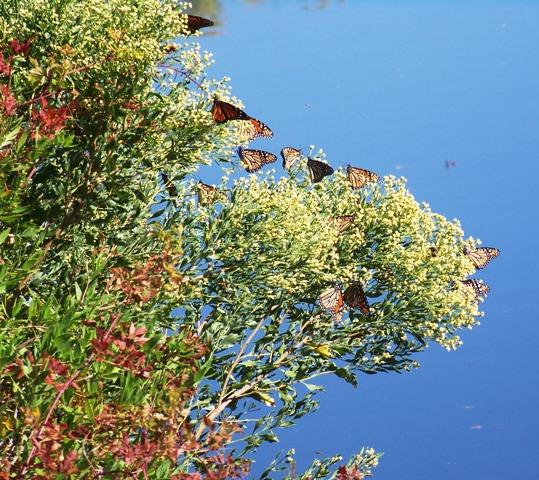
The Monarch Bush 1014

It is some weeks since I spent a morning among the monarch butterflies at St. Mark’s Wildlife Refuge. On their way to Mexico to overwinter, the monarchs make a multi-generational trek of 3,000 miles in spring and fall.

It is in the sunny lands they survive.

It seems to take at least four generations of butterflies to complete the trek. Only the monarchs know when it is time to go and for that matter, where to go. Some monarchs live as long eight months but others only long enough to mate and to lay eggs—a life of two to six weeks.

Because the trek is multi-generational, how do the butterflies always know? That is the mystery of the monarch migration. Inadvertently, mystery may be the greatest asset the monarchs have as they struggle to survive as a species.

Humans love a mystery. Often, we will take steps to preserve what we “have not yet figured out.” Recently, the monarch migration attracted the attention of the Canadian, American, and Mexican governments.

Perhaps the uniqueness of the monarch migration—its mystery—will hold their attention span long enough to restore butterfly habitat, thereby helping other pollinators as well. Perhaps….

At St. Mark’s Wildlife Refuge, there has been a Monarch Festival for 26 years but in 2014 there was worry as less than a handful had arrived–but the monarchs did not miss their festival—they showed up one day before it began.

Monarchs on the Water 1014

All these thoughts were mine as I sat among the monarchs—and that is almost literally true—for I was the lone human on a bench by the sea, next to bushes of butterflies. Gulf and sky were one shade of blue, shimmering in a sunny land.

Knock on the sky and listen to the sound!
Zen saying

In my moments with the monarchs, there seems no mystery, just a longing for sunny lands whether north or south. Neither the trek nor the distance matters. It is a migration for sunny lands, a yearning for survival, realizing that in order to arrive one must leave.

I watch the monarchs flock to saltbush, goldenrod and dotted horsemint bushes, diligent and methodical, trusting in the sun of this day as they spread their wings. They are on the move, after all.

He who binds to himself a joy

Does the winged life destroy

He who kisses the joy as it flies

Lives in eternity’s sunrise

(Eternity, William Blake)

So it is to knock on the sky and listen.

Postscript:

As I sat among the monarchs that day, the refrain of “Sunnyland,” a Hot Tamale original ballad, played in my mind. On one level, it is a song of the human desire to migrate to sunny lands but like the monarch mystery, it has other levels.

Within a week of my moments with monarchs, Meredith published the succinct, “Milkweed Meditation.” The milkweed is the monarchs’ favorite bush.

Finally, the initial count of monarch butterflies may be up this year, a first in a long time, and the migration mystery remains.

The Eddying of Experiences

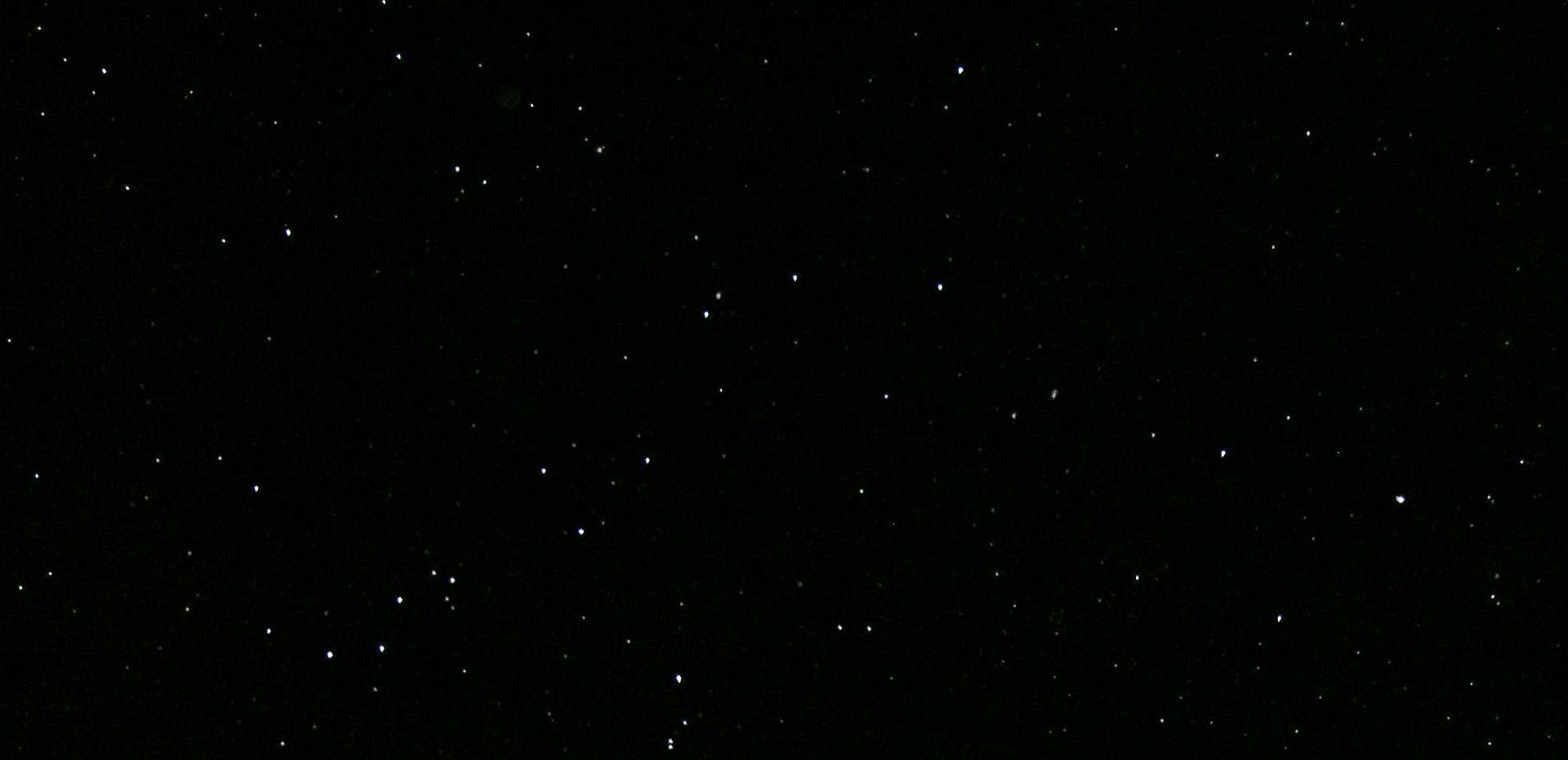
Seattle stars 012512

We are stardust—we know that—but as we are dust so are we energy. It is from this energy that we have a momentary experience as a human being, a blade of grass, or an armadillo.

And when we are no longer in this physical dimension, we remain energy, perhaps to know an experience in some other dimension or maybe to return for another physical life, leaving only our dust once again.

Our physical experience is unique to us—each of us has our own vibration—sometimes we’re a wave and other times, a particle.

Since subatomic matter makes up everything we can see and touch and experience in our macro world, then in a sense we—along with everything in our world—are also doing this disappearing act all the time. And so if subatomic particles exist in an infinite number of possible places simultaneously, then in some way so do we.

(You Are the Placebo: Making Your Mind Matter, Dr. Joe Dispenza, p. 183)

The quantum model is staggering with possibility, fascinating and even spellbinding, reality rooted in the pure energy we are. That’s the power of possibility, revealing that magic is real.

KMHuberImage; McCord Park; Tallahassee; Florida

I have always believed in magic, always sensed we had not yet grasped its true nature. For me, the quantum model is a magic carpet ride where the magic is the pure energy of life riding on reality, soaring and swooping, sometimes swirling.

The energy comprising the oneness of reality resembles a whirlpool as it “…fades out and the water passes on, perhaps to be caught again and turned for a moment into another whirlpool,” each its own eddy of experience (Charlotte Joko Beck).

Each whirlpool caught up in its own moment of existence yet ever connected to the energy of coming and going. Sometimes, we’re the  whirlpool, and other times, we’re a drop but always, we are the river.

There are many names and beliefs for the energy animating existence–God, the Universe, the Source. Each expression of this energy—as a human, as a blade of grass, as an armadillo–is a unique experience of life, a momentary whirlpool in the river that runs eternally.

When we learn to move beyond mistaken concepts and see clearly, we no longer solidify reality. We see waves coming and going, arising and passing. We see that life, composed of this mind and body, is in a state of continual, constant transformation and flux. There is always the possibility of radical change. Every moment – not just poetically or figuratively, but literally – every moment we are dying and being reborn, we and all of life.

~ Sharon Salzberg ~

Of Alarms, Animals, and Awakened Hearts

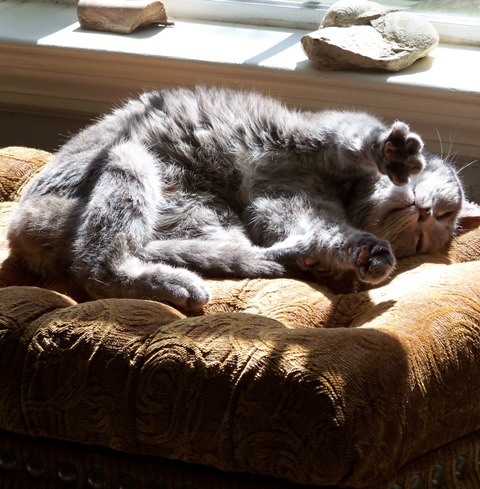
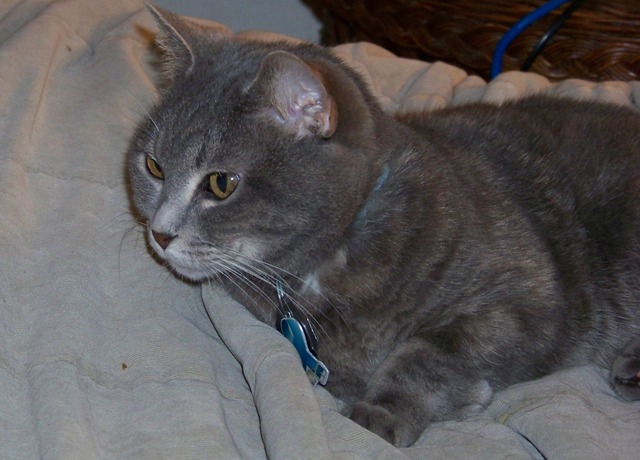
When the fire alarm went off, feline EmmaRose and I seemed sure it had something to do with me. She gave me her usual look of what now? My thought was I had finally succeeded in leaving an empty tea kettle on a hot burner long enough to melt the kettle’s bottom.

Quickly, I realized it was not our smoke detector but the fire alarm for the entire building. It was someone else’s burner/pan/tea kettle. I went outside into the warm, North Florida midnight air as did the rest of the building’s residents.

I did not put EmmaRose in her carrier and take her with me for she has such dread of any interruption of our routine—it upsets her for days—and although she is not fond of the fire alarm, it is not an unknown to her. Was this not yet another human event occurring for no apparent reason?
In her sun 0413

That seemed EmmaRose’s attitude, and she was correct. We never knew who pulled the alarm and probably never will. However, it would take 40 minutes before the alarm was finally silenced. Neither management nor the fire department could locate a key. This was not routine.

Within minutes, I decided the alarm was too much for EmmaRose’s ears. Standing among my neighbors, I heard myself say, “Well, I’m going to go get my cat.” I turned and walked toward my apartment.

Why I said aloud what I was thinking I have no idea but it produced another kind of human alarm.

“WHAT GOOD IS A CAT GOING TO DO??!? HOW WILL THAT HELP US?!?”

My back was to the man who was bellowing. I knew who it was, Carl. He had been talking nonstop to anyone and everyone but no one seemed to want his opinion, especially the firemen.

Still garrulous with my thoughts I shouted, “I think a lot more of animals than I do of people.” His retort was a strong suggestion that I grow up. I offered he might do the same and walked into my apartment.

EmmaRose met me at the door, ready to get into her carrier, and together, we went outside and away from the building but still in the vicinity of Carl’s voice.Eyes Open 0513

“I’ve been on the battlefield! I was in Special Ops! This is nothing! We are all upset!” Then, he stopped and looked around. After a few breaths, he mumbled something to the effect that I was making it worse for everyone.

It seemed more residents were bringing their pets outside. Maybe I had made it worse.

I looked at Carl. “Well, I didn’t think I was but if I have, I apologize.”

“Well, I apologize, too,” he said, adding, “peace?”

“We’re done,” I said.

Both of us remained quiet for the duration of the alarm as did every dog and every cat.

The next morning, Carl and I found ourselves face-to-face, again. We rarely saw each other.

“Good morning,” I said to Carl and meant it.

“So, we’re okay after last night?”

“We’re fine, really.” I extended my hand to him, and he shook it.

“I don’t know why I said that about your cat.”

“The alarm is hard on animals’ hearing,” I said, adding “I didn’t need to say what I said, either.”

“No, that was all right.”

KMHuberImages

At this point, we actually heard each other; our own alarms had finally shut off. For longer than the 40-minutes at midnight, Carl and I acknowledged each other’s value—a traditional Catholic soldier and a Buddhist animal lover—each worthy of respect for the human beings we are, a veteran and a hippie.

Carl is a fine teller of stories and excels at revealing the punch line. We laughed a lot and genuinely. We found common ground in a thoughtful discussion on democracy, in our mutual disdain for both prejudice and the healthcare system.

As he started up the stairs to his apartment and I to my vehicle, I heard the limp in his step, something I had not noticed.

I called out to him. “How do you feel about acupuncture?”

“I believe in it. Why?”

“I know a good one. Would you like her card?”

He says he would. I return to my apartment for the card, and he comes down the stairs to get it.

He thanks me and adds, “When you make a mistake you just have to own up, don’t you?”

“Yes, and then let it go,” I say.

And so we separate with hearts awakened.

The quality of modesty, or humility, comes naturally when we’re attentive. When we see how reactive and unkind we can be, this humbles us considerably.

Instead of causing despair, however, this painful realization can connect us with the tenderness of bodhichitta [or, awakened heart].

Modesty, or humbleness, is the opposite of armoring ourselves: it allows us to be receptive and hear what others have to say.

Pema Chödrön

(No Time to Lose: A Timely Guide to the Way of the Bodhisattva, pp. 134-35)

Sparkling Waverly 1013

Looking Through the Life Lens

Waverly in Fall 0914
Focus is adjusting the aperture of the life lens to reveal the ever-changing depth of field. Sometimes, life requires a wide open lens—the big picture—often, the aperture is small, open only to the current moment. Big or small, clarity creates perspective.

The turning of the life lens is like a kaleidoscope, quick glimpses of what might be, any and all a possibility. Not all choices will be clear, even momentarily, but those chosen find a forever as memories, a clarity all its own.
Almost Focus 0914

These days, my life lens hardly knows where to focus for my aperture is wide open, the depth of field possibilities ever-expanding. I know that infinite possibilities exist in each moment but every once in a while life is so large, it’s hard to decide where to focus first.

Almost daily now, I walk Waverly pond and park for a little focus practice.  Waverly residents are used to me and my aged, Kodak camera. Many of my photographic attempts resemble a quick turn through a kaleidoscope. Later, no amount of digital manipulation provides focus but in memory, focus has soft edges.Losing One's Head 0914

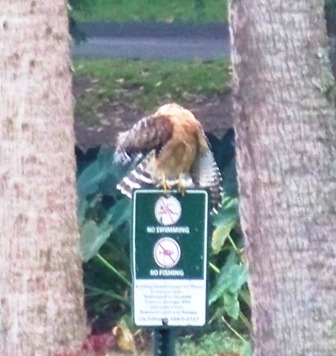
Of late, the resident pair of red-shouldered hawks have been quite fond of perching atop the “no fishing, no swimming” signs that are positioned on opposite sides of the pond.

I have yet to get a focused photo of their perching but I included one in last week’s post, anyway.  From these two vantage sign points, the hawks’ presence on the pond and the surrounding park is a constant and clear reminder to all.

I have learned how close I can get to the hawks, which is usually just out of the depth of field for my Kodak lens. Auto-focus is insufficient so I keep trying different settings.

The hawks balance patiently, providing me one opportunity after another but only my life lens captures the essence of these moments forever.Ghostly Egret 0914

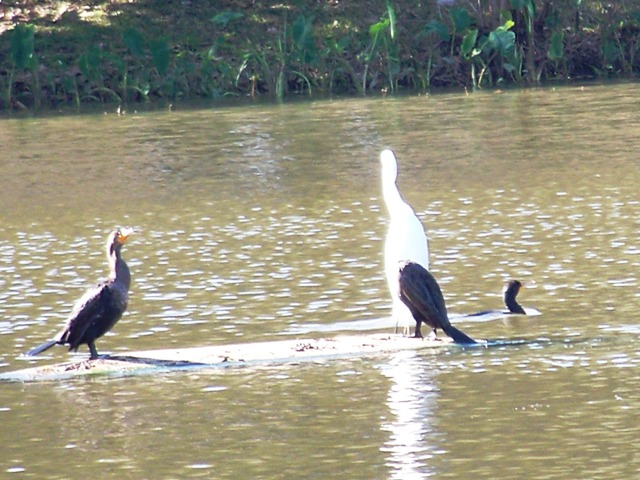
Eventually, I get a clear, sharp picture of the sign sans hawk. This is focus practice after all. Inadvertently, I capture a snowy egret in the background; its image more ghost-like than feather and flesh.

I continue my walk around the pond toward the egret, stopping to lean against a recently pruned ashI see You 0914 tree. I focus the Kodak lens through tree branches and find the egret looking at me so I look back. We stay this way for a bit before the egret returns to fishing, and I, to my walk.

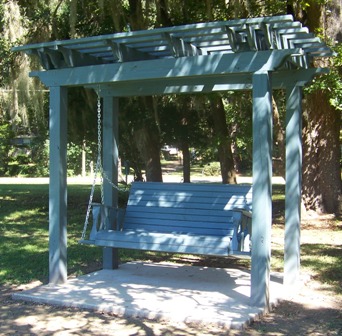
Recently, the neighborhood association added a wooden swing. It is so comfortable that it is rarely unoccupied. From here, the view is as wide open as my life lens aperture can get–timeless focus.

The wooden swing is my last stop. Often, the hawks join me, either alight the light post or perching on the connecting power wire. On overcast, drizzling days, grub from the ground is a favorite.

Sitting on the swing makes focusing the Kodak even more of a challenge. For me, it is a swing in perpetual motion for my feet cannot touch the ground so I sit forward for focus.

The Kodak results resemble turns of a kaleidoscope, with an occasional exception, but my life lens continuously captures Waverly for a lifetime of remembering.
Waverly Swing 1014


Not so Much but Just Enough

The whole harmony of life is a balancing act–not too tight, not too loose. It is not static—this Yin-Yang balance—it is in constant motion, ever impermanent as it shifts and adapts but always it is whole, complete.

The phrase “not too tight, not too loose” is associated with a well-known Buddhist story about a musician—he is a sitar or lute player depending upon the version–who comes to the Buddha for advice on meditating.

No and No 0914The Buddha advises the musician to consider his musical instrument as he asks, “What happens if you turn the strings too tightly?”

“The strings break,” the musician answers.

“And when the strings are not tight enough?”

The musician replies, “They are too loose. A string in tune is neither too tight nor too loose.”

Not too tight, not too loose is the elegant simplicity of balance, whether we are tuning a musical instrument, practicing meditation, or just living our lives day-to-day. Ultimately, imbalance finds balance.

The constant adjusting of imbalance plays out against the backdrop of life ever in motion and always in perfect balance. That is the wholeness of Buddha nature where cacophony finds its way to harmony, ultimately.

The tuning of strings on wood is straightforward but for human beings with so many ways to adjust and adapt what is too much or not enough is not always as obvious.

It is helpful when there is a buddha to ask, although the face of a buddha is not always recognized.

We meet ourselves time and again

in a thousand disguises on the path of life.

Carl Jung

These disguises, or buddhas, are mirrors of well-known behaviors, the “ineffable flux that makes a person a unique being” (Ted Kaptchuk). It is for us to look into each mirror, to seek the unique in the familiar, to open to life as it is revealed. If not, we could miss meeting a buddha.

The uniqueness is the chaos of being alive—the struggle for balance—within the constancy of life, whole in its harmony. Like the strings of the lute, living requires a fine tuning between too much and not enough. And for the sitar, it is how it sings.
No One Way 0914

There is no standard or absolute–what is health for one person may be sickness in another. There is no notion of “normal” Yin-Yang–only the unique challenges and possibilities of each human life.

(Ted Kaptchuk, The Web That Has No Weaver)

As Lao Tzu said, “he who stands on tiptoe is not steady” for the only constancy in Yin-Yang is that it—and us—are ever in flux. There is no one health for all, no normal for anyone. There is only the fine tuning of living—not too tight, not too loose—in attaining balance, momentary as it may be.

Nothing remains; everything passes by.
The only thing that always abides is your witnessing.

That witnessing brings balance.
That witnessing is balance.

~Osho~

Always, there is the passing parade of buddhas, in one disguise after another.