Questions Are the Helpers

Seeds of doubt disturb. What else their purpose other than to poke and to prod? Only life’s discomfort opens my eyes.

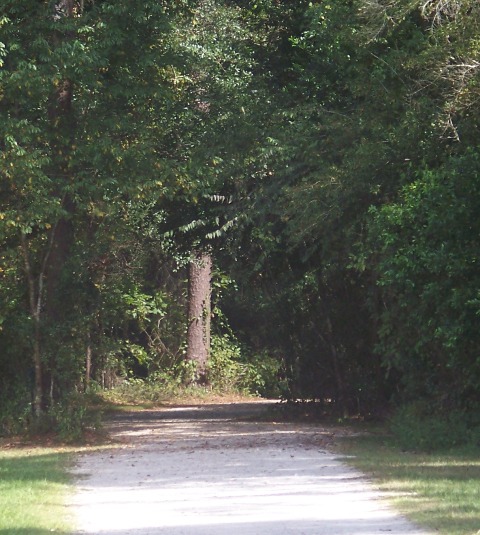
I’ve lived most of my life without that appreciation but as John Muir said, “the clearest way into the universe is through a forest wilderness.” I’ve walked my years. Mine was not to waste experience but to live passionately, which is to say rarely did I look before I leapt.

I may not have been averse to risk but I missed its potential, the fluid intelligence that is life and its infinite supply of questions. With few exceptions, I walked passed the gold. In a flurry of abandon to answer I didn’t realize every answer morphs into a question, again.

That’s the gold.

And then one day, I stopped running around the forest, in and out of life’s caverns, to experience it in daily doses, appreciating the uniqueness of every dawn and its dusk, each day fraught with doubt, eventually evening out.
It’s fluid, that evenness of energy, and there are days it seems impossible another sun will rise but so far…. That is the power of the present, never absent, even in rage and the time of Trump.

If I watch the world through his lens, I have the perspective of a pinhead, ego run amok, a desperate need for attention at any cost. At his rallies of like-minded MAGA hats, all are assured of answers as if they are forever.

Perhaps they would hide the sun–control its narrative–if they could, but that is not the nature of life, no matter the determination of mere men. I do my best to remember that and view them through the broadest lens I can find.

And that means questions.

What is it in me that brought them to the world stage? It’s an intimate question, a BREAKING daily dose, but I don’t have to go deep to discover my own egoic need for attention and what feeds it. Fortunately, mine isn’t magnified by the office of the presidency. Ego loves a circus, the more sleight-of-hand the better, but the question is, why do I pay the admission of distraction?

I do, far too often, and it is a high price to pay. Trump cannot exist in a world that doesn’t hear him as a human being or as president. True as well for his followers. All oligarchs need a platform in addition to a puppet president or the like. As I say, it’s a high price to pay.

Like the forest wild, I look through a glass darkly. Every day. Awareness grinds my mind, broadening my life lens. How else to clear my way to the universe? Certainly not by looking behind me or holding onto a way of life already gone.

I’ve tried that so many times, expecting different results by doing the same thing over and over. That’s paying the circus to go away which it won’t. It is always here but each time I face it, it loses a bit of its attraction and thus its attention.

That is the power of the present and what a gift it is. Always available, every event a teacher, ultimately one a traveling professor. For me it is a chronic disease whose assured outcome cannot be changed but everything else can. How’s that for empowerment?

Any circus, no matter how many monkeys, just doesn’t compete, which is not to say I ignore the tenor of the times. Far from it. I just won’t go to the circus. My attention is elsewhere, a freeing of the narrative from any who would control it.

Fear is quite vulnerable. It’s the minutia, every day details, even a single sentence, that chips away at control. The pause for thought is the stuff of change. It interrupts the flow. Like I said, it’s an intimate experience but its effects are external. Anyway, that’s what I do.

It is not mine to tell any human being how to live. Life is constant choice, one question after another. My beliefs are not sacred but fluid, alive with potential. I look to the questions for they are the helpers.

“There is a crack in everything. It’s how the light gets in” (Leonard Cohen).
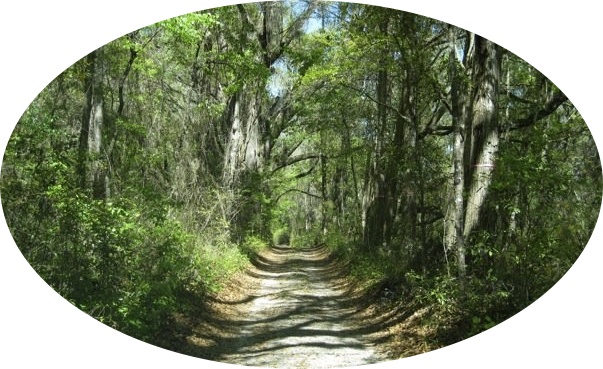
The Magic at the End of the Lane

Not long ago, I wrote a post about where magic lives, at the end of a rutted lane, canopied in cypress and live oak, a sanctuary of second chances.

It is a farm of family, no species denied. No one is turned away for being too old, too young, too sick, too maimed. Those who find their way to Second Chance Farms find home and love that lasts a lifetime.

Sometimes, that life is a short one, as it was for Phoebe Louise Dooley who died of pediatric brain cancer at the age of six. Her time on earth and at the farm was only a moment, but that’s all love ever needs to live on, as hers does in Bruno, the first Phoebe’s Foster.

Emily and Bruno

Her farm family misses the light that was Phoebe, her laughter and love of all dogs, the old and the overlooked, those so far from the ideal.  And that pretty much describes Bruno:

“It’s like he’s always been here at the farm. He is intelligent, eager to please, extremely gentle and of course–as all hounds should be–a bit stubborn and definitely very goofy. He is definitely Phoebe’s dog and just having him here helps to remind us that sweet Phoebe is still at work in this world.”

She was no stranger to the farm and understood how and why animals came to live at the sanctuary, a second chance not necessarily free from pain but a life of love nonetheless, however long it lasts.

And that’s what Phoebe’s Foster continues in Bruno, who comes with considerable medical baggage, living life as a hound, on a farm in a forest where magic lives.

Phoebe’s parents miss her every moment of every day, and this first holiday season without her is especially difficult but Phoebe was born not only out of their love but their courage. They share their daughter with the world through the works of the Phoebe Louise Dooley Foundation.

May we follow in Phoebe’s footsteps.

Dying Alone

My neighbor, Eva, and I share a wall. It divides our apartments, intersects our lives, leaving jagged the edges where we do not meet. One of those edges was Harriet, who shared a wall with Eva.

This past week, Harriet died. She was found in her favorite chair. It seems hers was a peaceful death but it required a police presence to prove, so for a while her apartment was a crime scene.

Our apartment complex is a 55+ community, and most of us are well beyond middle age. Death is part of the deal of living but in the tenor of these times, death by natural causes has to be proven when a woman dies alone.

We should have known is what Eva and I say to one another but we never know death’s arrival.

It is not that death visited, it is that death came and no one noticed. For days. And then, someone did.

When there was no answer on Harriet’s landline, an extended family member called the police. Later, Harriet’s son, Dave, arrived. To be fair, the police could get here more quickly. Dave lives an hour away

No neighbor checked on Harriet with any regularity, if at all. Eva tells me she is working through her guilt. She and Harriet have a history, and it’s a good one, but their daily strolls around the apartment complex are long gone, almost another lifetime.

Only a few walk with us for all our lives. Yet, living in a community where moving out usually means either nursing home or death, it seems as if connection–being good neighbors–would transcend our differences. It doesn’t.

Harriet’s death troubles me, too. Like Eva, I know I could have done more, much more. I didn’t try hard enough. When Harriet’s chihuahua, Hal, was dying, I did everything I could except give Harriet the one thing she needed, support.

She was angry, afraid, lashing at everyone. Losing Hal was losing her connection to life. All I needed to do was listen. I don’t remember doing much of that. Nor did I see her often after Hal died.

Son Dave took Harriet to her appointments, picked up her medications, and brought her groceries. He saw to her needs but he never came just to visit. That was not their relationship, and both accepted their differences. They loved, regardless.

Dave is not a talker. He just gets on with the next thing, which rarely works out for him. Like the time he brought Harriet a new-to-her recliner. She loved overstuffed recliners and wore out at least three in the time I knew her. It was where she watched TV, slept, ate, and smoked.

She all but burned up each chair. Harriet had congestive heart failure and terribly painful neuropathy. Heavily medicated, she would fall asleep in her chair, cigarette still burning. Eva tells me Harriet had all but quit smoking but just a couple of months ago, Dave brought another recliner. It had bedbugs.

As Eva says, some people are born under a dark cloud, and Dave is one of them. So it seems.

Pencil-thin, husky-voiced, and quick with a southern-spun retort, Harriet never pretended to be what she wasn’t, which is not to say she usually told the truth. Like all of us, sometimes her lies caught up with her, but she held onto them as long as she could.

I could have offered Harriet more. I didn’t. I live with that jagged edge, but in pain is the expression of experience. Mine is not to fix anyone or anything but to meet people where they are, as they are, and walk with them long enough to hear their story. In death, there are no more chances except for the living. Thank you, Harriet.

Eva says we should go no longer than two days without calling each other. Okay, I say. Maybe Eva wants Harriet to know that she, too, is grateful.

Note: For a bit more about Harriet and Hal, you might enjoy “Love Lives in Inconvenient Places.”

The Sound of Breath

Lately, the sound of my breath is interrupting my morning meditation. It’s noisy, calling attention to itself. I am not just exhaling. I am “pushing” my breath, hurrying it along.

It is as if I hear the sound of my thoughts and use my breath to expel them–emptying my mind and closing it off.

These thoughts are a part of me, words with images. With each breath, I expel a load. These days, the sound of my breath is gale force, far from mindful.

At every moment where language can’t go, that is your mind.
Bodhidharma

I guess that is where I try to go every morning for an hour or so and then take a bit of that into the rest of my day. It’s tricky, this mindfulness stuff.

I remind myself about the stories of the Buddha realizing what enlightenment means. It is a gift but the experience of it is life changing. It is not floating around in peace in a never-ending story.

Well, it is but getting there is giving up a lot like language, labels and learning to share space with all living things. The activities of daily living don’t magically stop or become unnecessary.

It’s just the perspective that changes. It’s a completely different lens.

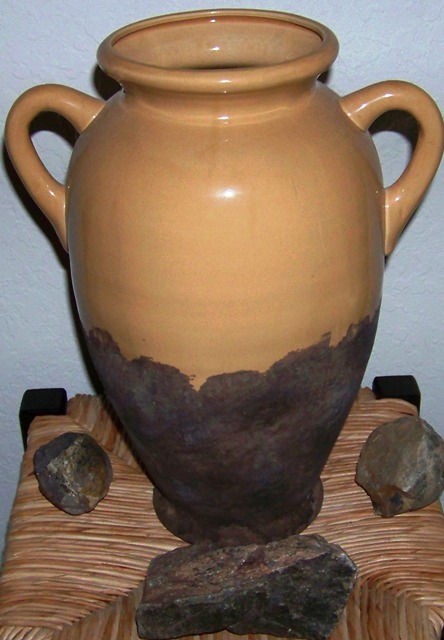
Sogyal Rinpoche illustrates with the example of empty jar or vase. There is air inside and outside. What separates is substance, clay in this case.

Our Buddha mind is enclosed within the

walls of our ordinary mind.

But when we become enlightened,

it is as if the vase shatters into pieces. 

 Sogyal Rinpoche, Glimpse of the Day

And then the sound of breath is soundless. Until then, patience is my practice.

Marianne Williamson says “infinite patience yields immediate results.” I don’t disagree. I think there is a glimpse, a moment when there is a favorable shift in the odds. In other words, growing awareness.

No overnight enlightenment for me, and I’m okay with that.

Patience resides in the hard places, where it hurts the most to be, physically or emotionally. To sit with the pain is patience. It takes trust.

The minute the struggle to sit stops, that’s the when the odds shift from suffering to acceptance. The pain may be less or may be more but there is no more holding onto it.

Infinite patience, immediate results.

It is the “unpleasant experience” in which I hear the sound of my breath, forcing words to empty the mind, which is not to say the words will not return.

They do, in Technicolor–full image–even a movie if I allow my memory its way.

My ego has superstar status when I lack compassion, refuse to listen to a point of view so opposite from mine. It is unpleasant, at times frightening, and every time I turn away from “the enemy,” I turn away from myself.

I hide in the jar of my “ordinary” mind, seeking solace but staying separate from my “Buddha” mind. In frustration, I breathe and the words keep coming.

I know of no Zen or Buddhist teacher that does not advise both patience and tolerance as well as interaction with our enemies. Not on a full-time basis but to seek what separates us.

Break through the clay, completely cast it aside.

It’s not about changing anyone into what they are not.  It is about breathing the same air with everyone else, soundlessly.

Always a Nasty Woman

I scroll screens by night and have been since November 8, 2016. It is how I first learned of the Nasty Women Project.

Arguably, many believe I am and have been a nasty woman all my life–in every sense of the term–I’m not disputing that. 😉 I am also a citizen in a republic whose duty is to be vigilant but I admit to complacency.

I’m on duty now. That’s all I can do anything about.

I contact members of Congress–someday, maybe I’ll be able to attend a town hall meeting—until then, I read newspapers and books like Ruth Bader Ginsburg’s My Own Words and Ron Chernow’s Hamilton.

#TheResistance is not about going back–that world is gone–it is about working through this moment. Yet, the past is not without its information.

Sometime around last Christmas, editor-in-chief Erin Passons put out a submissions call for a book she wanted to publish March 1–an anthology about the effects of November 8, the night the world changed.

I knew I would submit a piece but I had no idea my essay would begin 18 years ago–1998–on the day of Matthew Shepard’s funeral. Then, I was a middle-aged lesbian living in Wyoming. I was angry and too naïve to be afraid. I believed hate would not win but on that day, it did.

Members of the Westboro Baptist Church gained worldwide attention for their protest of Matthew Shepard’s funeral. I joined others in holding up my umbrella to block the signs of Matt in hell and God hates fags.

Our umbrellas sagged under the weight of snowflakes. I looked into the eyes of a young man from Westboro and found the hollowness of hate. He had won.

These 18–now 19 years later–I know winning is not when the heart is hollow.

My essay, “Confessions of a Closet Activist,” appears in the Nasty Women Project: Voices from the Resistance, Volume 1. 80 women, 80 stories of what it means to be a woman in the 21st century. 100% of the profits go to Planned Parenthood.

In the first two weeks, we raised over $2500 for Planned Parenthood. Our support continues no matter what Congress decides about healthcare, on any week. The attack on Planned Parenthood is a long and familiar one.

For me, it goes as far back as 1976. It is not impossible to be pro-choice and anti-abortion. Human beings are “walking contradictions.” There is no one way for everyone but for everyone there is a way.

Complacency is easier than activism. I’ve always known that but I’ve not always been aware of the privilege I have. As an old, white lesbian, it is considerable.

We all have privilege. It is not something new but an awareness of who we are, how we intersect with everyone else. We live in a republic whose survival means we must participate–always.

The failure of the healthcare bill shows us we are still able to make a difference. We are not yet staring down the hollowness of hate but we are not far from it, either.

Sometimes we see the danger and it kills us—

and sometimes we see the danger and it sets us free.

(“I Saved the World Every Night,” Erin Passons)

I scroll screens by night.


The Holiday Pounce or the Cat is on Steroids

Sometimes the holiday season is just upon me, unannounced points of light pristine as newly fallen snow. It is joy uncontained, this magic of my holiday heart, a music all its own.

This year, I am very like the boy in “Walking in the Air.” The music is new to me but in England it is a beloved Howard Blake song written for the 1982 television adaptation of Raymond Briggs’ The Snowman.  It is a traditional holiday favorite.

Perhaps that is how holiday traditions are made. New only one time and for all the holidays yet to come, remembered, sometimes as magic.

In ways unforeseen, feline EmmaRose and I are exploring our own version of walking in the air. In keeping with the title of this post, she is on steroids. For that matter, so am I.

It has not been what I would have anticipated for either one of us.

At Rest 0215

As you can see, most flights of fancy are in EmmaRose’s dreams. That said, there are moments the catnip mouse flies through the air, ever prey to EmmaRose’s declawed but deft paws. Usually, a serious nap follows. This has always been her way.

EmmaRose has reached a certain age where chronic inflammation in her gastrointestinal tract is now permanent. Prednisone gives EmmaRose a chance to keep her life as she has known it. In all things, same old, same old is EmmaRose’s idea of walking in the air.  The even keel is her joy.

As a woman of a certain age with an increasing number of chronic health conditions, I, too, aim for the joy of even. Every morning I check our respective steroid doses on the daily calendar. EmmaRose’s is in liquid form, which she prefers dribbled on flakes of tuna.

I take my tablets with warm, lemon water and set the timer for an hour. I meditate; EmmaRose naps.

Meditating on steroids is not a busy blur. Just the opposite, actually.  In the opalescent hours, dark and not far from morning–dawn’s assurance lurks–my body stills into one breath after another.

Inflammation signals, initially insistent as pain, ebb. More like soft points of light than not. Tramadol fans the flames of burning joints into embers as Gabapentin wends its way through the maze of misfiring nerves.

Within the hour, my body finds its balance to begin the day.  There will be constant shifts as medicine and body seek mutual agreement. Cooperation is fluid.

I am “floating in the midnight sky,” glimpsing the possibilities a life with traditional medicine may offer. The points of light are innumerable. Such is the dawn of change.

But even change will not stay. One cannot hold onto the midnight blue for it is only a moment’s ride. Always, the magic lasts just long enough for us to remember to believe.

Whether or not we go walking in the air is our choice. We can enrich our experience as much or as little as we choose. We are not confined by what our bodies can or cannot do.

Our most powerful tool—our curiosity, our ability to imagine—is what wraps and re-wraps the world so that it once again is new and shiny.

To go walking in the air is to “take the world by surprise,” to open our arms to joy, believing nothing is impossible. It only takes a moment to believe. And then our feet touch the ground.

To accept that walking in the air is as necessary as keeping our feet on the ground is to know joy, ours to live or not.

It is a game of catnip mouse with declawed paws.

It is the awe of experiencing each moment for none can ever stay.

Sometimes we walk in the air. Sometimes our footsteps are one in front of the other, grounded. It is an ever shifting balance.

Happy holidays. You are all points of light.

Here Are My Shoes

I did not know to send my shoes to Paris but here they are, virtually. Even the Pope sent a pair of plain black dress shoes; UN Secretary General Ban Ky Moon sent a jogging pair.shoes 120915

Type, condition, or owner is not the criteria. Solidarity of the human spirit is.

20,000 pairs of shoes arrived in the Place de la République in support of the activists who were not able to march at the UN climate summit. French authorities banned large outdoor marches in light of the recent terrorist attacks.

Activists turned to the compassionate response for terrorism is never a match for compassion, a truly revolutionary act. Compassion connects. The world sent shoes and then, hundreds of thousands in cities across the globe marched for those who could not.

In solidarity, there is awareness, a sliver of light where there once was darkness. That is change.

Black Bears of Florida, here are my shoes.

Black out for the bearsActivism did not stop the black bear hunt. It was a mismanaged slaughter as predicted. The Florida Wildlife Commission (FWC) sold over 3,700 hunting permits for the “harvesting” of 320 bears. In less than 48 hours, 298 bears were dead. As of this writing, the final bear death total is 304.

There had been no black bear hunting in Florida for 21 years. The population was considered endangered but in recovery. No one knows the total number of black bears in Florida. Most agree it is around 3,000, including the FWC who sold more hunting permits than the estimated number of bears.

The continued presence of activists did shut down the hunt five days early. They gathered at kill reporting checkpoints to monitor the hunt as well as to photograph and record bear data. And yes, they posted the data on social media. It is still getting attention.

Black bears found a way back from being an endangered species only to discover they are refugees in their own land.

In Tallahassee, there was a Requiem for Bear ceremony. When there is reverence for life, there is a spark, a way to begin anew. Increasingly, pairs of occupied shoes are coming to Florida courthouses and county commission meetings for the rights of black bears.

Seminole County is enacting an ordinance outlining specific requirements for humans to do their part in living with bears. Sponsored state legislation for 2016 will help municipalities cover the costs.

Virtual connections as well as person-to-person contact allow the issue the light of day. Solutions appear and disappear. Not all are feasible. Increased awareness results in increased opportunities for connection. That does work. It is how change occurs.

Syrian refugees, here are my shoes. Winter Solstice Skies 1214

Hundreds of thousands of refugees have died in Syria, and millions are fleeing. Numbers are fluid but an inter-agency group reports over 4.2 million “are persons of concern.”

I am reminded of a Flannery O’Connor short story, “The Displaced Person.” The title reflects a well-known and often-used term for WWII refugees. Themes of this story—bigotry, racism, xenophobia—are evident in every day events across the globe. We connect to them virtually.

Of late, America has given fear center stage. All of it is spew, the stuff of authoritarian regimes, so similar to what the refugees are fleeing. They must wonder what to do, knowing death is certain if they stay and life is uncertain if they go.

When it comes to refugees or any “displaced persons,” we wrap ourselves in labels—hold up our signs–so there is no doubt as to our identity, provided we are able to spell it correctly.

Hiding behind a label keeps us from making the compassionate response. We forget labels reveal not only who we are but who we are not. Our fear and paranoia crackle and pop like the short-lived flames they are, ever in need of an outside wind.

The compassionate response arises from the stillness within. It thrives on our connection to one another. That we are human is label enough. The compassionate response is the thoughtful tear on an ember of fear. One is all it takes before there are two. Solidarity of the human spirit is that basic.

Humanity, here are my shoes.

Getting Hooked and Giving It Up

Each of us is a unique point of light, a bright, shining moment within the eternal life force. Zen, our meditative state, is just as individualistic. Uniqueness is what we carry into our every day.

In the meditative state, we observe. Sometimes, thoughts come and go but other times, stillness suffices. In bringing Zen into our every day, we emulate the meditative state, experiencing every moment only to let it go.

We experience the physical dimension with and through a physical body, no less unique than our meditative state. Both provide sustenance for the mind-body. In meditation, there is being; in feeding and caring for the body, there is doing.  How we nourish our every day presence in life affects how we respond to the events of our lives.

Beginning the Day 092015

We are offered a multitude of ways to develop a daily meditative practice.  As for diet, there are billion-dollar industries offering nutrition through a series of steps, a number of days, eliminating certain foods altogether.

Just as there is no one way to meditate, neither is there one diet or food plan for everyone. Developing a diet unique to the mind-body’s nutritional requirements is as easy as walking through a minefield.

It seems safest to nibble one’s way in all the while clinging to what is sweetest. In clinging to food that comforts, it is difficult to discover our mind-body’s unique nutritional requirements.

Meditative Morning 1114

In the meditative state, one sits with the dark and light wolves of emotion, feeding or denying neither but rather, observing both so there is no separation of the two. Observation eliminates competition.

This is not as easy to do with food cravings—at times it is impossible–the principle is the same, however. Clinging to foods that momentarily comfort us rather than nurture our mind-body, is like keeping our light and dark wolves in constant competition.

Our thinking  becomes dualistic, either/or. We eat for comfort, unaware of our true hunger as we deny our body’s nutritional needs. Rather than feeding our mind-body, we are feeding a craving, which is only a thought, an ever empty one at that.

Feeding a craving is akin to feeding the ego. No comfort is possible for the ego always wants more. In Buddhism, such comfort food eating is a form of shenpa, often translated as “attachment.”

Shenpa is in all areas of life for old behaviors die hard, if they die at all. Pema Chodron refers to shenpa as “biting the hook.” As comfort food eating has been a lifelong issue for me, I prefer this translation.

Whether or not we bite the hook is not the issue— it is human nature that we will—it is in the awareness of our attachment that we spit out the hook and begin anew.  Each moment offers that opportunity.

This has certainly been true for me in my comfort food sessions, which are infrequent but still happen. There are no more binges. Honestly, I do not know that I would survive one.

EmmaRose does not have comfort food issues.

Because these comfort food moments are much fewer and far between, my mind-body is not as forgiving. I can feel it struggle with food that does not support its nutritional needs.

There is a sense of frustration in processing empty calories that offer sluggish and stiff body movement, muddled thinking, zigzagging emotions ranging from euphoria to the blues.

Overall, there is fatigue, enough to scare me into thinking the mind-body might want to quit. But that is only my attaching to a thought that has not been fed as it soars on empty emotion.

To live, thrive, is the nature of the mind-body–all unique points of human light coming together as one–to experience life in the physical dimension, including biting the hook.

Looking into Nature’s Mirror and Finding Grace

Waverly Larch Spring Nubs 0313The cycle of seasons is nature’s mirror, ours for the viewing. Mostly, we celebrate a new season but not always the length of time nature takes to make the change.

We assign spring a date, anticipating an event that may or may not arrive as assigned. Arrival is always a mystery. In a moment of grace, nature unfolds in its own time, in its own way.

“I do not at all understand the mystery of grace—only that it meets us where we are and does not leave us where it found us.” Anne Lamott

I do not understand the mystery, either, but I am content for the experience of it. All I do know is that grace transforms. And like spring, it is its own mystery.

Grace flows with the majesty of a meandering river. Part of its mystery is the gradual eroding of its course, without beginning or end. We do not know the precise moment we are transformed. We only know that we are.

In grace, we do not wallow or stagnate but discover and re-discover the spring of our lives not so much as to re-live but to be reborn in yet another season.

Spring is not a one-time event.

Grace moves us to deeds we once thought impossible. In each spring of our life, we emerge anew. Grace allows us to bare ourselves as we are—to take the risk again—to meet each new spring we are allowed.

We are given only one body to grow but we have the gift of grace to transform, to meet yet another spring. Our seasons cycle within our hearts, bold with the opportunity each affords.

We need not remain wrapped in winter, blanketed in its protective shell. Like nature, ours is not to stagnate or to wallow but to transform from a winter’s day into a spring’s blossom. It is the way of grace.

The bud opens, and life begins anew, yet again. There is grace in this falling away of one season for another, a radical change replete with uncertainty.

As we are revealed so are we seen. Grace unlocks our softness.

Upon Closer Reflection, Comfort in Chaos

Last week, I wrote of finding balance and the ongoing shifting of left and right until balance arrives of its own accord. Osho refers to this as a “graceful” shifting, which for me it has never been.

Rather, it has been a struggle, one worth taking on but very like sitting in a cave of chaos. I have not found grace there—not yet—but I discovered comfort, thanks to reader comments on last week’s post.

Comfort comes from accepting that balance is in constant motion. It is impermanent. When I start to squirm, I know I have shifted too far one way. It is time to let go and begin to swing back.

Balance is not identifying with left or right because in balance, I am both. Standing in the middle of a moment is mindful, and I have all the time I need.

Closer Reflection 0215

I experience moments I wish would stay forever. There are others I am convinced will never leave but being alive is being in motion as no moment ever stays. Life touches us—painfully, indescribably, unbelievably–myriad experiences ever in motion.

It’s chaotic. And it seems I have found comfort in that.

The reason everything looks beautiful is
because it is out of balance,
but its background is always in perfect harmony.

This is how everything exists
in the realm of Buddha nature, losing its balance
against a background of perfect balance.

~Shunryu Suzuki~

In looking at past posts, variations of the Suzuki quote appear in one form or another at least annually, sometimes more. Yet, this year is different. Why? I have a physical sense of balance.

Regular readers know I recently explored northern Florida with a dear friend. We covered over 500 miles in four days, which for a person with lupus is too much sustained activity. I am grateful for every moment, and yes, I was exhausted.

I am used to the routine of resting that usually follows such an outing. I  break from life, including blogging and writing. I shift from full days of activity to days of complete inactivity. Always, that has been the way.

Not. This. Time.

Peeking 0215

I do not remember consciously thinking of Suzuki’s “perfect balance of existence” but it seems my subconscious decided to trust it. I shifted my resources, not gracefully but gradually, with a certain awareness of the ever-changing balance in each moment.

Oh, there were moments of despair but they were brief, not worthy of support. I could not rouse myself to give in, give up, and wait. There was no life in that.

Rather, I immersed myself in each day, looking to the balance available to me. I communicated with my pain—sensing its signals—without struggling but with shifting.

When I went to my acupuncture appointment, my meridians overflowed with energy. An acupuncture point full of Qi (energy) signals stagnation; the needle is the stimulation to release it.

Point after point, Dr. Gold’s needles provided relief. I did not want that treatment to end–the release was that deep and that immediate. When I arrived, my overall pain level was a solid 8, my knees a 10. The treatment reduced my overall pain to a 3; in some locations, the pain was gone.

Resting came easier as did my sleep. My level of body energy, no longer trapped, shifted to the daily balance available. The body is graceful when allowed to do its work in its own way.

Acupuncture opened me to trusting the chaotic nature of balance. It is not the nature of balance or mine to stagnate. Ours is to be in the constant chaos.

My readers’ comments opened me to just how exceptional that is. Thank you, dear readers.

Every Day 0215