By the Light of the Moon

We come to recognize that we lead more than one life, its iterations multifaceted. We are one being–an explosive body of energy–exploring what it is to be alive.

My current life began by the light of the moon, August of 2010, sitting on a single bed, one of three pieces of furniture I had not sold or given away. I shared it with Gumby, an elderly, diabetic beagle. We were surrounded by boxes of books, an ottoman that doubled as a linen chest, an antique rocker from my childhood.

I was not unhappy but I was scared. In fact, I was more content than I remembered being in my then 58 years. The bottom of the abyss can feel that way, a beginning. There is something about starting anew; maybe it’s that beginnings never end.

Yet on that day in August, death was close. I could not or would not see it. In my eyes, Gumby grew younger every day. I did a lot of lying to myself then but not about managing her diabetes.

I was meticulous in giving her insulin and managing her diet. It would not be enough, ultimately, but in that August, I needed her to walk me through the moonlight, and she did–for miles–every day.

Sometimes being surrounded by uncertainty is the way to see through fear. How else to look through the life lens, wide-open. Death is not always believable in its first glimpse. It’s only the last look that stays.

I think that’s because life does go on and in its absence, we have memory, its edges soft–fears faded–we will never live that moment again. We know how it turns out.

So this life I lead now began with a dying beagle whose blindness led both of us into the life I have now.  Gumby only stayed a month after we stopped walking by the light of the moon.

Without her, I cannot know when or how I would have left my other life. It doesn’t seem possible. Certainly, the path would have been different.

Morning after morning, I sat in the dark that comes before dawn–sometimes with moonlight, sometimes not–always staring at a computer screen, waiting for the daily inspirational quote from Oprah Winfrey’s newsletter.

Every quotation seemed to be just what I was feeling. Another sliver of light. I wasn’t looking for answers.  I had learned about answers; they are a dime a dozen. Ephemeral.

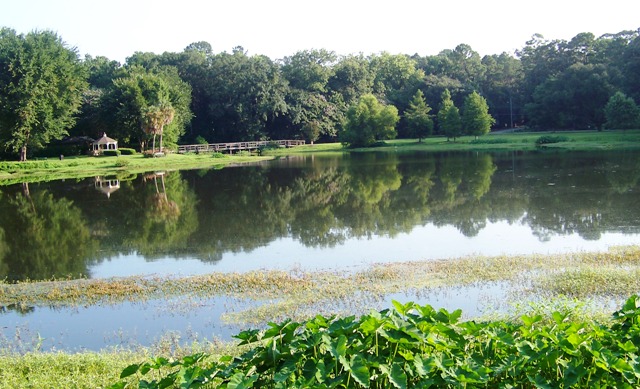
St. Mark's Refuge; Gulf of Mexico; KMHuberImage

I wanted to stay curious, to find a way to courage, to face questions I had not yet discovered and when I did, ask them aloud. I was tired of being afraid.

I wanted to be Gumby, starting every morning with a walk, unable to see yet confident in the path. I wanted that kind of trust. Scent memory was her GPS.

It has been years since I glimpsed her face in another animal or had a quick flash of memory that seems so real. For a moment I am with her again, walking for miles, never knowing where we are going but always finding home.

It took me years to trust my GPS.

The more we discover, the more lives we live. Like the moon, they have their phases, waxing and waning. A life can only be dark so long, maybe no longer than an eclipse even when it feels an eternity.

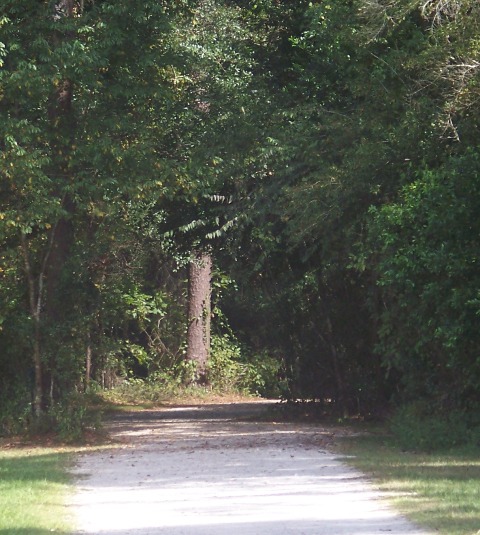
Never fear the path for it is always home.

The Grace of Acceptance

I continually grasp at life, clinging to what will not be held. I want to lie in the arms of acceptance, wrap myself in its grace.

Because once in a while I get a glimpse of Buddha nature, the backdrop against which the chaos of our everyday lives plays out.

I want to define what defies definition.

I suppose I just want to know where I stand, to which Pema Chödrön would remind me that only in groundlessness do I find my center. And that’s where acceptance is too, I think.

There is a lot of worry in that word, acceptance. I know it is a long moment and has nothing to do with approval, agreement, or acquiescing. Acceptance is living the every day with grace, embracing the daily risk.

That requires acceptance of circumstances–as they are for as long as they are–with “unconditional friendliness” toward ourselves. Who we are, as we are. That is Maitri. That is grace.

It moves us to deeds we once thought impossible. It unlocks us, and each day brings us “new grace” as Eberhard Arnold tells us.

I am a risk taker. Won’t settle for satisfactory. Never have. That doesn’t sound unconditionally friendly, does it? It sounds more like someone in search of a key for a lock.

Yet, I am not inflexible. I know the future is limitless. It is mine to explore the full experience of being alive. I really try to do that, no matter how many times my life lens changes.

I am most engaged when I’m completely present to my task, immersed in risk without ever a thought to it. Mine is not to control but to experience.  Without fail, the more groundless I am, the more centered I feel.

While it seems impossible at first,

you soon recognize that with everything

there is a point of balance

and you just have to find it.

(Amy Tan)

I suspect this is how we effect change everywhere–in tiny touches–surprising feats of strength all on their own. They allow us to enlarge our sense of things.

Far too often, I get lost in the minutia.

There is an oft-told story about a Hindu master and his apprentice who–I think–had a similar problem. The Hindu master sends the apprentice to purchase salt.

He tells the apprentice to put some salt into a glass of water and drink it. The apprentice says the water is bitter. The master agrees.

They go to a lake where the master tells the apprentice to throw in a handful of salt. The Hindu master instructs the apprentice to drink; he says the water tastes fresh.

Life is bitter the Hindu master says, “pure salt.” The taste of life depends upon whether we sip it from a glass or a lake. “The only thing [we] can do is … enlarge [our] sense of things.… become a lake.” (Version of Hindu story from Mark Nepo’s Book of Awakening).

This is why I meditate, to sip from something larger than life. Not to escape its bitterness but to become a lake, as comfortable with chaos as I am with constancy. To live where grace resides, in impermanence.

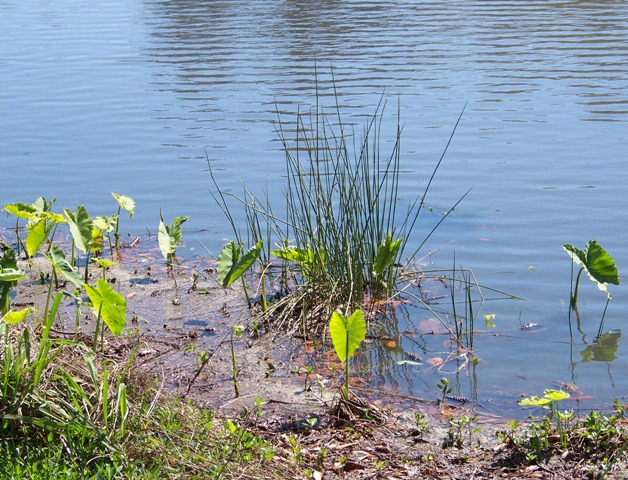
St. Mark's Refuge; Gulf of Mexico; KMHuberImage

Whether we confine ourselves to a single glass of water or become a lake depends upon how “friendly” we are with ourselves, whether or not we drink in our confusion as readily as our sanity.

Accepting that what fuels our fire creates the circumstances of our lives. May we live in the grace of that acceptance.

Life is like that.

We don’t know anything.

We call something bad;

we call it good.

But really we just don’t know.

Pema Chödrön

Survey Says…

Living on a fixed income can confine–no doubt about that–my budget is the same bottom-line every month but cost overflows require a constant balancing act.

So, I have been looking for ways to supplement my income. While costs will ever be fluid, I need to work within my current frame of life, which includes aging and chronic illness.

It is not that my current frame is without flexibility for it is not. Neither chronic illness nor aging confine but both, too, have a budget. To overrun either is to exact a cost on myself that is rarely made up next month or in this lifetime.

When life expands, so does its frame but it has to be life doing the expanding rather than egomania or placing myself within a frame that does not fit.

So, I started taking online surveys for payment–in cents, usually. The best surveys pay a dollar or two and some up to five but these are not the usual fare.

I’m conscientious in my work–surveys interest me–I’m curious what others measure. The surveys also mirror my own living within the frame that is my life.

Specifically, my experience as an aging, disabled woman living in Florida. Any one of those labels will disqualify me and frequently does. This is also true if I choose the label retired.

Often, my own blend of chronic illness is too rare (or too common) to warrant a survey but diabetes, hypertension, and cholesterol seem to be current hot topics for surveys.

But my label bias is showing. For me, labels are difficult, a lifelong issue, but I do recognize their importance in providing context.

And although I have not been in contact with anyone else who participates in these surveys, I suspect they, too, find themselves disqualified for their own group of labels.

I don’t want to get worked up about labels, which I am wont to do.

The surveys that I am offered most frequently have to do with gaming videos, although I do not own an Xbox or virtual reality equipment. I’m not into role-playing games, either.

I am, however, fascinated with strategy/puzzle games, mysteries mostly, forcing me to focus on the story’s task at hand. Similar to reading, I am immersed in a story that is not mine. Freely, I admit to this escape.

These games help me find the way through my fog, when my brain is more mush than matter. Now, I have surveys, too–similar but not the same–it is the absence of story that sets the two apart, I think.

Surveys end–happily or no–while at game’s end, these “mysteries” reveal a successful strategy. On some days, that is a better use of my time.

Of course, there are surveys I reject outright but I admit I am most careful with the qualifying questions, if the promised payment is larger. I, too, have my mouse and cheese moments.

Always, the mouse runs the maze for cheese, seeking at least the regular fare but a larger reward is even better. Any extra effort is only a problem when the reward is denied without explanation or is less than promised.

If I value my time in terms of dollars and cents–within this context–I am well on the way to passing our national debt, maybe as soon as the end of next week.

It’s not that I don’t value my time–I do–but in my current frame, these surveys add more than the time they take. Again, it’s context.

No matter how bad a day is for me, physically or emotionally, I find enough brain cells for surveys, not because they are witless but because they help me find the way to mine.

I am not caught up in the ego of discomfort or frustration. Rather, I am in life as it is–with my pain. It sits with me. I sit with it. I learn something.

Every day is not a jackpot, and every day what I want will not fit within my frame but every day, I have my space. It is enough.

Why chase cheese if it is not on the day’s menu?

Who Has the Power?

Silence is a response, deafening. It fells the tree in the forest. It may be centuries before anyone even notices, as no one heard the fall.

When white supremacists march in the streets but no one waves a flag in response, who has the power? Certainly not the ones carrying AK-47s. They only have a parade permit.

It is not that hate isn’t powerful–it is–its appetite is insatiable. We need not feed it. Hate is ego run amok–fear.

I don’t know about you but I cannot remember the last time my ego stopped chattering, which is not to say it always gets its way but it does far too often.

Silence is the power of emptiness. Without an audience, what good is the bully pulpit? Silence is the one state the ego cannot abide.

It is a coat of many colors—always a choice—perhaps best saved for last because silence knows no equal. It is deafening in its inattention and cannot be defeated. It is its own narrative, invincible and not inactive.

Silence carries with it a sobering responsibility—facing change as it happens—not as we would have it revealed.  I find this really hard, at times impossible.

Life turns on a dime, one side or the other. Whether heads or tails, each iteration is new, no matter how the label.  Sometimes, we look longingly–with hope- and other times we rue the side. To what purpose, either one?

Change does not ask for or require permission. Trees fall in a forest or don’t. Some I hear and others not. I don’t have a say. What I have is life.

I want to live in a world where all lives matter but that is not this planet and never has been. I don’t want white supremacists and Neo-Nazis marching in the streets anywhere but they are and do. Fear is for mobs.

Change is the stuff of centuries. I remind myself of that–now–on a daily basis.  I did not always, a mistake. Mostly, I have viewed change through the lens of history.

For me, context matters. It is how I accept that life is impermanent, that change is its own master. That means I accept all that I am—my shortcomings wrapped in my privilege—my history of being human.  I am responsible for me–all of me.

I do my best to take that context into every day, remembering that my past is not my present. There is nothing in my past that I can undo. That tree has fallen.

The hardest is to wear the armor of compassion always–first for myself so what I offer to the world is genuine. Compassion shatters ego—silencing it with action–a life-giving light.

No darkness can withstand compassion. It is its own narrative. The open heart is not the cloak of sycophancy or the “good soul” who never takes an uncomfortable step.

Do not underestimate the shield of compassion. It is a narrative like no other, a response to the hollow fear of white supremacy. Compassion is life for all always.  No exceptions, no distinguishing characteristics.

Unwittingly, the white supremacists have revealed us. They have ripped us open—ego usually does—but it is a boomerang, I suspect.  No ego ever listens much less hears.

It is not the change we want or some expected–this upheaval–but it has been centuries in the making. It is our narrative of we the people. This republic still stands, although divided.

We are far from coming to grips with all that we are—that is a long moment—change has more to reveal, I suspect, much more. That means accepting responsibility. Change always does.

It turns at will, this life that upends us at the most inconvenient times. I cannot think of a time when change was convenient—it is its own master.

Acceptance that we are here to experience life is to let go of the fallacy of control. To cling is completely illogical. We are a long way from that kind of acceptance but I think we are learning not every forest is felled by fear.

One Long Moment

Acceptance is a lifetime practice–one long moment–less about events and more about impermanence.

I know the drill. Everything is going fine, life is good, and in a nanosecond, the entire landscape changes. It’s a new life lens: the joy of the extraordinary or the bottomless gulf of grief–and everything in between.

Life will not be as I want it, no matter how hard I hold or push it away. Somewhere between these two is a moment of not clinging and not avoiding–accepting what is–where forgiveness is not such a chore, its heady fragrance in the crushed petal of the violet. Life has changed.

Mine is to accept the experience–come what may–as neither doormat nor fortress. In acceptance, I respond with compassion. It may not be what others want but if I am mindful, I offer all I am able.

The older I am, the more I accept what a treasure change is.  Still, I am a slow learner and sometimes given to stubbornness, steeped in the fear of being old. Yet, at any age, I am who I am.

Acceptance will not sit with fear. There is no room. The fragrance of forgiveness too heady. The pull of the life experience too strong.

I think that is the seat of self. Ageless? I don’t know.

It is the body that ages and mine not so well. I look older than my years; I have since my 50s. In my mid 30s the right side of my face began to sag.

Too much medication, wrong kind of medication, not enough medication. I don’t know. Maybe it would’ve happened anyway. I really haven’t noticed in these last years.

These days my visage sags with wrinkles, like the smoker’s lines above my lips. I don’t single out any one face furrow. They are the lines of my life, altogether.

Although I no longer drink, I once drank heavily. I know how fortunate I am in not missing alcohol. I thought it a change I would never make. Same with smoking.

I discovered that finding “life in the present” is as heady an experience as any martini—more so, actually—even better than the cigarette after dinner or sex.

Aging keeps me curious; judgment feels unreliable because it is. Aging reveals me as I am, flawed but ever viable. I need neither regret nor expectation. Who wants boomerangs?

In awe, I sit in the seat of self, where all gifts are given and received. Some are surprises, not all an easy open.

I may have an expiration date but the energy that animates this entire physical dimension does not. I’m not trying to stop any processes. I want to learn the grace of acceptance.

The body is a marvel at adapting to change. It is lifetime acceptance in action, forgiveness a given. All I need do is follow its lead and keep my life lens open.

The Look of Failure

Failure is its own kind of boomerang, and the sooner taken in hand the better for everyone. I know this, which is not to say that is what I do.

I’ve learned that to reach for failure is to seize the spectacular. I avoid it for as long as possible. I stay in step with my ego as it tells me, quite forcefully: “Just keep at it. It will work.”

All the while my body sends signal after signal to stop: ”This is not working. Let it go.”

My heart opens to failure as my ego flashes a neon sign: “Don’t screw this up.”  Of course, I already have. I am too busy to hear the sound of failure.

Ever patient, my heart shows me a seat to the spectacular while my ego offers only the slough of despond.

Only to the extent that we expose ourselves

over and over to annihilation

can that which is indestructible

be found in us.

Pema Chödrön in When Things Fall Apart

Exactly.

This is a failure I feel in my bones, literally, and my heart oozes with pain. I did visit the shores of the slough of despond momentarily, too tired to indulge in labels and finger-pointing, mostly at myself.

After spending the last 24 hours alternating between sleep and the meditative state, I hold failure’s boomerang in hand, feeling anything but spectacular. Still, I stay in my seat.

When things fall apart, it is not an easy view. Yet, the heart is compassionate and knows nothing is revealed in angst. That is a scene best left on the cutting room floor.

Best to begin from the beginning.

This past week, I signed on for a writing gig that may have been possible back in the day–eight or nine years ago, maybe longer.

Yet even with better health and greater stamina, it would have been challenging, as I did not have sufficient background. I had to spend too much time researching, which did not leave me enough time to write.

I kept working harder but not smarter. If I had, I would have heard the sound of failure.

I was fortunate to have a thoughtful and compassionate editor who recognized my limitations and as much as she helped me, there was no meeting the deadline.

It was up to me–and no one else–to say, “I cannot do this.” I waited too long and now others must scramble to complete my work, in addition to their own. My concern for failure was greater than my consideration for my colleagues.

Therein lies most of my pain but what is done is done. To anguish over what cannot be changed benefits no one. That is not admitting failure. That is hopelessness.

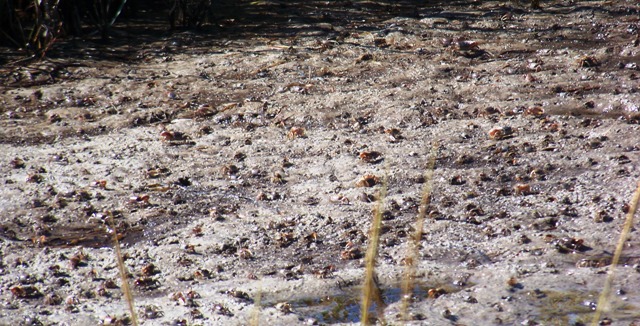
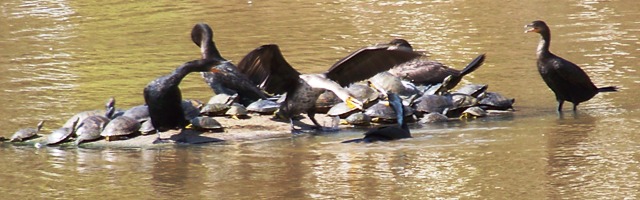
KMHuberImage; Mudhen; St. Mark's Refuge; Northern FL

To admit failure is to fall apart. Only in such moments does forgiveness reveal itself. I suppose that doesn’t seem spectacular—maybe I misuse the word–yet to sit in the seat of self reveals the human drama, and I know of no more breathtaking experience.

Only the heart can put on such a spectacular show, absorbing the annihilation that failure feels without judgment or looking through the colored lens of blame.

Failure reveals more than a wrinkled reflection; it is beyond the reach of any selfie filter. It is not a gloss. A reflection ripples with the tide or the wind, never providing more than a moment’s glance.

It is the mirror of the heart that reveals all failure, each one its own crack, healed in its own time. Forgiveness is the glue and knows no deadline only the steady beat of renewal. And that is indestructible. To me, spectacular.

The Sound of Breath

Lately, the sound of my breath is interrupting my morning meditation. It’s noisy, calling attention to itself. I am not just exhaling. I am “pushing” my breath, hurrying it along.

It is as if I hear the sound of my thoughts and use my breath to expel them–emptying my mind and closing it off.

These thoughts are a part of me, words with images. With each breath, I expel a load. These days, the sound of my breath is gale force, far from mindful.

At every moment where language can’t go, that is your mind.
Bodhidharma

I guess that is where I try to go every morning for an hour or so and then take a bit of that into the rest of my day. It’s tricky, this mindfulness stuff.

I remind myself about the stories of the Buddha realizing what enlightenment means. It is a gift but the experience of it is life changing. It is not floating around in peace in a never-ending story.

Well, it is but getting there is giving up a lot like language, labels and learning to share space with all living things. The activities of daily living don’t magically stop or become unnecessary.

It’s just the perspective that changes. It’s a completely different lens.

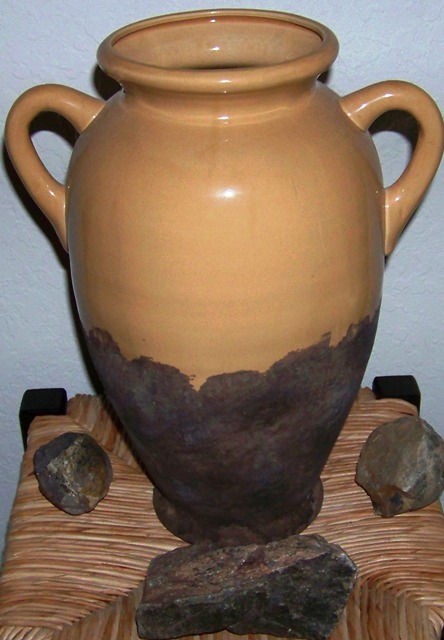
Sogyal Rinpoche illustrates with the example of empty jar or vase. There is air inside and outside. What separates is substance, clay in this case.

Our Buddha mind is enclosed within the

walls of our ordinary mind.

But when we become enlightened,

it is as if the vase shatters into pieces. 

 Sogyal Rinpoche, Glimpse of the Day

And then the sound of breath is soundless. Until then, patience is my practice.

Marianne Williamson says “infinite patience yields immediate results.” I don’t disagree. I think there is a glimpse, a moment when there is a favorable shift in the odds. In other words, growing awareness.

No overnight enlightenment for me, and I’m okay with that.

Patience resides in the hard places, where it hurts the most to be, physically or emotionally. To sit with the pain is patience. It takes trust.

The minute the struggle to sit stops, that’s the when the odds shift from suffering to acceptance. The pain may be less or may be more but there is no more holding onto it.

Infinite patience, immediate results.

It is the “unpleasant experience” in which I hear the sound of my breath, forcing words to empty the mind, which is not to say the words will not return.

They do, in Technicolor–full image–even a movie if I allow my memory its way.

My ego has superstar status when I lack compassion, refuse to listen to a point of view so opposite from mine. It is unpleasant, at times frightening, and every time I turn away from “the enemy,” I turn away from myself.

I hide in the jar of my “ordinary” mind, seeking solace but staying separate from my “Buddha” mind. In frustration, I breathe and the words keep coming.

I know of no Zen or Buddhist teacher that does not advise both patience and tolerance as well as interaction with our enemies. Not on a full-time basis but to seek what separates us.

Break through the clay, completely cast it aside.

It’s not about changing anyone into what they are not.  It is about breathing the same air with everyone else, soundlessly.

The Energy of Being in the Moment

I found a way of walking on air with prednisone this past week. It has been more mindful than you might think. And groundlessness was the key.

I would not have suspected that prednisone would provide yet another perspective on Pema Chödrön’s teaching of groundlessness.

In other words, work with the reality I have–be and stay present. Not something I had ever tried with a prednisone increase to reset rather than rejuvenate my body.

Initially, being present seemed counterintuitive. Why not go with the energy and have a few days of doing things like everyone else? Was that not being in the moment?

Not a one of us gets life full-blown forever. No one light shines without going dark. And even if it did, our appreciation would go blind.

Life is never about going back. It turns on a dime. Whether it stays on edge or lands on heads/tails, it is a new tale to tell every turn.

I remembered why I finally turned to meditation as a serious practice. I had no place else to go, nothing else to try. I wanted meditation to be a panacea but nothing is in isolation.

Some days, there is a clarity in meditation for which I have only the experience–no words. Other days, the thought chatter reduces me to tears.

I no longer show up with expectations.

It is the only way to wake up in a dark night of the soul and find a sliver of light. What else is the present moment other than a single sliver, just enough to light the night.

Some days stay all but dark. In this world, to get up in the morning is an act of courage for anyone. Life is not a Pollyanna prance.

What is more frightening than being in the moment? In other words, what I feared most about being in the moment was being in the moment.

But each day is all I ever have. Yesterday is gone, tomorrow a mere maybe. Both are mucky lands of “what if.”

It is only in the present that I settle into groundlessness. No thing and no one stays. The fabric of life–of what we take hold–is its impermanent experience. Maybe that is magic. I don’t know.

I once believed there to be a bit of magic in prednisone. After all, its possibilities seemed endless because energy is just that—endless. But I am finite.

This past week’s increase in prednisone has been unlike any other for me. It did not start out that way.

Old behaviors kicked in immediately. Within hours, I was anywhere but the present, my thoughts spinning with the possibilities of a six-day energy spree.

That kind of energy is so seductive, rather like chocolate. And too much of a good thing is just that. If meditation has taught me anything, it has taught me the power of pause.

I could exhaust myself with energy and at the end of six days, be in worse shape than when I started. Just a mere sliver of light that moment but it seemed a beacon.

That is how mindfulness rolls, a singular sweep of the scene, weaving one moment into another. An undulating tapestry. A web without a weaver.

Safe for Anyone?

Why not be content with a slice of life? Why is a moment not a sufficient feast?

Experience has taught me the moment is all I have, and it is more than enough. Yet, my ego remains suspicious. It believes there is more.

Byron Katie said, “when you want nothing from anyone else, you’re safe for anyone to be with, including yourself.”

Michael A Singer wrote that when we understand the world is merely something of which to be aware, then “the world will let us be who we are.”

In other words, go groundless, as Pema Chödrön calls it. Trust in myself and get comfortable with “getting tossed around with right and wrong.” Sit down in the “seat of self” (Singer).

I do manage to do that, from time to time, and when I do, my view of the world is completely changed. Whether in or out of the meditative state, in these moments I am who I am, and the world responds in kind.

It’s not pure, this awareness, just an evenness of mind. The banquet laid before me is more than I could ever imagine. This state stays until I try to hold onto it. The mere attempt at attachment and it evaporates.

My mind returns to ping-pong between the future and past regarding this and that. It whirs, images blur. What was clear and calm is chaos. And I begin to want, again.

Trusting in groundlessness seems impossible, yet how can I not?

Experience has taught me there is a point of balance in each day, no matter how pervasive the impossible. It is mine to find the fulcrum and respond with adjustments.

I have a greater appreciation of the unique, accepting that no day ever repeats. I’m grateful for that. Somehow, it lessens my fear that I am not enough.

With that confidence, I sit in the seat of self and open my laptop to Facebook for uniqueness in both the moment and in human beings.

We are born to difference, related to the stars by dust.

Some of the best Facebook threads are missed by those who comment without regard for reading. Often, that’s a source of irritation, resulting in much asserting of who is lacking. Soon, the original context is completely lost. So many are found wanting, and some demand it.

Social media context is easily misread yet what better opportunity to practice awareness, to get comfortable with “tossing around right and wrong.” It seems impossible, increasingly.

Sometimes, silence is the point of balance in my social media moments. The seat of self offers observation– allowing me to read—to listen hard for the tone. Selecting an emoji signals that I heard.

Sometimes, that is all I have.


Life as a Perennial Question

As a word, surrender still swallows hard.

Instead, I “crumble”; my “stony” self breaks into pieces–I “try something different” (Rumi). That I will more readily crumble than surrender may be a matter of semantics or more probably, Rumi.

Be crumbled.
So wildflowers will come up where you are.
You have been stony for too many years.
Try something different.
Surrender.
—Rumi

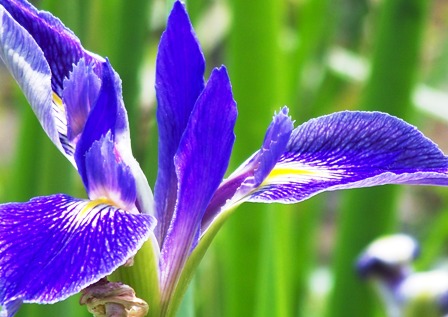
That wildflowers are possible is worth the risk of bursting forth as a bloom, going to seed, and sprouting again. My life is perennial until the year that it is not.

Until then, the crumbling into a wildflower is worth the experience, its seed an idea that will grow into some form of question.

I find myself fascinated with questions, considering them eternal. Answers are more ephemeral. Once accepted, they begin to crumble, not always noticeably, yet break-up they do. They are the feed for the seed—the idea–that will grow into another question.

They have so many facets and yet a familiarity about them, a leitmotif. Familiarity means I must be patient and allow the question to grow into itself. Far too many times, I anticipate—so sure I know what is being asked.

But I do not. It is mine to listen for there are so many variations on any theme. There is nothing new under the sun until life bursts through yet again, and then everything is new in that life.

What will it be like?

There is that question again–a unique seed–an idea expressed like no other. Its flower will blossom as have similar blooms before crumbling, surrendering.

Perhaps that is the promise of impermanence, life playing out against the constancy of Buddha nature, God, the Universe, the web without a weaver, the Tao….

I am the perennial until the year I do not sprout. I have gone on to something completely different