Upon Closer Reflection, Comfort in Chaos

Last week, I wrote of finding balance and the ongoing shifting of left and right until balance arrives of its own accord. Osho refers to this as a “graceful” shifting, which for me it has never been.

Rather, it has been a struggle, one worth taking on but very like sitting in a cave of chaos. I have not found grace there—not yet—but I discovered comfort, thanks to reader comments on last week’s post.

Comfort comes from accepting that balance is in constant motion. It is impermanent. When I start to squirm, I know I have shifted too far one way. It is time to let go and begin to swing back.

Balance is not identifying with left or right because in balance, I am both. Standing in the middle of a moment is mindful, and I have all the time I need.

Closer Reflection 0215

I experience moments I wish would stay forever. There are others I am convinced will never leave but being alive is being in motion as no moment ever stays. Life touches us—painfully, indescribably, unbelievably–myriad experiences ever in motion.

It’s chaotic. And it seems I have found comfort in that.

The reason everything looks beautiful is
because it is out of balance,
but its background is always in perfect harmony.

This is how everything exists
in the realm of Buddha nature, losing its balance
against a background of perfect balance.

~Shunryu Suzuki~

In looking at past posts, variations of the Suzuki quote appear in one form or another at least annually, sometimes more. Yet, this year is different. Why? I have a physical sense of balance.

Regular readers know I recently explored northern Florida with a dear friend. We covered over 500 miles in four days, which for a person with lupus is too much sustained activity. I am grateful for every moment, and yes, I was exhausted.

I am used to the routine of resting that usually follows such an outing. I  break from life, including blogging and writing. I shift from full days of activity to days of complete inactivity. Always, that has been the way.

Not. This. Time.
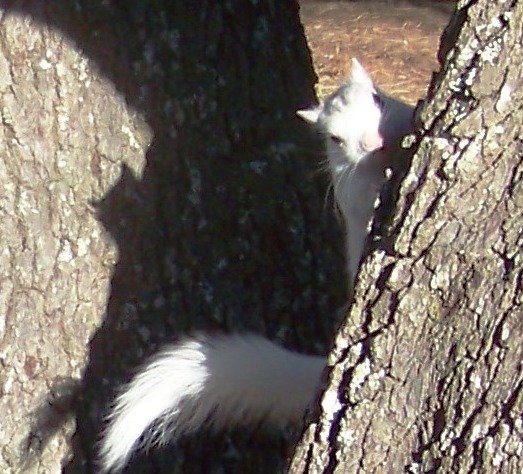
Peeking 0215

I do not remember consciously thinking of Suzuki’s “perfect balance of existence” but it seems my subconscious decided to trust it. I shifted my resources, not gracefully but gradually, with a certain awareness of the ever-changing balance in each moment.

Oh, there were moments of despair but they were brief, not worthy of support. I could not rouse myself to give in, give up, and wait. There was no life in that.

Rather, I immersed myself in each day, looking to the balance available to me. I communicated with my pain—sensing its signals—without struggling but with shifting.

When I went to my acupuncture appointment, my meridians overflowed with energy. An acupuncture point full of Qi (energy) signals stagnation; the needle is the stimulation to release it.

Point after point, Dr. Gold’s needles provided relief. I did not want that treatment to end–the release was that deep and that immediate. When I arrived, my overall pain level was a solid 8, my knees a 10. The treatment reduced my overall pain to a 3; in some locations, the pain was gone.

Resting came easier as did my sleep. My level of body energy, no longer trapped, shifted to the daily balance available. The body is graceful when allowed to do its work in its own way.

Acupuncture opened me to trusting the chaotic nature of balance. It is not the nature of balance or mine to stagnate. Ours is to be in the constant chaos.

My readers’ comments opened me to just how exceptional that is. Thank you, dear readers.

Every Day 0215

Losing a Mind-Set and Gaining a Life

My first post for 2014 considered aim for even as a way to live. I saw it something like this: in every experience I give what I am able to give, mindful that no two occurrences are the same no matter how similar they seem.

Remembering that uniqueness is not easy but is key to maintaining my balance. If I offer more than I am able to give or if I give less than is possible, I miss my mark.

In 2014, I aimed high and low aplenty but by year’s end I found myself more and more in the middle—in balance, even—as I let go of a  mind-set that skewed my aim.

Letting go meant giving up tried and true ways that comforted—at times even protected me—from the chronic pain inherent in my life. The subconscious is not easily dissuaded for it has had a lifetime to fine tune what comforts in order to cope. It’s its own infinite loop.

It would take me most of 2014 to break out of this mind-set. I wrote about it—a lot—on this blog.

Winds of Change 0214

In “The Winds of Change,” I believed I was slowly but surely losing my ability to walk. My response was I would adapt, like always. After all, I have an active online life and a great picture window with a view of the woods.

By September, “Some Awareness My Way Came”  in the form of spinal and cognitive issues. Yet, I would need another warning from my body that old ways would no longer serve. My kidneys sent a short but clear message.

“Only in Expanding My Cone of Habit” did I begin to dismantle the mind-set that had comforted me for decades. I turned to traditional Chinese medicine believing I had nothing left to lose. As I would discover, I had a lot to lose.

Wood Stork 0214

Transformation leaves behind habits of a life lived. There is no “getting my life back.” Life anew is an accumulation of every misstep, every revelation I experience. The stuff of transformation is recognizing that the great teachers in one’s life have always been there.

One of mine is chronic pain. Our relationship has changed completely. I no longer need to cope because I no longer fear pain, emotional or physical. I no longer fear pain spiraling out of control. Rather, I sit with my emotions as my body sends sensations.

I aim for even.

My transformation is far from complete but the changes I am experiencing I cannot explain other than through my new relationship with pain. I walk–slowly–without any limp and am just beginning to take short—really short—walks.

Just beginning 1014

Every day, and I mean EVERY day, I have a level of energy, something I lost decades ago. On the same day, I can complete errands, do some housework, and write–if necessary. Nine months ago, I thought I would live from my adjustable bed.

The pain is not gone but the mind-set is. There is no seeking comfort to mask the pain. Rather, there is the slow movement of yoga and the stillness of meditation, the balance of acupuncture. And there is food that fuels the biological changes taking place in my body rather than inflaming it.

Every day, I aim for even.

As I was writing this post, I kept trying to find ways to impart what aim for even might look like separate from chronic illness. August McLaughlin seemed to read my mind when she posted this graphic in her wonderful blog post.

August resolutions 0115

She captures aim for even beautifully. In giving what we are able to give, no more and no less, we resolve to live life as the ebb and flow that it is. We keep ourselves afloat.

Finding Refuge on the Eve of the Winter Solstice

It is early morning on the eve of the winter solstice, neither dark nor light but both—in a way. Even for north Florida, it is cold. I have the car heater on low as I drive to St. Mark’s Wildlife Refuge on the Gulf of Mexico.

It is perfect winter solstice weather.

Winter Solstice Skies 1214

The solstice celebrates the dark during a season given to light, a reminder that in light there is always dark. Yin-Yang. Oneness.

And there is the inherent stillness of the solstice. The increasingly dark and deepening autumnal sleep culminates in the pivotal moment of the winter solstice.

After this day, every dawn will mean more light and less night, as slumber gives way to the awakening of the spring solstice.

Every year, I write these words or similar ones regarding the winter solstice in the northern hemisphere. Usually, I celebrate the event with a walk around Waverly Pond but this has not been a year of “doing things as usual,” even holiday traditions.

Rather, it has been a year of firsts. Some may mean new traditions for me, among them driving to St. Mark’s on the eve of the solstice. Perhaps more than any other season of my life, I am immersed in transformation.

It is not surprising that I am drawn to the Refuge where transformation is in evidence everywhere.

Areas of longleaf pine stand stark in their burnt orange and black beauty against gray, morning skies. Wiregrass is the color of wheat ready to harvest.

Quiet of the marshes 1214

It is the season for prescribed or controlled burning, a matter of survival for the longleaf and wiregrass ecosystems. They depend upon the transformation fire brings–first alight with flame and then, darkness.

Transformation always involves the falling away of things we have relied on,

and we are left with the feeling that the world as we know it is coming to an end

because it is.

(Mark Nepo, The Book of Awakening)

As I look across saltwater marshes in seasonal slumber—timeless transformation–I cannot imagine being anywhere else on this dark, gray morning on the eve of the winter solstice.

Marshes 1214

In the quiet dark, I am mindful of the necessity of letting go in life. It takes time, transformation does, time to awaken to the light of a life yet to come, time to welcome the world anew.

Mindfulness gives you time. Time gives you choices. Choices, skillfully made, lead to freedom.

Bhante Henepola Gunaratana

The solstice seasonal slumber reminds me to quiet myself, to observe the dark that is as much a part of this festive season as is the light. In the stillness of the dark, the light swirls.

On the marshes of St. Mark’s on the eve of this winter solstice, I let a life lived end as a life I have not begins. Each ending is yet a beginning, a time for slumber in anticipation of awakening anew.

In keeping with the light and dark of the season, regular blog posts will return in 2015.

Bite-by-Bite, a Mindful Remembrance

KMHuberImages

Each August, I remember the day—some four years ago, now–that my gnawing hunger and craving for connection closed the door on the way I lived.

Always, my memory of that pre-dawn, August 12th morning feels crystalline yet memory is the mind’s filter, a selective and often soft light on pain past. Still, the remembrance is sharp enough.

Then, my heart was as empty as my stomach. In all ways, I was perfectly hollow, mindless in my approach to decades of autoimmune disease and related health issues.

I had reached the point where no food satisfied my hunger and almost any food would trigger digestive issues. Thinking 0714My weight just continued to climb no matter what I ate or did not eat. Inflammation was systemic.

My doctors—I had a whole group by this time—increased the variety and type of medication for my stomach and thyroid as well as musculoskeletal pain, more tests for my kidneys, and always more blood work as if to make sure both lupus and Sjogren’s remained rampant.

Mindlessly, I lived, not present for any of it. Rather, I looked to the days when remission would return—as it always had for the thirty years previous—then, I would return to life as I knew it.

There was no remission but there was no organ failure, either. What did happen was a dramatic decrease in my systemic inflammation, my digestive issues are no more, and I have maintained a 68 pound weight loss for 30 of the last 48 months with only gentle yoga for exercise. Musculoskeletal issues, in particular mobility, remain a challenge.

Mine is a life few, if any, would want but it is mine—and I am mindful of it—something I never was in the way I once lived.

Mindfulness is deliberately paying attention, being fully aware of what is happening both inside yourself—in your body, heart, and mind—and outside yourself, in your environment. Mindfulness is awareness without judgment or criticism.

(Mindful Eating, Jan Chozen Bays, M.D., p. 2)

It was the hunger in my stomach that brought me to mindfulness. I had to learn what food my body needed, for each body is unique in its nutritional needs. No two are the same. I had to sort through the food that would satisfy my hunger and ultimately, open my heart.

Eating mindfully is a bite-by-bite experience. Not all foods are equal in nutrients but being mindful of each bite keeps my focus on whether or not the food is satisfying my hunger. I have found I am much more selective in what and how I eat. Why would I eat food that leaves me not only hungry but craving more?

A Gander 0514Am I eliminating my disease process? No, but I am assisting my body by eating nutrient-dense food rather than adding to its burden with empty calories. And yes, it has taken most of these last four years not only to realize the difference between the two but to find food I love to eat.

Grains, even gluten-free, are not something my body processes efficiently but infrequently, I partake. The same is true for any starch or yeast. Sugar brings on “brain fog” and increases my musculoskeletal pain. Dairy and soy I just avoid.

My being present in eating opened me to my life as it actually is, filled with infinite possibilities unique to me. Mindfulness helps me discover them and experience life in ways I never imagined. Every day is fresh, its own possibility.

In creating a physical, compassionate connection with my body, I opened my heart to life as it comes–I connected–this August 12th, I paused to remember. Thanks, regular readers, for walking with me down this memory lane yet another time.

The Life Cycle of a Moment

Initially, this post seemed to be about dying into the moment and that was its working title. Working titles are quite Zen, I think. They are as impermanent as are the moments of our lives and just as complete in their birth, life, and death.

So the title of the post is now, “The Life Cycle of a Moment.” In another week in a different venue the title will change again as will the post but its essence, its cycle, will not. Whether similar or seemingly new, each moment cycles.

Three at Waverly 0714

In Jake Fades: A Novel of Impermanence, dying into the moment is the doorway into the next:

“…dying now means coming to each moment fresh… Seeing every person, even your partner, as if you have never met before. Hearing the birds as if you have never heard a chirp in your life. Our past is what we think of as our life, that whole life of thought and memory that we carry around all the time, but nothing actually repeats itself. Every moment is new, and you cannot live this moment until you die to the past one.”

(David Guy, p. 172)

Yet to consider death as integral to every moment was quite a shift for me, and as often happens in Zen, my view of the world turned inside out. For me, opening to the ending inherent in every moment makes the familiar fresh, a wave worthy of its own experience.

Some moments are like riding on the crest of a whitecap while in others it is as if I am becalmed and awaiting a wind until the wave washes upon the sand. All moments pass only to return as life anew.

So, how long is a moment? Consider this math: there are 6,400,099,980 moments in one day; one finger snap=65 moments; dividing 65 into 6,400,099,980=98,463,077 finger snaps per day (Ruth Ozeki, Appendix A, p. 407, The Tale of the Time Being).

That is a lot of living and dying at a rate I can barely wrap my mind around. Yet, a snap of fingers is such an immediate image of impermanence that it makes a wave upon the sand seem like an eternity. And yet, both are.

Wave upon the water 0514

“Everything in the universe is constantly changing, and nothing stays the same, and we must understand how quickly time flows by if we are to wake up and truly live our lives.”

(Ruth Ozeki, p. 408)

When awareness is the measure of the moment, any linear sense of time—such as a finger snap–fades into simply being, often enhanced by memory, flashes of moments similarly spent. Surely, the math of memory flashes is at least equal to, if not greater than, the number of moments in a finger snap.

And here we are near the end of another moment, perhaps measured more by awareness than by snaps of fingers or memory flashes. Well, that is what is true for me in this moment as it takes its place in the story that is me, maybe to return as a flash or maybe not.

We write (and read) stories to provide perspective on passing moments, recording the progress of our stories with working titles, changing with the measure of the moment.

Befriending Demons Begins with Naming

Stay watchful of gluttony and desire, and the demons of irritation and fear as well.

The noonday demon of laziness and sleep will come after lunch each day, and the demon of pride will sneak up only when you have vanquished the other demons.

(Evagerius as quoted in A Path With Heart by Jack Kornfield)

Hiding Mashes Sands 1013I have avoided putting a name to my “demons,” those every day “physical energies, emotions, and thought patterns [that I meet] within my relatively ordinary state of consciousness.” (Kornfield). My resistance was that I confused naming or recognizing these demons with attaching to them.

Mine is not to disassociate but to experience, or in the wise words of Rosanne Rosannadanna, “It’s always something.”  I might as well name my emotions so I can recognize them immediately.

This recognition both “honors and nurtures” the demons as I look beneath these emotional states for the pure energy that is at their core (Kornfield). In that energy is the experience they offer me. The emotional states are familiar but every occurrence is a new experience of them.

The naming of the familiar whether it is mental anguish or bodily pain opens us to the experience without attaching to the drama of it. Rather, we recognize the feeling and face the sensation as it occurs.

Upside down 0414

We might say to ourselves, “I know that feeling,” and we do. If we recognize that naming the feeling is the first step in freeing ourselves from its drama, we are more apt to open ourselves to the experience at hand. We face the familiar with a fresh being.

All of the spiritual traditions have a practice for facing the demons in our lives. For the Sufis they are the Nafs; some 2000 years ago, there were the Christian Desert Fathers, of which Evagerius was one; Buddhism knows these difficult forces as either Mara (God of Darkness) or the Hindrances to Clarity.

Naming our demons allows us to explore our body’s reaction to our emotions. Recognizing a familiar emotion without its drama allows our body a fresh and new experience of the familiar without the baggage.

As long as you have all sorts of ideas about yourself, 
you know yourself through the mist of these ideas. To know yourself as you are, give up all ideas. 
You cannot imagine the taste of pure water, 
you can only discover it by abandoning all flavourings.

~ Nisargadatta Maharaj ~

Pure emotion is pure energy. Naming it gives us the green light for a familiar yet fresh experience. Our Posing 0813emotions are our greatest allies, if we recognize them as a yet another way to experience any moment.

We feel our emotions with all of our being, in every cell of our body.  When we are mindful of these sensations, and as Pema Chodron says, “make friends with them,” we come to recognize that mindfulness opens us to options.

Blind determination walls in what we want and walls out what we fear. It digs a ready rut. In mindfulness, we name the feeling so that we may experience it anew. We do not experience the same scenario or emotional state twice, similar maybe but not exactly.

Whether we open to life as it is or whether we try to confine life to our way is the measure of our peace of mind. In every grain of sand there is yet another view.

A Way I No Longer Am

Bloom is off 0414Let me begin with a question: what of the moment when the cocoon is no more? All is new, unknown for this form of life. It is a moment of dramatic tension as well as one of wonder. Life is crisp, clear, completely in focus; there is just so much of it to explore.

One life has ended and another begins.

I had never considered the falling away of the cocoon. In not doing so, I missed the ending of one way of life and thus, the beginning of the next. Life cycles and while a cocoon is only a stage, each stage must have its moment—from beginning to end–so that the next may emerge. No matter how many times the cycle repeats each stage is unique.

It is not easy to let go of a way of life, especially the nurturing stage of a cocoon. Yet, in order to experience life through another perspective, the cocoon must fall away for the new form to live.

Five years ago I retired, believing I would regain my health by modifying my life. From a Buddhist perspective, I stayed stuck in samsara (the cycle of suffering), trying to live a way I no longer am.

I did not know then what I know now. The cocoon has fallen away, and the way of life that is emerging is familiar but its form is unique. It is one of less movement and more being.

In Buddhism, one develops the practice of loving-kindness and compassion as well as joy and equanimity for all in all things. I like to think of these “four sublime states” developing in stages as my practice of them grows. Some days, there is no growth but always, there is practice.

In these last two months, my practice has undergone such a dramatic change that my life feels new. I am curious and excited about this new form of being and what I will discover.Not a cocoon but a bud 0414

No longer trying to live a way I no longer am, I open to life turning on a dime. In a moment, it will turn again. Never has impermanence seemed so full of possibility. Once again, chronic illness opens me to another perspective, another way to be. I am not lupus or any of the labels that I have accumulated over the decades for as the Buddha taught, there is “no fixed or unchanged self.”

However, there is a body and a mind that cycle through my lifetime. For over half of that life, my mind and body experience has included autoimmune disease. Now, in this new stage of life, my mind and body are adjusting to the consequences of living with decades of disease. There is a wearing away of the old as the new comes into being.

In order to discover all this new stage offers, I must be more mindful than I have ever been. That much is clear. More rest for the body, more tolerance for the thought chatter.

I am neither my body nor my mind but I am experiencing a lifetime through them. For me, the challenge is and has been to be. Perhaps it is for most, as change excludes no one and no thing.

Stage after stage, the cocoon falls away.

When Ice Falls from the Sky in Florida

Snow on unit 012914It is the year it snowed, and the year is yet young–2014 has stuff to strut it seems—already, it impresses. Just the possibility of snow/sleet in Florida is not only newsworthy but requires action.

Whether there will be enough ice from the sky to roll into a snow figure or enough to lie down in to make the wings of an angel are serious considerations.

Snow is an interloper in a subtropical land but the curiosity of experiencing it outweighs its inconvenience.

City thoroughfares and interstates closed, some for over 24 hours, as did I-10 from the Florida border to Georgia and Alabama. Sand is one thing we have plenty of so we spread it about.

I did witness a few flurries that were not bouncing sleet balls of white, although I saw those as well. Decades of Rocky Mountain West wintering renders me a bit of an expert on frozen precipitation. I know my snow.

Whether it was sleet, snow or both, there was ice on trees, rooftops, and even on outside air conditioning/heater units. All are constructed, naturally or otherwise, to withstand hurricane-whipped rain but ice falling from the sky shocks. After all, it has been a quarter of a century since the White Christmas of 1989, and memory does not always serve.

Ice from the sky crossed a boundary because it could or because boundaries are meaningless when it comes to weather. Yet we believe we can predict the temperature and whether or not there will be precipitation.  Whatever we predict, the weather delivers what it has to deliver and moves on.

Watching ice fall from a Florida sky is like watching moments coming into physical existence, not lost in the flurry of a glass, snow orb but one by one, sleet balls bouncing, flakes floating, all completely present and content in their moment of existence, their lives.

Snow on roof 020214

I am reminded of my own moment that is my life. Do I receive each moment as it is given or am I too busy predicting weather that may or may not arrive?  Not opening the gift I am given is a lifelong trait. Perhaps that is why my life span is longer than ice that falls from the sky. I need lots of practice so I have more substance.

The wind cannot shake a mountain.
Neither praise nor blame moves the wise man.
He is like a lake,
Pure and tranquil.
~ Buddha: Dhammapada ~

When I am not the mountain, I am in a winter of discontent, allowing my mind to shake me. Rather than becoming a lake and absorbing all weathers, I am tempest-tossed, neither pure nor tranquil but frozen in flight.

Yet thaw I do, as nature, a force all its own, wends the way it is what with what it has. When I am who I am–unshaken—I am not limited by the weather of the world but open to the weather of its storms.

Ego Pop-Ups: Drama on Demand

If we listen only to our ego, we are never enough and never will be.  The essence of ego is to chatter constantly for that is how it thrives. Ego is not concerned with what choice we make ultimately for as soon as we make a decision, ego considers the choice not chosen and cites consequence after consequence.

The chatter is deafening at times yet it is ego’s duplicity that does it in for at some point, we realize we are caught up in ego’s never ending storyline. Ego is like the pop-ups on our computer screens—drama on demand—our choice is whether to allow or to block.

As humans, our ego pop-up blocker is found in joy, love, gratitude, and compassion where ego dare not tread for within these emotions, we are always enough. There is no need for drama.

Compassion, love, joy and gratitude remind us to be thoughtful in our speech, not to take things personally, to stay present in what we do so we make no assumptions about anyone or anything for when we are mindful, we really are doing the best we can.

Still, some days it seems as if all we ever do is deal with our ego pop-ups. Ego seems to know our vulnerabilities better than we do no matter how hard we try to remain present.  Why is that?
Ego 1113

Michael Singer says that “reality is just too real for most of us, so we temper it with the mind….”  Often, we just avoid those places where ego pop-ups abound or we run rather than facing what is occurring. Other times, rather than blocking the emotional pop-up, we stay with its storyline for it is a drama we know.

It is not for us to cling to our ego drama nor to suppress it. It is for us to acknowledge our ego’s existence:

Like two golden birds perched on the selfsame tree, intimate friends, the ego and the Self dwell in the same body. The former eats the sweet and sour fruits of the tree of life, while the latter looks on in detachment. Mundaka Upanishad

We are not our ego but we are the one who experiences emotions; we are the one who hears constant chatter. When we allow our ego to block us to our true self, we are not enough. Continuously, we surf screen after screen searching for freedom from our ego. Yet, exist with ego we must.

We are partners with our ego, one emotional pop-up after another. If we view our emotions as passing thoughts, momentary screenshots, we ground ourselves in the eternity that is the life force.

Ours is the compassionate response, grateful for the experience of being, of knowing love and joy.  We live as we breathe, inhaling each moment so that we may let it go. We are alive, and it is enough.

Aim for Even: Bringing Zen Into Every Day

This is the beginning of my third year of blogging about bringing Zen, the “meditative state,” into every moment of every day. There is no one way to do this, as I have learned, but Zen is possible in any and every moment.

The meditative state is being engaged in life, immersed in it, actually. “When coming out of sitting, don’t think that you’re coming out of meditation, but that you are changing postures” (Ajahn Chah).

The act of meditating is to sit in stillness while the practice of yoga moves around the body’s fluids. In both, there is the sensation of being alive. Taking a meditative moment at the end of a yoga session allows the fluids to balance within the body. What was in motion is now in balance for the day.

The postures or positions we assume are unique to us as are our everyday responsibilities. We join with one another in many activities, especially in our work, but even our collective effort is comprised of the unique points of light that each one of us is. That is the meditative state, our own Zen, which we bring to life.

Bringing Zen into our every day may mean stops and starts for a river’s flow is not always smooth, choppy or a torrent but rather, it is steady and swirling simultaneously. Making the meditative state integral to our lives is to aim for even, to meet each moment for all that it is without looking ahead or behind.

To aim for even is to “…stop being carried away by our regrets about the past, our anger or despair in the present or our worries about the future” (Thich Nhat Hanh). Aiming for even is to maintain our balance through the rapids of our lives and to float on moments of reflection. One is not more than the other ever.

Aim For Even 1113

To aim for even is to throw off emotional weight past, present or future, to “…see that the emotions themselves arise out of conditions and pass away as the conditions change, like clouds forming and dissolving in the clear open sky” (Joseph Goldstein). Emotions have the substance of a cloud and the energy of the life force, pure and wakeful.

Bringing Zen to the every day is letting the clouds of emotion delight, darken, and dissipate. Emotional balance is more than shrugging off a difficult moment. It is accepting that the dark never stays and neither does the light. Life is impermanent eternally.

“For things to reveal themselves to us, we need to be ready to abandon our views about them” (Thich Nhat Hanh). To aim for even is to forego pre-conceived notions of what or how life should be. To meet each moment is to allow it to reveal itself in all that it is and then respond.

If we allow the meditative state to remind us that silence is always a response, we are able to immerse ourselves in all that comes to us for as long as it may take but not a moment longer for there is so much more to come.

In meditation, we watch thoughts come and go for that is the posture of the practice. In bringing Zen into the everyday, we allow moments to move through us rather than holding onto them.

These past two years of blogging have been rich years. So many of you have revealed to me perspectives I may not have otherwise considered or have ever discovered. Thank you for bringing Zen into my every day, reminding me to aim for even.