The Mirror That is All of Us

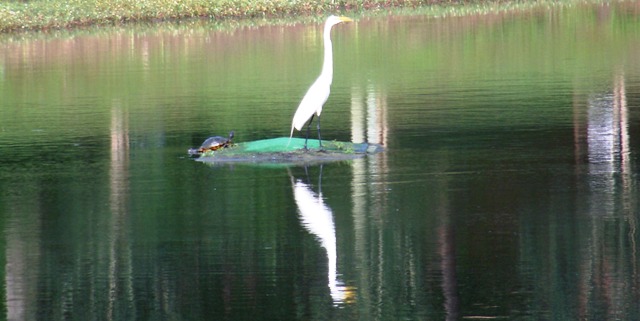
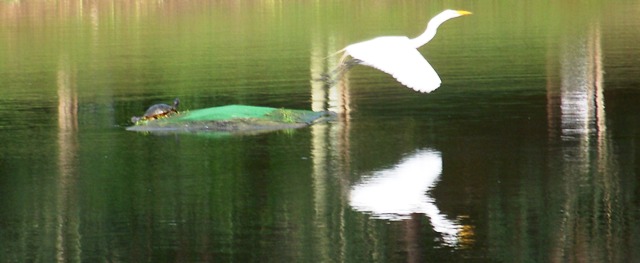
What is it we see when we look into the mirror of humanity, the oneness that is all of us? We recognize traits in others because we know hints of them in ourselves. In our oneness, we are mirrors for each other, reflecting the world to all.
Waverly bridge in spring 0413

There is a Sanskrit “great saying” or pronouncement from the Hindu Upanishads–Tat Tvam Asi–that is often translated as “you are that” or “that you are.”  Essentially, the idea is that each one of us is unique and our uniqueness is essential to the oneness of all existence.

Oneness never diminishes the individual but rather, each is part of the whole, occupying a unique space in a single moment of existence.  That is the gift of oneness, allowing us to mirror the world for one another. It is how we recognize ourselves.

If we celebrate our relationship to one another, our focus shifts to what connects us and not to what separates us. Imagine the possibilities in this 21st century. For the first time in the history of humanity, we have the technology to create global awareness one person at a time, the only way change is ever truly affected.

We live in a fractious and fearful world but our moment, our time is unique to us, just as it was for all who came before us. That seems to be the way of existence. Yet unlike previous generations, we are able to criss-cross the globe electronically, offering ourselves to relationships we would never know otherwise. Technology brings us closer to one another than we have ever been.
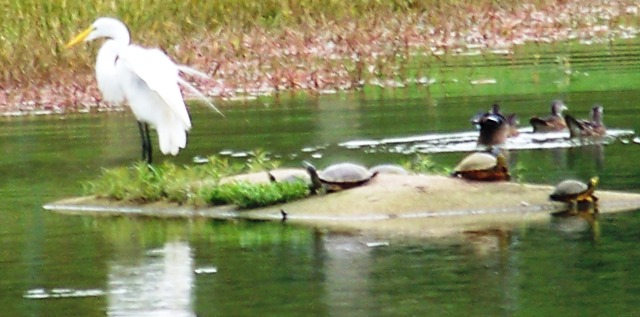
Co-existence on the Row 0713

It is not an opportunity that has come before, and perhaps it is not an opportunity that will come again. The world grows smaller as we grow closer to one another. “It is only by risking ourselves from one hour to another that we live at all” (William James). Such is existence.

Each moment is rife with infinite possibilities if we are aware, completely present to what is occurring, giving it our complete attention. In becoming more aware within ourselves, we let go of past ideals and future wishes to look into the mirror of what is, the present.

In the present, we recognize that we are always in relationship no matter where we are for we are always connected to life. That is our connection to oneness, our sharing of life with every pollinating bee, blade of grass, drop of water, and mountain peak. Everywhere we look, the world holds itself up to us.

The reflection of all that connects us is so much more than what separates us. If nothing else, such a look in the mirror that is the world broadens our perceptions for rather than being attached to only one way of being, we are presented with the life force that flows through all beings. It seems so worth the risk.

Bits and pieces of this revised post originally appeared as “The Mirror That is You.” 
The Laying Away of the Dark

Such a morning this has been, beginning in the promise of darkness, for rising before dawn is to witness the laying away of the dark for the light.

I sit meditation, as I do every morning; I have come to rely on this hour of silence. This morning is not a sitting of insight but of “monkey mind,” one thought tumbling on top of another. It is a busy stillness. When the timer goes off, I mutter something to the effect of “that was difficult—again.”

Yet, something nags so I sit a moment in review. Ah, yoga dropped in near the end of my sitting, specifically my Peggy Cappy Easy Yoga for Arthritis DVD. I have owned it for three years; so far, it has been mostly a good intention.
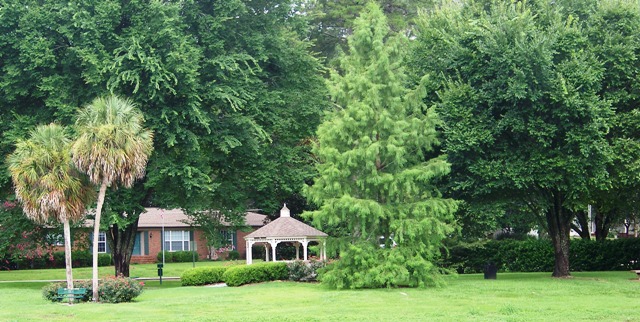
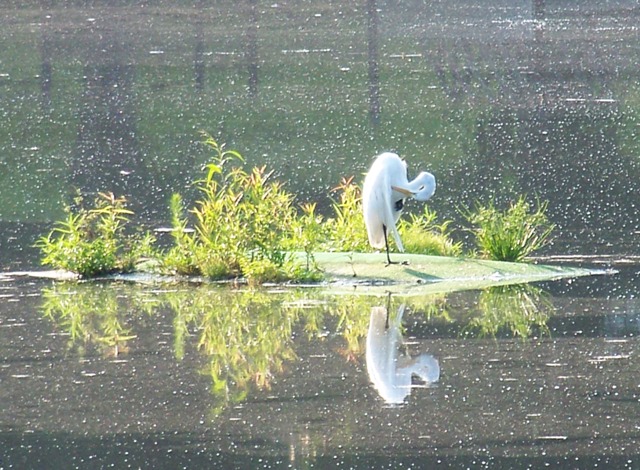
Waverly Preening 0813

The yoga DVD dropped in during a moment of open awareness meditation, meaning my focus was on neither emotion nor sensation but on pause, a true gap between thoughts, before the emotion returned.

For some time now I have been sitting with the feeling of bittersweet, for the sensations of loss and gratitude swirl just beyond me. In this particular morning, I am in search of its energy but eddies of distraction, proven pools of fear, bring me to the surface of my breath, entangled in old story lines.

Once again, I do not reach the pure energy at the core of bittersweet.  It has been like this for a while, this sitting or almost sitting with bittersweet. In open awareness, I sense the light of the day, and in drops the thought of the yoga DVD.

It is not a surprise for one of the effects of this last lupus flare is a significant reduction in my physical activity, in particular taking my beloved morning walk. It is still a possibility but it is not benefitting me, as it once did. My joints ache to stretch but not to pound the ground, no matter the distance. In fact, I have spent the last two days recovering from a stroll around Waverly Pond.

And just as the Waverly story line started up, my meditation timer went off. That is what I remember from my morning’s sitting.

She Who Must Not Be DisturbedThe day is now more light than dark but there is not yet a sunrise. Feline EmmaRose is sitting meditation in the bedroom doorway. She Who Must Not Be Disturbed knows I will remain in the bedroom until otherwise directed.

As I have rested for two days, there is no body rebellion this morning. The physical stillness of sitting meditation is always a physical boon, for in meditation the body is allowed to awaken gradually. The yoga DVD is next to the decade-old television set. There is nothing for it except to insert the disc.
Waverly Posing 0813

I am familiar with most of the yoga poses, and Peggy Cappy encourages individual adaptation, much like Pema Chodron suggests meditation position adaptation. Yet, foremost in my mind is to stop the yoga poses at the first sign of discomfort. The thought is reminiscent of my early days with meditation.

For the first time in three years, I participate in the entire yoga session. As with the first time I stayed sitting meditation, I do not note the length of time nor its passing.

As I look out my bedroom window, the sun is high in the sky, shimmering off the leaves of the willow. An aquamarine vine snakes its way along the lower limb of a Ponderosa pine, reaching for the willow.

I remember many mornings, distant now but not really that long ago, when morning meditation was hit and miss, anything but integral to beginning the day. Then, I was determined to make each day fit my plan, and each day began with a morning walk. I smile.

A familiar feeling of surrender washes over me, embraced with total acceptance. The darkness of loss gives way to gratitude for mornings such as these.

KMHuberImages
KMHuberImages

Transformation Requires Refraining

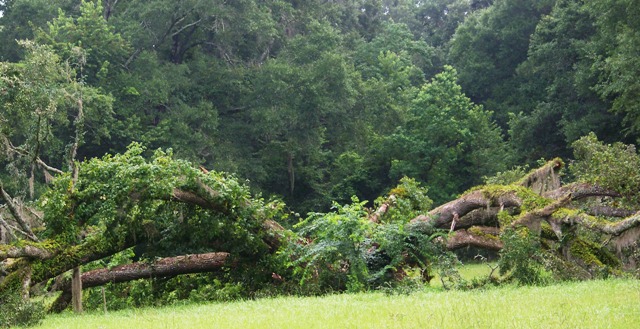
Tree sprawl 0713

Often, we get caught up in transforming our lives. We decide that we will no longer assume an old way of being or an old way of doing. In other words, whether it is New Year’s or not, we make a resolution not only to do better but to be a better person. Just like that.

What we discover is that letting go of a habit or a behavior requires a lot more than filling ourselves with resolve. Letting go is a lifelong practice for we revisit old habits, old behaviors–neuroses we once cherished–often, we recognize them immediately but sometimes, they are disguised as something new and possibly, beneficial.

 The three difficulties (or the three difficult practices) are:

1.   to recognize your neurosis as neurosis,
2. then not to do the habitual thing, but
to do something different to interrupt
the neurotic habit, and
3. to make this practice a way of life

(Pema Chödrön)

Recognizing what we no longer wish to do or be is usually obvious but recognizing all that it has meant to us–how it has disguised itself in order to be an integral part of our every day– is a lifelong practice of recognizing neurosis as neurosis.

For a while, just rising above the neurosis is reward enough. Yet, life is uneven and the rise of the unexpected often dissolves our resolve whether it lasted for minutes or months. Thankfully, life is impermanent, and we get lots of practice in letting go.

What we get to do each time we recognize that once again we have invited in a familiar neurosis is to accept that is exactly what we have done. That is the first step in letting go, accepting what is. Think of it as resolving to refrain rather than resolving to deny.

Refraining comes about spontaneously when you see how your neurotic action works. You may say to yourself, `It would still feel good; it still looks like it would be fun,’ but you refrain because you already know the chain reaction of misery that it sets off.

 (Pema Chödrön)

Even if we have begun to set off the chain reaction, we accept that we have and refrain from going any further. We set our resolve to refrain because we accept where we are. Refraining allows us to halt and not go where we have gone before and unhook from the neurosis.

Resolve serves us as long as it is to accept that life not only changes but masks itself in new faces and different viewpoints, allowing us to experience familiar habits, recognized behaviors, and old relationships through yet another perspective.

Transformation is not a matter of discarding but an accepting of all that we are and were. Such resolve is the genesis of transformation, a lifetime practice of experiencing, letting go, and when we are ready, refraining.

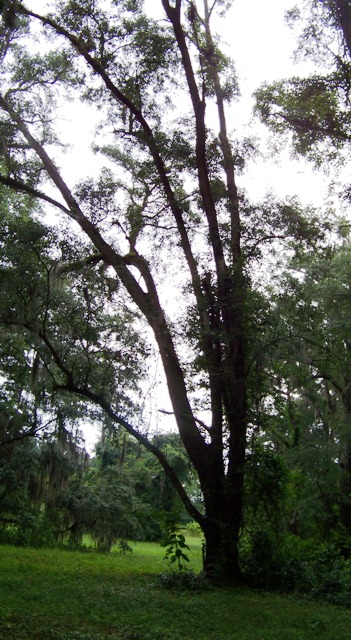
heart of tree 0713
KMHuberImages

When Dreams Speak Mindfully

Bunny Left side 072813In all the ways I have considered present moment awareness, I do not remember wondering whether or not my dreams were mindful. In fact, dream speak has never been on any kind of awareness meter for me, until recently.

“The moment is all you ever have and it is enough” is what I heard myself say in a dream. It brought me right into the present for immediately, I was awake. Certainly, I am familiar with that sentence as it has appeared in a number of blog posts and is the second sentence of my Twitter bio as well.

Thoughts may not be tangible but they are powerful, although like bubbles, they float to the surface and burst—every time. Maybe the closest we come to reality is being in the moment. While I am somewhat curious about what I was dreaming—I have never remembered–I am more curious about being jolted into mindfulness.

For a few months now, I have been sitting meditation through two flares, which has made the entire experience—physically and emotionally–different from any previous. Meditation helps me distinguish between qualifying the flares and immersing myself in them.

In other words, it is not a matter of how I am feeling but that I am feeling what is occurring in each moment. The idea that the moment is the only reality that I am experiencing opened up possibility after possibility for me, and eventually, found its way into my dreams.

There is a lojong slogan in meditation instruction that says, “regard all dharmas as dreams,” which Pema Chödrön explains as “regard all thoughts as being the same as a dream [for]…as we sit in meditation, we could begin to realize that we create everything, all our thoughts, with our mind” (Chödrön).
Bunny right side 072813
In meditation, rather than letting the thoughts trample all over me, I try to witness them for the transient dreams they are, first flaring and then, fleeing. If I do anything more than witness what is occurring, I attach to the thought, giving it life. This is when the “what ifs” and thus, the story, begin. When we attach to the drama of any thought, we have completely left the moment.

Pema Chödrön advises using the word “thinking” whenever we find ourselves attaching to a thought during meditation. As we utter the word in our mind, the story that once gave life to that thought vanishes. Immediately, we are present, as if awakening from a dream. With the thought gone, we return to a light emphasis on the breath and resume our role as witness.

As this exercise works so well for me during meditation, I use it post meditation as well. The practice is the same, including the breath. Regardless of what is occurring, no-thing is bigger than the moment; I find this particularly helpful in moments of physical and emotional discomfort.

“In our everyday lives, we are run around by these thoughts that we make so solid with our mind and our thinking. So when we say, ‘regard it all as a dream,’ we lead ourselves toward something that many people have discovered throughout the ages about the nature of reality: it’s not as solid as we think” (Chödrön).

More and more, I stay with what is occurring in the moment rather than going off with a thought. It is a shorter and more scenic trip. Also, impermanence seems more a friend than I ever thought possible.

KMHuberImages
KMHuberImages

All quotes are from How to Meditate: A Practical Guide to Making Friends With Your Mind by Pema Chödrön, Kindle version, May 2013.

Dear ?: A Peace Letter

July’s Bloggers for Peace Post is to write a letter for peace, which was a real challenge for me beginning with the salutation. The forpeace6question mark is preferable to a mere blank as there is an acknowledged mystery in the question mark as well as an implied unknown and perhaps uncertainty. Yet, as mindfulness or present moment awareness reminds me time and again, it is in this unknown and uncertain realm where the infinite possibilities lie.

Dear ?:

This is a letter to existence, the life force that runs through everything on the physical plane. Deliberately, I have settled for a punctuation mark rather than a name, although there are many from which to choose, but more and more, I am convinced that putting a label on anything only excludes.

Now that I am past the salutation, there is the body of the letter that contains my current thoughts on peace. Like existence, peace is ever undulating, for peace is not a destination or even a goal but rather, a way of being.

“Peace begins when expectation ends”

~ Sri Chinmoy~
Co-existence on the Row 0713

The onus is on us, where it always has been, yet the planet seems so much smaller now for we crisscross it on a daily basis through images and words on screens. It is reminiscent of when the world wrote letters, and the challenge still is to respond rather than to react. Pen and paper required more of us physically and may have delayed reaction time somewhat.

The ability to communicate instantaneously to almost anywhere in the world has brought us face to face with ourselves. Ideals, illusions, and even institutions have been shattered as we find ourselves in immediate relationship with so many voices from so many places. There are few gaps between thoughts.

Peace is not some sort of lofty ideal nor is it an illusion or an institution. Peace is not a finite but an infinite state of being. Peace is not a one size fits all but is unique to each one of us. The oneness of peace is the acceptance of all of us just as we are for then—and only then—have we removed expectation. The possibilities are infinite.

Peace on the Row 0713

As always, I am overtly optimistic, which is not to say that I am not aware of how taxed our planet’s resources are or how many species are either being pushed to the edge of their existence or are already extinct. I am only too aware that “the world is too much with us” to the point of making my head explode but then I remember:

Never doubt that a small group of thoughtful committed citizens can change the world; indeed, it’s the only thing that ever has

~Margaret Mead~

We begin from within, putting our own house in order from the inside out, which is a lifetime task. And that is how the world changes for we cannot give the world what we do not have within ourselves. If we are not at peace with ourselves, we are not in peaceful existence with the world.

It is no wonder that peace eludes us for we look everywhere except where it resides, within our own existence. It may seem more practical to fix ideals or institutions but change—impermanence–is the nature of all existence.

Discovering our own oneness is how we recognize our connection to all of existence. When we love ourselves completely and compassionately for the beings that we are, recognizing our faults and forgiving our mistakes, then our house is in order for we accept our own existence, unconditionally.

It is the task of a lifetime and always has been.

Yours in Impermanence,

KM Huber

Summer at Waverly 0713


Maybe Not Such a Mystery After All

Green Mic 0713“By chance, I encountered the lost lady. At that time I still believed in chance. A candle burned, and by the light of the flame I embarked upon the soul’s solitary adventure” (The Greening, p. 6, Margaret Coles).

I have always believed in chance, always loved the mystery as well as the possibility of it. Mystery and possibility wrap round each other easily, sometimes magically and other times, mystically. It is not surprising that I enjoyed Margaret Coles’ The Greening.

At the heart of The Greening is another, actual book, Revelations of Divine Love by 14th century anchoress Julian of Norwich, who took her name from the church that housed her for forty years, St. Julian’s.

Glen at Mic 0713

As an anchoress, Julian was “a woman who devoted her life to prayer for the community.… She had [sixteen] visions…in which she received a series of messages”; she spent the rest of her life writing about these visions (The Greening, p. 11). She had a lot of questions.

The fact of Julian is the heart of Coles’ novel, and while the plot does get away from Coles from time to time, my fascination with Julian’s belief in a loving God and a human life of impermanence kept me patient with the novel.

Yet again, I was reminded of the overlapping of Christianity, Taoism, and Buddhism, and that “the divisions between the faiths are pointless” (The Greening, p. 210).

The Buddha said, “I teach one thing and one thing only, suffering and the cessation of suffering.” In the Tao, “the ten thousand things rise and fall, while the Self watches their return” (Lao Tsu).  Julian’s famous words reveal the same: “‘all shall be well, and all shall be well, and all manner of things shall be well’” (The Greening, p. 65).

Just as the Buddha did not say that he teaches pain or the cessation of pain, just as the Tao accepts that moments rise and fall, so does Julian acknowledge that pain and pleasure are part and parcel of the human experience:  “he did not say, ‘you shall not be tempest-tossed, you shall not be work weary, you shall not be discomforted.’ But he said, ‘you shall not be overcome’” (The Greening,  p. 233).

What Coles captures in her novel is what has intrigued scholars for over 600 years about Julian of Norwich’s message: “’God tells you that you are beloved through all eternity and held safe in an embrace that will never let you go. But the love he offers requires us to turn our lives upside down’” (The Greening, p.87).

Julian’s vision of God is one of love, compassion, gratitude, and equanimity completely contrary to the turbulent times during which she lived. She understood that her revelations were in direct contrast to the very church that housed her. Yet, she wrote.
Path in Mic 0713

The “chance” of the lost lady’s writings surviving six centuries of territorial uprisings, sacking of monasteries and war after war seems slim but Julian’s revelations not only survived but after 1901 have remained in print and the subject of scholarly study.

That Margaret Coles chose Julian’s revelations as the heart of her novel is an intriguing concept. It is not a quick read but it is a thoughtful interweaving of Julian’s writing throughout the novel. The plot reveals the lives of two women–both find love and loss–but it is what they find in their individual quests that twists the story.

The plot strains at times and may be unnecessarily complicated but if one is looking for the greening of one’s soul, one will find one path to it here. For another, there is always Julian’s Revelations of Divine Love.

Here are some related links including Wikipedia as well as two other reviews.

Julian of Norwich

Cozy Little Book Journal

Dr. Teresa Meehan

A Note About Book Nook

About a month ago, I applied for membership in Book Nook, a community of bloggers that review books for Hay House Publishing. Hay House provides reviewers free copies in exchange for a review, favorable or unfavorable.

Hay House publishes an array of writers including Wayne Dyer, Anita Moorjani, Doreen Virtue, Julie Daniluk and, of course, its founder, Louise Hay. These writers’ subjects range from the Tao to angels to nutrition to near-death experiences.

Beyond indicating that Hay House has provided a free copy for us to review is the agreement that we will post the reviews on our blogs as well as on at least one commercial site.

Flare or Fog, It Matters Not

“Don’t pursue your passion. Be it” was Anita Moorjani’s response to a Hay House interviewer’s request for one bit of advice for everyone. The interview was months ago but the words stayed with me, like distant notes of a tune I almost recognized.

The words dropped in and out of my attention, showing up when I least suspected them. About ten days ago, the lupus flare I thought was on the wane gained new life, joined by the light of Sjogren’s syndrome.

It has been four years, maybe even five, since I have known the light of a Sjogren’s flare so it took me a while to recognize it. Sjogren’s attacks the body’s moisture glands–the exocrine system that produces tears and saliva—the primary symptoms are dry eyes, dry mouth, and fatigue. Even with the use of prescription medication, my salivary glands were destroyed years ago.

For me, Sjogren’s has always meant debilitating fatigue but in tandem with lupus, the brain fog and joint pain are in high evidence. I have to be careful not to give them too much credit because they will take it and more. They can seem insatiable.

Foliage Waverly 0713

For me, any kind of flare is a flash of light within a fog for the brighter the flare, the thicker the fog. I sense the energy of the flare but the fog is just as intense; for the past ten days, it has been flare and fog, quite fatiguing.

Still, Anita Moorjani’s words wandered in and out of my days for passion is the energy of this flaring duo. As the fog began to lift and the energy of the flare remained, the question emerged: what if I stop pursuing my passion? There is still sufficient fog but the question is clear enough to be considered.

I am not given to labeling passion, not in my later years anyway, but the gift of such flares is to be in life fully, letting one moment go for the next. Each moment presents its infinite possibilities, if we will allow it to reveal itself.

“To access the state of allowing, the only thing I had to do was be myself. I realize that all those years, all I ever had to do was be myself, without judgment or feeling that I was flawed” (Anita Moorjani, Dying to be Me).

KMHuberImages
KMHuberImages

Perhaps, being one’s passion is a mere matter of showing up for every moment mindfully, whether in fog or in flare matters not. It is a thought that enters my mind but I push it away in favor of sleep. It revisits me in my next morning’s meditation; I am tired and take a while before sitting meditation but I sit for my usual hour.

The morning is as it has been for over two weeks–overcast, humid, and rain seems imminent–but as my morning meditation ends, there is not yet rain and as often happens, I have more energy after meditation.

I decide to go in search of Lake Miccosukee, something that has crossed my mind from time to time but the moment never seemed to suit. The morning is still early, hazy with humidity, and I am a bit foggy myself so we are a perfect fit.

Driving down canopy roads of Live Oaks, crape myrtles bloom beneath the oak boughs as does the delicate mimosa. Many consider the mimosa a weed for it grows quickly anywhere, offering feathery blossoms in a fan like wave. I admire the mimosa’s tenacity to bloom, to return time and again, only to be chopped down. Nature is perpetually passionate.

Arriving at Lake Miccosukee, I have the boat dock all to myself for a moment, unbelievably good fortune and an omen for the rest of my day. Miccosukee is a prairie lake. Sometimes, it’s a prairie and other times it’s a lake, too, but always aquatic plants are abundant.

Prairie Lake 0713

I have grown used to lakes controlled by sinkholes, coming or going, either way works. In this moment, Lake Miccosukee is a floating prairie, and it occurs to me that here is yet another version of the island of vegetation from The Life of Pi. Imagine that.

I am already tired but it has been another marvelous hour. Would that all mornings were just like this one but if they were, this one would not be what it was, its own. I am learning the practice of being one’s passion, allowing the day to unfold, be it in flare or fog. It matters not.

“When coming out of sitting, don’t think that you’re coming out of meditation, but that you are only changing postures. If you reflect in this way, you will have peace. Wherever you are, you will have this attitude of practice with you constantly. You will have a steady awareness within yourself. The heart of the path is quite easy. There’s no need to explain anything at length. Let go of like and dislike and let things be. That’s all that I do in my own practice.

~Ajahn Chah~ 

Again, thanks for all of your warm wishes and kind words as I sit within the flare of this fog. My plan is to post weekly, whether it is a Sunday Something or a Thursday Tidbit but I am letting nature be my guide.

Sitting With the Wolf in Stillness

Every morning, I spend an hour in meditation followed by an hour that includes exercise, shower, and breakfast preparation. It is this mind-body connection that begins my day. While I will revisit physical exercise and food preparation, no day opens without meditation.

Empty yourself of everything. Let the mind become still. The ten thousand things rise and fall, while the Self watches their return. They grow and flourish and then Return to the Source. Returning to the Source is stillness, which is the Way of Nature.”
~ Lao Tsu ~
Tao Te Ching

During my recent lupus flare, it was meditation that allowed me to empty and renew myself for the rise and fall of the ten thousand things. It was meditation that allowed me to explore the energy underlying every form of discomfort, the internal investigation as Devaji refers to it.

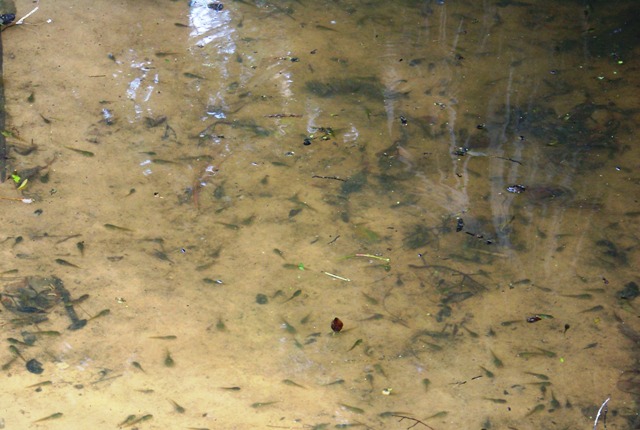
Tadpoles Waverly 0613

When there is internal investigation as opposed to following the external movement,
it is possible to recognize that every form of
discomfort, every problem that is experienced, is happening inside of you.
If you do not have a problem inside, you do not have a problem. The mind will say that it is due to something out there, but where you experience the problem is inside
.”
~Devaji~

It is a familiar pattern of mine this looking to the outside for what may only be discovered on the inside. I have done it for almost all of my life but this past year of daily meditation has been a discovery of stillness, which is not to say the mind is ever quiet.

In meditation, which many teachers referred to as “taming of the mind,” there is no effort to reshape or redefine any of our thoughts. In meditation, we observe our thoughts, allowing them to bubble up and away from us without interference, without creating yet another thought.

Rather, we go into the stillness, to the energy producing our thoughts. Always, in meditation there is “light emphasis” on the breath (Chögyam Trungpa Rinpoche) to sustain us as we sit in the stillness of our internal investigation, emptying ourselves.

As I understand mindfulness, it is bringing this technique to our day-to-day lives as they play out among the ten thousand things. For me, that means letting one storyline after another blow right past for I am interested in the energy supporting those thoughts. I am seeking the source.

Tadpole Free 0613

In this lupus flare, rather than pursuing my usual cause-effect-solution approach—another way of describing this is replacing one storyline with another, albeit a new and untried solution—I sought the source, the stillness, with my breath.

Stillness or “nowness” is placing our awareness on our breath as the thoughts bubble up. The breath is no more manipulated than are the thoughts. The more the breath and mind are observed, the more there is just being, no judgment, just stillness.

Internally investigating my lupus flare allowed me to sit in the energy of the ten thousand things of which my life is just one.  Rather than trying to starve or manipulate the lupus–the wolf–that is also of the ten thousand things, I just sat down with it in relationship.

Flares are never without their gifts nor is it surprising that those flares that burn brightest are always the most generous. This time, the gift of sitting meditation with the wolf has opened the door to a lifetime exploration of the rise and fall of the ten thousand things from the inside out.

Thanks to all of you for your generosity and kindness during this recent flare.

On-Again, Off-Again Buddhism

Waiting 0613Dukkha is the first of the Four Noble Truths in Buddhism and is usually translated as suffering, a concept that has always appealed to me about as much as the phrase falling apart, hence my on-again, off-again nearly thirty-year relationship with Buddhism.

Yet, it is to Buddhism that I always return, rather like everywhere I go there I am for as the Buddha said, “I teach only one thing: suffering and the cessation of suffering” (Pema Chödrön, How to Meditate: A Practical Guide).

While dukkha is the word the Buddha is said to have used for suffering, dukkha has more than one level. The first level concerns mostly our physical bodies and ultimately the fact that we die. This kind of suffering involves “outer discomforts” and is considered ordinary.

The second level of suffering pertains more to our stress/anxiety in accepting that nothing stays the same, no matter how hard we might try to make it so. This is the “dukkha produced by change.”
Taking Off 0613

The third level of suffering is often referred to as the “dukkha of conditioned states,” translated as “dissatisfaction” or “never satisfied.” Pema Chödrön explains:

“Dukkha is kept alive by being continually dissatisfied with the reality of the human condition, which means being continually dissatisfied with the fact that pleasant and unpleasant situations are part and parcel of life.”

Over the decades, it has actually become apparent that if I accept each moment as it occurs— the dukkha of conditioned states—the first two levels of suffering fade away, which is not to say accepting impermanence is easy.

Bloom of Peace 0613
KMHuberImages

For any level of dukkha, meditation helps us strip away our storylines, our drama from any pain or emotion we are feeling. Meditation takes us into the energy of our suffering so whether or not we can do anything about the circumstances, we can decide whether or not to suffer.

If we accept that we fall apart and come together all through our lives, we begin to practice compassion, first with ourselves and later with all those circumstances beyond our control. Because we are human, we are not always compassionate but every time, we have the choice to return to compassion. It is our inner version of war and peace.

In a comment on my initial post on falling apart, Ann E. Michael was kind enough to remind me of these lines from “The Second Coming,” Yeats’ often quoted poem on the aftermath of World War I:

“Things fall apart; the centre cannot hold;
Mere anarchy is loosed upon the world,
The blood-dimmed tide is loosed, and everywhere
The ceremony of innocence is drowned….”
~William Butler Yeats~

Every time I read Yeats or other World War I poets, I am reminded WWI was the war to end all wars, as if any war ever could. When we are at war with ourselves, we must remember that having compassion with ourselves is where peace begins for everyone.

All three levels of dukkha wend their way through our lives: physical pain, decay, and death claim each one; life will not stay the same for anyone; the constant impermanence of life is the human condition.

The Buddha taught, “I teach only one thing: suffering and the cessation of suffering.” Perhaps I always return to Buddhism because it is neither pessimistic nor optimistic but rather, things fall apart and come together again. Dukkha really is up to me.

In a Free Fall Flare

My regular Thursday and Sunday posts have been rather irregular for I remain in a free fall flare or the state of still falling apart, which is not to say it is not enlightening for it is.

As a dear friend pointed out, a flare is a flash of light, and this recent lupus flare is full of light for me. It is not so much a matter of physical or emotional discomfort but more a matter of “nowness” as Chögyam Trungpa Rinpoche calls it:

“The way to relax, or rest the mind in nowness, is through the practice of meditation.

“In meditation you take an unbiased approach.

You let things be as they are, without judgment, and in that way you yourself learn to be.”
Chögyam Trungpa Rinpoche

nowness 0513

I, myself, learning to be is what this flare feels like, if not quite a true free fall at least in constant motion. Sometimes, the flare feels like a game of pinball, silver-steeled balls bumping up against this teaching only to zip over to that tradition and back up to yet another healing alternative–all disappearing only to re-emerge.

No doubt that sounds rather scattered and perhaps unpleasant but it does not feel that way. Frankly, it feels like heightened awareness for unlike the game of pinball, I am allowed to sit in the energy of each moment and explore it through the practice of meditation.

“Sitting meditation opens us to each and every moment of our life. Each moment is totally unique and unknown….

“This very moment, free of conceptual overlay, is completely unique. It is absolutely unknown.

“We’ve never experienced this very moment before, and the next moment will not be the same as the one we are in now.

“Meditation teaches us how to relate to life directly, so that we can truly experience the present moment, free from conceptual overlay.”
(Pema Chödrön, How to Meditate: A Practical Guide)

Eyes Open 0513

In the eyes open meditation that Pema Chödrön is describing, we separate the storyline or thoughts–the conceptual overlay– from the energy of the emotion or sensation we are feeling. In essence, we are open to it.

I am new to the eyes open meditation that Pema Chödrön advocates and first tried it during the online retreat offered by the Omega Institute. In eyes open meditation, the gaze is downward but the head is erect and one is constantly aware of what is occurring in the present moment.

“Open the eyes, because it furthers this idea of wakefulness. We are not meditating in hopes of going further into sleep, so to speak.

“We are not internalizing. This isn’t a transcendental type of meditation where you’re trying to go to special states of consciousness.

“Rather, we meditate to become completely open to life— and to all the qualities of life or anything that might come along”
(Pema Chödrön, How to Medicate: A Practical Guide).

Relating to life directly 0513

Meditating with my eyes open was not as difficult as I thought it might be, even the first time, but then, I have the advantage of being in a flare, of being in a flash of light. In a flare, it is obvious that the gift of any moment of discomfort is present moment awareness.

Beyond the flare, practicing this wakeful kind of meditation at the start of my day prepares me for the post-meditation moments. Sitting meditation isn’t always comfortable and neither is life but meditation helps us sit down into the shifting emotional energy that flows through our daily lives.

We learn to go deep, beneath the conceptual overlay or storyline, to the energy of our emotions, of our pain. When we sit within the energy of our pain, we see into the state of us. There, we begin to heal—to suffer less—for we accept the alternating pain and pleasure that is the nature of our human condition, part and parcel. We, ourselves, learn to be.

Thank you for reading my blog. It matters a great deal to me that you do.