If you have not read part one, no worries. It was long ago and far away. There is no longer a flood outside my door but the leaks persist, now inside rather than outside.
I am a privileged, old white woman who is not without a bucket and an extra large, Halloween-orange bowl for when the drips fan out. Our building boiler is many decades old like the people it serves (and the plumbers it baffles).
A steady drip of life, water, and in these last two-and-a-half years, I have known oceans. More of the mind, yes, but also an actual glimpse of the ebb and flow of life and how it might end or not.
Cancer takes you there.
Mine was endometrial, grade one, stage one B. Early, early stages, quite common for a 73-year-old woman; the protocol is radical hysterectomy, which I had. I was in the hospital less than 24 hours. The pathology report revealed four remaining cells had invaded my lymphatic/vascular system. Three direct radiation treatments later and no more cancer. I continue to have checkups every three months.
That’s how endometrial cancer was for me, not painful but persistent and eventually eradicated. I was going to leave my bout with cancer at that until I heard 49-year-old poet laureate Andrea Gibson read their poem, “Love Letter From the Afterlife.” The reading was to Gibson’s wife, Megan Falley, during the last days of Gibson’s life. Very soon after, Andrea Gibson died of ovarian cancer, stage four.
You may or may not know (I didn’t) that the terms ovarian and endometrial cancer are sometimes used interchangeably. Gibson wasn’t the right grade/stage for even a fair prognosis much less a good one. You either are or not, with cancer. It’s not much of a spectrum.
“Why did no one tell us that to die is to be reincarnated in those we love while those are still alive.”
I have been waiting for that sentence all my life. Not that I knew it, of course. That kind of clarity just arrives, and the world changes. The life force that infuses this dimension is a 49-year-old poet writing a love letter to the world as they fade from life.
I have not the clarity of a poet or the bursting, immense love of Andrea Gibson but in this past year I came close to slipping the veil.
Six weeks later after my radical hysterectomy and before the radiation treatments, I almost died of urosepsis, a blood infection. I ran fevers as high as 103 and my heart raced to keep pace with a kind of Russian roulette playing out in the hunt for just the right antibodies, as my kidneys began to shut down.
I have never known such presence as machines beeped, doors opened and closed, food plates came and left undisturbed. I was immersed in life without clinging to it, as aware of pain as of joy, afloat in an ocean of love, as wave after wave of clarity buoyed me in timelessness.
I was so grateful for having had a chance to live—nothing seemed more precious—until the depth of my meditative state lightened with the swarm of antibodies and reality broke through, bright and cold on the afternoon of the fourth day. After a discussion with the hospitalist, I went home.
During those three and a half days I sensed I would live. It wasn’t a given; it was more like no time left to lose. To use Pema Chodron’s term, stop practicing “idiot” compassion, no more tilting at windmills, build boundaries firm. Meet people as they are and be compassionate but know that sometimes walking away or saying no is the kindest thing that can be done.
I did not feel easy days were ahead nor have they been but in my ocean travels, I sailed true North.
It was just Sunday noon and the excited voices outside my apartment followed by a sharp rap on each door meant emergency. Out of dread rather than curiosity, I opened my door.
Without taking a step into the hallway, I leaned left and looked to the sitting area across from the elevator where the two mahogany, oversized flower-cushioned chairs sat on either side of the matching, double-drawered buffet —in at least two inches of water.
To me, the set of furniture seems bespoke but its origin is murky in this 50+ year old apartment building for retirees. Many a resident, upon their death, donates furniture and belongings to what is known as the community. Thus, there are other equally lovely pieces—polished every week by the same woman for over 40 years—on each of the 12 floors.
I shut the door.
I needed to take a shower, ASAP, after I tucked what were once luxuriously soft towels, now faded gray and ecru but still absorbent, under my apartment door, with washcloths stuffed in the sides of the threshold.
Taking a shower may not seem intuitive in the time of an imminent flood but I had no idea how long we might be without water for we have had pipes burst before, and I knew the drill. This water event was particularly bad. Not only did it flood the second floor but the lobby and offices below, as “if the heavens had opened” is how it was relayed to me.
Nearly every floor has had its flood and subsequent fire alarm events.
About six weeks ago, the fire alarm went off and this time it was not a resident with a grease or oven fire but an alarm system too damaged from all the floods. It took 2 1/2 hours to finally figure out how to turn off the alarm system and keep it off—for that day.
No one evacuates for fire alarms or floods nor do the firemen come. We all know the drill. Mostly, these things happen in the midnight hour or some equally inconvenient time. Any alarm event after 3 AM and I make myself breakfast, spending the day with less light, more dark in a world of wet wires.
It’s an issue with the HVAC system but the maintenance team is optimistic because finally there are resources to replace the plumbing and electrical systems that have lasted five decades, almost.
I’m optimistic, too, for I love this old concrete and stucco building with spacious lobby, dining and living rooms—big enough for a baby grand piano and full pool table—in what is called Midtown, one of the oldest parts of Tallahassee.
Surrounded by live oaks and the occasional maple is our flower garden complete with crêpe myrtle, lemon, orange, and fig trees. Many garden plants have been left by former residents including flower bulbs from residents’ parents and grandparents. There is even a small fountain.
It’s true we are a community that loves its past be it bespoke furniture or bulbs of the amaryllis. It’s life in fire and flood.
The building was designed for retirees and so it has remained. It’s like hotel living that was a common in the first part of the 20th century. And every apartment is a room with a view. It’s a style of living now gone, only the furniture and structure last.
Sometimes a flood, sometimes a fire alarm.
That was how my time of rest began, that Sunday some seven months ago now. I felt so fortunate that day as the flood came within six inches of my door and no more, hence the gratitude and the shared optimism with the maintenance man, who would later get soaked as if he were a winning football coach. Three other apartments were flooded that Sunday and for the next 10 days, the drying fans roared 24/7.
For other reasons, he and I have seen each other as the replacement of the plumbing and electrical systems began in January and the work will continue throughout the year, daily it seems.
We refer to it as “the construction,” which it is and isn’t, but it’s the term the new administrator uses. It even has its own bulletin board and every week there is a schedule of what should happen and sometimes it does but to completely replace the lifelines of an apartment building—its plumbing and electrical systems—with residents in situ is not easy for workman or resident.
That Sunday flood was our final one but far from our last alarm.
Alan Watts tells a story about translating Zen texts into English and the selecting of those books. He consulted a Zen master who found the translation idea pretty preposterous, particularly the selection of certain books. After all, any and every book is Zen, be it Alice in Wonderland, the Bible, or a dictionary for “the sound of rain needs no translation” is what the Zen master had to say on the matter.
There is no separating Zen from being alive.
The first time I came across the Alan Watts story was some years ago, when I was on my own quest for anything Zen, wanting to capture and analyze Zen so I could keep it as a constant companion, completely oblivious to the fact that everywhere I went, there I was, in the eternal presence of Zen.
For everyone there is a way but there is no one way for everyone. I get that now.
But then, I explored quotations and Zen memes to suit any occasion, read books about Zen, and listened in rapt attention to Pema Chodron offer Zen just as it is as. And from her lips to my ears, the sound of rain needed no translation but only when she whispered it.
So, still translating with no Zen of my own or so I thought.
It may have been in the fall or spring. In Florida it is the color of the leaves that distinguishes those two seasons, so similar in temperature. It was raining with a constancy and clarity I have come to know of early morning rain, steel rod straight without wind.
It was just an hour or so into the light of day, and I was in the middle of monkey mind meditation. I have long forgot the pressing issue of that day—so important it was—or it may have been the frustration of yet another monkey mind day of meditation. Agitation has such an array of possibilities.
And then I was one with the rain. Just like that.
I don’t know when it started. All I know is that once I realized what was happening, it stopped, and I was back watching the rain with an awareness, an evenness of mind, that would stay with me for at least a few hours. I was completely present to each task but soon my mind started wandering and trying to explain that which does not translate.
I have had this happen to me three times in the years I have been meditating and it is much the same each time. I am aware of returning but not where I have been—that is a complete blank. And for the next few hours in the day, there is a heightened awareness, which I do my best to make stay, but I think too much about what was and not what is.
The moment is all I have and I don’t let it be enough.
Twice this meditative state has involved nature and once it involved what I can only describe as a feeling of knowing I was going somewhere. I was particularly tired that morning and quite low on energy yet I remember thinking “Oh, this will be good.”
And it was.
It was the longest time I have been “gone”—two to three hours—the heightened sense of awareness stayed with me for some days afterward and has never completely left. I turn to it when I find myself moving away from the moment I have. There is nothing back there and everything right here.
I questioned whether I had simply fallen asleep and maybe I did. It was some time before I told a friend, and she said Eckhardt Tolle had described a very similar experience and wondered the same thing about falling asleep. We always know when a moment changes us. And that is enough. The sound of the rain needs no translation.
There is no way to analyze or translate what is beyond our knowledge of the physical dimension. And considering human limitations, not the least of which is our penchant for labels, I have no doubt we deny what we know to be true. We have words but they are not always what they once were.
Consider the Snark in Lewis Carroll’s “The Hunting of the Snark.” The poem might be about the unanswerable theological or philosophical questions or simply nonsense, without meaning at all. (However, the idea makes a very interesting episode of Inspector Lewis [Series 5, Episode 1]).
In the poem, there are nine tradesmen and one beaver who go in search of the Snark—and if this reminds you of a snipe hunt—when they find the Snark, it “gently and softly vanish[es] away [to] never be met with again.” And to this end, the episode of Inspector Lewis offers an interesting twist.
Detective Constable Hathaway tells an anecdote from the late 1870s about a young girl who writes to Carroll, wanting to know why he didn’t explain the Snark to which Carroll responds, “Are you able to explain things you can’t yourself understand?” It works well with the script but I can find no tell of such tale.
Reverend Dodgson, an early Carroll biographer, writes in 1876 of a young girl who loves the poem so much that she recites it at will, whether or not she has an appreciative audience. Her favorite venue, it seems, was the carriage ride. She knew a captive audience when she had one.
Lewis Carroll, writing to an American friend about the Snark says “I’m very much afraid I didn’t mean anything but nonsense. Still, you know, words mean more than we mean to express when we use them” (The Life and Letters of Lewis Carroll, Stuart Dodgson Collingwood, 1899).
The last line of the poem is “for the Snark was a boojum, you see,” an animal of the imagination and in 1922, Godfrey Sykes would name the Boojum tree found in the Baja Peninsula for it is like no other. Even in physics, there is a geometric pattern on the surface of helium known as a boojum. At the moment, there is a brewing company in the Carolinas with the name of Boojum Brewing.
It seems to me that once again, everywhere we go, there we are, in the eternal present defying definition. All we have is awareness, preferably heightened.
And somewhat tangentially related is a “what would you choose” scenario of two choices: a.) $1 million in cash, free of any taxation burden; b.) returning to my 40s, knowing everything I know now, as I approach 70.
Even if this were a multiple guess question my answer would be immediate and the same. (In full disclosure, forced into either or, I chose returning to my 40s but life is neither this nor that. It is on its very good days, a Boojum).
Money has never been an attraction, much to the chagrin of those who love me. I am not good with money because I just don’t care about having more than enough to meet my needs, and only this has been true in the last act of my life. For most of it, I followed the magical thinking form of finance, of which the worry was harder than maintaining a monthly spreadsheet.
And I have to admit that I enjoyed my 40s but mostly, I became comfortable with each decade as it revealed itself, a series of leit motifs in the overarching experience of life, not that revelation is always pleasant. Each decade has required adjustment but I have no wish to return to any time, even the past nanosecond. Been there, experienced that.
Only the eternal present offers what is new under the sun.
In the moment before any story there is an image and then the translation of that thought into words, directing the actions of our lives. Of course, this is not always a good thing nor even a bad thing but it is how we roll.
In her iconic essay, “Why I Write” (NYT December 1976), Joan Didion says “I write entirely to find out what I’m thinking.” The essay title, Didion acknowledges right away, is borrowed from James Orwell, and that’s how it is with all words—borrowed—from a common culture to communicate, sometimes elegantly and other times, not so much.
I cannot say I had Joan Didion in mind when I received Celeste’s text about throw pillows. Rather, sex was on my mind as I was trying to write a scene about a health and sexuality podcast in a small town buried by time (think Girl Boner Radio meets Brigadoon).
“You really need some color on your loveseat and throw pillows look great. Which ones do you like?” 😊
“I’m not big on throw pillows. I don’t like them.” I believe this will suffice but like sex in a small town, the story becomes much more than any actual act.
I then receive three images of throw pillows in different shapes: a green and white check square, a green and orange circle, an oblong red and green Scottish plaid. I don’t like throw pillows; have never owned any. I don’t think I ever had a thought about a throw pillow until I met Celeste, truly a good soul.
My use of the term, “good soul,” is not complimentary but refers to people who are “just trying to help,” meaning they help their way and only their way, as if they were born with a vision better than the rest of us mere mortals. Dorothy Parker, elegant as ever, described good souls this way:
“There is simply no keeping them down–back they come, with their little gifts, and their little words of advice, and their little endeavors to be of service, always anxious for more.”
All of this is to say that I would soon find myself in H-E double toothpicks yet again.
Part II: The Curmudgeon and the Good Soul
Celeste is determined to make me like other people, believing that deep in my soul it is what I desperately seek. In other words, mine is the façade of a curmudgeon desiring to fit finely into another fold. Thankfully, every time I’ve attempted to be like everyone else, I found myself instead.
She and I would never have met if it were not for my recent relocation to an efficiency apartment of 17 ½’ x 12 ½’ with half galley kitchen (including a granite countertop just big enough for a small microwave) and bathroom. These measurements are important, dear reader, and not extraneous text.
Celeste is the daughter-in-law of a former neighbor, my dear Sibyl. As is befitting her name, Sibyl is wise and has seen almost all of the 20th century during her 93 years. Sibyl loves Celeste deeply but she also knows her as the kind of person who loves a cause and one who “will take over if you let her.”
And so it was that Celeste was looking for household items—”just about anything, really”—for some migrant families who moved into our area of the Florida Panhandle. After asking me, Sibyl sent her along. In truth, I was delighted!
It was less than 36 hours before I would move, and I still had more “stuff” than I knew what to do with and although I would not admit it, I was increasingly hampered by both spinal cord and autoimmune disease. I don’t know why I thought I could be anything more than the person who wrote the check for the move.
So, it wasn’t as if I could just box up/bag up items and take them to Goodwill or any other donation center. Literally, I did not have the physical wherewithal. Also, I don’t believe that Goodwill or any agency taking donations are dumping grounds for anything that isn’t dust.
In hindsight, I cannot imagine a poorer plan for moving household but hindsight is like that, a pair of eyes I rarely seek, perhaps at my own peril. What might have been is not the best view of the past so meh, I say.
Enter my good soul, Celeste, surveying my mismatched wares in size and color: plates and glassware, flatware, and utensils; towels, a yellow fitted sheet, a green sheet, a brown mustard colored pillowcase; knickknacks of absolutely no worth (or meaning to me) stored in bins for eleven years. Yet, Celeste seemed to find good in all but very little and that we shoved into black plastic bags for flinging into the dumpster. It was a hard day’s work.
Without Celeste at this juncture in the move, both my wallet and my body would be even worse for wear. I was and remain grateful, although that may not always be evident.
When there was less than 12 hours left, I had overworked my body into such an inflammatory state that my tissues were leaking freely and every joint was supersized while my moisture glands were as dry as the Sahara. Chronic illness is nothing if not contradictory.
I had been eating nitrate and nitrite free turkey hotdogs stuffed into quinoa tortillas with vegan cheese and a bit of spinach for the last 10 days. I will die a comfort food eater always with one eye to the healthy. Oh, and apples, always lots of apples and blueberries.
And that is how Celeste found me that final day, sitting in the middle of my living room floor facing a wall of filled boxes, shoving food fast. We had discussed my new efficiency apartment and she had mentioned a degree in design. Yes, I encouraged her and once again, I was ever grateful.
Patiently, she explained the floor plan of my new efficiency apartment was not what it seemed so she drew, to scale, a floor plan five feet shorter in length, which meant my loveseat would not fit.
With most of my food swallowed, I reply, “I guess I didn’t mention that I was actually in an apartment similar to the one I’ll be renting. We measured it and my 12-foot tape measure ran out with about five feet to go.” But such is not the mind of a good soul who knows all.
She is unmoved and only has eyes for her floor plan. “You really can’t tell about these floor plans,” she says and shakes her head. “See this closet? More than likely they are including it in the 17 feet.”
“But I was there. In the room. With my tape measure. With five feet to the closet door.”
More head shaking on her part and then she looks directly into my eyes and says what I have been thinking but have been unable to consider, “You won’t have room for the loveseat.”
I am not in love with the loveseat and originally considered selling it but I am now down to less than 10 hours before the movers arrive and bereft of bandwidth for Facebook Marketplace, as lucrative as it proved to be. Even Celeste’s church will not help.
For reasons I will never understand, I waste another two hours trying to convince Celeste she is wrong but methodically and calmly, she continues to explain that closets are hidden in floor plans. And the longer we go on, she becomes convinced the bathroom may also be included. “I will be shocked,” she says, “if that room is longer than 12 feet.”
Moving day proves me (and my floor plan) right and her wrong. I’m so angry about the added stress, the lost sleep and the unflappability that is Celeste so I wait a day before I text her: “It’s 17 1/2′.”
We go text silent for a week.
(Paulie Jenkins Photo)
Part III Only Her Kind of Love to Give
And now, dear reader, we return to the throw pillow texts or from whence this post began.
“To be clear, I don’t want throw pillows.” I think about adding 🙏 but I think better of it.
“OK. Sibyl and I would like to gift you these pillows. It’s really uncomfortable sitting on your loveseat and throw pillows would help.” 😊
I am reminded of a saying about people having only their kind of love to give. In Celeste’s case, it includes using my friendship with Sibyl. There really is no keeping a good soul down.
“Well, buy them, then! I certainly can’t have that!!? 🙄 By now, I have stopped writing the sex-in-a-small town podcast scene. Sexuality cannot hold a candle to a throw pillow in the hands of a good soul. I wish it were not so. But before Celeste can respond, I text:
“When you are not here, I’ll throw them in the closet. I don’t like throw pillows and I won’t make myself look at them.” In a room of 17′, EVERYTHING is in view, including a fleck from a taco shell. And yes, I’m being a bit childish. 😬
“But you have so little space!”
“Exactly.”
We go text silent for the day but I wake up to:
“Good morning! I’m wondering how you feel about the throw pillows today.” 😊
“Same as yesterday! But you already bought them so????” 😣 Ah, perhaps she did not purchase the pillows. I am reminded of Leonard Cohen’s “there is a crack in everything; it’s how the light gets in.”
“Who doesn’t like throw pillows?” 🤔
“I don’t. I told you I don’t. I’m not like other people.”
“But this means Sibyl and I will have to bring our own throw pillows when we come to visit.” 😕
As much as I love Sibyl I’m not living with throw pillows, which I suspect the prophetess has known all along. I offer her good soul daughter-in-law an out:
“It seems to me that most of our visits will take place in Sibyl’s apartment.” 😊
“That’s a good point.” 😊
There is some silence before Celeste texts:
“Sibyl would be really upset, I mean really upset, if she knew about this exchange.” 😳
“I have no intention of telling her.” I know I won’t have to because Celeste will, and Sibyl knows (and loves) both of us, who we are and as we are.
There have been no visits to either apartment but Sibyl and I converse on the phone regularly, as we have done for all the years of our friendship—we’re phone friends—she in her rocker with her throw pillow and I on my loveseat in restorative recline.
Into a forest darkly—the act of moving household after 11 years—making one’s way through leaving and arriving, often simultaneously, with lots of bumps, bruises, and breakage at both a physical and fiscal cost. As the physical toll makes itself known in the days and months to come, the fiscal total is immediately clear, just when a bit of obscurity would go a long way.
It is a forest dark indeed.
Moving undoes daily life, which is its purpose, leaving one life for another and in-between are boxes, which are always in short supply no matter how many are ordered, borrowed, begged. Boxes become the bitcoin of the moment.
And while recycle and up cycle are the catch words of living responsibly, not everyone wants what you have to give but the best of your friends will take it as you sort pans, Christmas bulbs, and shampoo into their respective boxes, hopefully.
Those same best friends ignore your babbling and just tend to what needs to be done. Later, they brush aside your inept attempts to thank them for being the wonderful people they are. However, they warn, “Don’t do it again.” And I won’t. I am too old to walk this forest again.
I have moved quite a bit in my life, more as a renter than as a homeowner, with much the same furniture and usually books in the hundreds, sometimes the high hundreds but this move is different, the last I make on my terms. The next is nursing home or death, and I prefer the latter. On my wheel of fortune there is no assisted living.
I keep what I love deeply and only that. In books that amounts to 33, mostly nonfiction; in furniture, an antique, mahogany bedroom set of my childhood from Aunt Mary and an oak rocker from Aunt Susie, which is the one item of a temporary nature. Someday, it will reside with my brother.
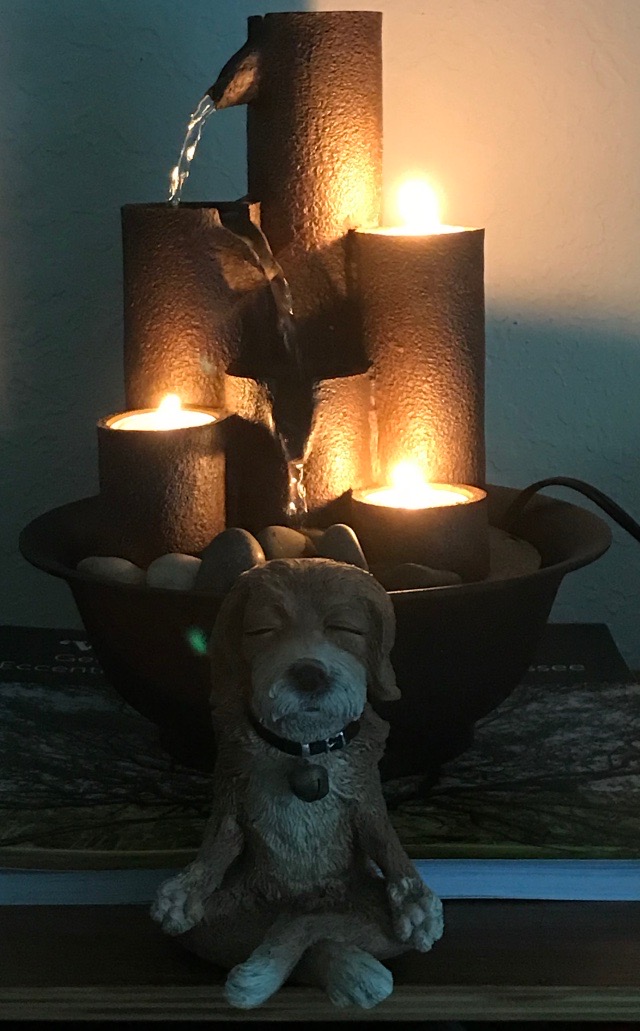
For everyday living, there’s a brown leather love seat and two black mesh filing cabinets that sit below each end of an oak door painted black years ago. Atop are the books, the fountain, yoga cats, pinecones, and meditating dog. I chose carefully and thoughtfully, keeping my eye on the prize, life on the other side of the move.
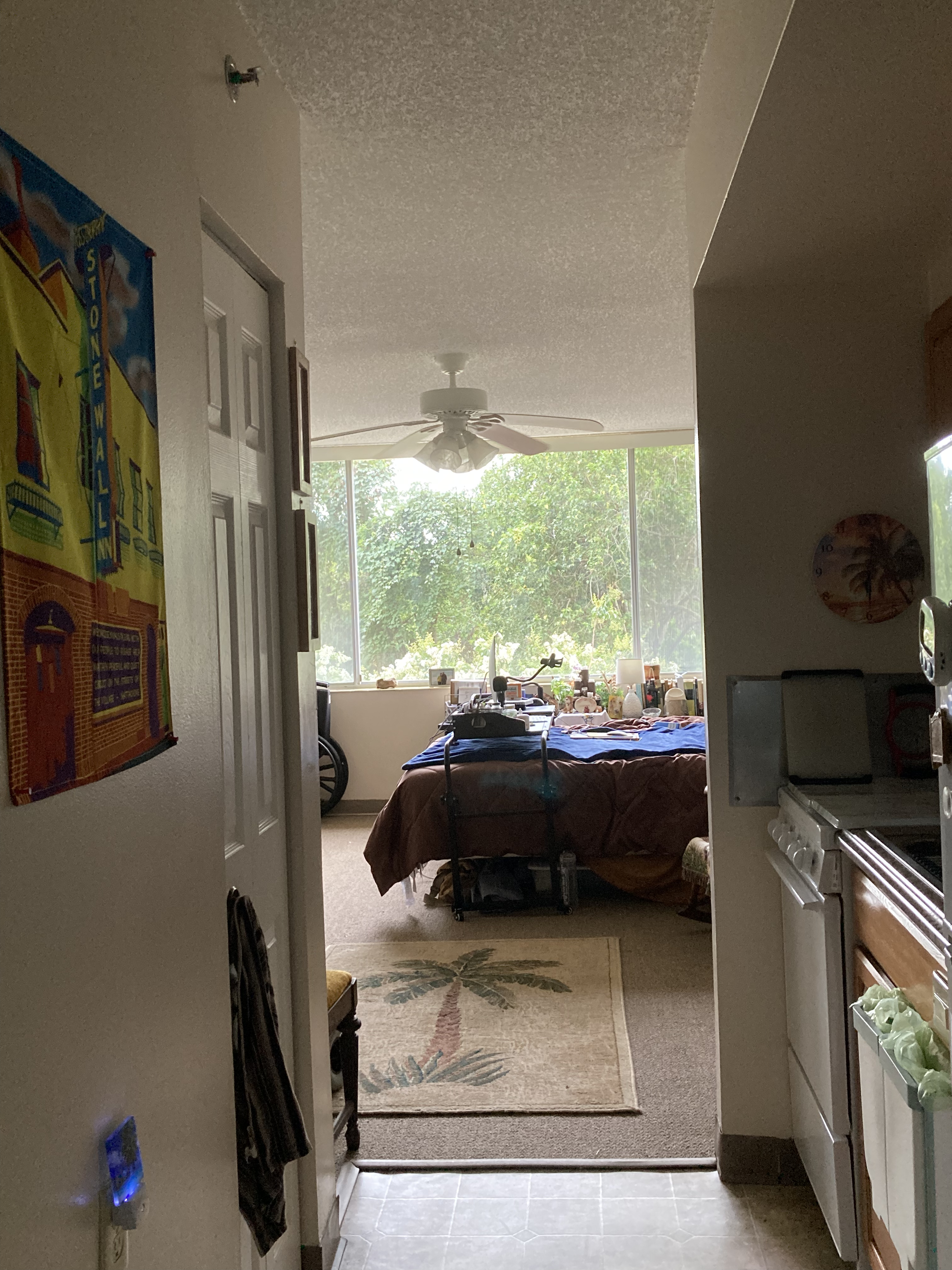
I had no choice but to leave my 690 ft.² apartment. My rent was raised twice in six months; the COLAs from both of my pensions no longer come close to covering the rent of “affordable” housing. So now I am in HUD housing in a market rate efficiency apartment of 222 ft.² It’s like tiny house living in a room with a view.
I had three weeks to move, which seemed like more than enough time to sort through belongings, box up what was left, and at night, watch home design shows on Amazon Prime. My challenge was a 12 ½’ x 17 ½’ room with galley-like kitchen and pantry (eight square feet total) to fill with furniture and 23 book-size boxes.
The hourly rate for professional movers is not insignificant. Even with boxes packed, the cost was staggering but within a forest darkly the only way is through and sometimes that means delays and detours.
The movers arrived late and then took their time, which was concerning not only to me but to the occupancy specialist at my new apartment building who values promptness and a singular way of doing things, such as signing papers upon move in (not a moment earlier or later). It’s her system of 20 years and I am not that fool to question it.
While I was signing, the movers were wandering, first to the wrong apartment building and when they found their way to my 12-story building, they entered the underground entrance improperly. Underground discussions ensued as captured on CCTV. It was the kind of day when it seemed certain the elevators would go down and so they did.
Time turns only on its dime.
Ultimately, I had less than 10 minutes to look at my actual apartment before the Tempurpedic adjustable bed, furniture, and boxes turned what I had known only as a floor plan into reality.
My nights of design time were well spent as only the vanity/desk and chest of drawers exchanged places (yes, those same best of friends were again on the scene), after I was notified of a building-wide apartment inspection in three days. A neighbor’s son and daughter-in-law were kind enough to hang my wall art.
Yet, my move was not yet complete.
For reasons I no longer understand (if I ever did), I decided to combine moving to a new apartment with donating my car to PBS. So much seems possible in the beginning of any life-changing event but then reality smiles and says, “Hold my beer.”
To be sure, there was far too much back and forth of I’ll donate the car/I won’t donate the car. Oh, I have yet another someone to buy it and yet another someone who cannot drive a stick shift. I had been done with driving for some time but to be done with car ownership is to be caught in a game of bumper cars with PBS, its vehicle vendor, and the state of Florida yet no thing lasts forever, even in the Sunshine State.
There are lots of conversations with truck drivers before the actual pick up of the vehicle as dates change, messages are mixed or parking spots are taken. Regardless, the truck drivers travel back and forth from Alabama with car trailers full or not for there’s always another run.
Here in historic, midtown Tallahassee, parking spaces and street sizes are from another century; the cement street curbs are steep, vintage 1950s, met by sloping, narrow boulevards of St. Augustine grass. A semi with a car trailer stops traffic in every direction so efficacy is appreciated.
When the day finally arrived for my car to be hauled away, I was instructed to put the title in the glove box and the key where the truck driver and I had agreed.
I don’t do well with sloping boulevards so I stood at the curb and locked my Traveler (walker) in place on the boulevard, away from me, so I could use the side and front of my white Toyota Psion XB for balance—there was enough room for a feather between my car and the car in front of it—as I lifted the weaker of my legs from the street over the curb and onto the boulevard, stabilizing myself with my stronger leg still left at the curb.
I did not feel the fire ants immediately, a testimony to my focus on getting the rest of me onto the boulevard so I could unlock the passenger door, put the car title in the glove box—THEN I felt the fire ants, tossed the key somewhere inside the car and slammed the door.
Nothing mattered anymore. Nothing. I was done except for brushing off the fire ants, which is no mean feat as they go wherever they want, especially between your toes, but this was my moment, too, and I made the best of it as the ants scrambled but not without leaving me stinging and later scarred yet all of us to home eventually.
It was weeks and days after my move began that I finally cleared the forest. In the subsequent months, a new chapter writes itself from my room with a view but sometimes I nod to the world as I once knew it.
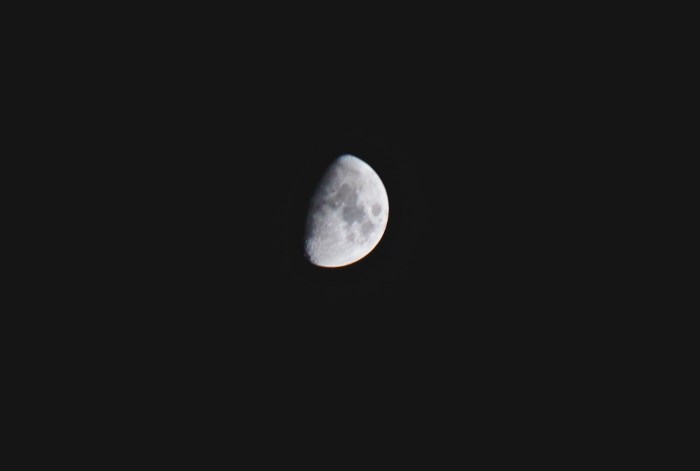
Perhaps on no other day is the nature of fear and fearlessness more apparent than on the winter solstice, the celebration of dark during a season given to light. Tonight, the quarter moon reveals the yin and yang of life, its phase equally light and dark.
A rather somber opening for a solstice celebration but these days are darkened by a pandemic that kills thousands—incredibly, thousands—every day. No sentence is darker than that. Yet, there is the promise of a vaccine; like the solstice it is the promise of lighter days. The science of stuff gives a glimmer of hope, and the rest is up to us.
Too given to fear, we often stay in the dark much longer than we need, not only at a high cost to ourselves but to the planet. We too soon forget that fearlessness is not being without fear but facing what scares us the most, the light of day, revealing who and what we are. Transformation. The winter solstice marks its beginning.
For over 30 years now, the winter solstice is inextricably intertwined with a quarter moon night, both black and bright, in a southwestern Wyoming town that has become known to me as Fossil. No such place really exists but the land of the fossil fishes does. There, life is in layers with occasional interruptions in the laminae—the moments that change everything—it’s a place I lived and then later it became its own story, and every December, I return to begin anew. Sometimes, I actually do.
Jillian drives west on Interstate 80, searching the brittle, white Wyoming landscape for highway marker 189. Unending waves of prairie snow-crust keep her from locating the lone highway marker, but the broad, green-and-white exit sign that reads “Fossil” is not to be missed. She turns onto a narrow, two-lane highway that looks and drives like a one-way street. This is the high plains desert, 6,900 feet, covered in glistening snow crust that will not melt until June is the last thought she allows herself before arriving at the house on Ruby Street, on the night of the winter solstice quarter moon.
In the clear cold of midnight, Jillian looks at an Independent Realty photograph that had been taken the previous May when burnt orange poppies surrounded the once white clapboard Ruby Street house now covered in a false, red brick front that sags. Nubs of native grasses dotted the wind worn grounds; seven aging cottonwoods bordered the backand sides of the corner lot. Sweeping, broad limbs of a lone blue spruce provided perpetual shade for the front porch. And facing the eastern scallops of Oyster Ridge, with its fumaroles from long abandoned coal mines, was a cherry tree heavy with blossom, magnificent in its breadth.
But this is the winter solstice and there are no blossoms, poppies, or grasses, nubs or no; just the fumarole gas plumes in the moonlight, somewhat like Yellowstone’s geysers, as they start to signal their burst. But this is not the fantasy of Yellowstone. It is life at timberline, a harsh cold beauty for the very few. The fumarole plumes will fade with the night but the gas is ever present if not always seen.
In the -2° crystalline landscape, the snow beneath Jillian’s boot all but shatters with her every step. Everything looks and feels cold enough to break at the touch of her glove so she is careful as she turns the key in the front door of the first house built in Fossil at the turn of the 20th century, the Madam’s home. Standing on its threshold, there seems a sliver of possibility Jillian has found her way home. Maybe it is the magic of the solstice with its yin and yang moon, yet in the stillness of the dark, the light swirls as she lets a life lived end and a life she has not, begin.
“Transformation always involves the falling away of things we have relied on, and we are left with the feeling that the world as we know it is coming to an end because it is” (Mark Nepo, The Book of Awakening).
Truth, like light, blinds. Falsehood, on the contrary, is a beautiful twilight that enhances every object (Albert Camus).
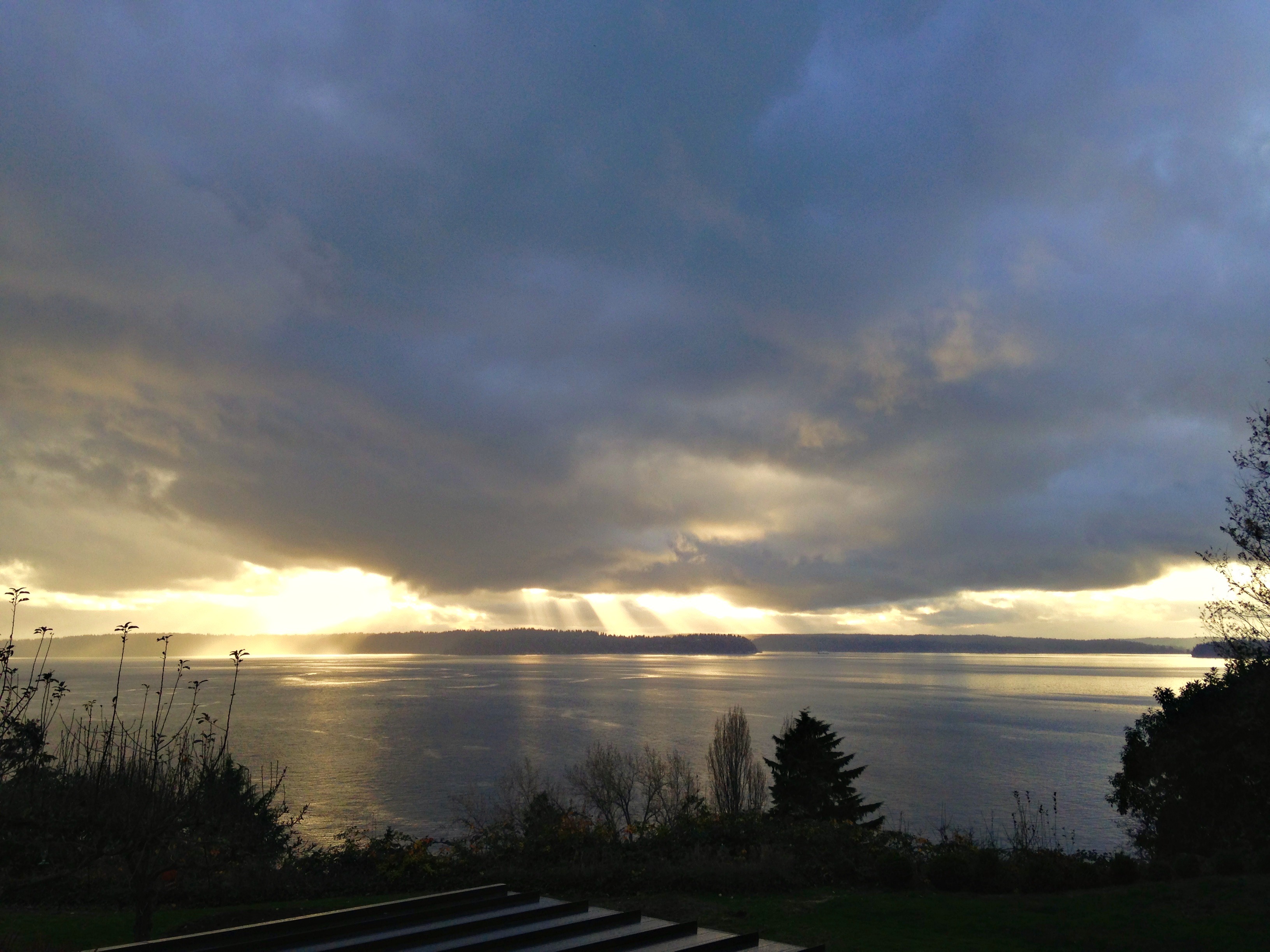
Mount Rainier Len Huber Photo
I. An ounce of compassion is all I need.
While Trump was in the hospital those first 24 hours, compassion dominated social media (in word and meme). If we could feel for him, there might be a way through this time of Trump but that would’ve been too easy.
Before the election, I had a brief exchange on Twitter with a young woman who was wondering whether Donald Trump would gain her eternal soul. As a disabled, newly unemployed, young black woman, she had lost pretty much everything so it was to her soul she clung.
The very fact that she was asking, I offered, showed she could still feel for another being, regardless of circumstances. Compassion doesn’t require much. An ounce will do. She had this I assured her.
Compassion does not live at the surface of our emotions but at their core, an inward journey, fraught with detours and maybe requiring a dark night of the soul—or two—for truth, like light, blinds….
In almost unfathomable numbers, Americans are dying as Trump ignores COVID, desperately seeking his next gig for the money he needs almost as much as the power he craves. Republicans stay complicit in their silence. They fear life with him as much as they fear him gone. They do not seem to fear for their souls, however.
Vulnerability is what wakes us at four in the morning.
It’s what causes our hearts to race and panic to rise in our throats.
It’s where our skin wears thin, where our armor and our self-contained walls cannot withstand the truth of what’s happening.
And because of this, it is the exact place we can recognize our interdependence with all things.
This is how we become free, and it is where deep hope is to be found (DianeEshin Rizzetto)*
Len Huber Photo
II. So, now I have a Eureka robot vacuum. I have been saving for it, initially because I truly loathe household chores of any kind but in particular, vacuuming and sweeping.
Both have become if not impossible, very risky chores to do while using a three-wheeled walker. So, I saved for “Euri,” as I have come to call him, and although I was certain I must supervise, it turns out I’m not needed. In fact, it’s best if I’m not in the room at all. Like the recliner, I am an obstacle.
It is true if you live long enough, some chores will become obsolete. Who knew there was that kind of joy.
Euri favors what I can only describe as a horizontal pattern of cleaning, not exactly a zigzag but always on alert for the most efficient cleaning angle. Sometimes his pattern is an isosceles triangle, while other times an obtuse one but always the angles are acute. There is little to none of the mundane up-one-row and down another. The corners and edges I avoided he favors.
Euri’s sensors are exact and his patience everlasting. No matter how many times he bumps into obstacles, he adjusts and adapts. And when he reaches 20% of his battery power, he returns to his docking station and recharges. He beeps to let me know he’s “home.”
The other day, Euri discovered the area under my bed. I had hoped that would not happen but he is not to be denied when he’s in the room. It wasn’t too long before Euri stopped, the signal for me to empty his dust cup and clean his roller, which I did and then returned him to duty. But he’d had enough and returned to his docking station. After all, it is dark under my bed, the dust is deep, and sometimes, monsters be there.
The intelligence may be artificial but its application feels human. Our interdependence with all things…is how we become free, and it is where deep hope is to be found.
Perhaps I will yet find that ounce of compassion.
Kristin MacDonald Photo
* Excerpt from Deep Hope: Zen Guidance for Staying Steadfast When the World Seems Hopeless by Diane Eshin Rizzetto, pages 13–14.
Seeds of doubt disturb. What else their purpose other than to poke and to prod? Only life’s discomfort opens my eyes.
I’ve lived most of my life without that appreciation but as John Muir said, “the clearest way into the universe is through a forest wilderness.” I’ve walked my years. Mine was not to waste experience but to live passionately, which is to say rarely did I look before I leapt.
I may not have been averse to risk but I missed its potential, the fluid intelligence that is life and its infinite supply of questions. With few exceptions, I walked passed the gold. In a flurry of abandon to answer I didn’t realize every answer morphs into a question, again.
That’s the gold.
And then one day, I stopped running around the forest, in and out of life’s caverns, to experience it in daily doses, appreciating the uniqueness of every dawn and its dusk, each day fraught with doubt, eventually evening out.
It’s fluid, that evenness of energy, and there are days it seems impossible another sun will rise but so far…. That is the power of the present, never absent, even in rage and the time of Trump.
If I watch the world through his lens, I have the perspective of a pinhead, ego run amok, a desperate need for attention at any cost. At his rallies of like-minded MAGA hats, all are assured of answers as if they are forever.
Perhaps they would hide the sun–control its narrative–if they could, but that is not the nature of life, no matter the determination of mere men. I do my best to remember that and view them through the broadest lens I can find.
And that means questions.
What is it in me that brought them to the world stage? It’s an intimate question, a BREAKING daily dose, but I don’t have to go deep to discover my own egoic need for attention and what feeds it. Fortunately, mine isn’t magnified by the office of the presidency. Ego loves a circus, the more sleight-of-hand the better, but the question is, why do I pay the admission of distraction?
I do, far too often, and it is a high price to pay. Trump cannot exist in a world that doesn’t hear him as a human being or as president. True as well for his followers. All oligarchs need a platform in addition to a puppet president or the like. As I say, it’s a high price to pay.
Like the forest wild, I look through a glass darkly. Every day. Awareness grinds my mind, broadening my life lens. How else to clear my way to the universe? Certainly not by looking behind me or holding onto a way of life already gone.
I’ve tried that so many times, expecting different results by doing the same thing over and over. That’s paying the circus to go away which it won’t. It is always here but each time I face it, it loses a bit of its attraction and thus its attention.
That is the power of the present and what a gift it is. Always available, every event a teacher, ultimately one a traveling professor. For me it is a chronic disease whose assured outcome cannot be changed but everything else can. How’s that for empowerment?
Any circus, no matter how many monkeys, just doesn’t compete, which is not to say I ignore the tenor of the times. Far from it. I just won’t go to the circus. My attention is elsewhere, a freeing of the narrative from any who would control it.
Fear is quite vulnerable. It’s the minutia, every day details, even a single sentence, that chips away at control. The pause for thought is the stuff of change. It interrupts the flow. Like I said, it’s an intimate experience but its effects are external. Anyway, that’s what I do.
It is not mine to tell any human being how to live. Life is constant choice, one question after another. My beliefs are not sacred but fluid, alive with potential. I look to the questions for they are the helpers.
“There is a crack in everything. It’s how the light gets in” (Leonard Cohen).
If there is no solution, then it’s not a problem. It’s a regrettable situation. It’s a boundary condition. It’s something you’ll need to live with. Seth Godin
Live with it? For how long? It feels empty when I have debunked a problem as a boundary condition.
Mine is a love-hate relationship with boundaries. My boundaries are sacrosanct and everybody else’s, not so much. That’s the history of humanity, battles about boundaries, most of which were never problems but regrettable situations.
I have a framed poster of the Little Big Horn Battlefield hanging in the entryway of my apartment. It’s hard to miss. Those who have noticed might wonder why but no one says anything.
It’s a view of a lone, white granite, military marker shadowed in golden grasses. Distant mountains purple under the haze of an azure sky. A Montana native, many times I walked the ground where a yellow-haired white man made a stand.
In my years as a middle manager for the state of Florida, I preferred the grasses of the Little Big Horn poster to the parking lot view from my corner office window. It is hard to see the horizon in Tallahassee, land of longleaf pine and live oak but it took me years to see the forest.
I believed everything was “figure-out-able.” What was not working would–no matter what–a solution was available, if I just looked long enough. And search I did but not always with distinction, regrettably. Years later, boundary conditions are not so hard to recognize.
It’s always a choice, live mindfully or stir the pot. One is so much easier on the heart–and head–the choice is ever obvious if not easy. Equanimity helps. No, seriously, it does.
Staying curious opens me to the world as it is, such as it is, knowing I won’t figure it out, and that’s okay. Nothing stays forever, boundary conditions or the real problems of the world, for which there are too few solutions. It’s just easier to get pulled into boundary conditions, the minutia of existence. That is figure-out-able.
I really need just one boundary condition: compassion, delivered firm and kind. I cannot think of one situation existing outside that boundary. It is a response for all occasions and sometimes, silence is the best wall of all.
My life is less the Little Big Horn battle than it was 30 years ago, and I have a Virginia Woolf poster that would fit its frame nicely. She, the woman of the transcendent sentence in a room of her own.
When I started meditating, nothingness was my goal. I wanted to sit in the peace of living, determined to eliminate my every thought for at least one hour every morning. Upside down and inside out thinking, of course, and utterly impossible.
Big thoughts announce themselves by snatching up space as if it only exists for them. They don’t stay long, for they require too much attention. It’s the undertow of thought, subtle and inviting, that is a constant thief. *
And what it steals in meditation, it steals in life. I miss my life when I wander with the thief, creating scenarios for existence elsewhere. In other words, nowhere.
Meditation does not jail the thief for like the undertow, it will not be defeated by brute stubbornness. Awareness is sufficient. It does not take more than that, which is not to say that mindfulness is not without effort. It’s just that it’s worth it. It’s the real deal, not a scenario.
Authenticity does not abide thieves selling snake oil, the positive thinking of nary a cloud in the sky no matter the storm raging. Mindfulness delivers life as it is and stays the would-be thieves of rose-colored glasses.
There is nothing quite like that first clear-eyed view of acceptance. Nothing. Equanimity seems not the stretch it once was. Regard for the undertow reveals more of life not less.
And nowhere in my life has that been truer than in adjusting to the various levels of chronic illness. Disease is a robber only if viewed through a lens of loss. There is no shortage of lenses in life; there is one for every moment.
It’s a matter of looking at what I have rather than what I don’t. It is how I stand in my truth, my power.
This does not happen without a bit of mental wandering with the undertow but there is a magnet to mindfulness, a groove of practice. The less that I am physically, the more I am mentally. Less function equals mindfulness magnified, more prowess with the would-be thief.
Mine is the life that many fear is inevitable in aging. Nothing is inevitable. It’s about choices. I haven’t always lived mindfully. It only matters that I do now, swimming with rather than against the undertow.
An hour’s meditation alerts me to my body’s strongest signals, setting the agenda for the day. A body in stillness is my way of stripping the drama from pain and listening to its signal, going to its core. So often, I would rather steal away but going nowhere is always a disappointment.
Both physically and mentally, I have places to be–the kitchen, the shopping, and the writing, which is increasingly tedious. My fingers cannot seem to select the correct key the first time but readily (and constantly) my hand palm finds the space bar or even caps lock.
No matter the type of voice recognition software, my word structure exasperates, especially if I consider the poetic or commit the greater sin of passive voice. There is constant correction on my screen of words trying to become sentences.
Some days, I persist just because I can but my mind tires of the stop-and-go writing and finally forgets what it was trying to say. My hands stay asleep, tingling.
I’ve had to recognize and actually appreciate that it takes me two to three times longer to write an initial draft, some days more than that. It’s a lot of additional hours.
Clear-eyed acceptance is not an easy lens but it offers options. Real ones. Should I struggle with the undertow, I am only out to sea, aimless. Best to be in the life I have, as it is, exhausted and frustrated, but not so far from equanimity.

















 KM Huber's Blog