Fail Better: Break the Sound Barrier

“The question is, are you going to grow or are you going to just stay as you are out of fear and waste your precious human life by status quo-ing instead of being willing to break the sound barrier?” Pema Chödrön from Fail, Fail Again, Fail Better, Commencement Address at Naropa University.

In a year like 2025, breaking the sound barrier seems the only choice. There is no status quo. One of the many questions I’ve been asking myself for the last 11 months is how loud does life have to get for people to wake to reality? It would seem sound barrier quality at least, yet there is a desperate clinging to the same old, same old yesterday be it politics or Christmas.

The “good old days” is the stuff of Currier and Ives’ lush, hand-colored lithographs whose reprints are still available on Christmas cards (as well on canvas); the same is true for the light in an idyllic Thomas Kinkade landscape, also now available as Christmas cards.

Nostalgia sends us to the moments when we knew what to do, who to be and how to succeed. Maybe even be happy. There is no failure in scenes of nostalgia, only the warmth of a moment when life was more a picture postcard than not.

Is there a way to make the magic stay? No thing, no one, no place stays the same. Therein may lie an answer.
Any center cannot hold if its edges, its fractures, its cast adrift pieces are never explored. Think of a kaleidoscope. When light enters its chamber, mirrors reflect pieces a jumble—we can hear them rolling around—as the chamber rotates one unique image into another. So fragile its impermanent beauty.

We are not momentscaptured on canvas or the mirrored light in a kaleidoscope. We are the real deal, flesh and blood, prone to failure.

In America, we just don’t give failure enough credit, if any. It may be why I so eschew winning, for everything is a competition and nothing matters but the win. To be fair, I am constantly contrary, unable to be like everyone else. I’ve tried, not with great conviction, but I have made an effort from time to time. It never goes well for anyone.

But I have grown so weary of the competitive American. In this land of supposed equality, I have never found the exceptionalism so often attributed to us. We are on the edge of losing our democracy because voting is now a competition between two colors, not a matter of who will best represent and serve all colors.

The upside is we have failed—spectacularly, dangerously so—wiping out any semblance of status quo. And we keep failing but we are beginning to fail better. Neither at light speed nor breaking the sound barrier but the November 2025 elections are a definite fail forward.

We are redefining our democracy as we approach the 250th anniversary of our first revolution. Seems we have good timing. This is not a throw out the Constitution with the kleptocrats moment. Our Constitution is us—we the people—an informed and vigilant electorate governed by the rule of law and no other.

Let’s think of it as fail forward because as Americans, forward is our thing. We are not exceptional. We have proven ourselves to be as susceptible to the forces of fascism as any other country on earth. We are a democracy with a Constitution like no other. With that, we can go forward.

Yet, failure, even failing better, is not a rallying cry. I don’t have any of those. I do my best to meet the moment. Having failure as a tool provides another life lens to broaden my perspective.

Before turning to Zen Buddhism some 13 years ago, I replaced the word/idea of failure with many a euphemism. That version of me still dwells within, as does every iteration of who I have been, but the idea of failure, the thought of failure as a fear no longer has a hold.

I can say this with some confidence because I know everywhere I go there I am. I sit and will continue to sit with many versions of me, reflecting on all the moments I cannot change. There’s purpose in reflecting rather than reliving, a kaleidoscope of light turning over one image after another.

Nowhere is this truer than in my writing, a stalwart that continues to surprise. Writing is my one strength that remains fiercely loyal to me. I am more subconsciously loyal to writing than I ever know. I have walked away from writing—or tried to—thinking maybe not this lifetime. Failing without acknowledging the word failure.
As a Buddhist, I’m counting on reincarnation. Especially when it comes to writing. We are inextricable. I’m always writing in my head until my ego steps in to say, ”but you’re not a writer.”

It has nothing to do with the quality of my words or my small list of publications. It has to do with working in an established framework. I neither have the talent nor the discipline to do that. I all but turned myself upside down and inside out when I tried to blog on certain days of the week. Failing again but with curiosity.

There is no one routine, no established writing hours or days. Before my last post, I hadn’t blogged for two years. I’ve never had any problem saying I’m a blogger.

“Oh,” ego is happy to interject. “Is a blogger really a writer?”

“Shut up.” Failing better.

There have been some excellent reasons why writing was not the order of the day, and sometimes, I’m just lazy. Who isn’t? When I meet the reality of my day, I’m a writer whether I write that day or not.

Just recently, I found an excellent placement for an essay I’m working on about my near-death experience with sepsis. Right now, it’s mostly notes and a very raw draft of part one. The issue was the deadline. When I found this publication possibility, I had enough time but not every day would be a writing day for me. Not without getting sick and losing a lot of days for everything in my life. A damaged spinal cord and rheumatoid arthritis dictate how long I will be sitting and even with voice recognition, there is always some keyboarding.

Failing better is knowing my sepsis essay is going to be a good one. I can feel it. And then I’ll see where it might find home. Like the Currier and Ives lithographs or the Kinkade paintings, when I allow the images to wend their way, words tumble like the light of the kaleidoscope, finding their way to one sentence and then another.
Part II: A Drip of Life

If you have not read part one, no worries. It was long ago and far away. There is no longer a flood outside my door but the leaks persist, now inside rather than outside.

I am a privileged, old white woman who is not without a bucket and an extra large, Halloween-orange bowl for when the drips fan out. Our building boiler is many decades old like the people it serves (and the plumbers it baffles).

A steady drip of life, water, and in these last two-and-a-half years, I have known oceans. More of the mind, yes, but also an actual glimpse of the ebb and flow of life and how it might end or not.

Cancer takes you there.

Mine was endometrial, grade one, stage one B. Early, early stages, quite common for a 73-year-old woman; the protocol is radical hysterectomy, which I had. I was in the hospital less than 24 hours. The pathology report revealed four remaining cells had invaded my lymphatic/vascular system. Three direct radiation treatments later and no more cancer. I continue to have checkups every three months.

That’s how endometrial cancer was for me, not painful but persistent and eventually eradicated. I was going to leave my bout with cancer at that until I heard 49-year-old poet laureate Andrea Gibson read their poem, “Love Letter From the Afterlife.” The reading was to Gibson’s wife, Megan Falley, during the last days of Gibson’s life. Very soon after, Andrea Gibson died of ovarian cancer, stage four.

You may or may not know (I didn’t) that the terms ovarian and endometrial cancer are sometimes used interchangeably. Gibson wasn’t the right grade/stage for even a fair prognosis much less a good one. You either are or not, with cancer. It’s not much of a spectrum.

“Why did no one tell us that to die is to be reincarnated in those we love while those are still alive.”

(Andrea Gibson, “Love Letter from the Afterlife”)

I have been waiting for that sentence all my life. Not that I knew it, of course. That kind of clarity just arrives, and the world changes. The life force that infuses this dimension is a 49-year-old poet writing a love letter to the world as they fade from life.

I have not the clarity of a poet or the bursting, immense love of Andrea Gibson but in this past year I came close to slipping the veil.

Six weeks later after my radical hysterectomy and before the radiation treatments, I almost died of urosepsis, a blood infection. I ran fevers as high as 103 and my heart raced to keep pace with a kind of Russian roulette playing out in the hunt for just the right antibodies, as my kidneys began to shut down.

I have never known such presence as machines beeped, doors opened and closed, food plates came and left undisturbed. I was immersed in life without clinging to it, as aware of pain as of joy, afloat in an ocean of love, as wave after wave of clarity buoyed me in timelessness.

I was so grateful for having had a chance to live—nothing seemed more precious—until the depth of my meditative state lightened with the swarm of antibodies and reality broke through, bright and cold on the afternoon of the fourth day. After a discussion with the hospitalist, I went home.

During those three and a half days I sensed I would live. It wasn’t a given; it was more like no time left to lose. To use Pema Chodron’s term, stop practicing “idiot” compassion, no more tilting at windmills, build boundaries firm. Meet people as they are and be compassionate but know that sometimes walking away or saying no is the kindest thing that can be done.

I did not feel easy days were ahead nor have they been but in my ocean travels, I sailed true North.

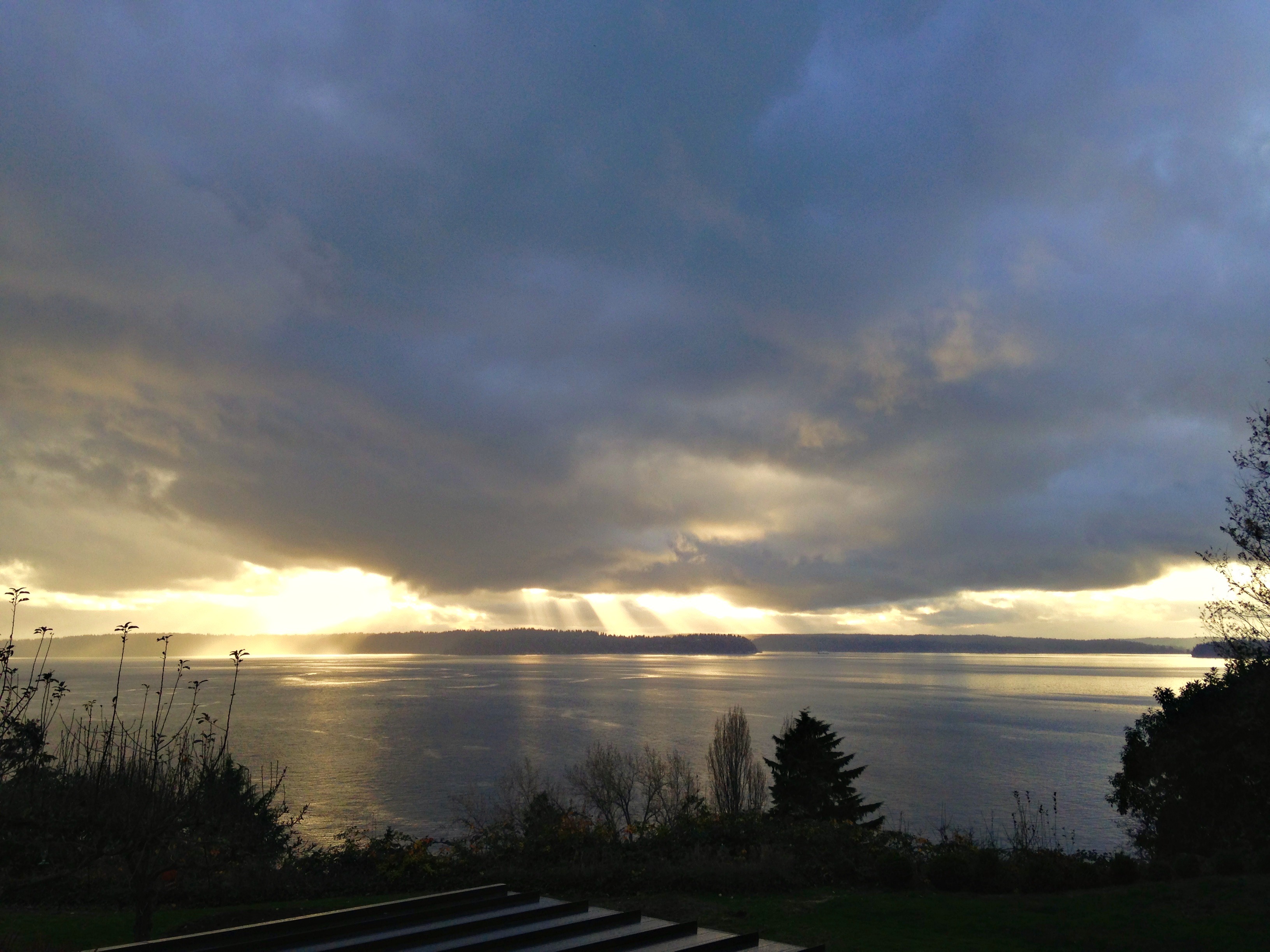
Puget Sound (Len Huber)

Rest, Part I: The Flood Outside My Door

It was just Sunday noon and the excited voices outside my apartment followed by a sharp rap on each door meant emergency. Out of dread rather than curiosity, I opened my door.

Without taking a step into the hallway, I leaned left and looked to the sitting area across from the elevator where the two mahogany, oversized flower-cushioned chairs sat on either side of the matching, double-drawered buffet —in at least two inches of water.

To me, the set of furniture seems bespoke but its origin is murky in this 50+ year old apartment building for retirees. Many a resident, upon their death, donates furniture and belongings to what is known as the community. Thus, there are other equally lovely pieces—polished every week by the same woman for over 40 years—on each of the 12 floors.

I shut the door.

I needed to take a shower, ASAP, after I tucked what were once luxuriously soft towels, now faded gray and ecru but still absorbent, under my apartment door, with washcloths stuffed in the sides of the threshold.

Taking a shower may not seem intuitive in the time of an imminent flood but I had no idea how long we might be without water for we have had pipes burst before, and I knew the drill. This water event was particularly bad.  Not only did it flood the second floor but the lobby and offices below, as “if the heavens had opened” is how it was relayed to me.

Nearly every floor has had its flood and subsequent fire alarm events.

About six weeks ago, the fire alarm went off and this time it was not a resident with a grease or oven fire but an alarm system too damaged from all the floods. It took 2 1/2 hours to finally figure out how to turn off the alarm system and keep it off—for that day.

No one evacuates for fire alarms or floods nor do the firemen come. We all know the drill. Mostly, these things happen in the midnight hour or some equally inconvenient time. Any alarm event after 3 AM and I make myself breakfast, spending the day with less light, more dark in a world of wet wires.

It’s an issue with the HVAC system but the maintenance team is optimistic because finally there are resources to replace the plumbing and electrical systems that have lasted five decades, almost.

I’m optimistic, too, for I love this old concrete and stucco building with spacious lobby, dining and living rooms—big enough for a baby grand piano and full pool table—in what is called Midtown, one of the oldest parts of Tallahassee.

Surrounded by live oaks and the occasional maple is our flower garden complete with crêpe myrtle, lemon, orange, and fig trees. Many garden plants have been left by former residents including flower bulbs from residents’ parents and grandparents. There is even a small fountain.

It’s true we are a community that loves its past be it bespoke furniture or bulbs of the amaryllis. It’s life in fire and flood.

The building was designed for retirees and so it has remained. It’s like hotel living that was a common in the first part of the 20th century. And every apartment is a room with a view. It’s a style of living now gone, only the furniture and structure last.

Sometimes a flood, sometimes a fire alarm.

That was how my time of rest began, that Sunday some seven months ago now. I felt so fortunate that day as the flood came within six inches of my door and no more, hence the gratitude and the shared optimism with the maintenance man, who would later get  soaked as if he were a winning football coach. Three other apartments were flooded that Sunday and for the next 10 days, the drying fans roared 24/7.

For other reasons, he and I have seen each other as the replacement of the plumbing and electrical systems began in January and the work will continue throughout the year, daily it seems.

We refer to it as “the construction,” which it is and isn’t, but it’s the term the new administrator uses. It even has its own bulletin board and every week there is a schedule of what should happen and sometimes it does but to completely replace the lifelines of an apartment building—its plumbing and electrical systems—with residents in situ is not easy for workman or resident.

That Sunday flood was our final one but far from our last alarm.

To be continued….


Zen Meets a Boojum with Snark

Alan Watts tells a story about translating Zen texts into English and the selecting of those books. He consulted a Zen master who found the translation idea pretty preposterous, particularly the selection of certain books. After all, any and every book is Zen, be it Alice in Wonderland, the Bible, or a dictionary for “the sound of rain needs no translation” is what the Zen master had to say on the matter.

There is no separating Zen from being alive.

The first time I came across the Alan Watts story was some years ago, when I was on my own quest for anything Zen, wanting to capture and analyze Zen so I could keep it as a constant companion, completely oblivious to the fact that everywhere I went, there I was, in the eternal presence of Zen.

For everyone there is a way but there is no one way for everyone. I get that now.

But then, I explored quotations and Zen memes to suit any occasion, read books about Zen, and listened in rapt attention to Pema Chodron offer Zen just as it is as. And from her lips to my ears, the sound of rain needed no translation but only when she whispered it.

So, still translating with no Zen of my own or so I thought.

It may have been in the fall or spring. In Florida it is the color of the leaves that distinguishes those two seasons, so similar in temperature. It was raining with a constancy and clarity I have come to know of early morning rain, steel rod straight without wind.

It was just an hour or so into the light of day, and I was in the middle of monkey mind meditation. I have long forgot the pressing issue of that day—so important it was—or it may have been the frustration of yet another monkey mind day of meditation. Agitation has such an array of possibilities.

And then I was one with the rain. Just like that.

I don’t know when it started. All I know is that once I realized what was happening, it stopped, and I was back watching the rain with an awareness, an evenness of mind, that would stay with me for at least a few hours. I was completely present to each task but soon my mind started wandering and trying to explain that which does not translate.

I have had this happen to me three times in the years I have been meditating and it is much the same each time. I am aware of returning but not where I have been—that is a complete blank. And for the next few hours in the day, there is a heightened awareness, which I do my best to make stay, but I think too much about what was and not what is.

The moment is all I have and I don’t let it be enough.

Twice this meditative state has involved nature and once it involved what I can only describe as a feeling of knowing I was going somewhere. I was particularly tired that morning and quite low on energy yet I remember thinking “Oh, this will be good.”

And it was.

It was the longest time I have been “gone”—two to three hours—the heightened sense of awareness stayed with me for some days afterward and has never completely left. I turn to it when I find myself moving away from the moment I have. There is nothing back there and everything right here.

I questioned whether I had simply fallen asleep and maybe I did. It was some time before I told a friend, and she said Eckhardt Tolle had described a very similar experience and wondered the same thing about falling asleep. We always know when a moment changes us. And that is enough. The sound of the rain needs no translation.

There is no way to analyze or translate what is beyond our knowledge of the physical dimension. And considering human limitations, not the least of which is our penchant for labels, I have no doubt we deny what we know to be true. We have words but they are not always what they once were.

Consider the Snark in Lewis Carroll’s “The Hunting of the Snark.” The poem might be about the unanswerable theological or philosophical questions or simply nonsense, without meaning at all. (However, the idea makes a very interesting episode of Inspector Lewis [Series 5, Episode 1]).

In the poem, there are nine tradesmen and one beaver who go in search of the Snark—and if this reminds you of a snipe hunt—when they find the Snark, it “gently and softly vanish[es] away [to] never be met with again.” And to this end, the episode of Inspector Lewis offers an interesting twist.

Detective Constable Hathaway tells an anecdote from the late 1870s about a young girl who writes to Carroll, wanting to know why he didn’t explain the Snark to which Carroll responds, “Are you able to explain things you can’t yourself understand?” It works well with the script but I can find no tell of such tale.

Reverend Dodgson, an early Carroll biographer, writes in 1876 of a young girl who loves the poem so much that she recites it at will, whether or not she has an appreciative audience. Her favorite venue, it seems, was the carriage ride. She knew a captive audience when she had one.

Lewis Carroll, writing to an American friend about the Snark says “I’m very much afraid I didn’t mean anything but nonsense. Still, you know, words mean more than we mean to express when we use them” (The Life and Letters of Lewis Carroll, Stuart Dodgson Collingwood, 1899).

The last line of the poem is “for the Snark was a boojum, you see,” an animal of the imagination and in 1922, Godfrey Sykes would name the Boojum tree found in the Baja Peninsula for it is like no other. Even in physics, there is a geometric pattern on the surface of helium known as a boojum. At the moment, there is a brewing company in the Carolinas with the name of Boojum Brewing.

It seems to me that once again, everywhere we go, there we are, in the eternal present defying definition. All we have is awareness, preferably heightened.

And somewhat tangentially related is a “what would you choose” scenario of two choices: a.) $1 million in cash, free of any taxation burden; b.) returning to my 40s, knowing everything I know now, as I approach 70.

Even if this were a multiple guess question my answer would be immediate and the same. (In full disclosure, forced into either or, I chose returning to my 40s but life is neither this nor that. It is on its very good days, a Boojum).

Money has never been an attraction, much to the chagrin of those who love me. I am not good with money because I just don’t care about having more than enough to meet my needs, and only this has been true in the last act of my life. For most of it, I followed the magical thinking form of finance, of which the worry was harder than maintaining a monthly spreadsheet.

And I have to admit that I enjoyed my 40s but mostly, I became comfortable with each decade as it revealed itself, a series of leit motifs in the overarching experience of life, not that revelation is always pleasant. Each decade has required adjustment but I have no wish to return to any time, even the past nanosecond. Been there, experienced that.

Only the eternal present offers what is new under the sun.

When Zero Was Not a Number

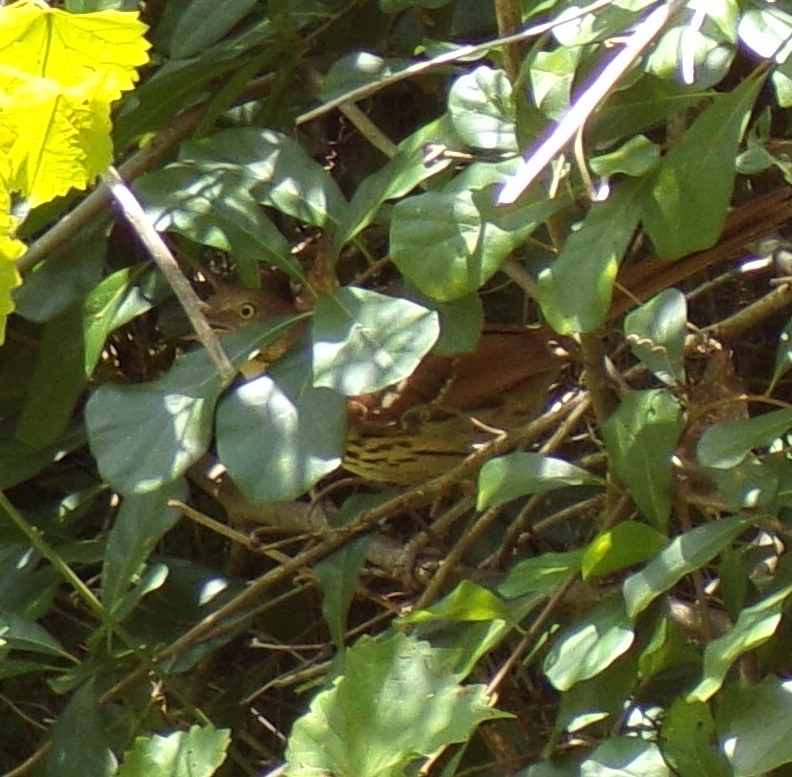
In the woods outside my window, it seems like nothing will stop this growing of green and the flurry of flashy red cardinals as they prepare their nests with their olive brown mates, who blend beautifully with the firebush, sparkleberry, and mesh of the passionflower vine. 

In spring, every day is endless.

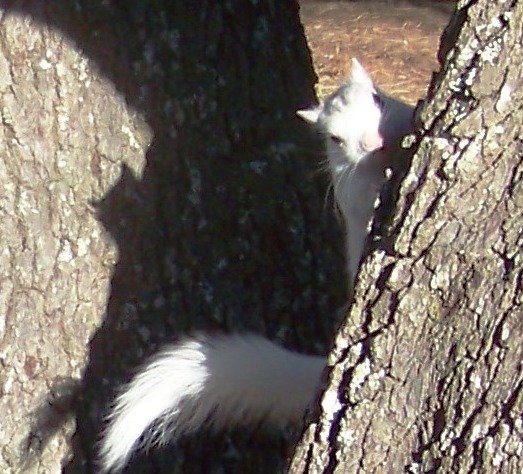
I am not immune to all this wonder of squirrels munching on the tender leaves of a wax myrtle, a treat seemingly worth the trek from the hole in the leaning Live Oak across the longleaf pine and down the passionflower vine.

Frankly, it makes the human world pale in comparison but then, nature usually does. 

Here at the Apartments in the Woods, we have replaced watching the murderer among us with having to deal with mandatory online rent payment. Checks are no longer accepted. Not amazingly, emotions run high as if life itself, again, was threatened. 

Quite the welcome for a new manager who had been assured the online payment system for our 55+ community of 144 apartments was in effect, one of many untruths she will discover for truth is not always what it appears.

I don’t know the percentage of people who pay rent online but I imagine the majority of residents use the convenience, which was not true just a few years ago when the majority cohort was more like 75+ but no one lives forever. Nonetheless, their numbers are still sizable, including my 93-year-old neighbor, Sybil, who somehow still maintains her flip phone, despite threats from everywhere and everyone that it can’t be done. 

Although we have been neighbors (sharing a common wall) for 11 years, and true friends for the last five, I often forget Sybil is Sicilian and have to be reminded, which she does with pride. Round faced with a slight rosacea on her high cheekbones, Sybil is a clear-eyed beauty with flowing white hair, agile yet fragile as her petite body begins to fail her. 

Sybil is prone to one point of view on any subject (until she’s done with it), no matter the cost. She traces this to the island existence of her Sicilian ancestors who were faced with one invasion after another. Hers is a kind of reticence, which some have called stoicism, and with this visage, she faces all weathers.

Something like 30 or 40 years ago, Sybil decided the Internet was a passing phase and only last month did she admit that had “probably been a mistake.” 

To their credit, Sybil’s family is proceeding at her pace, in their completion of the online payment process, relying on the information Sybil provides, such as the documentation sent out by Apartments in the Woods Enterprises (AWE) for the online payment portal. 

AWE is to be commended for a streamlined and simple process. Residents who had never made any kind of online payment completed the process in about a quarter of an hour. It feels rather worldy, this being on the web, writing electronic checks for rent. 

Sybil is not so sure, although some days she sees its truth, yet when it comes time for her son, Paul, to complete the process, Sybil lies awake at night worrying about hackers, for she is well read and has an amazingly accurate understanding of the World Wide Web for someone who has only looked upon but never browsed or received an email. 

“It seems that there is still a problem with the rent,” Sybil tells me. “Paul is exhausted by all this.”

“There is no problem with the system, Sybil.” The words are out of my mouth before I can stop myself, clipped and cold. I’m tired of the conversation before it begins yet again, but I do better with “what’s the problem Paul is having.” 

“There is no place to put the routing or account number,” Sybil pronounces this as fact. “I don’t want Apartments in the Woods to have access to my checking account.” 

We have been having this conversation two or three times a day for the last two weeks, and I know where it’s going, but I also know Sybil vets her ideas with me before she shares them with her family, for reasons understood only by Sybil, but there is a lot of fear, too, always a tough subject, which is to say that I, too, sometimes get the wrong end of the stick. 

“Sybil,” I say, wincing at my tone of voice, not quite terse but close. “If Paul enters your routing and account numbers into the AWE system—

“The WHAT?” Sybil begins to talk over me, thankful for the tangent. “I don’t even know—

“Sybil, stop. Just. Stop. Talking. Over. Me.” And finally, she does. “When you write a check for your rent, isn’t the routing number and the account number on the check? Yes or no.” 

“Yes.” 

“So, Paul is going to enter that same information into the online system. It’s an electronic check rather than a paper one. That’s it. Nothing more.” 

“Okay. I’m fine with that. But we’re going to use a credit card.” 

“You do you, Sybil, but know there will be at least a 3% charge for using your card. That’s about $30.” 

“Paul says five or 10 dollars,” Sybil fires back.

“He’s wrong, just wrong.” 

We are both so over this conversation, but we both know it’s not yet resolved. Sybil is upset at herself, not for the first time, for refusing to have any kind of online presence over all those years. So many missed moments, those, but I’ve made that kind of mistake, too. It hurts.

At 93, both Sybil and her family are doing everything they can to maintain her independence. Increasingly, that means more to do for them and less for her. They love her deeply and do not mind, and Sybil is grateful, but with each task, there is one more thing out of her control. It’s such an uneasy balance for all of them.

Somewhat similarly, my body is far older than my almost 69 years, and I am ever adapting to maintain my independence. So, Sybil and I are each at an age where decisions close a door and not always does another window open.  

My heart is a bit sad that my tone of voice has been firm with Sybil—well, terse at times, if I am honest—Sybil, too, is a bit sad that she can’t write a check to pay her rent as she has always done for the last 17 years. For her generation, loyalty and consistency were just about everything in life. I get it.

As usual, I turn to Pema Chödrön to see if I can find something in her words for my frustration. I don’t want to repress it or reject it. I want to go to its core to see what I can learn from it and maybe help Sybil look at hers. In other times, Sybil has done it for me, in her own way, which is not mine.

Turns out Pema has a friend who talks about this very thing.

“As a way of working with our aggressive tendencies, Dzigar Kongtrül teaches the nonviolent practice of simmering. He says that rather than ‘boil in our aggression like a piece of meat cooking in a soup we simmer in it.’” 
Pema Chödrön

Not exactly the imagery I was seeking but I get the metaphor.

“We allow ourselves to wait, to sit patiently with the urge to act or speak in our usual ways and feel the full force of that urge without turning away or giving in.” 
Pema Chödrön

I am aware of the energy in “edginess,” or what Pema Chödrön refers to as “groundlessness,” and I find it attractive, that unknown. How to manage when I don’t have my feet on the ground, when what I know is not of worth to someone else or is not what they can yet receive, and I must be patient and listen in acceptance. 

“Neither repressing nor rejecting, we stay in the middle, between the two extremes, in the middle between yes and no, right and wrong, true and false.”  
Pema Chödrön

Most of my life I was a “fixer,” offering the obvious solution only to have it rejected because the choice was not mine to make. Not everyone comes to change the same way or at the same pace. Patience in every moment—to sit and simmer—although easier with age, it is no guarantee.

There is only one solution for Sybil no matter how many times we talk through what must happen. What is not an issue for me is a game changer for her but we offer what we have to one another, although it doesn’t feel like it’s what we need. I don’t hear anything about online rent payment until the fifth of the month, the last day before rent is late.

“I was going to have to pay almost $28 if I used my credit card!” Sybil has never been a stranger to umbrage. 

“So, Paul found where to enter the routing and account numbers?” I just have to know, which feels a bit unfair but somehow, it feels important. “He received a receipt by email, correct?”

“Well, if you can call it a receipt. It says, ‘Dear Sybil’ and then gives only my apartment number without which building. There are at least four different apartments with the same last three numbers.”

We talk about unique transaction numbers for a while, which is what is important for a transaction to take place between the two systems.

“But that’s just it. It hasn’t cleared my bank. There is no transaction.”

“Sybil, we just went through the receipt, line by line. You have a transaction number. The receipt says it was sent. That specific transaction was sent.”

“The bank has not received it. I’m going to be late on my rent.” 

“You are not going to be late on your rent because you have a receipt saying you paid it on the 29th.”

“But there is no transaction is what the bank is saying,” Sybil says, with a calm that is surprising.

That is a problem but there also seems to be a solution or maybe she’s been winding me up. I can’t say I might not do the same.

“Paul is working with the AWE manager.” Sybil pauses, pleased with her use of the acronym, and I find myself smiling. She goes on, “The account number was wrong.” 

“Did Paul enter it incorrectly?” 

“No!” Sybil snaps. Her son does not make mistakes. “I didn’t give him the zero.” 

“The what??!!” And for a moment I am as lost, if not moreso, than Sybil was when all this started.

“The zero in front of my account number on my check. I never use it. When I was in school, we were always told that zero isn’t a number. It’s nothing.”

“Let me put it this way, Sybil. Data is made up of nothing but ones and zeros.” I pause before adding, “that’s just probably adding to the confusion.”

“No, it’s not! I understand that. I’m saying that when I was in school zero wasn’t a number.”

“Zero is a number and it has value, Sybil. It may look empty but it’s anything but nothing.” We wait for a moment before I ask, “Didn’t you give Paul a voided check so he could enter the numbers?”

“Yes, but he said he didn’t need it because I read the numbers to him.”

“So, Paul had a check but he entered the numbers you read to him.

“Correct.”

“But he has now entered the correct account number into the system????” 

“I don’t know.”

This time I don’t go there. I look at the woods outside my window and tell Sybil I watched a goldfinch singing this very morning, sitting atop a still bare branch of the fire bush, yet another add to my birding life list. 

And Sybil who has taught me so much about the flora and fauna that is the woods outside my window begins to tell me yet another story about spring in some year before the Internet, when you could believe zero was not a number and not be bothered at all.

*Pema Chodron excerpts from Living Beautifully with Uncertainty and Change, page 49.

A Murderer Among Us

A murderer lives in my apartment complex and has for the last eight years.

Marie stomped her 82-year-old mother to death, after throwing her down the stairs. Marie then encircled her mother’s body with all the things they had fought about: the gas money purse, the television set, various foods, mentholated rub. It would take some days to find both mother and daughter.

No one in our apartment complex knew about Marie’s past until recently, when she fell in love, so much so she told her beloved what happened just over 15 years ago. Predictably, he dumped Marie and then told everyone else in the complex that they could find Marie’s story online. He and a new girlfriend moved away.

The story of Marie falling in love with a man who leaves her for another is a repeat scenario, although this time there was no child that had to be given up for adoption, but falling in love seems to be the catalyst for Marie to stop taking her bipolar medication and to begin grasping at whatever story will give her oxygen: she was raped, she wasn’t raped; she’s a danger to others, she’s not a danger to others; she loves everyone, she doesn’t love anyone.

“I’m not a danger to myself or others but I guess I am” is what Marie told the judge at the sentencing hearing for her mother’s murder. Marie is and is not a danger, often simultaneously, a reality whose boundaries only she can perceive. The rest of us draw different lines in the sand that she crosses almost daily.

We call the police, record and video her outbursts and send them to the apartment complex managers but mostly, we wait until she injures herself or somebody else as she systematically destroys her own apartment.

Every day is pretty much the same with Marie. Sometimes the police come, sometimes not, and other times it’s the sheriff, whoever draws the short straw is what it feels like. “I’ll f**cking kill her (or you)” is a favorite rant as Marie asks for money or to borrow a phone that she will never return.

She is being evicted and sometimes she knows this but mostly she just tells us “this is “MY f*cking neighborhood.” We really are all she has but we don’t want her, and she doesn’t want us, either, yet we all need a place to live.

Because she’s leaving, Marie gifts her neighbors with used deodorant, perfume or dead batteries, delicately placed on the tiny shelves beneath the message blackboards outside resident apartment doors. It’s not that she’s not crying for help or that we don’t hear her. A torn window screen hangs from one of the window panels of her second story apartment, like a flag that just can’t catch a breeze.

About every four or five days, she is taken to a mental health facility where she is held for 72 hours and then released. Her own father and his wife, now in their late 80s, are so scared of her they sold their house and moved into an assisted living facility. They don’t want to be beaten to death during a psychotic outburst, and they no longer know how to help her.

With me, Marie keeps her distance. She waves whenever I drive into or out of the parking lot. I suspect she knows that eight years ago I figured out her story, when I was thinking about putting together a writers group. Marie was rather excited about it and told me her psychiatrist was, too. There are many solid reasons I never started that writing group, but it would be a lie to say that Marie was not the major one.

Eight years ago the story of Marie was more prominent on Google with pictures of the family home and sidebar stories about her activist mother. It was a tragedy, the headline read, and it still is but this time—so far—no one has died. We have two weeks until Marie leaves us for nowhere and anywhere. In either direction lies homelessness.

We do the best we can with who we are in any given moment, which doesn’t mean we choose right or wrong, even when either is evident. Life is not that clear cut, and there are always consequences. Choices are not words alone but actions, too; together, the best and worst in us.

UPDATE 4/13/21: Marie was evicted effective April 2 but not before there was a small fire in her apartment, perhaps accidentally started, perhaps not. Nonetheless, that was the last access Marie had to her apartment. In the waning hours of April 1, she sat outside her apartment, leaning against the door of what had been home for eight years. I don’t know how long she stayed, only that she is gone to the streets, maybe jail, possibly the mental health center but she can’t come home anymore.

All Right Will Never Be the Same

My primary care physician and I are having our usual conversation when she says, “If you didn’t do what you are doing, you would not be living on your own. Others would be caring for you.”

“Thank you” is all I manage to reply. There are so many facets to what she said. Later, I tell a friend who responds, “that’s so powerful.” It is indeed.

My mind’s memory reels spin, searching for July 2015, days before the surgery to decompress my spinal cord and prevent quadriplegia–this time. I’m told to stay at home and “whatever I do, don’t fall.” So, I don’t.

My stagger resembles a drunken Frankenstein’s monster and more than once, my scrambled eggs end up on the floor, as signals short-circuit. My limbs are less and less.

I meditate a lot and dream, vividly.

I am in a surgery where all the instruments, table, and equipment are white light in a brown paneled room. Dressed in a hospital gown I sit on the surgery table, legs dangling over the side. I’m not alone.

 Maurya sits next to me, also dressed in a hospital gown, legs dangling over the side. We talk about the surgery, as if she were still alive but she is not so our conversation is the sense of speech.

 “But I will make it through, right?” I remember repeating the question as she leaves, taking some of the answer with her but not all. I will go through stuff, maybe a lot, and I will be all right, but all right will never be the same.

And it hasn’t been, knowing there is no recovering only progressing, and no one, even in dreams, knows what that may mean for spinal cord and autoimmune disease.

I “do” not waste days wondering or analyzing dreams. I immerse myself in the life I have, and the more present I am the larger my world. My days are never long enough for all I want to do.

Mindfulness is not a placebo; it is awareness, raw and unfiltered. Finding the worthwhile in the seemingly worthless, like Leonard Cohen’s cracks that let in the light, imperfect in an impermanent life, one experience after another. It’s in the unexpected that I find out who I am.

This latest round of medical visits began with my driving to Georgia with a tampon up my nose. Who knew that was a thing? This is my kind of unexpected–almost expected, now.

Every three months, I see my rheumatologist and this last Tuesday, just as I was getting ready to leave, my nose began to bleed. These nosebleeds are now chronic, a side effect of Sjogren’s syndrome.

Immediately, I pinch the bridge of my nose, deciding whether I need a light(L), regular(R), or super(S). I don’t want to change tampons while I am on the road so I settle for an R. I close the red door of my apartment, turn the key in its lock, and walk to my car.

My drive takes me through Buffy St. Marie’s “Tall Trees in Georgia,” long leaf pines, sprawling live oaks, and in spring, wildflowers in the median. In winter, a steel green blanket.

By the time I reach the Macintosh Clinic, my nosebleed has stopped. The two-story, red brick building with white pillars once had another life and usually I stop to admire its architecture but on this day I’m grateful not to walk into the clinic with a tampon up my nose, although I was perfectly fine driving through 8:00 a.m. traffic.

When I tell the nurse about the nosebleed she asks, “When you were at the light, did you turn and look at people like this?” And her brown ponytail swirls from side to side as she gives me her best tampon-up-the-nose look. “I would! I’d find a cop and look straight at him!”

It is only recently I have come to know that tampons up the nose are an actual thing, medically. And on this day, I discover that my rheumatologist (and later) my primary care physician believe staring is the preferred behavior when wearing.

I tell my 90-year-old neighbor, Grace, and she, too, wants to know if I turned and looked at people. I get it, I really get it. I’m almost looking forward to the next time, for there will be one when I least expect it.

And all will be all right and all right will never be the same.

Every Time He Shakes His Tail

I was in my late 30s, finishing my Master of Arts thesis, when I finally understood writing as a process.

Admittedly, it sounds silly but in 1986, the “how-to” of writing was threatening an academic tradition once thought unassailable, at least in the English department at a small university in the Rocky Mountains.

It was the invincibility of that tradition that drew me to academia and it would usher me out. We would both find out of what we were made. Different stuff.

For the first time in my life I was consumed by my work, in complete awe of writing. It was alive, no longer an academic exercise in research. And for that matter, neither was I.

My thesis advisor, Jeanne, was having none of “my new process” and rejected the initial draft of my thesis after reading the first two pages. No matter what I said, she would not read more.

Jeanne was a friend, ever patient with my enthusiasm, but her life was the academic tradition. She railed against the canon of “white male fact” and was integral in establishing a women’s studies program but she knew her parameters.

So, stalemate.

In response, I drank my way to sobriety and an eventual decision. It seemed I was fine with not graduating. Writing was what mattered and that has never changed.

But no story ends without a twist or two, if we are true in the telling. We cannot be part of a tradition and simply pull away without consequence for others or ourselves.

So it was that my hands were in dishwater when the telephone call came.

“It’s Jeanne,” my then partner said, stretching her arm toward me, cordless white phone in hand.

“No.”

“She just wants to talk to you.”

I shook my head and looked down at my hands in the dishwater, a master’s graduation ring on my fourth finger, left-hand, gold in suds. My mom had it sent to me. She was coming for graduation. I would not cheat her out of this degree ceremony as I had for my bachelor’s.

Other than my partner, few outside my academic life knew about the thesis stalemate or a tangential twist, my formal charge of sexism and breach of protocol against a tenured professor.

It began with a question, as these things often do. The graduate level course was American literature, 1930s-40s, and I asked why there were no women writers included. The professor told me there were no major women writers. His words reverberated throughout the department.

His breach of protocol was reading the student evaluations before submitting his final grades. The professor all but grabbed them out of the office secretary’s hand, saying he knew “they would be good.”

I was the only graduate student to challenge him in class and in my written evaluation of his course. Accordingly, I was the only one to receive a B, everyone else an A. It is the only B on my graduate school transcript.

Confident in his tenure, the professor never denied any of the charges and a committee of his peers ruled against me, which proved to be the catalyst for a department showdown.

A number of professors threatened to bring my complaint before the entire department for a vote:  to overturn my grade (copies of my coursework were made available); to end the exclusion of women writers from all courses;  to censure the professor for breaching University protocol regarding student evaluations.

The vote never happened.

The head of the department removed that course from the professor’s teaching roster. He never taught in his area of emphasis again. The student evaluation procedure was completely revamped and finally, there was a review of department courses, something many members had been fighting for, including Jeanne.

My grade remained a B.

“You can appeal this decision, of course,” the department chair told me. Very carefully, he explained the process.

I nodded, hoping my tears would not spill over. Some part of me knew my grade was no longer the point, although it had been the initial pain.

“What you need to remember is that whenever he shakes his tail, this issue will make itself known for years to come.”

And it did for the rest of the professor’s life or so I am told.

Jeanne was not among the professors who outwardly supported me but for all of us there is more than one bridge too far in life. At least that has been true for me.

Of course, those were not my thoughts as I stood at the sink with my hands immersed in what was left of the soapsuds. Mostly, I thought about the many differences between my mother and me, specifically that 1986 MA class ring.

I took the phone call from Jeanne.

I did not really “defend” my thesis but ours was a lively discussion regarding writing and women. Some 25 years later, a thesis committee member told me there was some concern about my not defending the thesis.

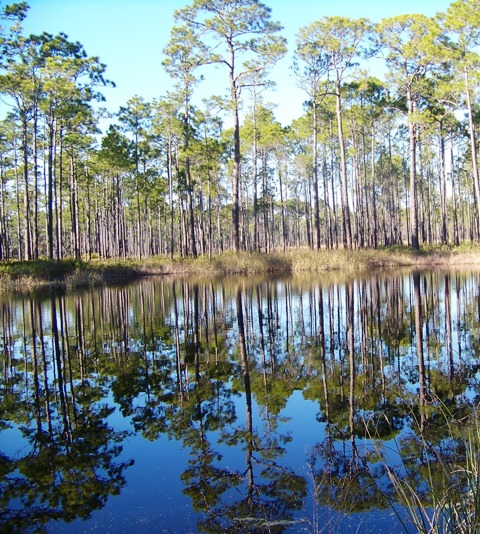
KMHuberImage; oneness; St. Mark's Refuge FL

Jeanne knew I would travel a road not hers but she sent me with love (and a degree) nonetheless. As firmly, she stood in her truth, too, a world of the Venerable Bede, tawny port, and women finding their own way.

In the year of Jeanne’s death, she asked me to teach a session of her graduate-level women’s studies course, the one that gave me the idea for my thesis. It remains one of the greatest honors of my life.

The last time I sat with Jeanne was in the dark hours of a Wyoming winter morning, selecting the music for her funeral, her singing “this little light of mine.” She thought it a good choice.

Me, too.

I have now lived longer than the lifespan that was Jeanne’s. I cannot imagine her in the time of Trump. She thought the 80s impossible, “the me generation.”

Not surprisingly, that last year of graduate school was on my mind as I listened to Dr. Blasey Ford’s testimony. Like so many other women I knew how it would end but I also kept hearing, “every time he shakes his tail.”

That, I know to be true.

The Peace in Thinking Bigger

Who is not looking to live with peace of mind, to rest in the reality of every day, to frustrate the frenzy in favor of calm. No one wants to ride the roller coaster forever. It’s exhausting.

My way is Zen, which provides perspective but not escape. I don’t get to detach from the chaos–create an echo chamber–mine is to sit in the middle of life, to “think bigger” as Pema Chödrön says.

It is more than sitting in meditation or feeling the prana of yoga. Those are powerful, pristine moments, truly a touch of peace, but like Heraclitus’ river, each experience is its own. No do overs.

Yet in the experience is the yen to return.

Some days I sit on its banks, having finally found my way around a horseshoe bend or oxbow but it is to the river I return, always at peace, a place to think bigger.

Where I accept that all of life is an experience. I trust it. And each time I drink in these waters, I am slowed, as if in the sip I experience life to no exclusion.

Every time I go off on another meander, yet another promising tangent, the river does not slow for me but trusts my return. Of course, the river is endless but my experiences are limited to one life.

I begin at the river, mind and body balanced, but soon one is ignored in favor of the other, leaving me vulnerable and impatient, probably defensive, which is what I bring to the world.

If I am not feeling equanimity, I’m not giving it. No amount of positive thinking/action will make it so. If I promise what I am not certain, offer words people want but I doubt, the river will wash out those bridges.

I am back where I began. My mind pulls up similar events and while memory is not 100% reliable, I am reminded I do not step in the same river twice–not ever–no matter how similar the results.

I add to my experience bank as I sit at river’s side, purposefully not moving, to still the body’s sensations, even the ever-present numbness/tingling in my hands. They who never quite wake appreciate the stillness of meeting the dawn as an act of breath.

It is a recent revelation for me, having my body still my mind rather than the other way around. It is not that I didn’t know, it is that I did not do. My mind is more cooperative because it doesn’t have to fight for its turn. No more meandering…well…less trying to step in the same river twice.

We are living impermanence on a grand scale, and it is not always what we would choose, but the river is not selective in its offering. How we accept experience defines us. Do we meet the dawn or run the meander only to return where we began?

 The main question is, are we living in a way

that adds further aggression and self-centeredness

to the mix, or are we adding some much-needed sanity?

Pema Chödrön, Taking the Leap:

Freeing Ourselves from Old Habits and Fear, page 2

Are we thinking bigger?


Are We Americans?

I write about change, which I do not find easy nor do most. We resist before we act, hoping not to have to change our lives. It always means some kind of loss but the longer we avert our eyes, the greater the effect.

Many other sentient beings are dying off (or being killed outright), unable to adapt to our immense presence. We are creating our own date stamp. That’s the global effect.

In America, it is our constitutional republic under siege. We are quite fond of that term, as if we understood its layers of complexity, its nature, by attaching to a label.

Currently, I’m reading Neil Gaiman’s American Gods. One of the characters remarks that America is the only country that is in constant search of its identity. Who or what is America?

It is an ongoing question, and that’s a good thing. A constitutional republic is vibrant as long as its citizens are vigilant. We cannot look away, although we have.

If you have read any Hamilton, Madison, or The Federalist Papers you know whereof I speak. Lots of questions about this new republic and for what it might stand. And there are years of writing, beyond the 18thcentury, about what a remarkable experiment we are.

History reveals some really cool stuff about being American. It’s some of my favorite writing. We can be and have been something good, not exceptional but good. It’s just that we have averted our eyes, and without vigilance, freedom dies.

In less than 250 years this great experiment in democracy is in shreds. Without one country, indivisible, there is no republic. We need to take a knee in defiance to the one who would rule us all, if for no other reason than to defy decree in democracy.

There are no saviors on the horizon. That is fantasy. We can no longer merely man the lighthouses. We are the saviors we seek, such as we are. It gives us pause but we know it is ours to do.

There have been and still are remarkable human beings whose lights are brilliant and whose hearts are so compassionate that all of humanity benefits. These beings have always walked this earth and that they still do is a tribute to the human spirit.

We have many in America, right now, but they are not faces we readily recognize. Too often, we avert our eyes still. Old habits, ours, are dying very hard. We are at our tipping point.

There is “nothing more exhilarating than saving yourself by the simple act of waking” (Junot Díaz). Fine words but what to do? We do know. Awareness is basic to human nature.

It’s not difficult to discern the right thing to do. It means do no harm, and in response, our hearts open in ways that amaze us. And before our eyes the world is different because we are. It’s the little stuff, every day, that changes the world. It always has.

We want swift change, with a certain outcome, but that is the wand the illusionist waves, diverting our attention from what we are, a constitutional republic, a unique experiment with layers of checks and balances. The web we weave is catching he who practices to deceive.

No trick lasts for any illusionist, demagogue, or oligarch. That is the story of human history. Life bends back around, like a boomerang, in ways beyond hope. Every. Single. Time.

We cannot be caught wanting. The simple act of waking, being aware, means taking a stand, accepting that it comes at a cost. We take ourselves out of our wants and act for the need of all. Every. Single. Day.

That’s the compassionate response and its ripple effects form the future. Our way of life as a constitutional republic is revolutionary and always has been. That is America. Are we Americans?