Transformation Requires Refraining

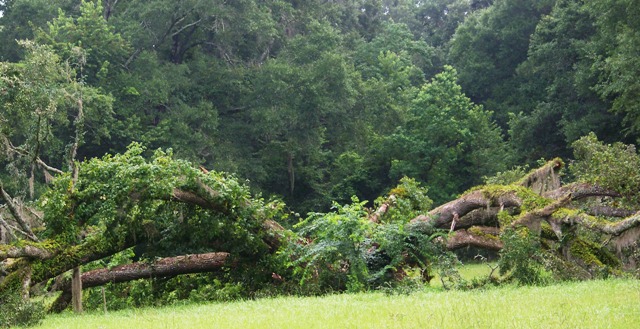
Tree sprawl 0713

Often, we get caught up in transforming our lives. We decide that we will no longer assume an old way of being or an old way of doing. In other words, whether it is New Year’s or not, we make a resolution not only to do better but to be a better person. Just like that.

What we discover is that letting go of a habit or a behavior requires a lot more than filling ourselves with resolve. Letting go is a lifelong practice for we revisit old habits, old behaviors–neuroses we once cherished–often, we recognize them immediately but sometimes, they are disguised as something new and possibly, beneficial.

 The three difficulties (or the three difficult practices) are:

1.   to recognize your neurosis as neurosis,
2. then not to do the habitual thing, but
to do something different to interrupt
the neurotic habit, and
3. to make this practice a way of life

(Pema Chödrön)

Recognizing what we no longer wish to do or be is usually obvious but recognizing all that it has meant to us–how it has disguised itself in order to be an integral part of our every day– is a lifelong practice of recognizing neurosis as neurosis.

For a while, just rising above the neurosis is reward enough. Yet, life is uneven and the rise of the unexpected often dissolves our resolve whether it lasted for minutes or months. Thankfully, life is impermanent, and we get lots of practice in letting go.

What we get to do each time we recognize that once again we have invited in a familiar neurosis is to accept that is exactly what we have done. That is the first step in letting go, accepting what is. Think of it as resolving to refrain rather than resolving to deny.

Refraining comes about spontaneously when you see how your neurotic action works. You may say to yourself, `It would still feel good; it still looks like it would be fun,’ but you refrain because you already know the chain reaction of misery that it sets off.

 (Pema Chödrön)

Even if we have begun to set off the chain reaction, we accept that we have and refrain from going any further. We set our resolve to refrain because we accept where we are. Refraining allows us to halt and not go where we have gone before and unhook from the neurosis.

Resolve serves us as long as it is to accept that life not only changes but masks itself in new faces and different viewpoints, allowing us to experience familiar habits, recognized behaviors, and old relationships through yet another perspective.

Transformation is not a matter of discarding but an accepting of all that we are and were. Such resolve is the genesis of transformation, a lifetime practice of experiencing, letting go, and when we are ready, refraining.

heart of tree 0713
KMHuberImages

When Dreams Speak Mindfully

Bunny Left side 072813In all the ways I have considered present moment awareness, I do not remember wondering whether or not my dreams were mindful. In fact, dream speak has never been on any kind of awareness meter for me, until recently.

“The moment is all you ever have and it is enough” is what I heard myself say in a dream. It brought me right into the present for immediately, I was awake. Certainly, I am familiar with that sentence as it has appeared in a number of blog posts and is the second sentence of my Twitter bio as well.

Thoughts may not be tangible but they are powerful, although like bubbles, they float to the surface and burst—every time. Maybe the closest we come to reality is being in the moment. While I am somewhat curious about what I was dreaming—I have never remembered–I am more curious about being jolted into mindfulness.

For a few months now, I have been sitting meditation through two flares, which has made the entire experience—physically and emotionally–different from any previous. Meditation helps me distinguish between qualifying the flares and immersing myself in them.

In other words, it is not a matter of how I am feeling but that I am feeling what is occurring in each moment. The idea that the moment is the only reality that I am experiencing opened up possibility after possibility for me, and eventually, found its way into my dreams.

There is a lojong slogan in meditation instruction that says, “regard all dharmas as dreams,” which Pema Chödrön explains as “regard all thoughts as being the same as a dream [for]…as we sit in meditation, we could begin to realize that we create everything, all our thoughts, with our mind” (Chödrön).
Bunny right side 072813
In meditation, rather than letting the thoughts trample all over me, I try to witness them for the transient dreams they are, first flaring and then, fleeing. If I do anything more than witness what is occurring, I attach to the thought, giving it life. This is when the “what ifs” and thus, the story, begin. When we attach to the drama of any thought, we have completely left the moment.

Pema Chödrön advises using the word “thinking” whenever we find ourselves attaching to a thought during meditation. As we utter the word in our mind, the story that once gave life to that thought vanishes. Immediately, we are present, as if awakening from a dream. With the thought gone, we return to a light emphasis on the breath and resume our role as witness.

As this exercise works so well for me during meditation, I use it post meditation as well. The practice is the same, including the breath. Regardless of what is occurring, no-thing is bigger than the moment; I find this particularly helpful in moments of physical and emotional discomfort.

“In our everyday lives, we are run around by these thoughts that we make so solid with our mind and our thinking. So when we say, ‘regard it all as a dream,’ we lead ourselves toward something that many people have discovered throughout the ages about the nature of reality: it’s not as solid as we think” (Chödrön).

More and more, I stay with what is occurring in the moment rather than going off with a thought. It is a shorter and more scenic trip. Also, impermanence seems more a friend than I ever thought possible.

KMHuberImages
KMHuberImages

All quotes are from How to Meditate: A Practical Guide to Making Friends With Your Mind by Pema Chödrön, Kindle version, May 2013.

On-Again, Off-Again Buddhism

Waiting 0613Dukkha is the first of the Four Noble Truths in Buddhism and is usually translated as suffering, a concept that has always appealed to me about as much as the phrase falling apart, hence my on-again, off-again nearly thirty-year relationship with Buddhism.

Yet, it is to Buddhism that I always return, rather like everywhere I go there I am for as the Buddha said, “I teach only one thing: suffering and the cessation of suffering” (Pema Chödrön, How to Meditate: A Practical Guide).

While dukkha is the word the Buddha is said to have used for suffering, dukkha has more than one level. The first level concerns mostly our physical bodies and ultimately the fact that we die. This kind of suffering involves “outer discomforts” and is considered ordinary.

The second level of suffering pertains more to our stress/anxiety in accepting that nothing stays the same, no matter how hard we might try to make it so. This is the “dukkha produced by change.”
Taking Off 0613

The third level of suffering is often referred to as the “dukkha of conditioned states,” translated as “dissatisfaction” or “never satisfied.” Pema Chödrön explains:

“Dukkha is kept alive by being continually dissatisfied with the reality of the human condition, which means being continually dissatisfied with the fact that pleasant and unpleasant situations are part and parcel of life.”

Over the decades, it has actually become apparent that if I accept each moment as it occurs— the dukkha of conditioned states—the first two levels of suffering fade away, which is not to say accepting impermanence is easy.

Bloom of Peace 0613
KMHuberImages

For any level of dukkha, meditation helps us strip away our storylines, our drama from any pain or emotion we are feeling. Meditation takes us into the energy of our suffering so whether or not we can do anything about the circumstances, we can decide whether or not to suffer.

If we accept that we fall apart and come together all through our lives, we begin to practice compassion, first with ourselves and later with all those circumstances beyond our control. Because we are human, we are not always compassionate but every time, we have the choice to return to compassion. It is our inner version of war and peace.

In a comment on my initial post on falling apart, Ann E. Michael was kind enough to remind me of these lines from “The Second Coming,” Yeats’ often quoted poem on the aftermath of World War I:

“Things fall apart; the centre cannot hold;
Mere anarchy is loosed upon the world,
The blood-dimmed tide is loosed, and everywhere
The ceremony of innocence is drowned….”
~William Butler Yeats~

Every time I read Yeats or other World War I poets, I am reminded WWI was the war to end all wars, as if any war ever could. When we are at war with ourselves, we must remember that having compassion with ourselves is where peace begins for everyone.

All three levels of dukkha wend their way through our lives: physical pain, decay, and death claim each one; life will not stay the same for anyone; the constant impermanence of life is the human condition.

The Buddha taught, “I teach only one thing: suffering and the cessation of suffering.” Perhaps I always return to Buddhism because it is neither pessimistic nor optimistic but rather, things fall apart and come together again. Dukkha really is up to me.

Thursday Tidbits: The Way to Fall Apart

This week’s Thursday Tidbits post considers retreat as a meditative withdrawal and as the idea of falling apart. As Pema Chödrön says, “Everything that comes together at some time falls apart.” Ours is to experience pain and pleasure–usually alternating but not always–for the nature of existence is impermanence.

Recently, I attended an online retreat offered by the Omega Institute, featuring Pema Chödrön. The retreat covered the four marks of existence–impermanence, egolessness, suffering, and peace–during the first minutes of the retreat, Chodron referred to the four as the facts of life. I felt a familiar stirring.

KMHuberimage
KMHuberimage

I had been drawn to the retreat from the moment the invitation arrived in my email box, about 72 hours prior to the event’s first session. I was not aware of having any connection to the Omega Institute, which is not to say I did not but is to say I do not remember a connection. Still don’t.

Serendipitous email or no, the retreat affirmed my suspicion that I was, indeed, falling apart again–health, writing, life–but the initial session on impermanence revealed how adept I had become at avoiding falling apart. That was an unexpected moment yet it was obvious I had been creating various bubbles of escape for some time. No wonder they felt so familiar, so comfortable.

You might think all my posts about allowing bubbles to float up and through us while remaining in present moment awareness might have had some effect on me other than escaping with the bubbles. They did, ultimately.

A few months ago when I started reading Pema Chödrön’s books, I chose The Places That Scare You over When Things Fall Apart. I felt a familiar stirring of avoidance when I made my selection but convinced myself I needed to read the former title–for what reason now escapes me.

Not surprisingly, the phrase that I kept hearing in the online retreat was “when things fall apart,” more by participants than by Pema Chödrön. That was not surprising, either.

“Things falling apart is a kind of testing and also a kind of healing. We think that the point is to pass the test or to overcome the problem, but the truth is that things don’t really get solved. They come together and they fall apart. And they come together again and fall apart again. It’s just like that. The healing comes from letting there be room for all of this to happen: room for grief, for relief, for misery, for joy” (When Things Fall Apart).

The words falling apart have always been difficult for me. I eschew vulnerability in the same breath that I advocate an open mind and open heart; however, I do know “strength does not come from a bubble of safety” (Chödrön).

Waverly gazebo 0513
KMHuberImage

My bubble burst within the first few minutes of listening to Pema Chödrön, and my tears streamed right along with the video; Chödrön is quite a wit so my tears were from laughter as well as from the pain of recognition. It was a great way to fall apart, actually.

Nothing has changed and everything has changed. I am still dealing with a significant lupus flare and adjusting my life accordingly; as always, diet, meditation, and yoga figure prominently. For me, it is not a matter of being less but a matter of being more, just as I am, which is new.

If I avoid the discomfort that is part of being alive, I am living in a bubble. Bubbles burst; it is their nature. If I open to both the pleasure and the pain of life, I am vulnerable but strength resides in accepting that things fall apart and come together. It is the nature of existence.

*****

Thursday Tidbits are weekly posts that offer choice bits of information to celebrate our oneness with one another through our unique perspectives. It is how we connect, how we have always connected but in the 21st century, the connection is a global one.

Joy Without the Hangover

Stork and Joy 0313
KMHuberImage

The “trust in our fresh, unbiased nature brings us unlimited joy– happiness is completely devoid of clinging and craving. This is the joy of happiness without a hangover” (Pema Chödrön, The Places That Scare You, 2009).

To experience the unlimited joy of every moment, we trust the innate goodness of our open heart. Joy is no more an adrenaline rush than it is an attempt to keep a moment from passing, no hanging on or yearning allowed, only gratitude. It is a matter of equanimity in all matters in all moments.

In revisiting Buddhism through Pema Chödrön, I am reminded of just how basic joy is and just how difficult. As Einstein said, “Everything should be made as simple as possible, but not simpler.” Nowhere is this more evident than in practicing the “four limitless qualities” of joy, equanimity, love, and compassion where ego never dares to tread.

In this past week, I knew moments of suffering in the Buddhist sense–any feeling or action outside the four limitless qualities–I also knew moments of happiness. In either, I did not want the hangover of holding onto the happiness or avoiding the suffering. I just wanted to be.

KMHuberImage
KMHuberImage

Unexpected as the events were, I practiced staying and not straying from each moment, difficult as it was. Equanimity in any moment—trying to remain unbiased—allows us to receive what each moment offers. We look within ourselves to our open heart for our compassionate response.

In opening ourselves to our own worth, each of us finds our way “to the truth that we have always been warriors living in a sacred world” (Chödrön). Within our truth is “the ongoing experience of limitless joy” if we will just trust ourselves within that experience.

At the beginning joy is just a feeling that our own situation is workable. We stop looking for a more suitable place to be” (Chödrön). When we stop looking outside for what is inside us, we immerse ourselves in reality. No matter what is occurring, we are alive, and we rejoice in all that we have and all that we are for “it is easy to miss our own good fortune” (Chödrön).

The practice of unlimited joy is our life’s work in every moment we have. “Rejoicing in ordinary things is not sentimental or trite. It actually takes guts… Everything we see, hear, taste, and smell has the power to strengthen and uplift us” (Chödrön). All we have to do is show up and be amazed, moment by moment.

Sunday Anhingas 0313
KMHuberImage

As unique as each one of us is, we are all connected in our suffering and happiness of our everyday lives, our source of unlimited joy.  “In a nutshell, when life is pleasant, think of others. When life is a burden, think of others. If this is the only training we ever remember to do, it will benefit us tremendously and everyone else as well” (Chödrön).

Our connection with one another is the expression of our love for the unlimited joy inherent in life, in whatever way it is served to us. We keep life simple, as it is, and not simpler, making it something it is not.

This simple way of training with pleasure and pain allows us to use what we have, wherever we are, to connect with other people. It engenders on-the-spot bravery, which is what it will take to heal ourselves and our brothers and sisters on the planet” (Chödrön).

To face every moment with equanimity is not always possible but doing the best we can with what we have lessens any hangover and increases unlimited joy.

Confessions of a Fixer: Does a Warrior Lurk Within?

KMHuberImage; Wood Stork Fishing
KMHuberImage

Warrior is not a concept that has ever described me for I have lived my life as a fixer. Now in my sixties, I can only hope that fixer is a permanent past tense characteristic.

It is not as if I was not aware of the warrior concept—I was introduced to Buddhism over 25 years ago–but as a committed fixer, I cared little for clashing or “going a-warring, not that a bodhisattva or Buddhist warrior does either.

“Those who train wholeheartedly in awakening unconditional and relative bodhichitta (“enlightened mind”) are called bodhisattvas or warriors…of nonaggression who hear the cries of the world. These are men and women who are willing to train in the middle of the fire…[who] cut through personal reactivity and self-deception [through] their dedication to uncovering the basic undistorted energy of bodhichitta” (Pema Chödrön, The Places that Scare You).

Admittedly, I did not care for the word warrior and was not  comfortable with bodhisattva but I admired the warrior’s way and still do. For me, it has been amazingly easy to confuse fixing myself with the warrior’s way. It has taken decades to discard the cloak of the fixer.

As a fixer, it never occurred to me to consider maitri, the complete acceptance of one’s self as one is. “Only when we relate to ourselves without moralizing, without harshness, without deception, can we let go of harmful patterns” (Chödrön). Yet, for the warrior maitri is essential. The warrior understands her inner self is her guide, her greatest strength.

“Lasting transformation occurs only when we honor ourselves as a source of wisdom and compassion” (Chödrön). As a fixer, I did not consider acceptance or surrender. That was giving up. No, I was determined to change my fundamental nature–as if I could–that was my fixer’s guide to true transformation. Yet, everywhere I went there I was, no matter how many different paths I took.

KMHuberImage; Florida turtle sunning
KMHuberImage

In the way of the warrior, there is no clean slate, just the self that is. The warrior knows her strength is in accepting all of the patterns and behaviors that have been her life. They are the open road to her heart, free of any sign pointing to one feeling or another. The warrior is open to the energy that is.

“There is nothing wrong, nothing harmful about that underlying energy. Our practice is to stay with it, to experience it, to leave it as it is” (Chödrön). As a fixer, I “dealt” with my feelings and thoughts by putting them where I did not have to see them. It was enough to know they were there. Maybe they would just go away for I had no intention of staying with that kind of energy. I was too busy trying to fix my life.

The warrior has the courage not only to look within herself but to stay with the energy, regardless of its outcome. Essentially, she “touches the bubble [of emotion] with a feather” (Chödrön). The warrior goes beyond the reactive demands of the mind chatter to the energy that is fueling all that emotion.

She stays with the energy for that is the warrior response, to experience. Sometimes, the response is silence but regardless, the warrior does not cling to whatever outcome occurs.

Always, the warrior is as compassionate with herself as she is with the world, not trying to fix either one. The quest of the warrior is staying in present moment awareness, and for a fixer from the past, that is quite a quest.

Patience is…

…second to simplicity, according to sage Lao-tzu, sixth century B.C. author of the Tao Te Ching (Tao). Some sources cite the Tao as the second most translated work in history, preceded only by the Bible. As always, second place may or may not impress but what is impressive is that each of the Tao’s 81 sections (or 5000 Chinese characters) provides us with the constant contradictions inherent in life and then, most generously, offers us strategies within the Tao’s three central teachings–simplicity, patience, and compassion—for every moment we live.

That simplicity precedes patience is not difficult to appreciate. Before we can be, we must separate the strands of our life, acknowledging each strand unto itself as well as its relationship to every other strand. Patience emerges from the untangling but “the place of waiting is always trying and very difficult to live out…fear wants us to act too soon…patience, hard as it is, helps us outlast our preconceptions” (Mark Nepo).

If we practice patience rather than relying on a conditioned response—that which we have always known or done—our perception of what is possible changes completely. Within patience, the moment is fresh and free as in Moksha, a Sanskrit word meaning freedom or release. Deepak Chopra has referred to Moksha as “choiceless awareness,” in which the moment is emotionally free from the situation surrounding it.

In the freedom of Moksha, every moment is free because it is now, completely and fully present. Just as the strands separate to reveal simplicity, in Moksha, the present moment is removed from any future or past situation. The moment is free of any complication, of any condition. The moment is.

Like the moment, how we respond is free and fresh, separate from any situation that has established itself in the past or in the future. As long as we are completely present, we are as emotionally free as the moment. Essentially, we are not attached to the situation’s outcome– a central tenet of Buddhism—as yet another ancient tradition reveals itself within the practice of patience.

Yes, I am weaving in and out of the Vedas of Hinduism and the Tao of Taoism along with the Zen of Buddhism, an intricate weave of no beginning and no end. Continuously, I am startled by similarities—as if I were following the strands of the weave for the first time rather than following a familiar pattern—there is such crispness, freshness to this wondrous weave’s undulating eternity. There is such life in these traditions and thus, freedom.

Yet, the moments from my previous meandering among these traditions show themselves from time to time. There is unraveling yet to be done but the strands sort themselves as only memory can. It takes time but I wait for I know every moment I have is free as long as I have patience. It is rarely easy but with practice, patience increases.

“… When feeling urgent to find your place on this Earth…wait…and things as you fear them will, more often than not, shrink into the hard irreplaceable beauty of things as they are…of which you have no choice but to be a part” (Nepo).

And buried therein are the seeds of compassion.

(All Mark Nepo quotations are from The Book of Awakening