Making Lemonade, the Patient Pause

“What else might this mean?”

Recently, I came across the question in this context: how different the world might be if we asked that question when facing a tense moment, when feeling anger or aggression, whenever there is pain.

To ask the question is to pause, creating a distance from the situation, preventing an immediate and perhaps pointed reaction.

We have given ourselves the opportunity to make the compassionate response.

Juggling for space 0414

Rather than clinging to the pain of the moment, we release it. We are not boxed up in a mindset or limited in our choices. In the compassionate response, we are open to the unimaginable.

We are not relinquishing our beliefs or changing our goals. We are not giving up or accepting less. We are standing in the reality we have, taking a moment to step back and make the choice that suits the moment.

We find ourselves less concerned with identity, the beliefs of “I,” and more concerned, maybe even intrigued, with how we might offer more to many.

Good Neighbors 0214

Asking what else might this mean reminds me of a well-worn meme—when life gives you lemons make lemonade— there was a time that I would roll my eyes whenever I was told this, which was rather often.

At some point, and I have no memory of any “aha” moment, I considered what it might mean to experiment with life’s lemons. It is an exercise in patience. In making lemonade, I found curiosity and grew to trust it.

Was I lowering my standards?

These days, I live a routine of no routine, relieved of the stress of tasks assigned to specific times. There is enough freedom so that on the days when life is one lemon after another, lemonade seems more than sufficient. I never know how tart or naturally sweet the lemonade might be.

I sip and stay curious.
Stork and Joy 0313

In the last two months, I produced more solid writing than I have in the last year and a half.

Physically, I am markedly different. I am not referring to walking with a cane or wearing a soft neck collar. These are temporary conditions of myelopathy.  Once again, the question of lowering my standards drifted through my ego. That required more than one glass of lemonade.

In short, myelopathy relieved my suffering for I had no choice except to slow down. Myelopathy accomplished what nearly 40 years of autoimmune disease could not. That is the difference.

In slowing down, I gained life anew. I have just begun to consider what this might mean for me.

KMHuberImage

Although my pace of life is slow, more measured, it is now possible for me to comfortably complete two or three errands in one outing, something I have not been able to do.

In rest, I find awareness, options never imagined. No longer am I pushing through to the end of a task, exhausting all of my resources.

In exhaustion, I find energy. To me, they are opposite ends of the same spectrum. I aim for even. The day does not dawn to certain tasks, it lights up with curiosity.

Still, there are the daily lemons.

My biceps feel as if there are weights on them; little has changed since the spinal cord surgery. The same is true for the numbness/tingling in my hands, particularly my index fingers and thumbs. They are unpredictable.

I use voice recognition software so that the frustration of typing does not impede the writing. My thumbs and index fingers have difficulty pinching or picking up small objects such as pens or pills, a mushroom slice, coins for the laundry.

Daily, I do dexterity exercises for my fingers and thumbs, a bit of yoga for my arms as well. There is no pushing just gentle flexibility. There is a lot of lemonade as well.

For all those moments when the world rages, as it does for all of us, if I ask, “what else might this mean,” I choose the compassionate response. It is not about having an answer. It is about asking the question.

The Rhythm in a Routine of No Routine

Of late, I am pursuing a routine of no routine. As much as I would like to do away with all artificial constructs of time,  the best I can do is settle into 24 hours, immersing myself in the amount of time most assured to me, a single day.

Watercolor 0815

Within these hours, I am not pushing, shaping, or molding a future outcome. Rather, I focus on the rhythm, the beat of the moment and what it requires. I cut up vegetables to put into scrambled eggs, slice ginger root for my daily tea.

There is also the daily revising of words, working a single sentence round and round only to realize its moment has not yet come—or has.

More and more I am aware of the flow in being. It is all but palpable. There is a rhythm in a routine of no routine, momentary and impermanent. Labels float by, never overstaying their welcome.

Often, it is only when I stray from the moment that I sense its flow. The past gives me a sense of the present. As Mark Nepo reminds, it is not that we stray from the moment that is important—that is part of being human—what is imperative is that we return to it.

Watercolor II 0815

Regaining a sense of the present through the past is valuable but I have noticed it also opens the door for my ego. And as I recently discovered, my ego is like the Hydra, the mythological beast of many heads and thus, many voices.

Ego can take many different forms and shapes. It is like the hydra.

You cut off one head and another head replaces it.

You cut off that head and see a third head and a fourth head ad infinitum.

This is because in the manifest dimension, ego identity is the root of life, and if the ego identity is lost,

then life as we know it no longer exists.

It exists as light; life becomes light.

Swami Niranjanananda Saraswati

Val Boyko introduced me to this metaphor in a post on her wonderful blog, Find Your Middle Ground. Far too often, I strike at my ego, as if I might actually conquer it once and for all.

In cutting off one head, I only create another.  As Val advises, what is the point of that? She reminds that the new ego may be even more deceptive.

It is a powerful incentive to float on the rhythm of a routine no routine, allowing the moment to reveal its rhythm. There are fewer heads, fewer strikes.

The rhythm of a routine of no routine encompasses body sensations as well as the emotions of the mind. They are signals, physical points of light. Their intensity varies but sometimes a signal is the total experience of the moment.

It is not for me to escape or suppress it. Like not cutting off the head of the hydra, I observe the sensation. It will only still if I sit with it. It is the well of energy available to me.

Some days, the bottom of the well seems close; other days, the well seems bottomless. Either way, if I sip and do not gulp, the available energy will sustain me.

Watercolor III 0815

Every day, there are requirements that must be met for a routine of no routine is not without its responsibilities. If and how I meet those responsibilities depends on whether or not I sip to the moment.

If I take large gulps–as if to anticipate the day–I will be back at my well sooner and more often. These are days frenzied with energy, brimming with new Hydra heads. They are laid waste, unproductive and exhaustive.

Perhaps the greatest advantage of a routine of no routine is that it is available in every moment, as close as the next breath. It relies not upon expectation but upon showing up.

It is a rhythm in which the mind does not squeeze itself; the body does not constrict its vessels. Always, there is the breath that will release as well as renew.

There is no reason to cut off the heads of the Hydra. It is just as easy to allow them to nod to one another.  After all, they are my identity, the life I have as a human.

When I am without identity, I am light.  In this moment, I am human.


Ponding: Pooling of Unwanted Thoughts

Sometimes, rather than practicing mindfulness, we engage in an exercise in focus. We are casting about the past and future rather than “living richly in the present” (Sylvia Plath).

I call such an exercise ponding. In nature, ponding is the pooling of unwanted waters. In being, ponding is the absence of mindfulness, the pooling of thought outside the present.

As Plath reminds us, to live richly in the present is the “hardest thing” to do.

It is a lifetime practice.

Spending days kmhuber imageI grew up in a high plains desert where rivers rush, streams gush. Ponds are few. In the Rocky Mountain West, water is on the go, impermanence on the fly.

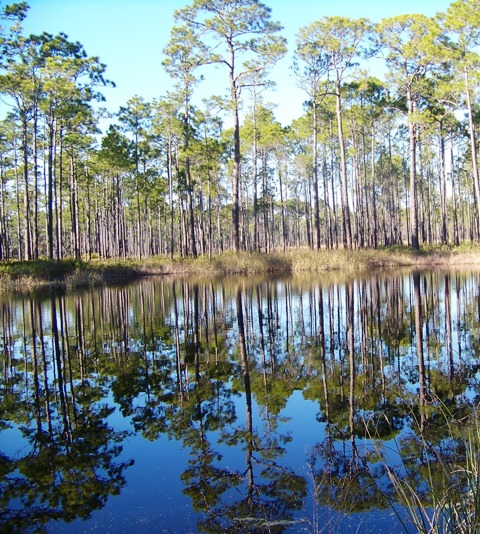
Now, my home is the meandering rivers and ponds of the Florida panhandle, subtropical lushness.

That both the West and South offer life opportunity opposites—mile high to sea level—once occupied much of my thought and time.

Then, it was location, location, location rather than living richly in my present. I spent years pooling unwanted waters for the future, trying to re-create past ponds.

It never works, even as an exercise.

This past week I found myself at Chapman, a pond I once visited daily as my life in the South began.

I missed the rush of water, having little consideration for the life that teems within a pond.

All that changed within the comfort of Chapman, contained under canopied, moss-draped oaks and towering Ponderosa pine. Daily, I focused on the peace I attributed to Chapman pond, unaware the peace was within me, always available.

Of course, I was ponding, unaware of my life as I was living it, pooling up thoughts, the unwanted waters of my past and future.

I was fishing, a practice I began in childhood.

Always, I searched any and all waters to see if they supported fish. I had to know if there was life. Fishing would occupy me for decades. I practiced consistently.

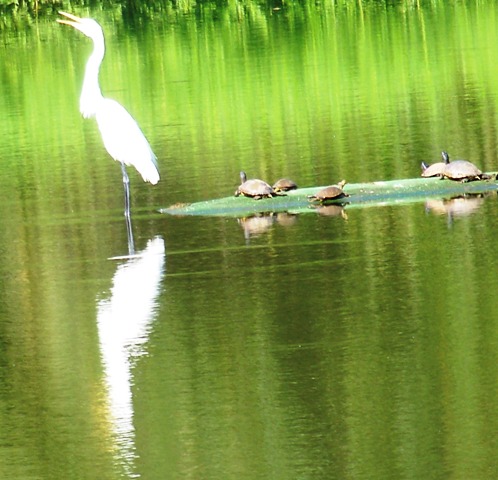
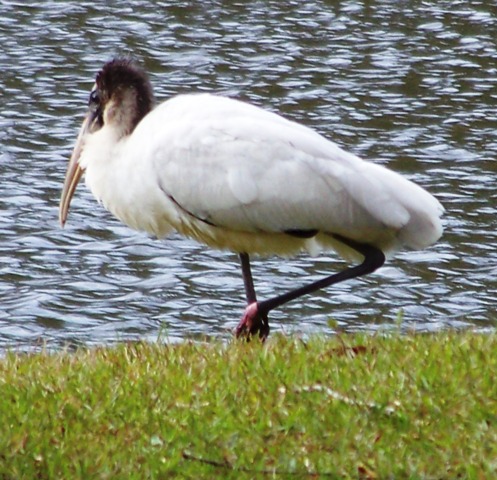
KMHuberImage; Wood Stork Fishing

As I aged, casting a line with no hook replaced catching a fish. With each cast, I did my best to imitate a fly afloat to tease a fish.

Whenever I went fishing, I was living richly, completely confined to the cast of the moment.

Perhaps it was the beginning of a mindfulness practice; perhaps, it was just fishing.

I gained a sense of the tide of time, the fisher and the fished, impermanence at its best.

There was no ponding, no thoughts of bigger or lesser fish or even the one that got away—only, the energy of the experience, the sensation that never stays.

I have not owned a rod and reel in years but still I fish.

Bits and Pieces: The Reality We Have

Sun and Sand 1013

If we live in the moment, we work with the reality we have. Sounds good, if a bit obvious or perhaps platitudinous. Yet, it seems the way to experience the best of what is being offered.

And if we are not thrilled with the reality we have, we need only remember that like the weather, life is impermanent. It will change; reality will offer other options.

Working with the reality we have is a bit of a slippery slope as joy never seems to stay long enough while pain never seems to leave soon enough.

Reality—the moment–is all we ever have. For however long it lasts, it is for us to do the best we can. Impermanence will do the rest.

Currently, my reality seems as if it is in a holding pattern. Doing the best I can to experience the moment I have, I admit I am often on the lookout for change.

Peeking 0215

Recently, I came through cervical myelopathy surgery with remarkable success–truly, there were some unforgettable and stellar moments–but success has shown its shadow.

Success and shadow—as one—make up memory. Always there are moments of both but perhaps only in memory are the two as one.

Memory does not re-create reality. It allows us reflection, a way to wait upon reality, to work with the moment we have.

In shadow, my reality seems a growing force of chronic illness comprised of autoimmune disease, degenerative disc disease, and myelopathy.  There is no complete defeat possible, not physically. That is not my reality in any moment.

Accepting that reduces my suffering and strengthens my resolve to explore the experience I have. By not attaching to the pain as the only reality I will ever know, pain passes like a shadow. Acceptance incites change.

Of course, I am not always as aware or as accepting. Sometimes, I have such an aversion to my reality that I am determined to change it, as if I could. After all, I am not accepting the actual experience. I am only trying to avoid it.

Sometimes, my aversion is quite elaborate, methodical even. Other times, I rush reality for all I am worth with everything within my grasp. I suffer for my indifference to reality. It is as if I am fighting my own biology.

After all, each of my body’s cells works with the state of its reality. Each cell works for balance–aging as well as disease affect this process– yet each cell works with its own unique makeup. It accepts its options.

In working with the reality we have, we accept that moments do not restore each other. They offer us other options, new perspectives on reality that just a moment ago seemed so difficult, even impossible.

Reality is messy that way. It overlaps who we are with who we were just a moment ago, leaving a trail of consequences.

Neither good nor bad, they are reality lived, bits and pieces of experience. Some are stored as success; others slip in as shadow.

The wise adapt themselves to circumstances,

as water molds itself to the pitcher.

Chinese Proverb

Compassion Jug 092113

On Expedition….

Who Has My Back 0215

It is time for me to explore the latest results of impermanence–physically and emotionally–so there will be a pause in posts. It really is an expedition, of sorts, this exploration of my mind and body as one.

The two are a single continent now, although once I saw them as separate countries, accessible only at certain times and tides.

What you are is what you have been.

What you’ll be is what you do now.

Buddha

So, my expedition begins.

(Regular posts will resume May 31)

(Delays and obstacles abound so June is now my anticipated return)

(And in July came the greatest challenge of all. I met it with all I had, and it proved to be enough)

(Blog post is on the July horizon)

Stay Open to Life: It is Rigged

Sometimes, life feels pre-determined, pre-destined even. I do not believe that it is but this past week had me wondering—at least for a while. Nothing in my world was as it appeared. I was stuck in some kind of state.

There was the appointment I missed by arriving too early.  I arrived at the time I was told, but that was not the time scheduled for the appointment.

My pot of vegetables—a staple of mine—soured as if it had been in the refrigerator for a week rather than two days.

A quick glance at the calendar revealed the number of days remaining in the month had no working relationship with the amount in my bank account, even if I remained in a meditative state until May 1.

Physically, there were issues beyond my usual lupus symptoms. These my body had kept all to itself. Until now.

Closer Reflection 0215

Ultimately, of course, each was a moment for me to broaden my perspective, to view life through a different lens. Always, I am reminded of the Buddha’s belief that pain is part of life but suffering is optional.

That was my state of mind when I came across this quote from Rumi–“Live life as if everything is rigged in your favor”—well, why not? It would change the view, if nothing else.

And how else does the tide turn other than with a view change?

A missed appointment freed up some cash as well as time to explore some options I had not considered.

There was no saving the pot of vegetables, of course. I suspect a couple of days really had turned into a week. Some part of my mind knew this for in the crisper I found fresh vegetables.

And then there was a visit with a good friend. Nothing rigs life in your favor quite like that. In the space of a couple of hours, our conversation ranged from Harper Lee to “branding” in social media. We have yet to meet a topic we would not attempt.

Most of our obstacles would melt away if,

instead of cowering before them,

we should make up our minds to walk boldly through them.

Orison Swett Marsden

And while we are walking through them, we may realize life really is rigged in our favor for the view always changes.

Have a good week. Stay open to life’s rigging.

The Highest Good: No Fight, No Blame

Without a fight, there is no blame. This basic truth can be found in the Tao te Ching—no fight: no blame—as well as in the major texts of many spiritual traditions. Blame seems that integral to the human experience.

In last week’s post I chose the phrase aflame with blame as a reference to its incendiary nature. It is quick to flame, this blame, although it is not a trait with any substance.

Whatever person or event we blame is not what causes us to suffer (Byron Katie). Blame is a distraction, and it is easy to get caught up in its mindset.

We suffer when we hold onto a mindset; in a blind stance, we dig in for a last stand. Mindset is a misguided attempt to avoid the inevitable.

Nothing ever goes away until it teaches us

what we need to know

Pema Chödrön

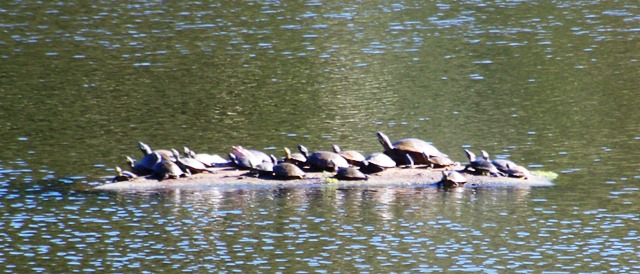
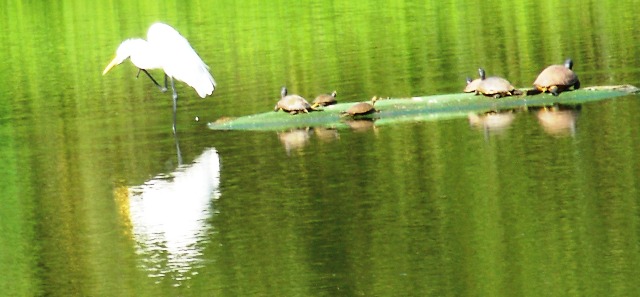
 Turtle Row in fall 1013

It would be hard, maybe impossible, to provide an example of a life experience that does not teach us for in every moment there is something to be learned. At a certain point in life, each of us becomes aware that what breaks us open is what we need to make us whole again.

It is how we learn. It is hard to accept, at least for me.

But time and again, I have realized this one lesson: when I open myself to learning rather than blaming and struggling against, I find the highest good in any situation. The flames of blame and the smoke of striving fade away.

Often, I turn to the teachings of the Tao (in translation) for I treasure its basic truths. Such reflections soothe and instruct every time I return. I am refreshed.

Water gives life to the ten thousand things and does not strive

(Tao, Verse 8)

And like water, the highest good is life-giving, “flowing in places men reject and so is like the Tao”  (Verse 8). All we need to remember is that water will flow—even through rock–rather than reject the route.

The highest good never rejects us, either, even when we do our best to shape what will not be shaped. There is no blame, no fight, no mindset.

Chronic illness is my greatest teacher, as I have mentioned many times. Even in my more difficult moments, I am more aligned with learning than striving, which is not to say I do not have some fiery moments of blame throwing. They are not as frequent.

I find it easier to recognize and to dismantle a mindset, and to do it with self-care and love. After all, a mindset deflates quickly for it is only made of air. And once I breathe it in, I can breathe it out.

Mindset is only a thought no matter how often it may appear. In my experience, mindsets return for they have unimaginable power IF they are allowed to attach and become unassailable belief.

We can learn from observing a mindset if we let it go for what it is. That is the way to keep learning rather than to continue struggling. I find hope in impermanence no matter how many times I meet similar situations. It makes the highest good in any situation seem not only possible but realistic.

We are more like water, wanting life for all and strife for no one. It is ours to flow, like water through rock if we must, open to the ten thousand things and like the Tao rejecting none.

High Tide St Marks 0214


Unplugged to Get Rewired

At Rest 0215

This image is of EmmaRose in her favorite place—in her plush and if necessary, heated bed–practicing her favorite pastime. If you live with a feline, you are constantly reminded how integral sleep is to life.

It is the way sentient beings unplug and get rewired, which is what EmmaRose and I have been doing for almost a fortnight. It is her daily way to unplug regularly.

I am, however, a slow learner yet I have another constant teacher, just as dedicated—autoimmune disease, lupus in particular and in a lesser role, Sjogren’s syndrome.  This is my sea to sail.

Not too long ago, I wrote a post about not unplugging, not ever coming to shore. I believed I could bully my way through any tempest—I was that kind of sailor–but that is not the law of the sea nor is it true self care. It is dangerous sailing, selfish and thoughtless.

large waves 0215

Self care is never a selfish act—it is simply good stewardship

of the only gift I have,

the gift I was put on earth to offer others.

Parker Palmer

Good stewardship requires a daily course adjustment of how to offer my gift without the dualistic thinking of there is only one way. Dualism exacts quite a price for in choosing one way, another way is excluded. Better to steer between the two for balance. They are within the same sea, co-existing with one another.

I was reminded of the inherent imbalance in dualistic thinking as I came across a lively Facebook group discussion on healthcare, specifically alternative versus traditional medicine. Here healthcare is a civil war with both groups firmly entrenched in their respective camps.

There is no one and only one way to health for all but for each of us there is a way to our best health. It may be a balance of both camps or it may lie more within traditional rather than alternative medicine or vice versa.

But without the benefit of learning what each camp offers, there is no balanced approach to one’s best health. In balance is wholeness and without it, we are aflame with blame. Our essence is diminished.

I do not haunt these discussion healthcare boards as I once did but I am reminded of my own imbalance in my approach to my best health. I am fortunate in having experienced the benefits of both camps but I do not know that I have expressed that in a broader perspective.

Sun and Sand 1013

And while my preference for traditional Chinese medicine (TCM) remains the course I steer, it is not without the benefits of traditional medicine. For traditional medicine continues to teach me about the western perspective on autoimmune disease. In turn, that perspective broadens my TCM options.

Wholehearted living is not a onetime choice.

It is a process. In fact, I believe it

is the journey of a lifetime.

Brene Brown

Good stewardship just may the journey of a lifetime, easy to drift off course or become becalmed. And then, there are the storms of life, much like the one I am in now, tossed about, swamped from time to time, but not run aground or sunk.

Some who read this blog also know chronic illness. We sail a similar sea as we chart our course anew for storm or to catch the wind for full sail. When we dock for a rest, we learn from our days at sea. We share our catch.

We know what we offer is the best we have to give, and that it only lasts a short time. We also know the impermanence of the sea requires we open our sails to the wind when and as it is given, and when it is denied to rest with a steady hand on the tiller.

Here are some of my favorite resources: Toni Bernhard’s How to Be Sick seems a guide for any storm as is Jan Chozen Bays, M.D.’s Mindful Eating. And through every storm I practice meditation and a gentle yoga flow.

Till we meet again.

Every Day 0215

Looking into Nature’s Mirror and Finding Grace

Waverly Larch Spring Nubs 0313The cycle of seasons is nature’s mirror, ours for the viewing. Mostly, we celebrate a new season but not always the length of time nature takes to make the change.

We assign spring a date, anticipating an event that may or may not arrive as assigned. Arrival is always a mystery. In a moment of grace, nature unfolds in its own time, in its own way.

“I do not at all understand the mystery of grace—only that it meets us where we are and does not leave us where it found us.” Anne Lamott

I do not understand the mystery, either, but I am content for the experience of it. All I do know is that grace transforms. And like spring, it is its own mystery.

Grace flows with the majesty of a meandering river. Part of its mystery is the gradual eroding of its course, without beginning or end. We do not know the precise moment we are transformed. We only know that we are.

In grace, we do not wallow or stagnate but discover and re-discover the spring of our lives not so much as to re-live but to be reborn in yet another season.

Spring is not a one-time event.

Grace moves us to deeds we once thought impossible. In each spring of our life, we emerge anew. Grace allows us to bare ourselves as we are—to take the risk again—to meet each new spring we are allowed.

We are given only one body to grow but we have the gift of grace to transform, to meet yet another spring. Our seasons cycle within our hearts, bold with the opportunity each affords.

We need not remain wrapped in winter, blanketed in its protective shell. Like nature, ours is not to stagnate or to wallow but to transform from a winter’s day into a spring’s blossom. It is the way of grace.

The bud opens, and life begins anew, yet again. There is grace in this falling away of one season for another, a radical change replete with uncertainty.

As we are revealed so are we seen. Grace unlocks our softness.

Upon Closer Reflection, Comfort in Chaos

Last week, I wrote of finding balance and the ongoing shifting of left and right until balance arrives of its own accord. Osho refers to this as a “graceful” shifting, which for me it has never been.

Rather, it has been a struggle, one worth taking on but very like sitting in a cave of chaos. I have not found grace there—not yet—but I discovered comfort, thanks to reader comments on last week’s post.

Comfort comes from accepting that balance is in constant motion. It is impermanent. When I start to squirm, I know I have shifted too far one way. It is time to let go and begin to swing back.

Balance is not identifying with left or right because in balance, I am both. Standing in the middle of a moment is mindful, and I have all the time I need.

Closer Reflection 0215

I experience moments I wish would stay forever. There are others I am convinced will never leave but being alive is being in motion as no moment ever stays. Life touches us—painfully, indescribably, unbelievably–myriad experiences ever in motion.

It’s chaotic. And it seems I have found comfort in that.

The reason everything looks beautiful is
because it is out of balance,
but its background is always in perfect harmony.

This is how everything exists
in the realm of Buddha nature, losing its balance
against a background of perfect balance.

~Shunryu Suzuki~

In looking at past posts, variations of the Suzuki quote appear in one form or another at least annually, sometimes more. Yet, this year is different. Why? I have a physical sense of balance.

Regular readers know I recently explored northern Florida with a dear friend. We covered over 500 miles in four days, which for a person with lupus is too much sustained activity. I am grateful for every moment, and yes, I was exhausted.

I am used to the routine of resting that usually follows such an outing. I  break from life, including blogging and writing. I shift from full days of activity to days of complete inactivity. Always, that has been the way.

Not. This. Time.

Peeking 0215

I do not remember consciously thinking of Suzuki’s “perfect balance of existence” but it seems my subconscious decided to trust it. I shifted my resources, not gracefully but gradually, with a certain awareness of the ever-changing balance in each moment.

Oh, there were moments of despair but they were brief, not worthy of support. I could not rouse myself to give in, give up, and wait. There was no life in that.

Rather, I immersed myself in each day, looking to the balance available to me. I communicated with my pain—sensing its signals—without struggling but with shifting.

When I went to my acupuncture appointment, my meridians overflowed with energy. An acupuncture point full of Qi (energy) signals stagnation; the needle is the stimulation to release it.

Point after point, Dr. Gold’s needles provided relief. I did not want that treatment to end–the release was that deep and that immediate. When I arrived, my overall pain level was a solid 8, my knees a 10. The treatment reduced my overall pain to a 3; in some locations, the pain was gone.

Resting came easier as did my sleep. My level of body energy, no longer trapped, shifted to the daily balance available. The body is graceful when allowed to do its work in its own way.

Acupuncture opened me to trusting the chaotic nature of balance. It is not the nature of balance or mine to stagnate. Ours is to be in the constant chaos.

My readers’ comments opened me to just how exceptional that is. Thank you, dear readers.

Every Day 0215