Upon Closer Reflection, Comfort in Chaos

Last week, I wrote of finding balance and the ongoing shifting of left and right until balance arrives of its own accord. Osho refers to this as a “graceful” shifting, which for me it has never been.

Rather, it has been a struggle, one worth taking on but very like sitting in a cave of chaos. I have not found grace there—not yet—but I discovered comfort, thanks to reader comments on last week’s post.

Comfort comes from accepting that balance is in constant motion. It is impermanent. When I start to squirm, I know I have shifted too far one way. It is time to let go and begin to swing back.

Balance is not identifying with left or right because in balance, I am both. Standing in the middle of a moment is mindful, and I have all the time I need.
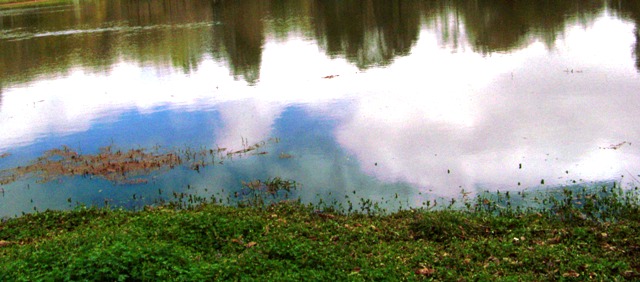
Closer Reflection 0215

I experience moments I wish would stay forever. There are others I am convinced will never leave but being alive is being in motion as no moment ever stays. Life touches us—painfully, indescribably, unbelievably–myriad experiences ever in motion.

It’s chaotic. And it seems I have found comfort in that.

The reason everything looks beautiful is
because it is out of balance,
but its background is always in perfect harmony.

This is how everything exists
in the realm of Buddha nature, losing its balance
against a background of perfect balance.

~Shunryu Suzuki~

In looking at past posts, variations of the Suzuki quote appear in one form or another at least annually, sometimes more. Yet, this year is different. Why? I have a physical sense of balance.

Regular readers know I recently explored northern Florida with a dear friend. We covered over 500 miles in four days, which for a person with lupus is too much sustained activity. I am grateful for every moment, and yes, I was exhausted.

I am used to the routine of resting that usually follows such an outing. I  break from life, including blogging and writing. I shift from full days of activity to days of complete inactivity. Always, that has been the way.

Not. This. Time.
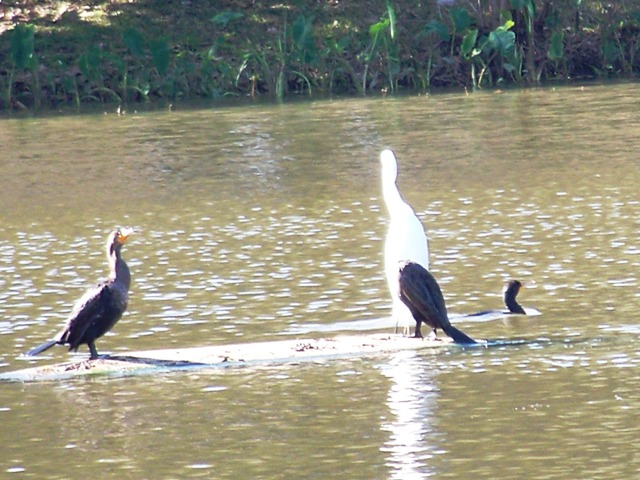
Peeking 0215

I do not remember consciously thinking of Suzuki’s “perfect balance of existence” but it seems my subconscious decided to trust it. I shifted my resources, not gracefully but gradually, with a certain awareness of the ever-changing balance in each moment.

Oh, there were moments of despair but they were brief, not worthy of support. I could not rouse myself to give in, give up, and wait. There was no life in that.

Rather, I immersed myself in each day, looking to the balance available to me. I communicated with my pain—sensing its signals—without struggling but with shifting.

When I went to my acupuncture appointment, my meridians overflowed with energy. An acupuncture point full of Qi (energy) signals stagnation; the needle is the stimulation to release it.

Point after point, Dr. Gold’s needles provided relief. I did not want that treatment to end–the release was that deep and that immediate. When I arrived, my overall pain level was a solid 8, my knees a 10. The treatment reduced my overall pain to a 3; in some locations, the pain was gone.

Resting came easier as did my sleep. My level of body energy, no longer trapped, shifted to the daily balance available. The body is graceful when allowed to do its work in its own way.

Acupuncture opened me to trusting the chaotic nature of balance. It is not the nature of balance or mine to stagnate. Ours is to be in the constant chaos.

My readers’ comments opened me to just how exceptional that is. Thank you, dear readers.

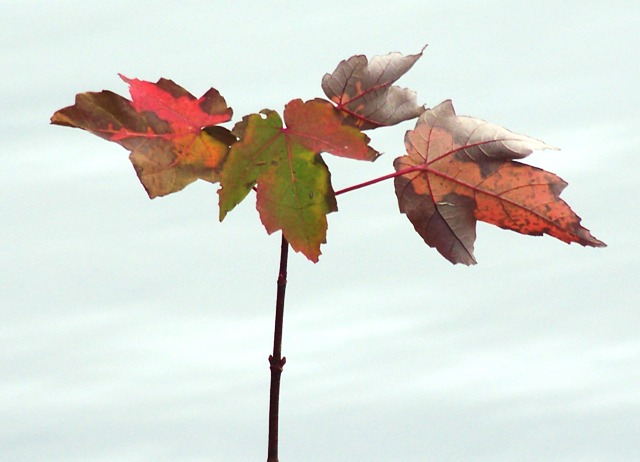
Every Day 0215

Maintaining Moderation Requires Graceful Shifting

For me, moderation is elusive. I struggle for balance—the measure of moderation—at times, my struggling is painful.  When I become aware of pain, however, is when I cease suffering from it. I aim for even on the day I have rather than going in search of the day I want.

[When] balance comes of its own accord…

[it] has tremendous beauty and grace.

You have not forced it, it has simply come.

By moving gracefully to the left,

to the right, in the middle,

slowly a balance comes to you

because you remain so unidentified.

~Osho~

Osho’s words remind me of Michael Singer’s observer: “There is nothing more important to true growth than realizing that you are not the voice of the mind. You are the one who hears it” (The Untethered Soul).

I find his image of the observer quite helpful in finding the balance in any moment but especially in those where I am on the edge of right or dropping off far left.  As the observer, I have an immediate distance and thus, a broader perspective much like what happens in writing.

The thoughts are in my mind and with my fingers on the keyboard I search for consonants and vowels to create a physical representation of the thought.

The distance between the ever evolving thought and its concrete representation—the word(s)—moves me closer to the center. I am not identifying with the left or the right as I move to the center–not always with grace, I admit.

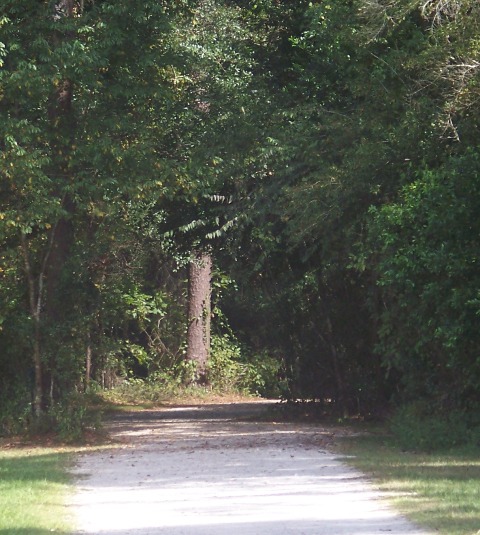
ocean pine 0215

That may be the overall process of moderation—each of us has our unique way with it—and at one time or another, we struggle with it. Why? We have to let go of what we have to receive what we are given. To me, that is the grace of moderation.

It means keeping the “big picture” in mind.  Whether we are discussing diet, climate change, or the world future generations will inherit. And that’s difficult to do. In terms of global issues, the big picture now looming is an ominous one.

In seeking a balance for a better world—finding moderation—we have to change the way we live, maybe even who we are. Balance—the measure of moderation—is a constant shift, an adjustment to the world as it currently exists. That will determine the world that is yet to come.

Often, the task feels overwhelming, especially if we anticipate a future we cannot know or gnash our teeth over a past that cannot be changed. All we have is the moment to gracefully move a little left or right to maintain our balance.

We begin with observing the life we know best–our own—ever aware of doing no harm to no thing, to no one. Then, we move gracefully to the right or to the left as life comes at us only to leave us. And when we leave, ultimately, both left and right are increased rather than diminished.

Testament of Friendship

The past ripples round me. It is a time of reflection—one last look—before I let go. In reflection is the unchanged past but looking through the eyes of the present, I am changed.

kmhuberimage

Sometimes, it feels like we are not remembering as fully as we might those loved ones who have died. It is the nature of life to evolve, one experience after another, changing us as we learn to live with the love from loss.

We cling to our memories. Our reluctance in letting go is as physical as it is emotional. It is a mind and body hold. Our cells store the emotion of a memory, often as pain. In letting go of the emotion, we release pain. The cell is changed.

Our body and mind are what we eat and how we meet each moment we live. In letting go, it is not that we love less but that we love completely.

My recent blog posts have been awash in memory. One post was about finding anger long forgotten; the other remembered the Zen master who taught me acceptance. That the anger has been denied longer than acceptance learned does not surprise me.

Both posts lead me to this one as this week marks one year that my beloved friend died of endometrial cancer. Our friendship spanned more than half a century. We grew up in the Rocky Mountains and eventually we both moved east, she to the north and I to the south.

I still think of her as frequently as I did when she was alive. Often, I have to remind myself there are no more conversations for us. I search my memory for the conversations we did have. They are a comfort and sometimes, I learn something new.

Weather in weather 0314

I was not able to be at the celebration of her life service but her partner sent me a DVD of images and music that completely captures her life. I have lost count of the number of times I have watched it, especially in the early months.

Always, I stop the DVD at one particular image. It is a long quotation, in her handwriting, regarding friendship. It is the opening and ending sentences that stay with me. It opens as:

Never cast aside your friends if by any possibility you can retain them. We are the weakest of spendthrifts if we let one friend drop off through inattention, or let one push away another, or if we hold aloof from one for petty jealousy, or heedless slights or roughness….

This was not how she talked but it is how she lived. It took me a while to locate a source for the quote. The words have changed a bit over the centuries—language evolves with us–but the meaning is unchanged.

We accept our shortcomings and our strengths, knowing that sometimes one becomes the other. We lean less on distinctions and more on acceptance.

And while I never knew the quote before Maurya’s death, it is what I have now, a testament of friendship for the life I still have to live, as the closing line of the quote reminds me:

It is easy to lose a friend but a new one will not come for the calling nor make up for the old one.

(Mother’s Magazine)

I do not know that she ever lost a friend. And yes, the diversity of her friendships is a rich legacy. I am changed by her death but more so by the way she lived. I hold close this testament of friendship for the years left to me, for the life I have yet to know.

We meet today.
We will meet again tomorrow.
We will meet at the source every moment.
We meet each other in all forms of life.

Thich Nhat Hanh

In letting go, I find forever.

Sun and Sand 1013

Learning Zen from a Beagle

Humans have to work at equanimity for often there is a well-established mindset that stifles openness. Mindset often closes the door on mindfulness. There is, however, an enviable equanimity—evenness—that we associate with dogs. They can meet a moment with all they have and let it go.

If you can sit quietly after difficult news; if in financial downturns you remain perfectly calm; if you can see your neighbors travel to fantastic places without a twinge of jealousy; if you can happily eat whatever is put on your plate; if you can fall asleep after a day of running around without a drink or a pill; if you can always find contentment just where you are:

you are probably a dog.

Jack Kornfield

 A Lamp in the Darkness: Illuminating the Path Through Difficult Times

My mindset in reading the Kornfield quote was, “Great! A pithy, Zen quote about how to meet difficult moments.” Well, it is and it is not—such is the nature of Zen. Mostly, however, I thought of a dog named Gumby.

First Days 0708A beagle mix–maybe dachshund, maybe rat terrier, maybe neither–Gumby was mostly black and tan with a bit of white on her chest. Long-legged yet petite.

I was thinking of the evening when diabetes claimed her sight. We were on our walk with Gumby determining our route, as always.

In an instant, her long legs searched wildly for the sidewalk that seemed to have disappeared. Yet, she did not stop but kept going until she found her stride again.

That evening and every walk thereafter, she decided our route by beagling– scent memory.  She walked me miles—some days as many as five—I followed, trusting her to take us where we needed to go.

Blind but completely present, Gumby walked me into the world so I could see it as it is. It was not the world I wanted but it was the world we were in. We walked, every day and every night for two-and-a-half years.

We even appeared on the evening news as concerned residents regarding a dangerous cross walk. Gumby’s blindness went unremarked. Few ever noticed she was mostly blind, unless they looked directly into her clouded eyes. And even then, who could be sure?  Gumby remembered 011812

But if any light ever entered her eyes it was in listening to Puccini’s La Boheme. Whether it was a “Live at the Met” radio performance on a Saturday afternoon or from a CD, we sat through all four acts together every time.

She came to me as an older dog with few teeth—hence the name, Gumby–I never knew the origin of her love for classical music or opera.  It ceased to matter how she had once lived before her life with me.

She taught me to meet the moment with whatever I happen to have wherever I might happen to be. She took me many miles through many difficult moments. Years later, I am changed and unchanged.

I still sit through all four acts of La Boheme, completely present in its story, as if for the first time. It was my favorite opera before I knew Gumby but now each performance is a new experience. Was it her favorite opera? That has ceased to matter as well. It was the only opera in which we sat together in meditative stillness.

Mindset comes from experience, our memory of a time past. But sometimes, with enough time and space, we can reflect on difficult moments, returning to the unchanged as the changed being we are.

I took her beagling. She taught me Zen.


What the Heart Reveals in a Beat

“I feel your anger in your pulse.”

Yet again my acupuncture physician revealed my heart to me. Immediately, she ignored my statement of “I’m okay” and began listening to my pulse.  She always seems to know when to dismiss my words for what my heart has to say.

It is not that I am being deliberately dishonest. My mind says I am fine but as Dr. Gold keeps reminding me, the pulse of my body–my heart—reveals the truth, no matter what that may feel like.

This time Dr. Gold showed me how to feel the anger in my pulse. I was stunned at feeling this bubble, this thickened middle of a single beat. I remember my mind flashing the word “sadness” but I focused only on the beat of my heart.

Currently, my life is one of movement, so much stirring and shifting physically and emotionally. It is exciting, this palpable energy I am discovering through traditional Chinese medicine, this literal listening to the beat of my heart.

Lake Ella Fountain 0115

I feel as if I am sitting with a trusted friend for I am. It is a friend that allows my mind to reflect on but not to linger in what has passed. It is a lifeline for revisiting anger.

This broadening of the beat of my heart takes me first to the movie, Selma, and then to 1965 as I remember it. That August I would change labels—no longer just a child but now a teenager as well.

The Beatles had already arrived. The Civil Rights Act had passed. Lyndon Johnson had been elected president by the largest landslide in history. Martin Luther King recently received the Nobel Peace prize.

But what the movie Selma awakened in me was the feeling of that time.  Even in the sparsely populated, high-plains desert of Wyoming, it was obvious momentous change was on the horizon.

For all Americans this energy would explode into their living rooms mostly on black and white television screens for it was an anger of black and white.

The heartbeat of the Civil Rights movement was palpable after just one moment of watching televised events in Selma and the subsequent protests. It was energy, it was hope, and ultimately, it became a movement for all faiths and for all races as the five-day March on Montgomery would show the world.

There was a belief that we would overcome. And the fact that President Johnson used those very words in his televised speech on the Voting Rights Act shocked many and angered some.

black and white in nature 0115

Fifty years later, we still fall short but ”tolerance, like any aspect of peace, is forever a work in progress, never completed, and if we’re as intelligent as we like to think we are, never abandoned” (Octavia Butler September 1, 2000 NPR interview with Scott Simon).

We may be struggling “to be the change we seek”—maybe that is the never-ending human struggle–sometimes a great cause and other times, a true movement.

Our world is now even smaller as we meet one another screen to screen on a daily basis—connected is the word bandied about—we are faced with all we are and are not. We are a work in progress, ever in motion.

For a moment, we can reflect on but not bring forward the hope of another time. We move along with the real pulse of life all around us, a collective heartbeat. And if we are angry, that is our pulse. It is our truth.

What if we all learn to listen to the heartbeat of our anger? It is more calming, this expanding of a heartbeat, than you may think for it is the truth of what one feels. In knowing the truth we find our way to compassion and possibly tolerance, once again taking up the banner of believing we will overcome.

What kind of world might be possible if we turn to our hearts for the truth, for the real pulse of our lives? Are we intelligent enough to try?

peace offering 0115

Note: Tom Michael, who walked the miles from Selma to Montgomery, writes a thoughtful and powerful essay on that time. You will find it here.

Monarch Meditations on Butterfly Warriors

Rock and Hard place 1014

It is just dark, the morning darkness that precedes every dawn, the stillness before the splash of the sun that becomes the light of day. This is the pause—the moment of stillness—before the stirring begins yet again.

Most mornings I immerse myself into the stillness—my meditative state I call it—for when I do, there is a shimmer to the day that seems to rub off onto me as well.

Yet, there are days upon leaving my sleep state that I am aware of a mind-body consensus considering “what if we just rest today” and not really awaken. Mind knows that skipping meditation means body will not have to stretch itself with yoga.

There is a cascade of memories—perfect in their replaying of such lazy pleasure—of what past days of rest have meant: comfort food, marathon movie watching, binge reading.

It is the escape offered to the day at hand. Almost always, I decline the escape route. But every time I do, there is an acknowledged appreciation for what that escape once meant. It remains an old friend rarely visited.

Instead, I sit and remember the warrior monarch butterfly, a true bodhisattva and a welcome memory on the mornings I hesitate to meditate. The complete metamorphosis of the butterfly reminds me why I meet each day I am given.

It is the butterfly who gives up one way of life after another—each stage fraught with life-ending possibilities—for to fly is to know the freedom of walking on air. From the stillness of the larva the caterpillar stirs to its search for sustenance, consuming one leaf after another.

There is a reward for all this eating, and it is not one of rest but rather it is the spinning of a pupa—the chrysalis—a chamber of life as tissue, limbs, and organs of a body that once crawled become a body that now flies.

No new life emerges until the old is transformed into what is necessary for the life that awaits.

And for the monarch warriors, there is a 2,500-mile migration critical to its survival, a quest that relies not on individual warrior monarchs but on all monarch warriors living their lives to ensure the species.

Safety in Numbers 1014

The monarch warrior moves through one form of life after another without wondering about the ways of existence. Such consideration falls within the realm of the human species.

We yearn to be like the monarchs, warriors working together, not singularly, to ensure our species survival. We might ache for metamorphosis but we do not easily let go of our accumulated experiences, especially those that seem to require so much of us.

“We don’t want to go through that again,” we say, which we won’t, of course, not exactly. Perhaps the monarch warrior does know this.

We want to spread our wings without changing who we are. We are agreeable to making necessary changes—an adjustment of our very being—as long as we are allowed to keep what is most dear.

We may not be as fearless or as selfless as the warrior monarch but we are just as connected to existence. We are born with the capacity for complexity rather than the singularity of purpose of the warrior monarch.

I have to wonder just what the warrior monarch might know for it is my nature to wonder. And so I do. On most mornings in the stillness before the stirring begins yet again.

Releasing the Fragrance of Forgiveness

Lately, I have been writing about transformation, in particular the changes I am experiencing with my health. And this week, there is even better news. For the first time, my acupuncture physician felt all of my pulse points. For me, that is huge—to say it is remarkable is not an exaggeration.

It indicates more movement than stagnation. It is as if a way of life, a mindset, is dissolving, breaking up. There is still some stagnation but the decline is being reversed as my cell structure changes in my body’s attempt to balance itself.

Transformation offers what has never been. If not a new body, literally, then a body and a being “falling in love with life, again” as reader Val Boyko so generously offered in the comments on last week’s post.

That more life is pulsing through me accounts for my increased energy level; also, it seems accurate to say—now–that my pain level is also in decline, albeit a slow one.

Flying Away 0115

Transformation occurs in its own time—patience is essential–but the benefits are life-changing, literally. I find I am more present in each moment. I do not want to miss any of the unfolding of any day so I am less likely to pay attention to mindset. There is so much new to explore.

Still, the mind prefers calling up the tried and true of old, a series of steps followed again and again until they are, well, set, as if in concrete. Mindsets are the known, limited in effect and thus, predictable, perhaps even stagnant.

Yet, I do not believe that a mindset is without its worth. Not at all. Rather, it is our own bank of experience. Mindset makes us who we are.

Mindset is what we bring to the moment we meet transformation. Then, we have a choice: same-old, same-old secure or the unknown of transformation.

“Patience, grasshopper” is a line I have met many times these last months yet sit I did and do still. My impatience is less for I found that in being patient, one finds forgiveness, the ability to let go of the debt that accrues from all regret. It is the way to open one’s heart to all.

KMHuberimage
Not a Violet but a Petal

Not surprisingly, I returned to a favorite quote. Forgiveness is the “fragrance that the violet sheds on the heel that has crushed it.” Though often attributed to Mark Twain (since the 1970s), it seems its present form is a compilation of phrases from centuries past.

No doubt the thought stays with us for forgiveness is such a struggle for humans.

There is a firm delicacy in a violet petal forgiving the heel that crushes the life out of it. Soon, the fragrance dissipates but it lingers just longer than life. That is forgiving the debt.

The fragrance reminds that in forgiveness we are transformed–a mindset shattered for what is yet to come with no regret of what has been.

Transformation requires we accept every step we have ever taken; it requires we acknowledge every action or decision, given or received. None can be undone. All steps are ours to own, to accept, and to release.

As always, forgiveness—a journey deep and often dark—begins within us. We cannot offer to others what we do not give to ourselves. In the moment we accept all that we have been, we release the fragrance of forgiveness.

We focus not on what crushes us but on what releases us.

Losing a Mind-Set and Gaining a Life

My first post for 2014 considered aim for even as a way to live. I saw it something like this: in every experience I give what I am able to give, mindful that no two occurrences are the same no matter how similar they seem.

Remembering that uniqueness is not easy but is key to maintaining my balance. If I offer more than I am able to give or if I give less than is possible, I miss my mark.

In 2014, I aimed high and low aplenty but by year’s end I found myself more and more in the middle—in balance, even—as I let go of a  mind-set that skewed my aim.

Letting go meant giving up tried and true ways that comforted—at times even protected me—from the chronic pain inherent in my life. The subconscious is not easily dissuaded for it has had a lifetime to fine tune what comforts in order to cope. It’s its own infinite loop.

It would take me most of 2014 to break out of this mind-set. I wrote about it—a lot—on this blog.

Winds of Change 0214

In “The Winds of Change,” I believed I was slowly but surely losing my ability to walk. My response was I would adapt, like always. After all, I have an active online life and a great picture window with a view of the woods.

By September, “Some Awareness My Way Came”  in the form of spinal and cognitive issues. Yet, I would need another warning from my body that old ways would no longer serve. My kidneys sent a short but clear message.

“Only in Expanding My Cone of Habit” did I begin to dismantle the mind-set that had comforted me for decades. I turned to traditional Chinese medicine believing I had nothing left to lose. As I would discover, I had a lot to lose.

Wood Stork 0214

Transformation leaves behind habits of a life lived. There is no “getting my life back.” Life anew is an accumulation of every misstep, every revelation I experience. The stuff of transformation is recognizing that the great teachers in one’s life have always been there.

One of mine is chronic pain. Our relationship has changed completely. I no longer need to cope because I no longer fear pain, emotional or physical. I no longer fear pain spiraling out of control. Rather, I sit with my emotions as my body sends sensations.

I aim for even.

My transformation is far from complete but the changes I am experiencing I cannot explain other than through my new relationship with pain. I walk–slowly–without any limp and am just beginning to take short—really short—walks.

Just beginning 1014

Every day, and I mean EVERY day, I have a level of energy, something I lost decades ago. On the same day, I can complete errands, do some housework, and write–if necessary. Nine months ago, I thought I would live from my adjustable bed.

The pain is not gone but the mind-set is. There is no seeking comfort to mask the pain. Rather, there is the slow movement of yoga and the stillness of meditation, the balance of acupuncture. And there is food that fuels the biological changes taking place in my body rather than inflaming it.

Every day, I aim for even.

As I was writing this post, I kept trying to find ways to impart what aim for even might look like separate from chronic illness. August McLaughlin seemed to read my mind when she posted this graphic in her wonderful blog post.

August resolutions 0115

She captures aim for even beautifully. In giving what we are able to give, no more and no less, we resolve to live life as the ebb and flow that it is. We keep ourselves afloat.

Finding Refuge on the Eve of the Winter Solstice

It is early morning on the eve of the winter solstice, neither dark nor light but both—in a way. Even for north Florida, it is cold. I have the car heater on low as I drive to St. Mark’s Wildlife Refuge on the Gulf of Mexico.

It is perfect winter solstice weather.

Winter Solstice Skies 1214

The solstice celebrates the dark during a season given to light, a reminder that in light there is always dark. Yin-Yang. Oneness.

And there is the inherent stillness of the solstice. The increasingly dark and deepening autumnal sleep culminates in the pivotal moment of the winter solstice.

After this day, every dawn will mean more light and less night, as slumber gives way to the awakening of the spring solstice.

Every year, I write these words or similar ones regarding the winter solstice in the northern hemisphere. Usually, I celebrate the event with a walk around Waverly Pond but this has not been a year of “doing things as usual,” even holiday traditions.

Rather, it has been a year of firsts. Some may mean new traditions for me, among them driving to St. Mark’s on the eve of the solstice. Perhaps more than any other season of my life, I am immersed in transformation.

It is not surprising that I am drawn to the Refuge where transformation is in evidence everywhere.

Areas of longleaf pine stand stark in their burnt orange and black beauty against gray, morning skies. Wiregrass is the color of wheat ready to harvest.

Quiet of the marshes 1214

It is the season for prescribed or controlled burning, a matter of survival for the longleaf and wiregrass ecosystems. They depend upon the transformation fire brings–first alight with flame and then, darkness.

Transformation always involves the falling away of things we have relied on,

and we are left with the feeling that the world as we know it is coming to an end

because it is.

(Mark Nepo, The Book of Awakening)

As I look across saltwater marshes in seasonal slumber—timeless transformation–I cannot imagine being anywhere else on this dark, gray morning on the eve of the winter solstice.

Marshes 1214

In the quiet dark, I am mindful of the necessity of letting go in life. It takes time, transformation does, time to awaken to the light of a life yet to come, time to welcome the world anew.

Mindfulness gives you time. Time gives you choices. Choices, skillfully made, lead to freedom.

Bhante Henepola Gunaratana

The solstice seasonal slumber reminds me to quiet myself, to observe the dark that is as much a part of this festive season as is the light. In the stillness of the dark, the light swirls.

On the marshes of St. Mark’s on the eve of this winter solstice, I let a life lived end as a life I have not begins. Each ending is yet a beginning, a time for slumber in anticipation of awakening anew.

In keeping with the light and dark of the season, regular blog posts will return in 2015.

Reading Both Sides of the Label

The giving season 1014
It is the “giving season,” wrapped gifts are tagged to identify who is receiving and who is giving. These labels tell us that we are thought of, sometimes in a way that surprises and, unwittingly, may separate us.

Labels do exclude as well as identify—they play a necessary part in our lives—sometimes, we come to rely on a label as finite when in reality, it is not.

This labeling of life as a known quantity is easy to do. Some labels last a lifetime.

If the doors of perception were cleansed
every thing would appear to man as it is, infinite.
For man has closed himself up, till he sees
all things through narrow chinks of his cavern.

William Blake
(“The Marriage of Heaven and Hell”)

For most of my life, I did not appreciate there are two sides to any label, much like the dark and light wolves that live within us. Just as both wolves require feeding, both sides of any label balance the life experience.

Lone tree 1014It is not merely a matter of turning over the label—that is sleight of hand, yet another illusion—it is in the turning transformation occurs. The unknown emerges as the known fades.

Right now, my health is somewhere in-between what always has been and what has not been. I do not know what the other side of my chronic disease label may reveal.

It seems fair to say it is still a blank. It is also more than fair to say I am a bit befuddled but just as intensely curious. Amazingly, I seem rather patient, something I am not, usually.

Wear a label long enough, and it is how the mind wends its way. If the mind—the head–leads the heart long enough it will grow silent, aware it cannot be heard.

What matters lives,

Hidden or not,

Within us

So that when the right words come

We recognize them as something

We tried to say but did not know how.

Fanny Howe
(The Wedding Dress: Meditations on Word and Life, “White Lines,” P. 70)

Let me give you the right words that came to me as I began to peel back the label of chronic disease: I am no longer waiting to die; I am creating a life new to me.

The choice between no longer waiting to die and creating a life is not an obvious one. There is a chasm, decades deep, between the two sides of this life label. Grief is what bridges them.

I grieve for my life of chronic illness that consumed all of my middle age and most of my youth. I have to grieve soRock and Hard place 1014 I stop trying to regain health that was possible only in the years then but is not in the years I have now.

“People wait until nothing else works,” is what my acupuncture physician told me. Yes, it was only when I believed I had nothing to lose that I was able to lose the label of a lifetime.

Who knows what life will emerge. What I do know is that it has not been nor is it about what I might gain. There is no desire to wrap up this gift and slap a label on it. As it is given, so is it received.