Walking Waverly in All its Wonder

KMHuberImages
KMHuberImages

It has been twelve weeks since I added a regular yoga practice to my life and ceased my daily, morning walks. The change was a gift from lupus. There have been few days that I did not participate in a full yoga flow and only a day or two that I did not practice at least one pose.

The gifts of yoga have been many and continue to come but I miss walking Waverly, a park I have come to know in all seasons. It is a trusted place. Admittedly, during most yoga sessions memories of Waverly drop in and out.

I hoped to return and have.

It is still too soon to tell whether or not a daily walk may return to my regular regimen but that I was able to walk all around the pond means Waverly is still a possibility from time to time. As often happens at Waverly, it was a walk of wonder for the wildlife is rich and varied. I like to think my return was noticed.

As the images reveal, all of the usual suspects came out, if not to say hello at least to give me a glance. I was especially thrilled to see this creature, whom I have only glimpsed twice before. On this day, there was patience for a portrait.Fox pose 1013

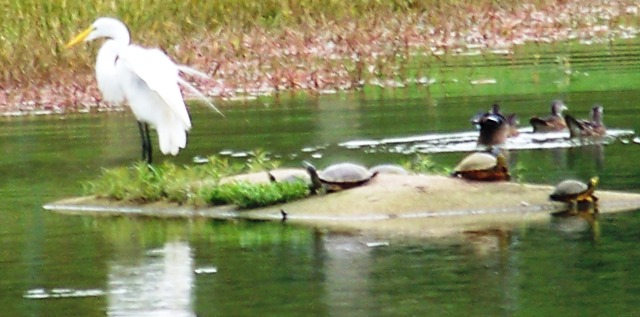
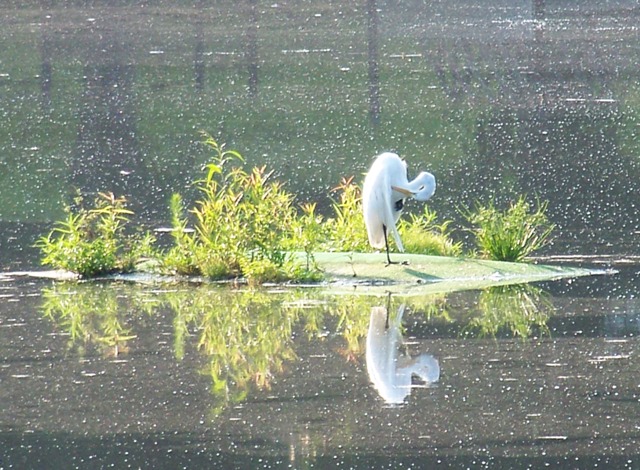
Turtle Row is especially populous on this bright fall morning with all sizes welcome. Snowy egrets walk water’s edge, sampling the bounty of the pond. As I cross the bridge, the falling leaves crackle as they catch a crisp, momentary breeze.

In every direction is awe for the seeing, and I gawk. After some time I realize I have assumed Mountain Pose or Tadasana: spine straight, knees together with toes pointed in slightly to even my stance, head lifted in full appreciation of just being at Waverly.
Snowy Egret in fall 1013

Among the many gifts of yoga is learning to move mindfully, neither straining nor restraining the body but moving according to its level of flexibility.  Yoga is my dialogue with my physical self; each movement opens my body to response. I have come to recognize the sensation of the flow of my own energy, my own Waverly.

In the real Waverly, my steps are deliberate—once I would have characterized them as slow—sinew connects muscle to bone in simultaneous stride, a mind-body connection. There is a light awareness of sensation with every breath, with every step.
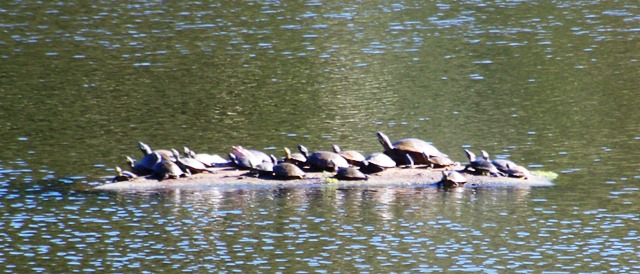
Turtle Row in fall 1013

It is a familiar, meditative energy that I have come to appreciate for it is present in a moment of monkey mind or one of being with nature. Such a meditative state always serves, highlighting the sensation of the physical self as the mind drops in thought after thought.

Walking Waverly, I open to its energy, swinging my arms and flexing my fingers just because I can. Images of past yoga sessions drop in and out of my walk, as if to remind me of the first time I felt warmth coursing up and down my legs. It is the energy of life.

I remember that I have not always acknowledged the energy of my life. Just because I was able to walk did not mean I was mindful of my body movement in any regard. It is possible I am receiving another chance despite decades of inattention to my physical self other than to constantly demand of it.

So on this morning as I walk Waverly again, I am mindful of the wonder in every step.
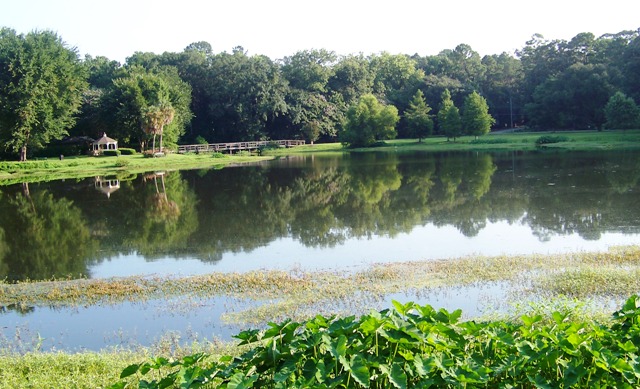
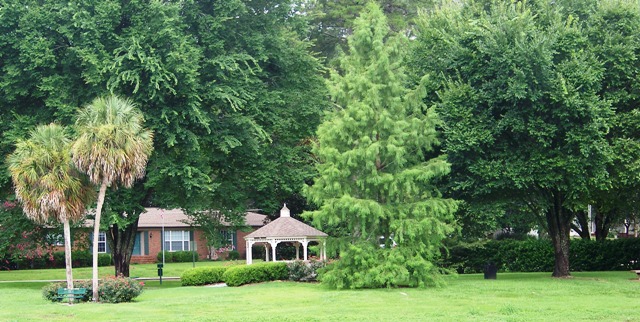
Waverly shade 1013

Compassion Totters on Friday the 13th

Simplicity, patience, compassion.
These three are your greatest treasures.
Simple in actions and thoughts, you return to the source of being.
Patient with both friends and enemies,
you accord with the way things are.
Compassionate toward yourself,
you reconcile all beings in the world.

~The Tao~

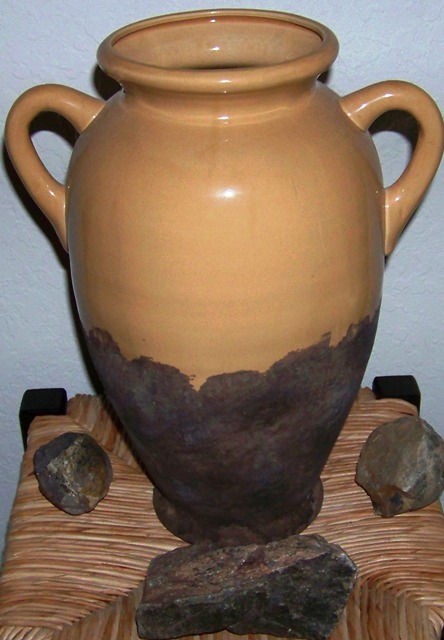
A car accident allowed me a “real-life” opportunity to practice the three treasures of the Tao—simplicity, patience, compassion. The Friday the 13th mishap found my compassion tottering, like an amphora (vase) too close to the edge.

Frankly, my patience held, even when my tone of voice betrayed me, as I temporarily strayed into the tentacles of story so very far from the simplicity that is “the source of being.” As far as I know, the story strands still abound outside my being.
Compassion Crash 091313

At the core of the story is an uninsured driver, momentarily distracted by a text message, hitting one parked car and sliding it into another (mine) in the parking lot of the apartment complex where all involved live. The driver left a phone number, unable to remain at the scene. That is the source of every story that followed.

Thoughtful neighbors who witnessed parts of the accident notified me. My initial thought on seeing the two cars together was I am very fortunate. The car that slid into my white Scion was severely damaged on both sides. After more than one call to the police, an officer did arrive to assist with details and separate the two vehicles.

My compassion vase moved ever closer to the edge as the hours ticked by, bringing no response to a voice mail I left for the driver. His late night call to me with strands of story unconnected to the accident wrapped round me, and my emotions swirled to the surface. My compassion went into free fall.
Compassion Jug 092113

Over the next 72 hours, the driver’s story would emerge in various versions, sometimes tangentially connected to the incident but often not. In a face-to-face meeting of all three car owners, I peppered the driver with questions in a cold, staccato tone devoid of compassion, a tone I once used far too frequently.

However, that realization was not what returned me to compassion but this thought: I really have to stop reading/watching so many murder mysteries. I am not a chief inspector solving a crime. I smiled, stopped my questions, and leaned back in my chair, finally listening to the driver’s story. Then, I let it go.

Securing my amphora of compassion—returning to my source of being—meant more to me than staying in a never-ending story. Once, I had lived that way, for most of my life, actually. Those years pale to how I live now.

Of course, I still have moments when my compassion totters, and there will be others, no doubt, but such is the human experience. My vase is secure for now. As for the final reconciliation, the driver and I have entered into a payment arrangement. After all was agreed and signed, he said he had not expected me to be kind. I responded that he and I had one bad moment but we need not have another.

The Wisdom in Compassion, a Matter of Nuance

Living with All Beings 081913

The practice of compassion requires considerable courage, for the way of compassion is living an active life amongst all beings. Practicing compassion means we trust ourselves enough to connect to life completely, making ourselves vulnerable, a daring in its own right.  Such is the wisdom of compassion.

Compassion (Late Latin: com=”together” + pati “to suffer”) offers us a perspective on suffering. Its etymology—the peeling back of the layers of its life—reveals its nuance, allowing us a peek into its past. Much of the mystery of life lies in such nuance.

The practice of compassion is a commitment to connect with the suffering of all beings, including those we do not like. Connecting is not condoning but rather a revealing of the nuance inherent in every being. “It involves learning to relax in allowing ourselves to move gently toward what scares us” (Chodron).

A Closer Look 081913

Moving toward what scares us allows us to soften rather than harden, to open to options previously hidden from view. In acknowledging that all suffer, we recognize that all know pain in its various guises. Suffering reveals our connection to all beings.

In practicing compassion, especially when to do so challenges us to our core, we appreciate the pain of other people. The nuance is in recognizing the suffering without judging the behavior. In this coming together with those who suffer— the etymology of compassion—we glean the wisdom inherent in living such a life.

Dr. Grace Damman terms this as the aligning of compassion with wisdom: “What I mean is that when I am served by other people who are driven by their own standards of excellence, and not by the demands of my ‘whiny self,’ then I am best served by them.” It is what she discovered in her recovery from a serious car accident, a truly vulnerable state.

In reaching for the wisdom within compassion, our perspective broadens, leaving us less susceptible to shenpa or getting hooked by our emotions. When we are hooked, we soar with our neuroses, oblivious to objectivity. We sever our connection with all beings, hearing only our own demands, our own needs.

Storm Clouds 081913

The churning of our emotions slips us into solitary confinement with our suffering, devoid of compassion. We sharpen our selves, harden our hearts to resist what scares us–creating the classic boomerang effect—the life of the infinite loop.

When we finally stop and peel back the layers of our pain, we open up to compassion, softening into the realization that all suffer. We connect to the nuance of life. The practice of compassion is not for the faint of heart but for warriors—bodhisattvas—who trust their vulnerability, for they know it is their connection to the wisdom of existence.

“We cultivate bravery through making aspirations. We make the wish that all beings, including ourselves and those we dislike, be free of suffering and the root of suffering” (Chodron).

Such is the way of a life of compassion.

After Silence, Music Expresses it Best

The power of music was the Bloggers for Peace challenge for August. It brought to mind Aldous Huxley: “After silence, that which comes nearest to expressing the inexpressible is music.”
forpeace6
Throughout the history of humanity, music has permeated barriers often considered impenetrable. Music unites continents, as the deeds of humanity are recounted in song. Human existence is the song of the ages written across bars of hope and measures of peace.

From Paleolithic time onward, every major tradition—Islam, Christianity, Judaism, Buddhism, Taoism Tao, Hinduism—embraced song as one way to reveal the stories of human existence. Combining music and story, each of the major traditions expressed compassion for all in the community as a way of daily living. Similarly, each tradition warned of the pitfalls of hoarding riches and extolled the virtues of giving to the least among us.
Heron on Turtle Row 0213

In each verse of the song of community, all give and all receive, the song of the ages expressing the inexpressible.

For many in my generation, “We Shall Overcome” was the song for civil rights for every American as well as every citizen of the world. We are still singing this song, still committed to overcoming what divides us in order to live with what unites us–peace. Globally, it is the melody of the human heart, expressing the inexpressible. Within its coda is the constant vigilance required for compassion and thus, for coexistence.

Peace is not passive but like compassion it is alive, an aria to overcome what we have yet to accomplish in twenty-one centuries: to live with one another in the harmony of acceptance sans the labels of race, creed, color or any dissonance that divides rather than unites.

Since we began composing the story of human existence, there have always been notes of hope. Perhaps the power of music and its ability to express what we cannot will one day lead us to a vigilant, vibrant life of peace and compassion.

It is and always has been to our great credit that we sing.

If memory serves, the video clip of Joan Baez singing “We Shall Overcome” is from the 1969 movie, Woodstock.  There was a time I would have recognized it immediately. Well, I still know all the words.

Other Bloggers for Peace Posts:

Grandmalin: The August Post for Peace

Rarasaur: One Little Candle Burning Bright

The Seeker:  Music That Will Make You Smile

Rohan Healy:  Alien Eyes

Electronic Bag Lady: Music and the Brain

The New Now: A Possum in Moonlight

The possum’s size was considerable enough that first glance indicated it might be an armadillo but the sheen of its fur, seemingly silken in the moonlight, proved it a possum, and a rather deliberative one at that.

Browsing the ground and grasses, the possum foraged with pause, as if such a night of light was evident even with possum vision. Feline EmmaRose (ER) and I had also been drawn to the full moon’s light, as we often are.

EmmaRose in Meditation KMHuberImage

In stillness, ER sits a window sill and I sit abed, watching the possum peruse the moonlight. Contentment reigns on either side of the window.

When the possum finally leaves our viewing area, ER yawns and decides it is time to eat so she, too, leaves the moonlight viewing. And after she eats? Well, that now is not yet here, is it?

Every moment is the new now, a peeling back of another layer of the present, offering an experience all its own. It is the only way ER and the possum know–each moment is its own clean slate, free from what was as well as from what might be. Each moment is its own entity.

This musing in moonlight is familiar but there is something in this light at night that seems…well, revelatory.

I remember Anita Moorjani explaining that she begins each day by surrendering herself to whatever the day may bring to her and ends her day by releasing everything that she received. Thus, each day is new and her slate is clean every morning.

For some months now, I have been in-between dances, unable to let go of what was in order to immerse myself in what is. In the moonlight, such struggling against time and tide seems silly and without substance.

A cramp in my hand reminds me I am still clinging to my beloved Kodak camera.  There are no possum pictures this night nor will there be from this aged camera. It works beautifully but I had to replace my laptop and the camera software is not compatible.

The Kodak recorded the last years of life for two, aging canines; captured five years of life along the Gulf Coast and the occasional snapshot of the Gulf’s waters; almost, it walked with me through two years of change on Waverly pond. Few objects become dear friends but it is possible, and in the moonlight, I am convinced, yet again, of the sentience of all things.

I suspect every moment is a clean slate but I am not that present and may never be, yet in appreciating that every moment is the new now, I hold onto less and am open to more.

After all, I have watched a possum strolling by the light of the moon.

The Mirror That is All of Us

What is it we see when we look into the mirror of humanity, the oneness that is all of us? We recognize traits in others because we know hints of them in ourselves. In our oneness, we are mirrors for each other, reflecting the world to all.
Waverly bridge in spring 0413

There is a Sanskrit “great saying” or pronouncement from the Hindu Upanishads–Tat Tvam Asi–that is often translated as “you are that” or “that you are.”  Essentially, the idea is that each one of us is unique and our uniqueness is essential to the oneness of all existence.

Oneness never diminishes the individual but rather, each is part of the whole, occupying a unique space in a single moment of existence.  That is the gift of oneness, allowing us to mirror the world for one another. It is how we recognize ourselves.

If we celebrate our relationship to one another, our focus shifts to what connects us and not to what separates us. Imagine the possibilities in this 21st century. For the first time in the history of humanity, we have the technology to create global awareness one person at a time, the only way change is ever truly affected.

We live in a fractious and fearful world but our moment, our time is unique to us, just as it was for all who came before us. That seems to be the way of existence. Yet unlike previous generations, we are able to criss-cross the globe electronically, offering ourselves to relationships we would never know otherwise. Technology brings us closer to one another than we have ever been.
Co-existence on the Row 0713

It is not an opportunity that has come before, and perhaps it is not an opportunity that will come again. The world grows smaller as we grow closer to one another. “It is only by risking ourselves from one hour to another that we live at all” (William James). Such is existence.

Each moment is rife with infinite possibilities if we are aware, completely present to what is occurring, giving it our complete attention. In becoming more aware within ourselves, we let go of past ideals and future wishes to look into the mirror of what is, the present.

In the present, we recognize that we are always in relationship no matter where we are for we are always connected to life. That is our connection to oneness, our sharing of life with every pollinating bee, blade of grass, drop of water, and mountain peak. Everywhere we look, the world holds itself up to us.

The reflection of all that connects us is so much more than what separates us. If nothing else, such a look in the mirror that is the world broadens our perceptions for rather than being attached to only one way of being, we are presented with the life force that flows through all beings. It seems so worth the risk.

Bits and pieces of this revised post originally appeared as “The Mirror That is You.” 

The Laying Away of the Dark

Such a morning this has been, beginning in the promise of darkness, for rising before dawn is to witness the laying away of the dark for the light.

I sit meditation, as I do every morning; I have come to rely on this hour of silence. This morning is not a sitting of insight but of “monkey mind,” one thought tumbling on top of another. It is a busy stillness. When the timer goes off, I mutter something to the effect of “that was difficult—again.”

Yet, something nags so I sit a moment in review. Ah, yoga dropped in near the end of my sitting, specifically my Peggy Cappy Easy Yoga for Arthritis DVD. I have owned it for three years; so far, it has been mostly a good intention.
Waverly Preening 0813

The yoga DVD dropped in during a moment of open awareness meditation, meaning my focus was on neither emotion nor sensation but on pause, a true gap between thoughts, before the emotion returned.

For some time now I have been sitting with the feeling of bittersweet, for the sensations of loss and gratitude swirl just beyond me. In this particular morning, I am in search of its energy but eddies of distraction, proven pools of fear, bring me to the surface of my breath, entangled in old story lines.

Once again, I do not reach the pure energy at the core of bittersweet.  It has been like this for a while, this sitting or almost sitting with bittersweet. In open awareness, I sense the light of the day, and in drops the thought of the yoga DVD.

It is not a surprise for one of the effects of this last lupus flare is a significant reduction in my physical activity, in particular taking my beloved morning walk. It is still a possibility but it is not benefitting me, as it once did. My joints ache to stretch but not to pound the ground, no matter the distance. In fact, I have spent the last two days recovering from a stroll around Waverly Pond.

And just as the Waverly story line started up, my meditation timer went off. That is what I remember from my morning’s sitting.

She Who Must Not Be DisturbedThe day is now more light than dark but there is not yet a sunrise. Feline EmmaRose is sitting meditation in the bedroom doorway. She Who Must Not Be Disturbed knows I will remain in the bedroom until otherwise directed.

As I have rested for two days, there is no body rebellion this morning. The physical stillness of sitting meditation is always a physical boon, for in meditation the body is allowed to awaken gradually. The yoga DVD is next to the decade-old television set. There is nothing for it except to insert the disc.
Waverly Posing 0813

I am familiar with most of the yoga poses, and Peggy Cappy encourages individual adaptation, much like Pema Chodron suggests meditation position adaptation. Yet, foremost in my mind is to stop the yoga poses at the first sign of discomfort. The thought is reminiscent of my early days with meditation.

For the first time in three years, I participate in the entire yoga session. As with the first time I stayed sitting meditation, I do not note the length of time nor its passing.

As I look out my bedroom window, the sun is high in the sky, shimmering off the leaves of the willow. An aquamarine vine snakes its way along the lower limb of a Ponderosa pine, reaching for the willow.

I remember many mornings, distant now but not really that long ago, when morning meditation was hit and miss, anything but integral to beginning the day. Then, I was determined to make each day fit my plan, and each day began with a morning walk. I smile.

A familiar feeling of surrender washes over me, embraced with total acceptance. The darkness of loss gives way to gratitude for mornings such as these.

KMHuberImages
KMHuberImages

Transformation Requires Refraining

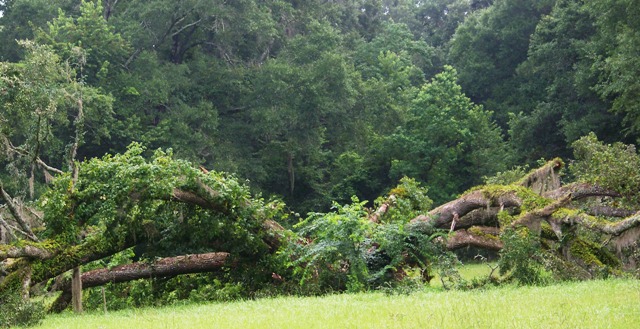
Tree sprawl 0713

Often, we get caught up in transforming our lives. We decide that we will no longer assume an old way of being or an old way of doing. In other words, whether it is New Year’s or not, we make a resolution not only to do better but to be a better person. Just like that.

What we discover is that letting go of a habit or a behavior requires a lot more than filling ourselves with resolve. Letting go is a lifelong practice for we revisit old habits, old behaviors–neuroses we once cherished–often, we recognize them immediately but sometimes, they are disguised as something new and possibly, beneficial.

 The three difficulties (or the three difficult practices) are:

1.   to recognize your neurosis as neurosis,
2. then not to do the habitual thing, but
to do something different to interrupt
the neurotic habit, and
3. to make this practice a way of life

(Pema Chödrön)

Recognizing what we no longer wish to do or be is usually obvious but recognizing all that it has meant to us–how it has disguised itself in order to be an integral part of our every day– is a lifelong practice of recognizing neurosis as neurosis.

For a while, just rising above the neurosis is reward enough. Yet, life is uneven and the rise of the unexpected often dissolves our resolve whether it lasted for minutes or months. Thankfully, life is impermanent, and we get lots of practice in letting go.

What we get to do each time we recognize that once again we have invited in a familiar neurosis is to accept that is exactly what we have done. That is the first step in letting go, accepting what is. Think of it as resolving to refrain rather than resolving to deny.

Refraining comes about spontaneously when you see how your neurotic action works. You may say to yourself, `It would still feel good; it still looks like it would be fun,’ but you refrain because you already know the chain reaction of misery that it sets off.

 (Pema Chödrön)

Even if we have begun to set off the chain reaction, we accept that we have and refrain from going any further. We set our resolve to refrain because we accept where we are. Refraining allows us to halt and not go where we have gone before and unhook from the neurosis.

Resolve serves us as long as it is to accept that life not only changes but masks itself in new faces and different viewpoints, allowing us to experience familiar habits, recognized behaviors, and old relationships through yet another perspective.

Transformation is not a matter of discarding but an accepting of all that we are and were. Such resolve is the genesis of transformation, a lifetime practice of experiencing, letting go, and when we are ready, refraining.

heart of tree 0713
KMHuberImages

When Dreams Speak Mindfully

Bunny Left side 072813In all the ways I have considered present moment awareness, I do not remember wondering whether or not my dreams were mindful. In fact, dream speak has never been on any kind of awareness meter for me, until recently.

“The moment is all you ever have and it is enough” is what I heard myself say in a dream. It brought me right into the present for immediately, I was awake. Certainly, I am familiar with that sentence as it has appeared in a number of blog posts and is the second sentence of my Twitter bio as well.

Thoughts may not be tangible but they are powerful, although like bubbles, they float to the surface and burst—every time. Maybe the closest we come to reality is being in the moment. While I am somewhat curious about what I was dreaming—I have never remembered–I am more curious about being jolted into mindfulness.

For a few months now, I have been sitting meditation through two flares, which has made the entire experience—physically and emotionally–different from any previous. Meditation helps me distinguish between qualifying the flares and immersing myself in them.

In other words, it is not a matter of how I am feeling but that I am feeling what is occurring in each moment. The idea that the moment is the only reality that I am experiencing opened up possibility after possibility for me, and eventually, found its way into my dreams.

There is a lojong slogan in meditation instruction that says, “regard all dharmas as dreams,” which Pema Chödrön explains as “regard all thoughts as being the same as a dream [for]…as we sit in meditation, we could begin to realize that we create everything, all our thoughts, with our mind” (Chödrön).
Bunny right side 072813
In meditation, rather than letting the thoughts trample all over me, I try to witness them for the transient dreams they are, first flaring and then, fleeing. If I do anything more than witness what is occurring, I attach to the thought, giving it life. This is when the “what ifs” and thus, the story, begin. When we attach to the drama of any thought, we have completely left the moment.

Pema Chödrön advises using the word “thinking” whenever we find ourselves attaching to a thought during meditation. As we utter the word in our mind, the story that once gave life to that thought vanishes. Immediately, we are present, as if awakening from a dream. With the thought gone, we return to a light emphasis on the breath and resume our role as witness.

As this exercise works so well for me during meditation, I use it post meditation as well. The practice is the same, including the breath. Regardless of what is occurring, no-thing is bigger than the moment; I find this particularly helpful in moments of physical and emotional discomfort.

“In our everyday lives, we are run around by these thoughts that we make so solid with our mind and our thinking. So when we say, ‘regard it all as a dream,’ we lead ourselves toward something that many people have discovered throughout the ages about the nature of reality: it’s not as solid as we think” (Chödrön).

More and more, I stay with what is occurring in the moment rather than going off with a thought. It is a shorter and more scenic trip. Also, impermanence seems more a friend than I ever thought possible.

KMHuberImages
KMHuberImages

All quotes are from How to Meditate: A Practical Guide to Making Friends With Your Mind by Pema Chödrön, Kindle version, May 2013.

Dear ?: A Peace Letter

July’s Bloggers for Peace Post is to write a letter for peace, which was a real challenge for me beginning with the salutation. The forpeace6question mark is preferable to a mere blank as there is an acknowledged mystery in the question mark as well as an implied unknown and perhaps uncertainty. Yet, as mindfulness or present moment awareness reminds me time and again, it is in this unknown and uncertain realm where the infinite possibilities lie.

Dear ?:

This is a letter to existence, the life force that runs through everything on the physical plane. Deliberately, I have settled for a punctuation mark rather than a name, although there are many from which to choose, but more and more, I am convinced that putting a label on anything only excludes.

Now that I am past the salutation, there is the body of the letter that contains my current thoughts on peace. Like existence, peace is ever undulating, for peace is not a destination or even a goal but rather, a way of being.

“Peace begins when expectation ends”

~ Sri Chinmoy~
Co-existence on the Row 0713

The onus is on us, where it always has been, yet the planet seems so much smaller now for we crisscross it on a daily basis through images and words on screens. It is reminiscent of when the world wrote letters, and the challenge still is to respond rather than to react. Pen and paper required more of us physically and may have delayed reaction time somewhat.

The ability to communicate instantaneously to almost anywhere in the world has brought us face to face with ourselves. Ideals, illusions, and even institutions have been shattered as we find ourselves in immediate relationship with so many voices from so many places. There are few gaps between thoughts.

Peace is not some sort of lofty ideal nor is it an illusion or an institution. Peace is not a finite but an infinite state of being. Peace is not a one size fits all but is unique to each one of us. The oneness of peace is the acceptance of all of us just as we are for then—and only then—have we removed expectation. The possibilities are infinite.

Peace on the Row 0713

As always, I am overtly optimistic, which is not to say that I am not aware of how taxed our planet’s resources are or how many species are either being pushed to the edge of their existence or are already extinct. I am only too aware that “the world is too much with us” to the point of making my head explode but then I remember:

Never doubt that a small group of thoughtful committed citizens can change the world; indeed, it’s the only thing that ever has

~Margaret Mead~

We begin from within, putting our own house in order from the inside out, which is a lifetime task. And that is how the world changes for we cannot give the world what we do not have within ourselves. If we are not at peace with ourselves, we are not in peaceful existence with the world.

It is no wonder that peace eludes us for we look everywhere except where it resides, within our own existence. It may seem more practical to fix ideals or institutions but change—impermanence–is the nature of all existence.

Discovering our own oneness is how we recognize our connection to all of existence. When we love ourselves completely and compassionately for the beings that we are, recognizing our faults and forgiving our mistakes, then our house is in order for we accept our own existence, unconditionally.

It is the task of a lifetime and always has been.

Yours in Impermanence,

KM Huber

Summer at Waverly 0713