Walking the Walk of Friendship With Pema Chödrön

Recently, I “Walked the Walk” with Pema Chödrön at an online seminar offered by the Omega Institute. Chödrön has the ability to make you feel that she is speaking only with you; I have found the same in reading her books. In my mind, she and I converse frequently.

Chödrön is anything but pretentious—no transcendental soaring with Emerson’s oversoul or escaping into the ether—she is often pithy, adept with any koan, softening much of what she says with anecdote. Frequently, humor is the connection with her audience.

Warning us to beware of “spiritual people” dressed in special clothes to draw attention to their spirituality, she directed our gaze to her own Buddhist nun clothing of burgundy and yellow. Then, she looked up and smiled, eyes twinkling. Laughter filled the room. When all was quiet, the two-day retreat began.
Road Awaits 072813

In walking with Chödrön we explored “making friends with ourselves” unconditionally. Kindness, compassion, and a deep love are what true friendship offers. Why not become friends with the one we know best?

Being friends with ourselves does not mean that we will not know disappointment or concern for in all relationships there are times of confusion. Yet, at some fundamental level we trust the confusion will pass for deep friendship is worthy of unconditional reflection.

Reflection—specifically self-reflection—is found in all of the great spiritual traditions for it is in reflection that there is transformation. In making friends with ourselves, we learn who we are. The transformation comes with accepting who we are unconditionally. As our biggest supporter and ally, we show up for life.
Path in Mic 0713

“Don’t speak, don’t act” is what Chödrön offers as a way of meeting the moments of every day. It means we embrace the feelings we have about what is occurring—we receive what we are given–without the reaction of a label, judgment or opinion. We experience the rawness of the moment.

In embracing the emotion of each experience without acting or speaking, we are practicing what Chogyam Trungpa Rinpoche calls the “reference points of nowness,” gaps between experiences that allow us to strengthen our minds as we meet the moments of life.

The reference points are the practice, and the attitude is one of developing an unconditional friendship with ourselves. With gentleness and kindness we become fully aware of all of our traits. The key is to accept them–give ourselves a break— for that is what we do for friends.
A Closer Look 081913

Chödrön suggests dissecting F-E-A-R as a specific way to examine those darker characteristics that are in all of us. In revealing them, awareness begins and transformation is possible.

F— find it in your body

E— embrace it

A—allow the thoughts to dissolve; abide with the feeling

R–remember or recall that other people are also feeling it (Pema Chödrön , “Walk the Walk” seminar).

Pulling apart fear creates an atmosphere of kindness and compassion. Unconditional means that no matter what we are there for ourselves.  It is not a matter of condoning behavior but viewing it with an open heart. We see and feel with our heart; we listen and experience with our head. It is our heart that leads.

We make choices to cease our suffering. We remember that temporary gratification is unconscious thought, a repetition of old behaviors, following old patterns with the same results. “We do not have to bite that hook” (Pema Chödrön).

It takes courage to be vigilant, to live with an open heart, but the reward is a life of compassion and kindness with ourselves and thus, with the world. It is experiencing life as friends. “Show up for life as it is and drop your preconceptions of how it should be” (Pema Chödrön).

KMHuberImages
KMHuberImages

Opening to a New Wind, the Sea Oat Nods

Sea Oat 1013Sometimes, it is merely a matter of bending with the breeze, opening up to what is available, allowing a new perspective. As Mark Twain said, “Loyalty to a petrified opinion never yet broke a chain or freed a human soul.” Nor will it ever for “openness is like the wind. If you open your doors and windows, it is bound to come in” (Chogyam Trunpa).

Openness is the stuff of adventure, and if given a choice, some step back from it. It is the unknown, the uncertain, the unproven so unlike all the labels to which we cling. Yet, at one time or another, the air in our lives grows stale, and we open to a new wind.

Every year, fall is my fresh air. It has long been my favorite season. Even when I lived in the West, I preferred fall to spring, which was an infrequent visitor to the high plains desert. Yet, the rare Rocky Mountain springtime meant seemingly endless prairies of wildflowers.

Now living near the Gulf of Mexico, I find fall comes gradually, mostly, a cooling down to allow another crop of vegetables, another round of blooming bedding plants. This year, fall feels as if it arrived over night, perhaps an afterthought of Tropical Storm Karen who managed to puff herself up a bit but was too disorganized to do much other than blow in autumn. Or at least that’s when I first felt fall.

It is my first autumn without Cooper. We enjoyed every season but when fall temperatures became the norm, we took to the road, sometimes every day of the week.  I smile at the flood of memories, ever grateful for each one. They open me to the fall that is, and I am ready for an outing.

Cooper Going on a Bye-Bye

It is easy to see Cooper in my mind’s eye sitting in the passenger seat as I drive to Mashes Sands, one of the few places on the Gulf coast that Cooper and I did not explore, although I cannot think why.

A day of sun and blue, the Gulf sparkles at low tide. The breeze is slight as I admire the sea oats so long absent after previous years of hurricanes as well as some recent tropical storms. Breathing in the salted air, I open to the moment of sun, sea, and me.

Sitting on the sand, I close myself to the openness always available in the gap between thoughts, in the pause that awakens awareness. All around me there is sentient movement, coming and going, ebbing and flowing. The fragile but flexible sea oat nods, finding it not difficult to bend, to open completely to possibility.

I hold sand in the palm of my hand as I squint to “see the world in a grain of sand” for I know it to be true. Thoughts fall left and right, like the sand flowing through my fingers, until each grain of thought mingles with all the others to become one. And that, too, is impermanent.

Before this fall ends, there are more breezes, gusts and maybe even gales to come. It is a matter of throwing open the doors and windows for whatever way the wind may blow, and like the sea oat, nod in acceptance.

KMHuberImages
KMHuberImages

Life Churns for Everyone so Why Swirl With the I?

As Pema Chodron says, “there is no way to make a dreadful situation pretty.” Often, I find myself searching for language that removes the dualistic labels of good or bad, happy or sad. For me, writing makes this somewhat easier for it affords a pause, whereas in conversation, I tend to forget the gap between thoughts and even my breathing is shallow.

These past few weeks have been full of opportunities for me to “make a big deal” out of situations or to remember that the underlying emotion of my experience is what every other human being feels at one time or another. Remembering that we are all in this together reminds me of what I have in common with all sentient beings.

My specific moments are unique to me yet woven into the undulating life “web that has no weaver.”* One week it was a car mishap and the next moment it was a family member facing a life-threatening situation. The illness was not entirely unexpected, unlike the car incident, yet both provided a life-changing moment. Life churned.

Life Churns 100413

The car is repaired but the loved one’s recovery remains uncertain. The human body, our personal vehicle, endures a life of dents, and occasionally, broken parts. We heal or get replacements but I suspect the heart and mind–and in that order–have more to do with longevity than repairs to the physical body.

Regardless of the wearing out/replacing of parts, all are allowed a life, a length of time known to none but allotted to each. The not knowing churns the emotional pool within each of us. Whether we choose to immerse ourselves in the eddies of emotion or await the stillness that comes with reflection is the ongoing dilemma.

“Like water which can clearly mirror the sky and the trees only so long as its surface is undisturbed, the mind can only reflect the true image of the Self when it is tranquil and wholly relaxed” (Indira Devi).

Reflecting Pool 100413
KMHuberImages

Initially, I swirl within the emotional eddies more than I sit in reflective pause yet I know it is the motion that separates me from everyone else. The swirling, downward spiral isolates me in my own pain, unaware that my pain is what connects me to humanity.

“Shantideva said that since all sentient beings suffer from strong, conflicting emotions, and all sentient beings get what they don’t want and can’t hold on to what they do want, and all sentient beings have physical distress, why am I making such a big deal about just me? Since we’re all in this together, why am I making such a big deal about myself?” (Pema Chodron).**

Until we see in ourselves those emotions that we so readily assign to everyone else, we cannot pull ourselves out of our own pain to reflect on the pain that connects us all. In recognizing the human bond, we come to reflect on what is common to all.

We must dive deep to sit at the still waters of our own existence to reflect upon the life force that binds us all.

A personal note: As of this writing, my family member’s recovery continues to be remarkable as well as inspirational.

Text Notes:

*This phrase is from the title of Ted Kaptchuk’s thorough book, The Web That Has No Weaver: Understanding Chinese Medicine. I highly recommend it.

**Omega Institute is offering another online workshop with Pema Chodron on October 25-27 with early bird pricing. The event is sold out for anyone wishing to attend in person. Click here for more information.

Compassion Totters on Friday the 13th

Simplicity, patience, compassion.
These three are your greatest treasures.
Simple in actions and thoughts, you return to the source of being.
Patient with both friends and enemies,
you accord with the way things are.
Compassionate toward yourself,
you reconcile all beings in the world.

~The Tao~

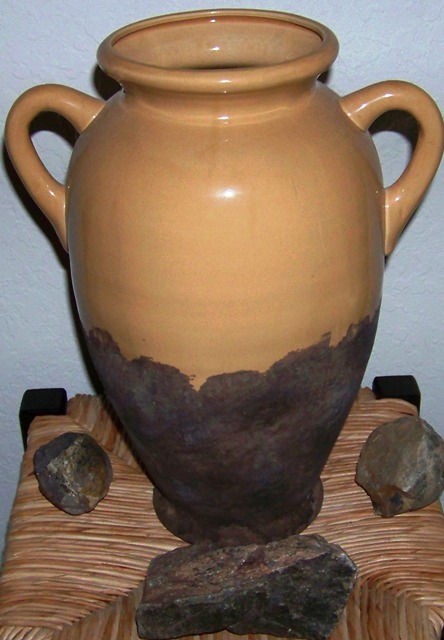
A car accident allowed me a “real-life” opportunity to practice the three treasures of the Tao—simplicity, patience, compassion. The Friday the 13th mishap found my compassion tottering, like an amphora (vase) too close to the edge.

Frankly, my patience held, even when my tone of voice betrayed me, as I temporarily strayed into the tentacles of story so very far from the simplicity that is “the source of being.” As far as I know, the story strands still abound outside my being.
Compassion Crash 091313

At the core of the story is an uninsured driver, momentarily distracted by a text message, hitting one parked car and sliding it into another (mine) in the parking lot of the apartment complex where all involved live. The driver left a phone number, unable to remain at the scene. That is the source of every story that followed.

Thoughtful neighbors who witnessed parts of the accident notified me. My initial thought on seeing the two cars together was I am very fortunate. The car that slid into my white Scion was severely damaged on both sides. After more than one call to the police, an officer did arrive to assist with details and separate the two vehicles.

My compassion vase moved ever closer to the edge as the hours ticked by, bringing no response to a voice mail I left for the driver. His late night call to me with strands of story unconnected to the accident wrapped round me, and my emotions swirled to the surface. My compassion went into free fall.
Compassion Jug 092113

Over the next 72 hours, the driver’s story would emerge in various versions, sometimes tangentially connected to the incident but often not. In a face-to-face meeting of all three car owners, I peppered the driver with questions in a cold, staccato tone devoid of compassion, a tone I once used far too frequently.

However, that realization was not what returned me to compassion but this thought: I really have to stop reading/watching so many murder mysteries. I am not a chief inspector solving a crime. I smiled, stopped my questions, and leaned back in my chair, finally listening to the driver’s story. Then, I let it go.

Securing my amphora of compassion—returning to my source of being—meant more to me than staying in a never-ending story. Once, I had lived that way, for most of my life, actually. Those years pale to how I live now.

Of course, I still have moments when my compassion totters, and there will be others, no doubt, but such is the human experience. My vase is secure for now. As for the final reconciliation, the driver and I have entered into a payment arrangement. After all was agreed and signed, he said he had not expected me to be kind. I responded that he and I had one bad moment but we need not have another.

After Silence, Music Expresses it Best

The power of music was the Bloggers for Peace challenge for August. It brought to mind Aldous Huxley: “After silence, that which comes nearest to expressing the inexpressible is music.”
forpeace6
Throughout the history of humanity, music has permeated barriers often considered impenetrable. Music unites continents, as the deeds of humanity are recounted in song. Human existence is the song of the ages written across bars of hope and measures of peace.

From Paleolithic time onward, every major tradition—Islam, Christianity, Judaism, Buddhism, Taoism Tao, Hinduism—embraced song as one way to reveal the stories of human existence. Combining music and story, each of the major traditions expressed compassion for all in the community as a way of daily living. Similarly, each tradition warned of the pitfalls of hoarding riches and extolled the virtues of giving to the least among us.
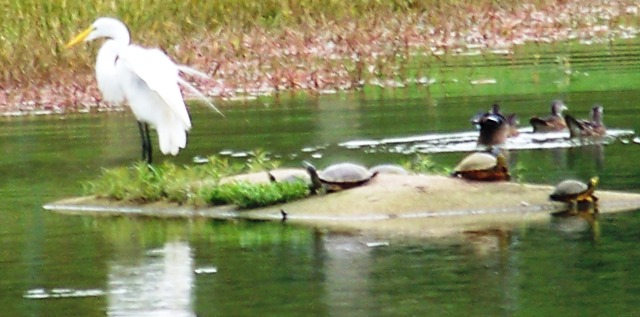
Heron on Turtle Row 0213

In each verse of the song of community, all give and all receive, the song of the ages expressing the inexpressible.

For many in my generation, “We Shall Overcome” was the song for civil rights for every American as well as every citizen of the world. We are still singing this song, still committed to overcoming what divides us in order to live with what unites us–peace. Globally, it is the melody of the human heart, expressing the inexpressible. Within its coda is the constant vigilance required for compassion and thus, for coexistence.

Peace is not passive but like compassion it is alive, an aria to overcome what we have yet to accomplish in twenty-one centuries: to live with one another in the harmony of acceptance sans the labels of race, creed, color or any dissonance that divides rather than unites.

Since we began composing the story of human existence, there have always been notes of hope. Perhaps the power of music and its ability to express what we cannot will one day lead us to a vigilant, vibrant life of peace and compassion.

It is and always has been to our great credit that we sing.

If memory serves, the video clip of Joan Baez singing “We Shall Overcome” is from the 1969 movie, Woodstock.  There was a time I would have recognized it immediately. Well, I still know all the words.

Other Bloggers for Peace Posts:

Grandmalin: The August Post for Peace

Rarasaur: One Little Candle Burning Bright

The Seeker:  Music That Will Make You Smile

Rohan Healy:  Alien Eyes

Electronic Bag Lady: Music and the Brain

The New Now: A Possum in Moonlight

The possum’s size was considerable enough that first glance indicated it might be an armadillo but the sheen of its fur, seemingly silken in the moonlight, proved it a possum, and a rather deliberative one at that.

Browsing the ground and grasses, the possum foraged with pause, as if such a night of light was evident even with possum vision. Feline EmmaRose (ER) and I had also been drawn to the full moon’s light, as we often are.

EmmaRose in Meditation KMHuberImage

In stillness, ER sits a window sill and I sit abed, watching the possum peruse the moonlight. Contentment reigns on either side of the window.

When the possum finally leaves our viewing area, ER yawns and decides it is time to eat so she, too, leaves the moonlight viewing. And after she eats? Well, that now is not yet here, is it?

Every moment is the new now, a peeling back of another layer of the present, offering an experience all its own. It is the only way ER and the possum know–each moment is its own clean slate, free from what was as well as from what might be. Each moment is its own entity.

This musing in moonlight is familiar but there is something in this light at night that seems…well, revelatory.

I remember Anita Moorjani explaining that she begins each day by surrendering herself to whatever the day may bring to her and ends her day by releasing everything that she received. Thus, each day is new and her slate is clean every morning.

For some months now, I have been in-between dances, unable to let go of what was in order to immerse myself in what is. In the moonlight, such struggling against time and tide seems silly and without substance.

A cramp in my hand reminds me I am still clinging to my beloved Kodak camera.  There are no possum pictures this night nor will there be from this aged camera. It works beautifully but I had to replace my laptop and the camera software is not compatible.

The Kodak recorded the last years of life for two, aging canines; captured five years of life along the Gulf Coast and the occasional snapshot of the Gulf’s waters; almost, it walked with me through two years of change on Waverly pond. Few objects become dear friends but it is possible, and in the moonlight, I am convinced, yet again, of the sentience of all things.

I suspect every moment is a clean slate but I am not that present and may never be, yet in appreciating that every moment is the new now, I hold onto less and am open to more.

After all, I have watched a possum strolling by the light of the moon.

The Mirror That is All of Us

What is it we see when we look into the mirror of humanity, the oneness that is all of us? We recognize traits in others because we know hints of them in ourselves. In our oneness, we are mirrors for each other, reflecting the world to all.
Waverly bridge in spring 0413

There is a Sanskrit “great saying” or pronouncement from the Hindu Upanishads–Tat Tvam Asi–that is often translated as “you are that” or “that you are.”  Essentially, the idea is that each one of us is unique and our uniqueness is essential to the oneness of all existence.

Oneness never diminishes the individual but rather, each is part of the whole, occupying a unique space in a single moment of existence.  That is the gift of oneness, allowing us to mirror the world for one another. It is how we recognize ourselves.

If we celebrate our relationship to one another, our focus shifts to what connects us and not to what separates us. Imagine the possibilities in this 21st century. For the first time in the history of humanity, we have the technology to create global awareness one person at a time, the only way change is ever truly affected.

We live in a fractious and fearful world but our moment, our time is unique to us, just as it was for all who came before us. That seems to be the way of existence. Yet unlike previous generations, we are able to criss-cross the globe electronically, offering ourselves to relationships we would never know otherwise. Technology brings us closer to one another than we have ever been.
Co-existence on the Row 0713

It is not an opportunity that has come before, and perhaps it is not an opportunity that will come again. The world grows smaller as we grow closer to one another. “It is only by risking ourselves from one hour to another that we live at all” (William James). Such is existence.

Each moment is rife with infinite possibilities if we are aware, completely present to what is occurring, giving it our complete attention. In becoming more aware within ourselves, we let go of past ideals and future wishes to look into the mirror of what is, the present.

In the present, we recognize that we are always in relationship no matter where we are for we are always connected to life. That is our connection to oneness, our sharing of life with every pollinating bee, blade of grass, drop of water, and mountain peak. Everywhere we look, the world holds itself up to us.

The reflection of all that connects us is so much more than what separates us. If nothing else, such a look in the mirror that is the world broadens our perceptions for rather than being attached to only one way of being, we are presented with the life force that flows through all beings. It seems so worth the risk.

Bits and pieces of this revised post originally appeared as “The Mirror That is You.” 

Maybe Not Such a Mystery After All

Green Mic 0713“By chance, I encountered the lost lady. At that time I still believed in chance. A candle burned, and by the light of the flame I embarked upon the soul’s solitary adventure” (The Greening, p. 6, Margaret Coles).

I have always believed in chance, always loved the mystery as well as the possibility of it. Mystery and possibility wrap round each other easily, sometimes magically and other times, mystically. It is not surprising that I enjoyed Margaret Coles’ The Greening.

At the heart of The Greening is another, actual book, Revelations of Divine Love by 14th century anchoress Julian of Norwich, who took her name from the church that housed her for forty years, St. Julian’s.

Glen at Mic 0713

As an anchoress, Julian was “a woman who devoted her life to prayer for the community.… She had [sixteen] visions…in which she received a series of messages”; she spent the rest of her life writing about these visions (The Greening, p. 11). She had a lot of questions.

The fact of Julian is the heart of Coles’ novel, and while the plot does get away from Coles from time to time, my fascination with Julian’s belief in a loving God and a human life of impermanence kept me patient with the novel.

Yet again, I was reminded of the overlapping of Christianity, Taoism, and Buddhism, and that “the divisions between the faiths are pointless” (The Greening, p. 210).

The Buddha said, “I teach one thing and one thing only, suffering and the cessation of suffering.” In the Tao, “the ten thousand things rise and fall, while the Self watches their return” (Lao Tsu).  Julian’s famous words reveal the same: “‘all shall be well, and all shall be well, and all manner of things shall be well’” (The Greening, p. 65).

Just as the Buddha did not say that he teaches pain or the cessation of pain, just as the Tao accepts that moments rise and fall, so does Julian acknowledge that pain and pleasure are part and parcel of the human experience:  “he did not say, ‘you shall not be tempest-tossed, you shall not be work weary, you shall not be discomforted.’ But he said, ‘you shall not be overcome’” (The Greening,  p. 233).

What Coles captures in her novel is what has intrigued scholars for over 600 years about Julian of Norwich’s message: “’God tells you that you are beloved through all eternity and held safe in an embrace that will never let you go. But the love he offers requires us to turn our lives upside down’” (The Greening, p.87).

Julian’s vision of God is one of love, compassion, gratitude, and equanimity completely contrary to the turbulent times during which she lived. She understood that her revelations were in direct contrast to the very church that housed her. Yet, she wrote.
Path in Mic 0713

The “chance” of the lost lady’s writings surviving six centuries of territorial uprisings, sacking of monasteries and war after war seems slim but Julian’s revelations not only survived but after 1901 have remained in print and the subject of scholarly study.

That Margaret Coles chose Julian’s revelations as the heart of her novel is an intriguing concept. It is not a quick read but it is a thoughtful interweaving of Julian’s writing throughout the novel. The plot reveals the lives of two women–both find love and loss–but it is what they find in their individual quests that twists the story.

The plot strains at times and may be unnecessarily complicated but if one is looking for the greening of one’s soul, one will find one path to it here. For another, there is always Julian’s Revelations of Divine Love.

Here are some related links including Wikipedia as well as two other reviews.

Julian of Norwich

Cozy Little Book Journal

Dr. Teresa Meehan

A Note About Book Nook

About a month ago, I applied for membership in Book Nook, a community of bloggers that review books for Hay House Publishing. Hay House provides reviewers free copies in exchange for a review, favorable or unfavorable.

Hay House publishes an array of writers including Wayne Dyer, Anita Moorjani, Doreen Virtue, Julie Daniluk and, of course, its founder, Louise Hay. These writers’ subjects range from the Tao to angels to nutrition to near-death experiences.

Beyond indicating that Hay House has provided a free copy for us to review is the agreement that we will post the reviews on our blogs as well as on at least one commercial site.

Flare or Fog, It Matters Not

“Don’t pursue your passion. Be it” was Anita Moorjani’s response to a Hay House interviewer’s request for one bit of advice for everyone. The interview was months ago but the words stayed with me, like distant notes of a tune I almost recognized.

The words dropped in and out of my attention, showing up when I least suspected them. About ten days ago, the lupus flare I thought was on the wane gained new life, joined by the light of Sjogren’s syndrome.

It has been four years, maybe even five, since I have known the light of a Sjogren’s flare so it took me a while to recognize it. Sjogren’s attacks the body’s moisture glands–the exocrine system that produces tears and saliva—the primary symptoms are dry eyes, dry mouth, and fatigue. Even with the use of prescription medication, my salivary glands were destroyed years ago.

For me, Sjogren’s has always meant debilitating fatigue but in tandem with lupus, the brain fog and joint pain are in high evidence. I have to be careful not to give them too much credit because they will take it and more. They can seem insatiable.

Foliage Waverly 0713

For me, any kind of flare is a flash of light within a fog for the brighter the flare, the thicker the fog. I sense the energy of the flare but the fog is just as intense; for the past ten days, it has been flare and fog, quite fatiguing.

Still, Anita Moorjani’s words wandered in and out of my days for passion is the energy of this flaring duo. As the fog began to lift and the energy of the flare remained, the question emerged: what if I stop pursuing my passion? There is still sufficient fog but the question is clear enough to be considered.

I am not given to labeling passion, not in my later years anyway, but the gift of such flares is to be in life fully, letting one moment go for the next. Each moment presents its infinite possibilities, if we will allow it to reveal itself.

“To access the state of allowing, the only thing I had to do was be myself. I realize that all those years, all I ever had to do was be myself, without judgment or feeling that I was flawed” (Anita Moorjani, Dying to be Me).

KMHuberImages
KMHuberImages

Perhaps, being one’s passion is a mere matter of showing up for every moment mindfully, whether in fog or in flare matters not. It is a thought that enters my mind but I push it away in favor of sleep. It revisits me in my next morning’s meditation; I am tired and take a while before sitting meditation but I sit for my usual hour.

The morning is as it has been for over two weeks–overcast, humid, and rain seems imminent–but as my morning meditation ends, there is not yet rain and as often happens, I have more energy after meditation.

I decide to go in search of Lake Miccosukee, something that has crossed my mind from time to time but the moment never seemed to suit. The morning is still early, hazy with humidity, and I am a bit foggy myself so we are a perfect fit.

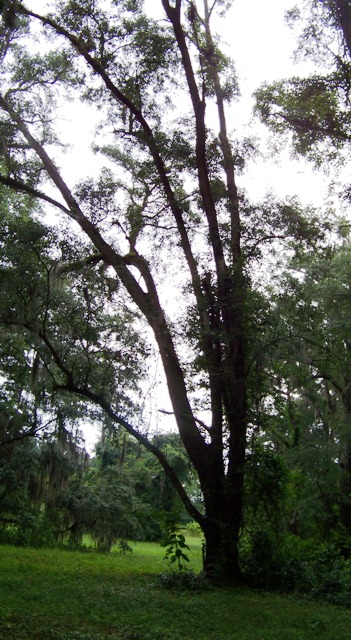
Driving down canopy roads of Live Oaks, crape myrtles bloom beneath the oak boughs as does the delicate mimosa. Many consider the mimosa a weed for it grows quickly anywhere, offering feathery blossoms in a fan like wave. I admire the mimosa’s tenacity to bloom, to return time and again, only to be chopped down. Nature is perpetually passionate.

Arriving at Lake Miccosukee, I have the boat dock all to myself for a moment, unbelievably good fortune and an omen for the rest of my day. Miccosukee is a prairie lake. Sometimes, it’s a prairie and other times it’s a lake, too, but always aquatic plants are abundant.

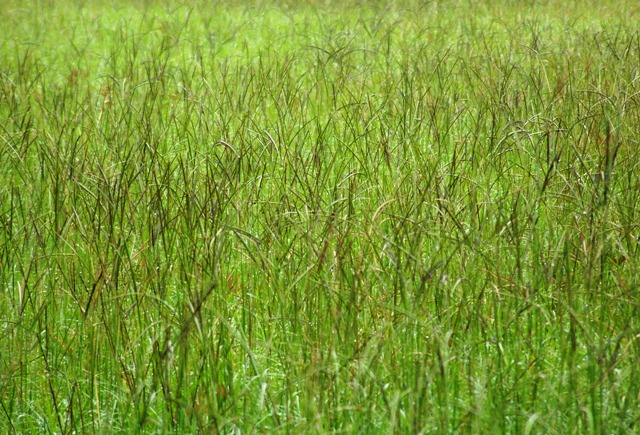
Prairie Lake 0713

I have grown used to lakes controlled by sinkholes, coming or going, either way works. In this moment, Lake Miccosukee is a floating prairie, and it occurs to me that here is yet another version of the island of vegetation from The Life of Pi. Imagine that.

I am already tired but it has been another marvelous hour. Would that all mornings were just like this one but if they were, this one would not be what it was, its own. I am learning the practice of being one’s passion, allowing the day to unfold, be it in flare or fog. It matters not.

“When coming out of sitting, don’t think that you’re coming out of meditation, but that you are only changing postures. If you reflect in this way, you will have peace. Wherever you are, you will have this attitude of practice with you constantly. You will have a steady awareness within yourself. The heart of the path is quite easy. There’s no need to explain anything at length. Let go of like and dislike and let things be. That’s all that I do in my own practice.

~Ajahn Chah~ 

Again, thanks for all of your warm wishes and kind words as I sit within the flare of this fog. My plan is to post weekly, whether it is a Sunday Something or a Thursday Tidbit but I am letting nature be my guide.

Sitting With the Wolf in Stillness

Every morning, I spend an hour in meditation followed by an hour that includes exercise, shower, and breakfast preparation. It is this mind-body connection that begins my day. While I will revisit physical exercise and food preparation, no day opens without meditation.

Empty yourself of everything. Let the mind become still. The ten thousand things rise and fall, while the Self watches their return. They grow and flourish and then Return to the Source. Returning to the Source is stillness, which is the Way of Nature.”
~ Lao Tsu ~
Tao Te Ching

During my recent lupus flare, it was meditation that allowed me to empty and renew myself for the rise and fall of the ten thousand things. It was meditation that allowed me to explore the energy underlying every form of discomfort, the internal investigation as Devaji refers to it.

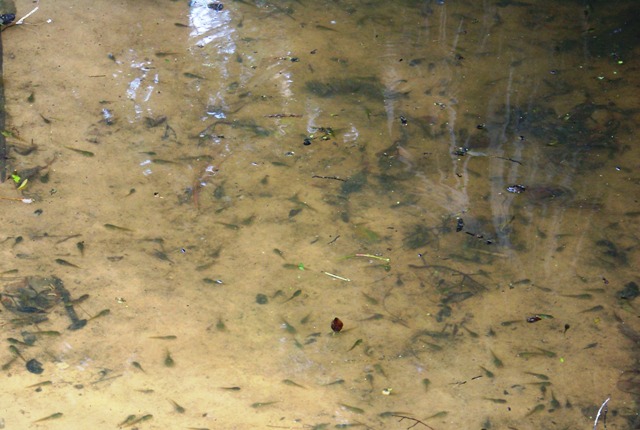
Tadpoles Waverly 0613

When there is internal investigation as opposed to following the external movement,
it is possible to recognize that every form of
discomfort, every problem that is experienced, is happening inside of you.
If you do not have a problem inside, you do not have a problem. The mind will say that it is due to something out there, but where you experience the problem is inside
.”
~Devaji~

It is a familiar pattern of mine this looking to the outside for what may only be discovered on the inside. I have done it for almost all of my life but this past year of daily meditation has been a discovery of stillness, which is not to say the mind is ever quiet.

In meditation, which many teachers referred to as “taming of the mind,” there is no effort to reshape or redefine any of our thoughts. In meditation, we observe our thoughts, allowing them to bubble up and away from us without interference, without creating yet another thought.

Rather, we go into the stillness, to the energy producing our thoughts. Always, in meditation there is “light emphasis” on the breath (Chögyam Trungpa Rinpoche) to sustain us as we sit in the stillness of our internal investigation, emptying ourselves.

As I understand mindfulness, it is bringing this technique to our day-to-day lives as they play out among the ten thousand things. For me, that means letting one storyline after another blow right past for I am interested in the energy supporting those thoughts. I am seeking the source.

Tadpole Free 0613

In this lupus flare, rather than pursuing my usual cause-effect-solution approach—another way of describing this is replacing one storyline with another, albeit a new and untried solution—I sought the source, the stillness, with my breath.

Stillness or “nowness” is placing our awareness on our breath as the thoughts bubble up. The breath is no more manipulated than are the thoughts. The more the breath and mind are observed, the more there is just being, no judgment, just stillness.

Internally investigating my lupus flare allowed me to sit in the energy of the ten thousand things of which my life is just one.  Rather than trying to starve or manipulate the lupus–the wolf–that is also of the ten thousand things, I just sat down with it in relationship.

Flares are never without their gifts nor is it surprising that those flares that burn brightest are always the most generous. This time, the gift of sitting meditation with the wolf has opened the door to a lifetime exploration of the rise and fall of the ten thousand things from the inside out.

Thanks to all of you for your generosity and kindness during this recent flare.