With the Dawn, the Every Day Miracle Begins

Settling into the miracle of life may be all that we ever require. The miracle of the every day is the field of infinite possibilities available at every dawn. Distinguishing what is from what is not is a lifelong dilemma, a constant in humanity.

“Every particle of creation sings its own song of what is and what is not. Hearing what is can make you wise; hearing what is not can drive you mad” (Sufi poet Ghalib).

We are prone to making sure that events turn out as expected, keeping wonder in absentia. We are more comfortable when we confine the outcome to known boundaries. Trusting the miracle that we are requires a shift in perspective.
Snowy egret-110311

“There are two ways to live your life. One is as though nothing is a miracle. The other is as though everything is a miracle” (Albert Einstein).

Viewing life through that lens, merely appreciating that we are alive seems more than sufficient. Yet, there is the matter of day-to-day relationships and situations.

The Vedic sutra Sankalpa–Sanskrit for purpose or intention—can be a way to frame our choices and decisions. “Every decision I make is a choice between a grievance and a miracle. I let go of all grievances and choose miracles” (Deepak Chopra, SynchroDestiny, DVD version).

Sankalpa opens up the field of infinite possibilities by encouraging us to choose courage over fear. When we accept our fear, all that is left is courage.

It means loving ourselves for who we are, not for whom we want to be or for the person we have been but who we are in the dawn of each day. In loving ourselves just as we are, we connect to the miracle of being alive.

“… Loving [ourselves] requires a courage unlike any other. It requires us to believe in and stay loyal to something no one else can see that keeps us in the world—our own self-worth” (Mark Nepo, Book of Awakening).

When we settle into the miracle of all that we are, we open ourselves to the world. There is no guarantee the world will open to us in return yet to live the miracle of the every day is to rely on the constancy of our own self-worth, confident in our ability to absorb the day no matter how it is presented to us, whether as pain or pleasure.

Every moment of our lives is like an opening night performance for our roles are constantly evolving through plot twists and scene changes. All the acts of our lives play from beginning to end, sometimes to applause and other times to catcalls. Such is the stage of life.

“And all moments of living, no matter how difficult, come back into some central point where self and world are one, where light pours in and out at once.…a fine moment to live” as is the next. (Mark Nepo).

Walking the Walk of Friendship With Pema Chödrön

Recently, I “Walked the Walk” with Pema Chödrön at an online seminar offered by the Omega Institute. Chödrön has the ability to make you feel that she is speaking only with you; I have found the same in reading her books. In my mind, she and I converse frequently.

Chödrön is anything but pretentious—no transcendental soaring with Emerson’s oversoul or escaping into the ether—she is often pithy, adept with any koan, softening much of what she says with anecdote. Frequently, humor is the connection with her audience.

Warning us to beware of “spiritual people” dressed in special clothes to draw attention to their spirituality, she directed our gaze to her own Buddhist nun clothing of burgundy and yellow. Then, she looked up and smiled, eyes twinkling. Laughter filled the room. When all was quiet, the two-day retreat began.
Road Awaits 072813

In walking with Chödrön we explored “making friends with ourselves” unconditionally. Kindness, compassion, and a deep love are what true friendship offers. Why not become friends with the one we know best?

Being friends with ourselves does not mean that we will not know disappointment or concern for in all relationships there are times of confusion. Yet, at some fundamental level we trust the confusion will pass for deep friendship is worthy of unconditional reflection.

Reflection—specifically self-reflection—is found in all of the great spiritual traditions for it is in reflection that there is transformation. In making friends with ourselves, we learn who we are. The transformation comes with accepting who we are unconditionally. As our biggest supporter and ally, we show up for life.
Path in Mic 0713

“Don’t speak, don’t act” is what Chödrön offers as a way of meeting the moments of every day. It means we embrace the feelings we have about what is occurring—we receive what we are given–without the reaction of a label, judgment or opinion. We experience the rawness of the moment.

In embracing the emotion of each experience without acting or speaking, we are practicing what Chogyam Trungpa Rinpoche calls the “reference points of nowness,” gaps between experiences that allow us to strengthen our minds as we meet the moments of life.

The reference points are the practice, and the attitude is one of developing an unconditional friendship with ourselves. With gentleness and kindness we become fully aware of all of our traits. The key is to accept them–give ourselves a break— for that is what we do for friends.
A Closer Look 081913

Chödrön suggests dissecting F-E-A-R as a specific way to examine those darker characteristics that are in all of us. In revealing them, awareness begins and transformation is possible.

F— find it in your body

E— embrace it

A—allow the thoughts to dissolve; abide with the feeling

R–remember or recall that other people are also feeling it (Pema Chödrön , “Walk the Walk” seminar).

Pulling apart fear creates an atmosphere of kindness and compassion. Unconditional means that no matter what we are there for ourselves.  It is not a matter of condoning behavior but viewing it with an open heart. We see and feel with our heart; we listen and experience with our head. It is our heart that leads.

We make choices to cease our suffering. We remember that temporary gratification is unconscious thought, a repetition of old behaviors, following old patterns with the same results. “We do not have to bite that hook” (Pema Chödrön).

It takes courage to be vigilant, to live with an open heart, but the reward is a life of compassion and kindness with ourselves and thus, with the world. It is experiencing life as friends. “Show up for life as it is and drop your preconceptions of how it should be” (Pema Chödrön).

KMHuberImages
KMHuberImages

Opening to a New Wind, the Sea Oat Nods

Sea Oat 1013Sometimes, it is merely a matter of bending with the breeze, opening up to what is available, allowing a new perspective. As Mark Twain said, “Loyalty to a petrified opinion never yet broke a chain or freed a human soul.” Nor will it ever for “openness is like the wind. If you open your doors and windows, it is bound to come in” (Chogyam Trunpa).

Openness is the stuff of adventure, and if given a choice, some step back from it. It is the unknown, the uncertain, the unproven so unlike all the labels to which we cling. Yet, at one time or another, the air in our lives grows stale, and we open to a new wind.

Every year, fall is my fresh air. It has long been my favorite season. Even when I lived in the West, I preferred fall to spring, which was an infrequent visitor to the high plains desert. Yet, the rare Rocky Mountain springtime meant seemingly endless prairies of wildflowers.

Now living near the Gulf of Mexico, I find fall comes gradually, mostly, a cooling down to allow another crop of vegetables, another round of blooming bedding plants. This year, fall feels as if it arrived over night, perhaps an afterthought of Tropical Storm Karen who managed to puff herself up a bit but was too disorganized to do much other than blow in autumn. Or at least that’s when I first felt fall.

It is my first autumn without Cooper. We enjoyed every season but when fall temperatures became the norm, we took to the road, sometimes every day of the week.  I smile at the flood of memories, ever grateful for each one. They open me to the fall that is, and I am ready for an outing.

Cooper Going on a Bye-Bye

It is easy to see Cooper in my mind’s eye sitting in the passenger seat as I drive to Mashes Sands, one of the few places on the Gulf coast that Cooper and I did not explore, although I cannot think why.

A day of sun and blue, the Gulf sparkles at low tide. The breeze is slight as I admire the sea oats so long absent after previous years of hurricanes as well as some recent tropical storms. Breathing in the salted air, I open to the moment of sun, sea, and me.

Sitting on the sand, I close myself to the openness always available in the gap between thoughts, in the pause that awakens awareness. All around me there is sentient movement, coming and going, ebbing and flowing. The fragile but flexible sea oat nods, finding it not difficult to bend, to open completely to possibility.

I hold sand in the palm of my hand as I squint to “see the world in a grain of sand” for I know it to be true. Thoughts fall left and right, like the sand flowing through my fingers, until each grain of thought mingles with all the others to become one. And that, too, is impermanent.

Before this fall ends, there are more breezes, gusts and maybe even gales to come. It is a matter of throwing open the doors and windows for whatever way the wind may blow, and like the sea oat, nod in acceptance.

KMHuberImages
KMHuberImages

After Silence, Music Expresses it Best

The power of music was the Bloggers for Peace challenge for August. It brought to mind Aldous Huxley: “After silence, that which comes nearest to expressing the inexpressible is music.”
forpeace6
Throughout the history of humanity, music has permeated barriers often considered impenetrable. Music unites continents, as the deeds of humanity are recounted in song. Human existence is the song of the ages written across bars of hope and measures of peace.

From Paleolithic time onward, every major tradition—Islam, Christianity, Judaism, Buddhism, Taoism Tao, Hinduism—embraced song as one way to reveal the stories of human existence. Combining music and story, each of the major traditions expressed compassion for all in the community as a way of daily living. Similarly, each tradition warned of the pitfalls of hoarding riches and extolled the virtues of giving to the least among us.
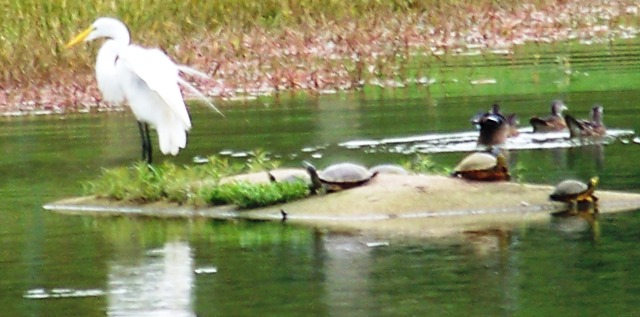
Heron on Turtle Row 0213

In each verse of the song of community, all give and all receive, the song of the ages expressing the inexpressible.

For many in my generation, “We Shall Overcome” was the song for civil rights for every American as well as every citizen of the world. We are still singing this song, still committed to overcoming what divides us in order to live with what unites us–peace. Globally, it is the melody of the human heart, expressing the inexpressible. Within its coda is the constant vigilance required for compassion and thus, for coexistence.

Peace is not passive but like compassion it is alive, an aria to overcome what we have yet to accomplish in twenty-one centuries: to live with one another in the harmony of acceptance sans the labels of race, creed, color or any dissonance that divides rather than unites.

Since we began composing the story of human existence, there have always been notes of hope. Perhaps the power of music and its ability to express what we cannot will one day lead us to a vigilant, vibrant life of peace and compassion.

It is and always has been to our great credit that we sing.

If memory serves, the video clip of Joan Baez singing “We Shall Overcome” is from the 1969 movie, Woodstock.  There was a time I would have recognized it immediately. Well, I still know all the words.

Other Bloggers for Peace Posts:

Grandmalin: The August Post for Peace

Rarasaur: One Little Candle Burning Bright

The Seeker:  Music That Will Make You Smile

Rohan Healy:  Alien Eyes

Electronic Bag Lady: Music and the Brain

The Mirror That is All of Us

What is it we see when we look into the mirror of humanity, the oneness that is all of us? We recognize traits in others because we know hints of them in ourselves. In our oneness, we are mirrors for each other, reflecting the world to all.
Waverly bridge in spring 0413

There is a Sanskrit “great saying” or pronouncement from the Hindu Upanishads–Tat Tvam Asi–that is often translated as “you are that” or “that you are.”  Essentially, the idea is that each one of us is unique and our uniqueness is essential to the oneness of all existence.

Oneness never diminishes the individual but rather, each is part of the whole, occupying a unique space in a single moment of existence.  That is the gift of oneness, allowing us to mirror the world for one another. It is how we recognize ourselves.

If we celebrate our relationship to one another, our focus shifts to what connects us and not to what separates us. Imagine the possibilities in this 21st century. For the first time in the history of humanity, we have the technology to create global awareness one person at a time, the only way change is ever truly affected.

We live in a fractious and fearful world but our moment, our time is unique to us, just as it was for all who came before us. That seems to be the way of existence. Yet unlike previous generations, we are able to criss-cross the globe electronically, offering ourselves to relationships we would never know otherwise. Technology brings us closer to one another than we have ever been.
Co-existence on the Row 0713

It is not an opportunity that has come before, and perhaps it is not an opportunity that will come again. The world grows smaller as we grow closer to one another. “It is only by risking ourselves from one hour to another that we live at all” (William James). Such is existence.

Each moment is rife with infinite possibilities if we are aware, completely present to what is occurring, giving it our complete attention. In becoming more aware within ourselves, we let go of past ideals and future wishes to look into the mirror of what is, the present.

In the present, we recognize that we are always in relationship no matter where we are for we are always connected to life. That is our connection to oneness, our sharing of life with every pollinating bee, blade of grass, drop of water, and mountain peak. Everywhere we look, the world holds itself up to us.

The reflection of all that connects us is so much more than what separates us. If nothing else, such a look in the mirror that is the world broadens our perceptions for rather than being attached to only one way of being, we are presented with the life force that flows through all beings. It seems so worth the risk.

Bits and pieces of this revised post originally appeared as “The Mirror That is You.” 

On-Again, Off-Again Buddhism

Waiting 0613Dukkha is the first of the Four Noble Truths in Buddhism and is usually translated as suffering, a concept that has always appealed to me about as much as the phrase falling apart, hence my on-again, off-again nearly thirty-year relationship with Buddhism.

Yet, it is to Buddhism that I always return, rather like everywhere I go there I am for as the Buddha said, “I teach only one thing: suffering and the cessation of suffering” (Pema Chödrön, How to Meditate: A Practical Guide).

While dukkha is the word the Buddha is said to have used for suffering, dukkha has more than one level. The first level concerns mostly our physical bodies and ultimately the fact that we die. This kind of suffering involves “outer discomforts” and is considered ordinary.

The second level of suffering pertains more to our stress/anxiety in accepting that nothing stays the same, no matter how hard we might try to make it so. This is the “dukkha produced by change.”
Taking Off 0613

The third level of suffering is often referred to as the “dukkha of conditioned states,” translated as “dissatisfaction” or “never satisfied.” Pema Chödrön explains:

“Dukkha is kept alive by being continually dissatisfied with the reality of the human condition, which means being continually dissatisfied with the fact that pleasant and unpleasant situations are part and parcel of life.”

Over the decades, it has actually become apparent that if I accept each moment as it occurs— the dukkha of conditioned states—the first two levels of suffering fade away, which is not to say accepting impermanence is easy.

Bloom of Peace 0613
KMHuberImages

For any level of dukkha, meditation helps us strip away our storylines, our drama from any pain or emotion we are feeling. Meditation takes us into the energy of our suffering so whether or not we can do anything about the circumstances, we can decide whether or not to suffer.

If we accept that we fall apart and come together all through our lives, we begin to practice compassion, first with ourselves and later with all those circumstances beyond our control. Because we are human, we are not always compassionate but every time, we have the choice to return to compassion. It is our inner version of war and peace.

In a comment on my initial post on falling apart, Ann E. Michael was kind enough to remind me of these lines from “The Second Coming,” Yeats’ often quoted poem on the aftermath of World War I:

“Things fall apart; the centre cannot hold;
Mere anarchy is loosed upon the world,
The blood-dimmed tide is loosed, and everywhere
The ceremony of innocence is drowned….”
~William Butler Yeats~

Every time I read Yeats or other World War I poets, I am reminded WWI was the war to end all wars, as if any war ever could. When we are at war with ourselves, we must remember that having compassion with ourselves is where peace begins for everyone.

All three levels of dukkha wend their way through our lives: physical pain, decay, and death claim each one; life will not stay the same for anyone; the constant impermanence of life is the human condition.

The Buddha taught, “I teach only one thing: suffering and the cessation of suffering.” Perhaps I always return to Buddhism because it is neither pessimistic nor optimistic but rather, things fall apart and come together again. Dukkha really is up to me.

Thursday Tidbits: The Art of Peace

This week’s Thursday Tidbits is the Bloggers for Peace monthly post, specifically the art of peace.  The art of peace begins within ourselves and radiates outward into every relationship we have, in particular those relationships that for one reason or another are askew or gone awry.forpeace6

To renew a relationship begins with intention, although to re-open our heart is often difficult. That is why the art of peace begins within, for when we are at peace with ourselves is when we re-connect to serve all.

In order to start, Pema Chödrön maintains it is not such a great effort to once again establish a relationship that serves, if we will just consider that a commitment we once made is now broken.

KMHuberImage
KMHuberImage

It means we have to let go of the story we’ve been telling ourselves–the why, the what, the how, or who– and just acknowledge “…that we hardened our heart and closed our mind, that we shut someone out. And then we can retake our vow. On the spot—or as a daily practice—we can reaffirm our intention to keep the door open to all sentient beings for the rest of our life” (Pema Chödrön).

Everyday life, no matter how we approach it, is a practice that requires patience, especially when we do not seem to notice any progress within ourselves or within the world.

There are four emotions that never involve the ego—compassion, gratitude, joy, and love—these four ways have many other names including the four agreements of Don Miguel Ruiz that ask us to be “impeccable” in our speech, not to take whatever occurs personally, to be present in all we do so we are not assuming anything about anyone for when we are present, we are doing the best we can.

The art of peace is available to us in every moment we have for each moment is free from any attachment to what has been or what might be. That we affirm our intention to be the best we can be and live with true compassion for ourselves and others in every moment is what keeps peace always within our grasp. It begins with being present.

KMHuberImage
KMHuberImage

“That’s the training of the spiritual warrior, the training of cultivating courage and empathy, the training of cultivating love. It would be impossible to count the number of beings in the world who are hurting, but still we aspire to not give up on any of them and to do whatever we can to alleviate their pain” (Pema Chödrön).

In alleviating that pain we must remember the key to the art of peace: the idea of serving rather than helping or fixing anyone or anything. It is only in serving that we view ourselves and our connection to all life as whole, not broken or weak.

When we are clear in our intention of serving, we are open to what is available for all of us. The art of peace is a celebration of the diversity that makes up the whole, an acknowledgment that uniqueness is necessary for completeness.

Here are links to other Bloggers for Peace and their consideration of the art of peace:

Kozo Hattori: Art Thou Peaceful 

Bodhisattva In Training: The Art of Peace

Grandma Lin: May Post for Peace

The Seeker: Peace is Like a River

Caron Dann: Recreationist Theory

Card Castles in the Sky: Float Upward

One of my favorite combinations of the art of lyrics, music, and painting is this well-known video featuring the music and lyrics of Don McLean and Vincent Van Gogh’s paintings.

Thursday Tidbits are weekly posts that offer choice bits of information to celebrate our oneness with one another through our unique perspectives. It is how we connect, how we have always connected but in the 21st century, the connection is a global one.

Ringing the Bell of Uncertainty

“Suffering is a meditation bell, not an enemy” appeared in a recent update on Jeff Foster’s Facebook page.  The context of the quote is that in suffering, we identify ourselves as a single thing, image, or sensation, thereby confining ourselves to that single identity. It is only when we remember that we are “no-thing” do we discover our true nature, “which is everything” (Foster).

Suffering grabs our attention as a signal that our “okayness” is about to change. It is the ringing of the bell of uncertainty. We can resist and suffer or we can accept and “allow” as Anita Moorjani calls it.

Allowing or accepting is not passive in any regard but rather, an open-arms welcome to the uncertainty inherent in each of our lives. In allowing, we transcend duality, forgoing the labels that make us this or that. Allowing is discovering our true nature, and it is a lifelong trip.

KMHuberImage
KMHuberImage

“To access the state of allowing, the only thing I had to do was be myself. I realize that all those years, all I ever had to do was be myself, without judgment or feeling that I was flawed. At the same time, I understood that at the core, our essence is made of pure love” (Anita Moorjani).

Moorjani’s book, Dying to be Me, is a fresh approach to accepting ourselves as we are. It is also an accounting of her recovery from physical illness that includes a near death experience, which is not the focus of the book, at least not for me.

Quite specifically, she writes that her story is just that–her story—of recovery from cancer that led her inward to her true  nature, which is entirely unique to her. Likewise, what her story may or may not mean to any of us is just as unique.

Clarity in the wild 0413
KMHuberImage

“I don’t advocate that if we ‘believe’ a certain way, it will eliminate disease or create an ideal life…. Having awareness, on the other hand, just means realizing what exists and what’s possible—without judgment. Awareness doesn’t need defending” (Moorjani).

Moorjani does refer to a kind of “clarity” that she had as she lay dying.  In a coma, she considers where she was as a state and not a place.  There are no conversations with God or with any other being just awareness:

“…I instinctively understood that I was dying because of all my fears. I wasn’t expressing my true self because my worries were preventing me from doing so.

“I understood that the cancer wasn’t a punishment or anything like that. It was just my own energy, manifesting as cancer because my fears weren’t allowing me to express myself as the magnificent force I was meant to be” (Moorjani).

Moorjani’s book focuses on present moment awareness of the self– the exploration of one’s true nature— and within that journey the necessity of loving ourselves unconditionally in this realm that is here and now. Repeatedly, she indicates her healing was not positive thinking or mind over matter but consciousness, which she calls “magnificence…a state of being…the part of me that’s eternal, infinite, and encompasses the Whole.”

KMHuberImage
KMHuberImage

Moorjani is well-versed in all of the Eastern traditions as well as Christianity. She is not a physician or a scientist but a woman who nearly died of cancer seven years ago and is completely recovered.

In previous posts, I have mentioned Deepak Chopra’s Quantum Healing and Perfect Health regarding the role of consciousness in one’s health, specifically the “intelligence” inherent in the physical body. I have read other medical and scientific works as well. In the 21st century, there is a growing body of work in neuroscience—and to some extent, physics–that is exploring the role consciousness may or may not play in our health. I find it fascinating, all of it.

To me, it is increasingly evident that our level of health is inextricably tied to our true nature. Our physical and emotional health reveals our level of awareness of our true nature, in essence whether we resist or accept our lives. Who knows? Attaining our optimal health may begin with our response to the meditation bell of suffering.

In the coming months, I plan to explore optimal health and consciousness. As always, I appreciate your thoughtful comments and that you take time to read my blog. Thank you, dear reader.

Time for a break; regular posts will resume in May.

Thursday Tidbits: Unhooking the Pain

This week’s Thursday Tidbits considers “shenpa…the all-worked-up feeling of…getting hooked on a negative emotion” such as pain (Pema Chödrön).  In order to unhook ourselves from shenpa, we must give our full attention to our pain and that includes physical discomfort as well. We must immerse ourselves in our pain in order to release it.

KMHuberImage; oneness; St. Mark's Refuge FL
KMHuberImage

In giving our full attention to our pain, we open up to the experience of it and not the drama or storyline we have told ourselves about our pain. Our storyline is what hooks us until we sit down in the middle of what is hurting us, forsaking its interpretation for its reality.

Anyone who has ever experienced chronic pain—physical, emotional or both–knows that this kind of shenpa can easily become the only story we ever live. Yet, when we give chronic pain our full attention, we change the idea of our pain. We are no longer content to live its story.

Unhooking ourselves from shenpa does not mean that we will be completely pain-free but it does mean we give our full attention to living the lives we have as the beings we are. Being in our pain completely is where all healing begins.

KMHunerImage; McCord Park; Tallahassee
KMHuberImage

Essential to all life is water, and it has more than one form, yet it is either flowing or frozen. Mark Nepo suggests that how we deal with our pain resembles the form water takes. “For when trees fall into the ice, the river shatters. But when a large limb falls into the flowing water, the river embraces the weight and floats around it” (Book of Awakening).

If we view our pain as ice, jagged and hard, we risk living shattered lives of fear and worry, holding our shenpa close. But if we give our pain our full attention and release it branch by branch into the river of life, it becomes a burden we can bear.

We release the idea of our pain and experience it as is, moment by moment, within our flow in our own time. “Once given full attention, you will come back—one drop at a time— into the tide of the living” (Nepo).

Like the river’s path, our lives wend in ways we never imagine. It is life’s way, and pain is only one part, although it can last a lifetime. It is up to us whether pain remains sharp or a bubble in our daily flow.

KMHuberImage; McCord Park; Tallahassee; Florida
KMHuberImage

We have to show up for every moment of our lives, pain or no, giving our full attention to life, trusting that we will absorb our pain and not be shattered by it.

For the people of Boston and the Commonwealth of Massachusetts, for the people of West and the state of Texas, we open ourselves to each and every one of you—victims and family members—for as long as it takes to absorb the pain. There is no limit on your courage or on our love.

Thursday Tidbits are weekly posts that offer choice bits of information to celebrate our oneness with one another through our unique perspectives. It is how we connect, how we have always connected but in the 21st century, the connection is a global one.

Humility: The Art of Being Enough

The art of being enough begins with the complete and total acceptance of ourselves (maitri), without labeling our shortcomings or our strengths. There are no credits or debits within the flow of life.

“All streams flow to the sea

because it is lower than they are.

Humility gives it its power.”

 ~Lao Tzu~

KMHuberImage
KMHuberImage

The art of being enough is accepting that we meander with the river of life on our way to the sea. Each horseshoe bend of life is the forgiveness of ourselves and others so essential to the flow of being enough. Each bend reflects a challenge met, yet another way discovered.

Bending with life rather than letting life bend us is the power of humility, a delicate balance of keeping our thinking subordinate to our heart. The strength of humility is not denying our uniqueness but in expressing it, although those waters seem murky at times. Ego will do that.

When we allow our ego to supersede our heart, we cut ourselves off from the flow of life. Essentially, we are saying we are not enough. Continuously, we add up what we are and are not—our debits and credits are never enough–and with our abacus of self, we total up the world’s worth, which also falls short. There is never enough for ego without a heart.

The art of being enough regards life as an adventure with infinite possibilities. Rather than adding up life as a positive or negative, in humility we pursue life for the pure experience of it. We are not trying to mold it to assure a certain outcome; we bend with the possibilities, trusting the flow of being enough.

KMHuberImage
KMHuberImage

How we live our lives is our unique contribution to the oneness of existence. Sooner or later, we become enough. Perhaps the best illustration of this is the story of the Hindu master and his apprentice.*

The apprentice is constantly complaining about life, how it measures up or does not. The Hindu master grows weary of the apprentice’s complaints and sends him to purchase salt.

Upon the apprentice’s return, the master tells him to put a handful of salt into a glass of water and drink it. Immediately, the apprentice pronounces the taste of the water as bitter. The master smiles and informs the apprentice they are going to the lake.

At the lake, the apprentice is told to throw a handful of salt into the lake and then take a drink from the water’s edge. The apprentice says the water tastes fresh. The master tells the apprentice:

“`The pain of life is pure salt; no more, no less. The amount of pain… remains…exactly the same. But the amount of bitterness we taste depends on the container we put the pain in.’”

KMHuberImage
KMHuberImage


There is a grace in learning to bend with life, and perhaps in bending, we just may discover that our unique purpose is to do just that, express ourselves in the meandering flow of life on our way to the sea.

In the words of the Hindu master, “`…the only thing you can do is…enlarge your sense of things….Stop being a glass. Become a lake.’”  You are enough.

*The story of the Hindu master and apprentice first appeared in a January 2012 post; all citations are from Mark Nepo’s Book of Awakening.