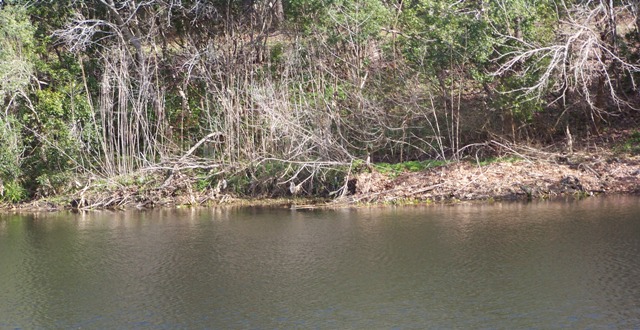
Thursday Tidbits: The Fragrance of Forgiveness

This week’s Thursday Tidbits post considers forgiveness, which is also the Bloggers for Peace challenge for March. Forgiveness may be the heart forpeace6of peace but giving and getting forgiveness from the heart is not easy for any of us.   

Forgiveness is the fragrance that the violet sheds on the heel that has crushed it.   (Anonymous) 

Always, we wish to know the fragrance of the violet but must it always come at such a price? It seems to be the history of humanity that it does, yet it is also the history of humanity to know peace, compassion, love, and equanimity, all inherent in the fragrance. We begin where we can, within ourselves.

Consider The Four Agreements of Don Miguel Ruiz:

  1. Be impeccable in your word
  2. Don’t take anything personally
  3. Don’t make assumptions
  4. Always do your best.

waters of forgivenessInherent in the agreements is maitri, of which compassion is certainly a form, but maitri is the complete and total acceptance of one’s self. No conditions. Maitri is where forgiveness begins, a seed that we all may plant, and as the seed grows, so grows our ability to accept ourselves.

In accepting ourselves, we pursue compassionate truth, regardless of outcome. We do not deceive ourselves for outcome is often a sticking point, but if we do not take things personally and do not make assumptions, we are doing our best to be impeccable in our word.

Anger has a role in forgiveness as well as in peace, and not to acknowledge anger is not to pursue peace. There is the anger from a closed heart, the kind we all readily recognize, and then there is anger that is not personal or based upon any assumptions, the anger of the impeccable word, the anger-with-the-heart-open:

“For when there is no desire to wound or punish or blame, we become able to speak with great clarity and power. We may roar like a lion, but it is a healing roar. We may be challenging, but we are infinitely fair. We may be outraged, but we are respectful. This is ‘anger-with-the-heart-open’ and it has a beauty, a passion, and a clarity that is unmistakable”
(Processing Anger With An Open Heart).

In forgiveness, we leave the past where it is, when it happened, who did it, and what occurred. We accept that the past cannot be changed:  

“Forgiving someone can mean giving them another chance, not necessarily because they deserve it, but because they need it.  When you forgive, you love.  You stop being a victim and you let go of the pain.  Forgiving others can give us back the laughter and the peace in our lives.”
(grandmalin.wordpress.com)

We immerse ourselves in the acceptance of all that we are and are not, our wisdom and grace, our missteps and shortcomings. We accept that all the life we have lived up to the present moment is the foundation for our being here now. On our impeccable word floats the fragrance of forgiveness.

This week’s video features an acoustic version of Matthew West’s “Forgiveness.”

Thursday Tidbits are weekly posts that offer choice bits of information to celebrate our oneness with one another through our unique perspectives. It is how we connect, how we have always connected but in the 21st century, the connection is a global one.

Confessions of a Fixer: Does a Warrior Lurk Within?

KMHuberImage; Wood Stork Fishing
KMHuberImage

Warrior is not a concept that has ever described me for I have lived my life as a fixer. Now in my sixties, I can only hope that fixer is a permanent past tense characteristic.

It is not as if I was not aware of the warrior concept—I was introduced to Buddhism over 25 years ago–but as a committed fixer, I cared little for clashing or “going a-warring, not that a bodhisattva or Buddhist warrior does either.

“Those who train wholeheartedly in awakening unconditional and relative bodhichitta (“enlightened mind”) are called bodhisattvas or warriors…of nonaggression who hear the cries of the world. These are men and women who are willing to train in the middle of the fire…[who] cut through personal reactivity and self-deception [through] their dedication to uncovering the basic undistorted energy of bodhichitta” (Pema Chödrön, The Places that Scare You).

Admittedly, I did not care for the word warrior and was not  comfortable with bodhisattva but I admired the warrior’s way and still do. For me, it has been amazingly easy to confuse fixing myself with the warrior’s way. It has taken decades to discard the cloak of the fixer.

As a fixer, it never occurred to me to consider maitri, the complete acceptance of one’s self as one is. “Only when we relate to ourselves without moralizing, without harshness, without deception, can we let go of harmful patterns” (Chödrön). Yet, for the warrior maitri is essential. The warrior understands her inner self is her guide, her greatest strength.

“Lasting transformation occurs only when we honor ourselves as a source of wisdom and compassion” (Chödrön). As a fixer, I did not consider acceptance or surrender. That was giving up. No, I was determined to change my fundamental nature–as if I could–that was my fixer’s guide to true transformation. Yet, everywhere I went there I was, no matter how many different paths I took.

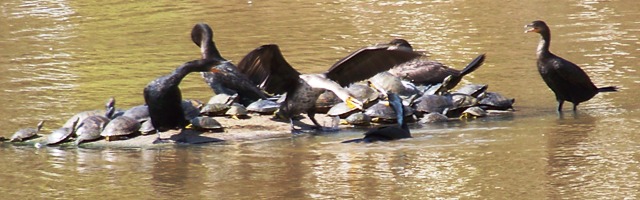
KMHuberImage; Florida turtle sunning
KMHuberImage

In the way of the warrior, there is no clean slate, just the self that is. The warrior knows her strength is in accepting all of the patterns and behaviors that have been her life. They are the open road to her heart, free of any sign pointing to one feeling or another. The warrior is open to the energy that is.

“There is nothing wrong, nothing harmful about that underlying energy. Our practice is to stay with it, to experience it, to leave it as it is” (Chödrön). As a fixer, I “dealt” with my feelings and thoughts by putting them where I did not have to see them. It was enough to know they were there. Maybe they would just go away for I had no intention of staying with that kind of energy. I was too busy trying to fix my life.

The warrior has the courage not only to look within herself but to stay with the energy, regardless of its outcome. Essentially, she “touches the bubble [of emotion] with a feather” (Chödrön). The warrior goes beyond the reactive demands of the mind chatter to the energy that is fueling all that emotion.

She stays with the energy for that is the warrior response, to experience. Sometimes, the response is silence but regardless, the warrior does not cling to whatever outcome occurs.

Always, the warrior is as compassionate with herself as she is with the world, not trying to fix either one. The quest of the warrior is staying in present moment awareness, and for a fixer from the past, that is quite a quest.

Thursday Tidbits: the 11th Possibility

This week’s Thursday Tidbits considers the 11th possibility as defined on rarasaur’s wonderful blog series, Prompts for the Promptless. The series is not just for bloggers but for anyone who wants to stretch and flex the mind. To me, that is where the 11th possibility resides:

“The 11th Possibility is the idea that, regardless of data to the contrary, something unexpected and outside the realm of ordinary thought is always potentially around the corner” (rarasaur).

Considering 0213Perhaps the 11th possibility is the heartbeat of curiosity, comfortable in the uncertainty that a nine out of ten result is lost in the light of the one time it is a glimpse into the unknown. We are startled into complete attention, our creativity sparked, for we see in way we did not, which makes all the difference.

Consider Albert Einstein’s thoughts on a human being in contrast to how we might consider being human:

“A human being is a part of the whole called by us ‘the universe,’ a part limited in time and space. He experiences himself, his thoughts and feelings, as something separate from the rest—a kind of optical delusion of consciousness. 

KMHuberImage, Waverly Pond, Florida
KMHuberImage

“This delusion is a kind of prison for us, restricting us to our personal desires and affection for a few persons nearest to us. Our task must be to free ourselves from this prison by widening the circle of understanding and compassion to embrace all living creatures and the whole of nature in its beauty” (Einstein). 

In that regard, what if we eagerly anticipate the 11th possibility–the idea that the unknown and uncertain might occur–rather than relying on the ten probabilities that precede it? Clearly, I am mixing math and probability with mere musing but the 11th possibility is so like Randall Jarrell’s sick child crying out, “all that I’ve never thought of think of me,” and so I do.

Perhaps my favorite illustration of the 11th possibility is the story of the monarch butterfly that caught a ride with Southwest Airlines. True to its own timetable, the monarch butterfly overslept in its New York state cocoon and missed the insect group flight to Texas. Thanks to a woman who simply asked an airline if it would transport a butterfly to Texas, the butterfly caught a ride to San Antonio.

“It is a grand gesture, to be sure, ushering that lonely insect back on its way — but If the gentle flap of a single butterfly’s wings can shape the weather, then perhaps the kindness shown towards saving one butterfly’s life could change the course of history for the better” (Daily Good.org

Regardless, with a little help from each other, the uncertainty of the unknown is a mere 11th possibility. Imagine that.

This week’s video features Joe Cocker singing his rather famous reminder of our connection to one another.

Thursday Tidbits are weekly posts that offer choice bits of information to celebrate our oneness with one another through our unique perspectives. It is how we connect, how we have always connected but in the 21st century, the connection is a global one.

On a Slow Boat to Fitness

“You may be a wonderful doodlekit” is the phrase that opened a February blog post a year ago, almost to the day. It was, of course, an unsolicited statement. In the year that has passed, I have not pursued whether or not I am or have ever been wonderful, a doodlekit or any combination of the two.

In that same February post, I considered my True Self versus my False Self (Mark Nepo) in light of having to cancel family travel plans and wondered whether I would ever be able physically to travel again. It remains a question but because of my progress this past year, there is a trip in the making. Whether it’s the first of many or the last, there is a trip.

KMHuberImage
KMHuberImage

In preparation, I have been increasing my physical activity, which is not to say the trip will require any rigorous hiking or extended walking. That is for most people it will not. For me, just being in airports will be an outing. Although I have made significant progress in mitigating my lupus and Sjogren’s syndrome symptoms, one of the reasons for my success is limited physical activity.

It is no exaggeration to say my exercise program began with walking around one room and then another, eventually graduating to short walks in a park with Cooper. My current recovery is in its third year, and now, my personal best is a thirty-minute walk, with most of my walks right at twenty minutes. Frankly, I’m delighted.

Heron on Turtle Row 0213
KMHuberImage

It may not seem like much but on my way to a level of health that is realistic after decades of disease, I appreciate progress in inches. As I have mentioned many times on this blog, the biggest advantage to chronic illness is that it keeps one physically in the moment, for no matter what occurs on one day, the next day dawns as if the previous day never existed. Frankly, I suspect that is true with or without disease but chronic illness provides a 24/7 mirror.

Having achieved a daily 15-20 minute walk for a month without any significant increase in inflammation or stress on my joints has me giddy with success. Now, I am attempting yoga. My introduction is through Peggy Cappy’s Yoga for People with Arthritis DVD. I highly recommend it.

While I have become accustomed to the fact that the line in the sand is in a different place every day, in my eagerness to begin every day anew, I have a tendency to be idealistic, my mantra in almost every project I attempt. Yoga is no different.

What I appreciate about the Cappy DVD is that it is divided into sections of different poses as well as warm-up exercises. In addition, there are great exercises for hands and fingers, perfect for anyone who uses any kind of electronic device. In the short time I have been doing these exercises, there has been a marked increase in my flexibility, so much so that I ignored the line in the sand.

Wood Stork at Waverly 0213
KMHuberImage

Rather than allow my body to adjust to the sitting poses and warm-up exercises, I went on to try the standing and sun salutation poses–Warrior One, Warrior Two and even Sitting Dog–within a few days my inflammation increased to a level I had not known in over a year. Not the fault of the DVD or any of the yoga poses just the False Self ignoring the True Self and each day’s line in the sand.

My bones and joints have taken a pounding for decades, first with one disease and then another, yet there is still an optimum level of health available to me. As Deepak Chopra says in Quantum Healing, chronic illness and aging have an effect on what that level of health will be. I see it as progress in inches but it is progress, nonetheless.

As I mark this first year of contemplating my True and False Selves, I have made enough progress to begin yoga, one pose at a time, and to attempt a cross-country trip as an avowed Uni-Tasker–one task, one moment. Maybe someday, a doodlekit….

Thursday Tidbits: Neurosis Interrupted

This week’s Thursday Tidbits post ponders neurosis or what Pema Chödrön refers to as Training in the Three Difficulties:

“The three difficulties (or the three difficult practices) are:

1. “to recognize your neurosis as neurosis,
2. “then not to do the habitual thing, but
to do something different to interrupt
the neurotic habit, and
3. “to make this practice a way of life”

(Pema Chödrön’s Quotes of the Week).

KMHuberImage; St. Mark's Wildlife Refuge; Florida; USA
KMHuberImage

In light of my metaphorical faucet fixing last week, I found this examination of neurosis rather revealing. For most of my life, I have been considered anti-establishment, a deeply 60s term and apt label for my own neurotic groove, the face I show to the world.

In these last few years, my inner self has taken up its own anti-establishment banner so that within and without are the same reflection, not always true in previous decades. It is my way of saying “no” to what I have known and “why not” to what is uncertain.

As part of my “training in the three difficulties,” I am reminded of a favorite morning meditation on the true and false self from Mark Nepo’s Book of Awakening:

“… It is the true self that lets us know what is authentic and what has become artificial, while the false self is a diplomat of distrust, enforcing a lifestyle of guardedness, secrecy, and complaint.” 

“…Each time we experience a change in reality as we know it, we must choose whether to declare or hide what we know to be true. At such moments, we either need to bring the way we have been living into accord with that shift of reality, or we need to resist the change.…

 “Whether we live in our true or false self depends on our willingness to stay real.… Staying real becomes the work of keeping our actions in the world connected to the truth of our inner being, allowing our true self to see the light of day” (Mark Nepo).

It is the “staying real” that reveals our every day practice, how much we actually train, how much we exercise our resolve and whether or not we leave it on the training mat, a hard habit to break….

One way to keep the training fresh and the resolve intact is in hearing new voices. This past week, I learned about Jeff Foster on Tomas’s blog where I discovered the following quote that originally appeared on Foster’s Facebook page:

“I don’t want to fix you. I don’t want to give you answers. I don’t want to impress you. I don’t want you to change. I only want to meet you, exactly as you are, beyond your stories, your hopes and dreams, your games, your masks, here and now.

“If you feel confused, feel confused now. If you feel frightened, feel frightened now. If you are bored, let’s get bored together. If you are burning with rage, let’s burn together awhile and see what happens. I want to meet what’s really here. Perhaps then, great change is possible” (Jeff Foster).

If our training on the inside is reflected in the face we reveal to the world, then our daily practice is who we are. Why not, then, a change of habit, a foregoing of neurosis, even great change?

Finally, I include  a 1960s blurry, black and white video of Simon and Garfunkel singing, “I Am a Rock.” Before the song, however, Paul Simon offers a comment on neurosis.

Thursday Tidbits are weekly posts that offer choice bits of information to celebrate our oneness with one another through our unique perspectives. It is how we connect, how we have always connected but in the 21st century, the connection is a global one.

A Matter of Practice

Since I began practicing present moment awareness, I have known dark moments, even despair at times. It’s not as if the mere practice of present moment awareness means all is light for not all is nor ever was.

KMHuber; Dark Moments; Waverly Pond; Tallahassee
KMHuberImage

Present moment awareness allows me to attend the dark and light in me, to place every moment under scrutiny without fear of shattering illusions or poking at beliefs still circumspect. Light only illuminates the truth, even in the dark. There is no need to cling to any moment for any longer than it lasts.

Practicing present moment awareness turns the uncertainty of the unknown into the possibility of opportunity. It is “being here now” as Ram Dass has told us.

In one way or another, I write about present moment awareness in every blog post, perhaps even write around it at times. Yet, within the last couple weeks my present moment awareness practice has changed. Less and less, do I discover myself in past meanders or future scenarios. Dark or light, I am more now than not.

Musing CatPerhaps it is because I am finally writing the old woman novel, not plotting, considering structure, or writing reams of back story. No, I am telling a story, which requires specificity, focus, “being here now.”

Certainly, some sentences and scenes are more ragged than others in this initial draft, but the present moment awareness of the novel’s world is seeping into my real life practice. That has my attention as well.

When I enter the world of the old woman, I meet her fears–fear moves a story along quite nicely–while her story is not my story, fear is an emotion magnet. When a character reveals fear to me, I am attracted into her moment by my own reservoir of fear.

Some days, the connection with the old woman takes my breath away, and I am blown back in time to one uncomfortable moment after another until I turn my attention to the old woman’s story, the vehicle into and out of my past. Only through the telling of her story am I able to close the doors she opens so easily.

At one time I believed my characters spoke to me but since I began my meditation practice, that belief no longer serves. To be clear, I do not hear voices when I write or when I meditate. It is much quieter than that. Frankly, stillness suits either practice as awareness or mindfulness has a practical application, at least for me.

In my daily meditation practice, there is stillness, a “gap between thoughts” as Deepak Chopra calls it, different than when I write but similar, too. My meditation precedes my writing practice; my mind is quiet as it enters the world of the old woman.

Physically, I am refreshed, deliberate in each hand movement, a uni-tasker, as I do not type. I use voice recognition software to write the story–the only voice I hear is my own–relaying observations and marking moments in an old woman’s life as I come to know her story.

Every day, the hours I spend in my meditation/writing practice increase. It is changing how I am in “the real world,” although I cannot characterize just what the effect is, not yet.

KMHuberImage; Meditation Cat;
KMHuberImage

The only change is that my cat, EmmaRose, now meditates with me more often than not. At five and half pounds, she is more like a neck scarf than a cat around my neck or on my chest. Our meditation posture is a leaning back position rather than the more traditional cross-legged sit–for now. With constant practice comes constant change.

Thursday Tidbits: Fearlessness and Faucets

Learning fearlessness is like applying just the right amount of pressure to the handle of a leaky faucet spout, trial and error. All things (and people) wear out, which may just be the root of all fear as well as the source of fearlessness.

Being fearless is experiencing the moment fully, regardless. We are told to face our fears for they are all we have to fear (Franklin Roosevelt), or we can consider the words of Thich Nhat Hanh: “If we can acknowledge our fear, we can realize that right now we are okay.”

Once again, I hear the Cherokee story about attending my two inner wolves, dark and light. In order for the light to break Faucet 0213through, I must see into the dark, attend it, which is not the same as appeasing it. Of late, my inner wolves have been as insistent as the drip of my faucet, all awaiting attention.

The longer I live the more I believe the key to fear is acknowledging that it never goes away—it lives within the dark wolf—and requires a lifetime of attention. One remains a fearless witness to one’s life:

“When we practice inviting all our fears up, we become aware that we are still alive, that we still have many things to treasure and enjoy. If we are not pushing down and managing our fear, we can enjoy the sunshine, the fog, the air, and the water. If you can look deep into your fear and have a clear vision of it, then you really can live a life that is worthwhile” (Fearlessness, Thich Nhat Hanh).

As in Michael Singer’s book, The Untethered Soul, one does not engage the fear by creating a future scenario or by visiting a past moment and tweaking it a bit—no to both. The moment is the only reality there ever is, and if one works with and faces that reality, then one’s life unfolds before one’s eyes, fearlessly.

That is the heart of my practice these days: transforming my fears so that they are attended to, rather like the persistent drip of my aged faucet with its spout and base leaks. I am mindful of the pressure I apply to its worn handle. It has a bit more time left and is worth my attention.

 “Nobody can give you fearlessness. Even if the Buddha were sitting right here next to you, he couldn’t give it to you. You have to practice it and realize it yourself. If you make a habit of mindfulness practice, when difficulties arise, you will already know what to do” (Thich Nhat Hanh)

Tomas at Heartflow 2013 offers another perspective on experiencing the moment for what it is. My favorite quote from the post is “don’t pacify yourself with platitudes.”

Thursday Tidbits are weekly posts that offer choice bits of information to celebrate our oneness with one another through our unique perspectives. It is how we connect, how we have always connected but in the 21st century, the connection is a global one.

As this is Valentine’s Day,  here is Eva Cassidy singing “The Water is Wide.”

Thursday Tidbits: The Inner Wolves

This week’s Thursday Tidbits is my February post as part of the Bloggers for Peace movement. At least once a month, over 100 bloggers dedicate at least one blog post to peace and its many facets.forpeace6

On this blog, I explore peace fairly frequently including the fascinating fact that critical mass consciousness is now possible through the technology that connects the world. Imagine the possibilities for the world if we let peace begin within each one of us. Yet, how to secure the peace within….

There is a Cherokee story about a conversation on life between a grandfather and his grandson. The grandfather tells a vivid tale of the battle between his inner “black wolf and white wolf.” The two wolves are constantly fighting each other no matter what the grandfather does. The grandson wonders which wolf will win.

KMHuber Image

Here is the grandfather’s reply:

“If you feed them right, they both win.

“…the white wolf needs the black wolf at his side. To feed only one would starve the other and they will become uncontrollable. To feed and care for both means they will serve you well and do nothing that is not a part of something greater, something good, something of life. Feed them both and there will be no more internal struggle for your attention.

“And when there is no battle inside, you can listen to the voices of deeper knowing that will guide you in choosing what is right in every circumstance.

“Peace, my son, is the Cherokee mission in life. A man or a woman who has peace inside has everything. A man or a woman who is pulled apart by the war inside him or her has nothing.

“How you choose to interact with the opposing forces within you will determine your life. Starve one or the other or guide them both” (Beyond the Conflict of Inner Forces at www.awakin.org).

No matter what characteristics you attribute to your inner wolves, they are the two halves of the one that is you. Your left and right halves of your body make up the physical you; emotionally, your ego provides the context of your life, surrendering only to compassion, gratitude, love and joy. In peace, there is no reaction to chaos, only response out of stillness.

For me, the Cherokee story is also another way to view the paradox that is duality: Oneness originates out of opposites becoming one, equal in every way. Only in equanimity is there peace, which requires lifelong attention to the light and dark that is in each one of us, where peace begins.

Once again, my thanks to Kozo at Everyday Gurus for this mindful way to spend 2013 as well as every moment we ever have.

Thursday Tidbits are weekly posts that offer choice bits of information to celebrate our oneness with one another through our unique perspectives. It is how we connect, how we have always connected but in the 21st century, the connection is a global one.
Blogs of Interest:

Kozo on Peace Practice

Radical Amazement on The Presence of Peace

Bullzen on How to Save the World (Abridged)

Grandmalin on The Global Family

Refuge in Winter

Yesterday was not the day I anticipated—it was so much more–always is, no matter the day. Anticipation is never present and always future, sometimes tinged with memory. In these days of living life without Cooper, the memories are abundant, like driving to St. Mark’s Wildlife Refuge to purchase our annual pass.

Often, our February trek coincided with the fairly recent but also annual event, the Wildlife Heritage and Outdoors Festival. The luxury of living so close to the Gulf of Mexico, less than a thirty minute drive, has never been taken for granted. It is a beauty still wild.

KMHuberImage; Gulf of Mexico, FL; St. Mark's Wildlife RefugeLow humidity, low 50s in a slow breeze, warm by any Nordic standards, it is a winter’s day in Florida. The crisp air is a refuge in itself, an annual visitor to a subtropical climate.

Not a wisp of cloud can be found in the blue sea that is the sky, yet in the shade of a towering Ponderosa pine, it’s not uncomfortable for me to wear two hoodies—a fleece from Seattle over basic black cotton from Florida—cushy winter vests are popular, too. Gloves of any kind are welcome.

Hot Tamale, a favorite musical group of mine, braves the briskness of February to entertain festival goers, breaking only for the turkey calling contest. For all afternoon, the music of Hot Tamale wafts through and around outdoor grills of sausages with grilled onions, down the single lane of exhibits and over the heads of children not always running with twigs in hands.

I marvel that Craig, Hot Tamale’s guitar player, manages to keep his guitar in tune, song after song, as he and Adrian sing us through Motown, Jefferson Airplane, Brooks & Dunn, and my all-time favorites, Hot Tamale originals. For two hours, I immerse myself in this winter’s day’s music, a refuge medley.

The shade from the Ponderosa pine broadens as the sun moves closer to 3 o’clock. It is time to begin the drive KmHuberImage; St. Mark's, Florida Gulf of Mexico between the festival site and the shores of the Gulf. Memories of past trips are quickly displaced by every image that is. It happens every time in this place primeval. The refuge diminishes all human presence for it is raw with life.

As I drive, Cooper is with me as much as he is not: heart-centered is a term I remember someone giving me. I liked it so much I wanted to discover its meaning on my own. And in that moment, I do: it is joy absorbing physical absence, fleeting but nonetheless felt.

I park the car, and the tide of memory rolls in: I am taking a photograph of the lighthouse, believing it to be a view I did not have. Cooper is content to remain in the car; perhaps, he knew it was just another picture of a lighthouse with trees. Cooper was tired is what I remember as the image of our last trip to the refuge fades.

The sun is now lower than three in the sky but not yet four as I walk down a path Cooper and I never did walk. It is a shortcut to the path he and I always walked, a new way to the path’s end where we always rested.  I realize path’s end has been my destination the entire day.

For a moment, I am awash in memory again: I am missing Cooper’s curiosity, his constant enthusiasm for the present, no matter where we were. No matter where we were…the realization of what that means jolts me.  I had been clinging to the memory of Cooper’s curiosity rather than rediscovering my own, as he had shown me time after time.

Just as Cooper found joy and enthusiasm in recognizing and rediscovering the scents of the refuge, I started taking photographs of the point, the palm tree, the “island” that is only another point of land, all images I seem to record every February’s  first trip to the refuge in winter.

They are the same and not the same, as Cooper is heart-centered, new and familiar with the scent of life ongoing.

KMHuberImage; St. Mark's Wildlife Refuge; Florida; Gulf of Mexico

Thursday Tidbits: I’ll Take the Unknown

KMHuberImage; McCord Park; Tallahassee FLToday’s Thursday Tidbits swirls around the unknown, where creativity and courage reside, and where we humans fear to tread with any kind of regular practice.

For me, it has been a week that has offered one unknown after another; new perspectives on the known is one way I consider them.

I am getting used to the experience of what I know, or thought I knew, becoming something else. Yet, it is challenging when the present offers an array of unexpected moments, one after another.

It is a lot to breathe in and out but breathe I do; so far, breathing is a constant known, or is it.

“Breathing is the fundamental unit of risk, the atom of inner courage that leads us into authentic living. With each breath, we practice opening, taking in, and releasing. Literally, the teacher is under our nose. When anxious, we simply have to remember to breathe” (Mark Nepo’s The Book of Awakening)

Yes, the teacher and I have been close this past week; perhaps you, too, have had such a week. Just about the time I was wondering how much more creativity I could appreciate in any moment, I came across a quote from David Deida:

“Right now, and in every now-moment, you are either closing or opening. You are either stressfully waiting for something-–more money, security, affection-–or you are living from your deep heart, opening as the entire moment, and giving what you most deeply desire to give, without waiting”  (David Deida).

The quote opens a fascinating article by Gail Brenner, “The Wisdom of Forgetting Everything You Know.” It was just the kind of wisdom that allowed me some easy breaths so I am sharing an excerpt with you:

Here is what not knowing looks like:

“You wake up on a weekend morning without any plans, and you let your day unfold.

“You stop saying the same unproductive statement to your partner and let yourself not know what will happen next.

 “You sit and take a breath rather than propelling yourself forward into the next activity.

 “You press pause on a habit without knowing what you will do or say next.

“You let your routine fall away so you can be guided by the natural flow of things.

“You let go of, `I have to…’ and let yourself rest for a moment.

 ”You tell yourself the truth about the motivation behind the things you do, and surrender to not knowing.

 ”You forget who you think you are. Instead of same old, same old, you show up fresh, new, and unencumbered.

 ”Just contemplating any of the examples on this list may make you gasp for air. How could you have no plans for a whole day or stop carrying out familiar routines?

 Center yourself in the wisdom of not knowing:

“You are aligned with the truth of things as they are.

 “You open to the possibility of freedom from habits that are limiting and painful.

 “You live in reality and not in your mind-constructed version of a false reality.

 “You are here, alive, embodied, available.

“It is natural to be afraid to let go of the known. Remember that life wants you to live fully and to express yourself in beautiful and amazing ways. But you can’t know what they are” (“The Wisdom of Forgetting Everything You Know” at www. dailygood.org)

Thank you, Gail Brenner; I’ll take the unknown. As for breathing, here is Faith Hill:

Thursday Tidbits are weekly posts that offer choice bits of information to celebrate our oneness with one another through our unique perspectives. It is how we connect, how we have always connected but in the 21st century, the connection is immediately global.