Flare or Fog, It Matters Not

“Don’t pursue your passion. Be it” was Anita Moorjani’s response to a Hay House interviewer’s request for one bit of advice for everyone. The interview was months ago but the words stayed with me, like distant notes of a tune I almost recognized.

The words dropped in and out of my attention, showing up when I least suspected them. About ten days ago, the lupus flare I thought was on the wane gained new life, joined by the light of Sjogren’s syndrome.

It has been four years, maybe even five, since I have known the light of a Sjogren’s flare so it took me a while to recognize it. Sjogren’s attacks the body’s moisture glands–the exocrine system that produces tears and saliva—the primary symptoms are dry eyes, dry mouth, and fatigue. Even with the use of prescription medication, my salivary glands were destroyed years ago.

For me, Sjogren’s has always meant debilitating fatigue but in tandem with lupus, the brain fog and joint pain are in high evidence. I have to be careful not to give them too much credit because they will take it and more. They can seem insatiable.

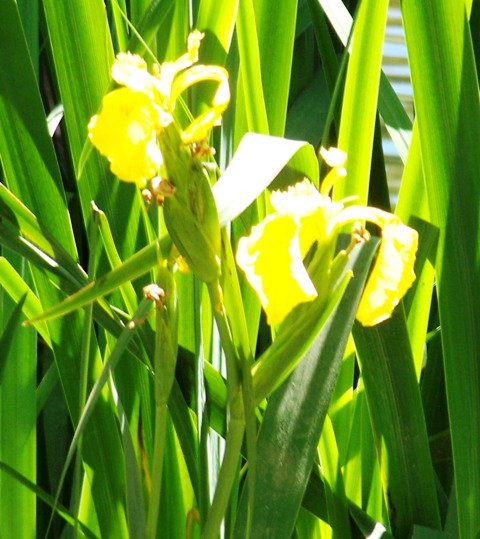
Foliage Waverly 0713

For me, any kind of flare is a flash of light within a fog for the brighter the flare, the thicker the fog. I sense the energy of the flare but the fog is just as intense; for the past ten days, it has been flare and fog, quite fatiguing.

Still, Anita Moorjani’s words wandered in and out of my days for passion is the energy of this flaring duo. As the fog began to lift and the energy of the flare remained, the question emerged: what if I stop pursuing my passion? There is still sufficient fog but the question is clear enough to be considered.

I am not given to labeling passion, not in my later years anyway, but the gift of such flares is to be in life fully, letting one moment go for the next. Each moment presents its infinite possibilities, if we will allow it to reveal itself.

“To access the state of allowing, the only thing I had to do was be myself. I realize that all those years, all I ever had to do was be myself, without judgment or feeling that I was flawed” (Anita Moorjani, Dying to be Me).

KMHuberImages
KMHuberImages

Perhaps, being one’s passion is a mere matter of showing up for every moment mindfully, whether in fog or in flare matters not. It is a thought that enters my mind but I push it away in favor of sleep. It revisits me in my next morning’s meditation; I am tired and take a while before sitting meditation but I sit for my usual hour.

The morning is as it has been for over two weeks–overcast, humid, and rain seems imminent–but as my morning meditation ends, there is not yet rain and as often happens, I have more energy after meditation.

I decide to go in search of Lake Miccosukee, something that has crossed my mind from time to time but the moment never seemed to suit. The morning is still early, hazy with humidity, and I am a bit foggy myself so we are a perfect fit.

Driving down canopy roads of Live Oaks, crape myrtles bloom beneath the oak boughs as does the delicate mimosa. Many consider the mimosa a weed for it grows quickly anywhere, offering feathery blossoms in a fan like wave. I admire the mimosa’s tenacity to bloom, to return time and again, only to be chopped down. Nature is perpetually passionate.

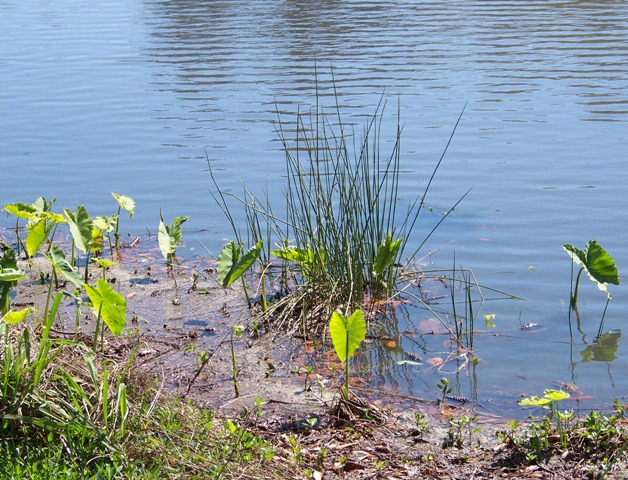
Arriving at Lake Miccosukee, I have the boat dock all to myself for a moment, unbelievably good fortune and an omen for the rest of my day. Miccosukee is a prairie lake. Sometimes, it’s a prairie and other times it’s a lake, too, but always aquatic plants are abundant.

Prairie Lake 0713

I have grown used to lakes controlled by sinkholes, coming or going, either way works. In this moment, Lake Miccosukee is a floating prairie, and it occurs to me that here is yet another version of the island of vegetation from The Life of Pi. Imagine that.

I am already tired but it has been another marvelous hour. Would that all mornings were just like this one but if they were, this one would not be what it was, its own. I am learning the practice of being one’s passion, allowing the day to unfold, be it in flare or fog. It matters not.

“When coming out of sitting, don’t think that you’re coming out of meditation, but that you are only changing postures. If you reflect in this way, you will have peace. Wherever you are, you will have this attitude of practice with you constantly. You will have a steady awareness within yourself. The heart of the path is quite easy. There’s no need to explain anything at length. Let go of like and dislike and let things be. That’s all that I do in my own practice.

~Ajahn Chah~ 

Again, thanks for all of your warm wishes and kind words as I sit within the flare of this fog. My plan is to post weekly, whether it is a Sunday Something or a Thursday Tidbit but I am letting nature be my guide.
Sitting With the Wolf in Stillness

Every morning, I spend an hour in meditation followed by an hour that includes exercise, shower, and breakfast preparation. It is this mind-body connection that begins my day. While I will revisit physical exercise and food preparation, no day opens without meditation.

Empty yourself of everything. Let the mind become still. The ten thousand things rise and fall, while the Self watches their return. They grow and flourish and then Return to the Source. Returning to the Source is stillness, which is the Way of Nature.”
~ Lao Tsu ~
Tao Te Ching

During my recent lupus flare, it was meditation that allowed me to empty and renew myself for the rise and fall of the ten thousand things. It was meditation that allowed me to explore the energy underlying every form of discomfort, the internal investigation as Devaji refers to it.

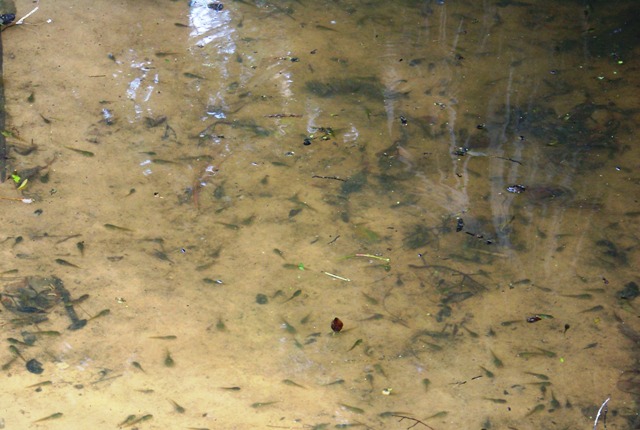
Tadpoles Waverly 0613

When there is internal investigation as opposed to following the external movement,
it is possible to recognize that every form of
discomfort, every problem that is experienced, is happening inside of you.
If you do not have a problem inside, you do not have a problem. The mind will say that it is due to something out there, but where you experience the problem is inside
.”
~Devaji~

It is a familiar pattern of mine this looking to the outside for what may only be discovered on the inside. I have done it for almost all of my life but this past year of daily meditation has been a discovery of stillness, which is not to say the mind is ever quiet.

In meditation, which many teachers referred to as “taming of the mind,” there is no effort to reshape or redefine any of our thoughts. In meditation, we observe our thoughts, allowing them to bubble up and away from us without interference, without creating yet another thought.

Rather, we go into the stillness, to the energy producing our thoughts. Always, in meditation there is “light emphasis” on the breath (Chögyam Trungpa Rinpoche) to sustain us as we sit in the stillness of our internal investigation, emptying ourselves.

As I understand mindfulness, it is bringing this technique to our day-to-day lives as they play out among the ten thousand things. For me, that means letting one storyline after another blow right past for I am interested in the energy supporting those thoughts. I am seeking the source.

Tadpole Free 0613

In this lupus flare, rather than pursuing my usual cause-effect-solution approach—another way of describing this is replacing one storyline with another, albeit a new and untried solution—I sought the source, the stillness, with my breath.

Stillness or “nowness” is placing our awareness on our breath as the thoughts bubble up. The breath is no more manipulated than are the thoughts. The more the breath and mind are observed, the more there is just being, no judgment, just stillness.

Internally investigating my lupus flare allowed me to sit in the energy of the ten thousand things of which my life is just one.  Rather than trying to starve or manipulate the lupus–the wolf–that is also of the ten thousand things, I just sat down with it in relationship.

Flares are never without their gifts nor is it surprising that those flares that burn brightest are always the most generous. This time, the gift of sitting meditation with the wolf has opened the door to a lifetime exploration of the rise and fall of the ten thousand things from the inside out.

Thanks to all of you for your generosity and kindness during this recent flare.

On-Again, Off-Again Buddhism

Waiting 0613Dukkha is the first of the Four Noble Truths in Buddhism and is usually translated as suffering, a concept that has always appealed to me about as much as the phrase falling apart, hence my on-again, off-again nearly thirty-year relationship with Buddhism.

Yet, it is to Buddhism that I always return, rather like everywhere I go there I am for as the Buddha said, “I teach only one thing: suffering and the cessation of suffering” (Pema Chödrön, How to Meditate: A Practical Guide).

While dukkha is the word the Buddha is said to have used for suffering, dukkha has more than one level. The first level concerns mostly our physical bodies and ultimately the fact that we die. This kind of suffering involves “outer discomforts” and is considered ordinary.

The second level of suffering pertains more to our stress/anxiety in accepting that nothing stays the same, no matter how hard we might try to make it so. This is the “dukkha produced by change.”
Taking Off 0613

The third level of suffering is often referred to as the “dukkha of conditioned states,” translated as “dissatisfaction” or “never satisfied.” Pema Chödrön explains:

“Dukkha is kept alive by being continually dissatisfied with the reality of the human condition, which means being continually dissatisfied with the fact that pleasant and unpleasant situations are part and parcel of life.”

Over the decades, it has actually become apparent that if I accept each moment as it occurs— the dukkha of conditioned states—the first two levels of suffering fade away, which is not to say accepting impermanence is easy.

Bloom of Peace 0613
KMHuberImages

For any level of dukkha, meditation helps us strip away our storylines, our drama from any pain or emotion we are feeling. Meditation takes us into the energy of our suffering so whether or not we can do anything about the circumstances, we can decide whether or not to suffer.

If we accept that we fall apart and come together all through our lives, we begin to practice compassion, first with ourselves and later with all those circumstances beyond our control. Because we are human, we are not always compassionate but every time, we have the choice to return to compassion. It is our inner version of war and peace.

In a comment on my initial post on falling apart, Ann E. Michael was kind enough to remind me of these lines from “The Second Coming,” Yeats’ often quoted poem on the aftermath of World War I:

“Things fall apart; the centre cannot hold;
Mere anarchy is loosed upon the world,
The blood-dimmed tide is loosed, and everywhere
The ceremony of innocence is drowned….”
~William Butler Yeats~

Every time I read Yeats or other World War I poets, I am reminded WWI was the war to end all wars, as if any war ever could. When we are at war with ourselves, we must remember that having compassion with ourselves is where peace begins for everyone.

All three levels of dukkha wend their way through our lives: physical pain, decay, and death claim each one; life will not stay the same for anyone; the constant impermanence of life is the human condition.

The Buddha taught, “I teach only one thing: suffering and the cessation of suffering.” Perhaps I always return to Buddhism because it is neither pessimistic nor optimistic but rather, things fall apart and come together again. Dukkha really is up to me.

In a Free Fall Flare

My regular Thursday and Sunday posts have been rather irregular for I remain in a free fall flare or the state of still falling apart, which is not to say it is not enlightening for it is.

As a dear friend pointed out, a flare is a flash of light, and this recent lupus flare is full of light for me. It is not so much a matter of physical or emotional discomfort but more a matter of “nowness” as Chögyam Trungpa Rinpoche calls it:

“The way to relax, or rest the mind in nowness, is through the practice of meditation.

“In meditation you take an unbiased approach.

You let things be as they are, without judgment, and in that way you yourself learn to be.”
Chögyam Trungpa Rinpoche

nowness 0513

I, myself, learning to be is what this flare feels like, if not quite a true free fall at least in constant motion. Sometimes, the flare feels like a game of pinball, silver-steeled balls bumping up against this teaching only to zip over to that tradition and back up to yet another healing alternative–all disappearing only to re-emerge.

No doubt that sounds rather scattered and perhaps unpleasant but it does not feel that way. Frankly, it feels like heightened awareness for unlike the game of pinball, I am allowed to sit in the energy of each moment and explore it through the practice of meditation.

“Sitting meditation opens us to each and every moment of our life. Each moment is totally unique and unknown….

“This very moment, free of conceptual overlay, is completely unique. It is absolutely unknown.

“We’ve never experienced this very moment before, and the next moment will not be the same as the one we are in now.

“Meditation teaches us how to relate to life directly, so that we can truly experience the present moment, free from conceptual overlay.”
(Pema Chödrön, How to Meditate: A Practical Guide)

Eyes Open 0513

In the eyes open meditation that Pema Chödrön is describing, we separate the storyline or thoughts–the conceptual overlay– from the energy of the emotion or sensation we are feeling. In essence, we are open to it.

I am new to the eyes open meditation that Pema Chödrön advocates and first tried it during the online retreat offered by the Omega Institute. In eyes open meditation, the gaze is downward but the head is erect and one is constantly aware of what is occurring in the present moment.

“Open the eyes, because it furthers this idea of wakefulness. We are not meditating in hopes of going further into sleep, so to speak.

“We are not internalizing. This isn’t a transcendental type of meditation where you’re trying to go to special states of consciousness.

“Rather, we meditate to become completely open to life— and to all the qualities of life or anything that might come along”
(Pema Chödrön, How to Medicate: A Practical Guide).

Relating to life directly 0513

Meditating with my eyes open was not as difficult as I thought it might be, even the first time, but then, I have the advantage of being in a flare, of being in a flash of light. In a flare, it is obvious that the gift of any moment of discomfort is present moment awareness.

Beyond the flare, practicing this wakeful kind of meditation at the start of my day prepares me for the post-meditation moments. Sitting meditation isn’t always comfortable and neither is life but meditation helps us sit down into the shifting emotional energy that flows through our daily lives.

We learn to go deep, beneath the conceptual overlay or storyline, to the energy of our emotions, of our pain. When we sit within the energy of our pain, we see into the state of us. There, we begin to heal—to suffer less—for we accept the alternating pain and pleasure that is the nature of our human condition, part and parcel. We, ourselves, learn to be.

Thank you for reading my blog. It matters a great deal to me that you do.

Right Down the Middle

KMHuberImage; St. Mark's Wildlife Refuge; Florida; USA

I often think of present moment awareness as a matter of balance, and whenever I think of balance, I think of Buddha nature: “The reason everything looks beautiful is because it is out of balance, but its background is always in perfect harmony” (Shunryu Suzuki).

The background balance of Buddha nature is the source of the infinite possibilities available to us in every moment we have. Our lives are up-and-down, in and out, and all the while, the balance of Buddha nature holds it together while we try this and that.

There are many names for Buddha nature— the web that has no weaver, God, Allah, the Tao— and underlying them all is impermanence, the pain and pleasure of existence. All the great traditions offer ways to accept impermanence, for if we can wrap ourselves around the idea that change is what offers us opportunities, we can live in the moment for all that we are.

There is no one way to present moment awareness but all the great traditions encourage living life fully present.  They offer prayer and meditation as tools but only we can find our middle way for balance is uniquely personal.

Thick of it 0313

Yet, the nature of impermanence is that balance requires constant adjustment. Just when we think we have found balance, a way to live that accounts for most possibilities, something changes. Sometimes, everything changes or at least seems that way.

Those are the moments of greatest opportunity but they often require everything of us. Our emotions rage. These are not moments to be passed off in positive platitudes or repressed in any way. These are moments to explore the energy beneath the emotion. Present moment awareness plunges us into the energy without the thought.

Many of the traditions define emotion as raw energy with thought or a story attached to it. Usually, many stories emerge with our emotions. It is the stories that bubble up and we attach to them. Before we know it, our thoughts have removed us from the rawness of what is occurring.

The result is we either stuff the emotion away or devise a strategy to control what we are feeling but regardless, we do not immerse ourselves in the rawness but impermanence is the nature of existence, so we will get another opportunity. What present moment awareness offers is a way to wake up and be in the rawness.

Single Path 0313

It is not surprising that we are resistant to being in the moment for it means accepting the unknown, yet we do not doubt that life is unpredictable.  We want a certain amount of unpredictability in our lives but we do not want to be uncomfortable.

When something outside our regular routine occurs, we get unsettled, and we struggle for balance. Whether the occurrence is as minor as not being able to get a cup of coffee or if it is life-changing, accepting impermanence as the nature of our lives gives us the power to deal with change. It is not approval of any event but acceptance of impermanence.

“So this place of meeting our edge, of accepting the present moment and the unknown, is a very powerful place for the person who wishes to awaken and open their heart and mind…it is what propels us toward transformation…the present moment is the fuel for your personal journey” (Pema Chödrön).

Meditation and prayer are two, sustainable fuel resources and always available. We begin within so that we may be all we want to be to the world. In finding our unique middle way, we awaken our hearts and minds to the ways of the world, able to adjust to its constant flux.

Being Present in Healing

My recent trip to the American West was, among other things, a test of the holistic approach to disease that I have followed for the last 33 months. My approach is perhaps best described within Deepak Chopra’s definition of quantum healing:

“…the ability of one mode of consciousness (the mind) to spontaneously correct the mistakes in another mode of consciousness (the body). It is a completely self-enclosed process” (Quantum Healing).

Essentially, this mind-body consciousness is a type of “intelligence” (Chopra’s term) attempting to restore balance in a body that is diseased. It was this “intelligence” that made sense to me when I first read Chopra’s book in the early 1990s and again in 2010 when I removed myself from medical care.

KMHuberImage
KMHuberImage

Undoubtedly, it takes a certain amount of desperation and frustration to walk away from medical science, which is not a route that Chopra, a medical physician, advocates. Rather, he argues that medical science can be a viable partner in working with the innate intelligence of the mind-body connection, with the following caveat:

A man-made drug is a stranger in a land where everyone else is blood kin. It can never share the knowledge that everyone else was born with” (Quantum Healing). In other words, every cell in our body has a kind of intelligence with specific tasks and abilities. All cells in the body work together, ever adjusting to what is occurring.

The inherent intelligence within the mind-body connection is one that medical science has yet to duplicate but it does not mean that medical science cannot assist us in our healing. It can and does–for many. Regardless, awareness of the mind-body intelligence can change our lives just as being aware that every decision we make and every thought we attach to affects our physical body directly and immediately.

That is where stress starts, and with increased stress comes imbalance, and when the imbalance is great enough, there is disease and yes, sometimes irreparable damage. The state of disease for anyone is unique but also may be integral to the individual’s purpose as Anita Moorjani suggests:

The reasons for…illness lie in [our] personal journey and are probably related to [our] individual purpose. I can now see that my disease was part of why I’m here, and whether I chose to live or die, I wouldn’t be any less magnificent” (Dying to be Me).

KMHuberImage
KMHuberImage

Disease as a state of health is how one has lived and continues to live. Just as lupus is not cancer—although in both the body is under attack and in both the autoimmune system plays a major role—directing disease is as unique to the individual as is the optimal level of health outcome.

What that outcome is and how long it may take is just as individualistic as is the degree of recovery. At the very least, an awareness of the inherent intelligence of the mind-body connection provides an alternative to  dealing with disease. At the very most, it can change drastically the course of a disease.

The reason why not everyone manages to take the healing process as far as they can go is that we differ drastically in our ability to mobilize it” (Chopra).

KMHuberImage
KMHuberImage

My experience with “incurable” disease is limited to lupus and Sjogren’s Syndrome, the current names for the disease that has been present in my body for at least 35 years. Some medical experts have told me autoimmune disease has been present since childhood. As I am now a sexagenarian, that’s a long time.

My last rheumatologist told me, “There’s just so much wrong with you and it’s been going on for so long.” That is probably still true for that rheumatologist and the entourage of doctors “on my case” but it was not true for me.

I was seriously ill, and I knew it, but I believe “when we get in touch with that infinite place within us–where we are Whole–then illness can’t remain in the body” (Dying to be Me). My intention is not to be smug or simplistic–nor am I speaking of mere positive thinking–my awareness of the inherent intelligence within my body-mind connection opened me to how I live as well as how I have lived. It gave me a place to begin some 33 months ago, and for me, it has meant drastic changes.

My life does not resemble the life I once knew, nor will it ever. It is not a life free of disease—not yet and maybe never will be–but it is a life aware of the possibilities in each moment I have. It is a life lived from within, and only now do I see the world as it really is, moment by moment, the only reality I ever have.

Ringing the Bell of Uncertainty

“Suffering is a meditation bell, not an enemy” appeared in a recent update on Jeff Foster’s Facebook page.  The context of the quote is that in suffering, we identify ourselves as a single thing, image, or sensation, thereby confining ourselves to that single identity. It is only when we remember that we are “no-thing” do we discover our true nature, “which is everything” (Foster).

Suffering grabs our attention as a signal that our “okayness” is about to change. It is the ringing of the bell of uncertainty. We can resist and suffer or we can accept and “allow” as Anita Moorjani calls it.

Allowing or accepting is not passive in any regard but rather, an open-arms welcome to the uncertainty inherent in each of our lives. In allowing, we transcend duality, forgoing the labels that make us this or that. Allowing is discovering our true nature, and it is a lifelong trip.

KMHuberImage
KMHuberImage

“To access the state of allowing, the only thing I had to do was be myself. I realize that all those years, all I ever had to do was be myself, without judgment or feeling that I was flawed. At the same time, I understood that at the core, our essence is made of pure love” (Anita Moorjani).

Moorjani’s book, Dying to be Me, is a fresh approach to accepting ourselves as we are. It is also an accounting of her recovery from physical illness that includes a near death experience, which is not the focus of the book, at least not for me.

Quite specifically, she writes that her story is just that–her story—of recovery from cancer that led her inward to her true  nature, which is entirely unique to her. Likewise, what her story may or may not mean to any of us is just as unique.

Clarity in the wild 0413
KMHuberImage

“I don’t advocate that if we ‘believe’ a certain way, it will eliminate disease or create an ideal life…. Having awareness, on the other hand, just means realizing what exists and what’s possible—without judgment. Awareness doesn’t need defending” (Moorjani).

Moorjani does refer to a kind of “clarity” that she had as she lay dying.  In a coma, she considers where she was as a state and not a place.  There are no conversations with God or with any other being just awareness:

“…I instinctively understood that I was dying because of all my fears. I wasn’t expressing my true self because my worries were preventing me from doing so.

“I understood that the cancer wasn’t a punishment or anything like that. It was just my own energy, manifesting as cancer because my fears weren’t allowing me to express myself as the magnificent force I was meant to be” (Moorjani).

Moorjani’s book focuses on present moment awareness of the self– the exploration of one’s true nature— and within that journey the necessity of loving ourselves unconditionally in this realm that is here and now. Repeatedly, she indicates her healing was not positive thinking or mind over matter but consciousness, which she calls “magnificence…a state of being…the part of me that’s eternal, infinite, and encompasses the Whole.”

KMHuberImage
KMHuberImage

Moorjani is well-versed in all of the Eastern traditions as well as Christianity. She is not a physician or a scientist but a woman who nearly died of cancer seven years ago and is completely recovered.

In previous posts, I have mentioned Deepak Chopra’s Quantum Healing and Perfect Health regarding the role of consciousness in one’s health, specifically the “intelligence” inherent in the physical body. I have read other medical and scientific works as well. In the 21st century, there is a growing body of work in neuroscience—and to some extent, physics–that is exploring the role consciousness may or may not play in our health. I find it fascinating, all of it.

To me, it is increasingly evident that our level of health is inextricably tied to our true nature. Our physical and emotional health reveals our level of awareness of our true nature, in essence whether we resist or accept our lives. Who knows? Attaining our optimal health may begin with our response to the meditation bell of suffering.

In the coming months, I plan to explore optimal health and consciousness. As always, I appreciate your thoughtful comments and that you take time to read my blog. Thank you, dear reader.

Time for a break; regular posts will resume in May.

Humility: The Art of Being Enough

The art of being enough begins with the complete and total acceptance of ourselves (maitri), without labeling our shortcomings or our strengths. There are no credits or debits within the flow of life.

“All streams flow to the sea

because it is lower than they are.

Humility gives it its power.”

 ~Lao Tzu~

KMHuberImage
KMHuberImage

The art of being enough is accepting that we meander with the river of life on our way to the sea. Each horseshoe bend of life is the forgiveness of ourselves and others so essential to the flow of being enough. Each bend reflects a challenge met, yet another way discovered.

Bending with life rather than letting life bend us is the power of humility, a delicate balance of keeping our thinking subordinate to our heart. The strength of humility is not denying our uniqueness but in expressing it, although those waters seem murky at times. Ego will do that.

When we allow our ego to supersede our heart, we cut ourselves off from the flow of life. Essentially, we are saying we are not enough. Continuously, we add up what we are and are not—our debits and credits are never enough–and with our abacus of self, we total up the world’s worth, which also falls short. There is never enough for ego without a heart.

The art of being enough regards life as an adventure with infinite possibilities. Rather than adding up life as a positive or negative, in humility we pursue life for the pure experience of it. We are not trying to mold it to assure a certain outcome; we bend with the possibilities, trusting the flow of being enough.

KMHuberImage
KMHuberImage

How we live our lives is our unique contribution to the oneness of existence. Sooner or later, we become enough. Perhaps the best illustration of this is the story of the Hindu master and his apprentice.*

The apprentice is constantly complaining about life, how it measures up or does not. The Hindu master grows weary of the apprentice’s complaints and sends him to purchase salt.

Upon the apprentice’s return, the master tells him to put a handful of salt into a glass of water and drink it. Immediately, the apprentice pronounces the taste of the water as bitter. The master smiles and informs the apprentice they are going to the lake.

At the lake, the apprentice is told to throw a handful of salt into the lake and then take a drink from the water’s edge. The apprentice says the water tastes fresh. The master tells the apprentice:

“`The pain of life is pure salt; no more, no less. The amount of pain… remains…exactly the same. But the amount of bitterness we taste depends on the container we put the pain in.’”

KMHuberImage
KMHuberImage


There is a grace in learning to bend with life, and perhaps in bending, we just may discover that our unique purpose is to do just that, express ourselves in the meandering flow of life on our way to the sea.

In the words of the Hindu master, “`…the only thing you can do is…enlarge your sense of things….Stop being a glass. Become a lake.’”  You are enough.

*The story of the Hindu master and apprentice first appeared in a January 2012 post; all citations are from Mark Nepo’s Book of Awakening.

In Buddha Nature, No Excuse is Necessary

KMHuberImage
KMHuberImage

“The reason everything looks beautiful is
because it is out of balance,
but its background is always in perfect harmony.

This is how everything exists
in the realm of Buddha nature, losing its balance
against a background of perfect balance.

So if you see things without
realizing the background of Buddha nature,
everything appears to be in the form of suffering.

But if you understand the background of existence,
you realize that suffering itself is how we live,
and how we extend our life.”

~Shunryu Suzuki

My blog posts are a bit out of sync for this has been a week of resistance, meaning accepting what is has not come easily. Whenever we resist what is, we suffer, for we hold on and tug at a moment, as if to reshape it and the future, as if we could.

That kind of attachment never works, ultimately. The freedom inherent in every moment is not only more palatable but more realistic, for every moment is framed within the harmony of Buddha nature.

When suffering is viewed through Buddha nature, resistance reveals itself as a struggle against what is being extended to us. If we just open up to whatever the moment is offering us, if we just trust the harmony of Buddha nature, we do not escape suffering nor do we push it away for another day. We accept and move through it.

It is tempting to trot out reasons and excuses for why we resist–some of them are really good stories in and of themselves–yet resistance relies on past moments that are beyond changing, which is not to say those moments may not find themselves in a story. Writing extends life to any moment as a new story playing out within the balance of Buddha nature.

Quite often, I lose my balance in life, unlike the old woman whose story I am writing. She knows her story and accepts Buddha nature as basic but she did not always. Writing a story is secondary to living one but like real life, story plays out on a blank canvas, as choices color each scene, ultimately revealing Buddha nature.

KMHuberImage
KMHuberImage

I try to remember the old woman when I slip away from Buddha nature for her story shows me what is possible—no matter what—but unlike the old woman, I do not have the benefit of knowing all my story, not yet. Rather, my advantage is the clean slate that every moment presents to me, as a writer and as an old woman, uncertain in both and curious about what happens next for either.

“Do not try to know the truth, for knowledge by the mind is not true knowledge. But you can know what is not true—which is enough to liberate you from the false. The idea that you know what is true is dangerous, for it keeps you imprisoned in the mind. It is when you do not know, that you are free to investigate. And there can be no salvation, without investigation, because non investigation is the main cause of bondage.”

~Nisargadatta Maharaj

Shedding: An Act of Immortality

KMHuberImage
KMHuberImage

Spring knows many faces but regardless, it is renewal, a restoring to existence. Present moment awareness is like spring in that each moment is new, unattached to any outcome, full of the breath of infinite possibilities.

Each moment sheds itself for the next, an ongoing renewal of life, our own cycle of the seasons, our own glimpse into immortality, if we are willing to embrace the unknown and let go of the known.

Shedding is a term I learned from Mark Nepo’s Book of Awakening; he is a great teller of stories for he knows their power. One of the early stories of humans shedding their skin comes from the North Borneo Dusuns who believe when “God finished creating the world, He announced that ‘Whoever is able to cast off his skin shall not die’” (Nepo).

Stories of immortality evolve around the inevitable change involved in choice.

The Melanesians of the New Hebrides offer a story of such a choice (Nepo). In the beginning, humans shed their aged skins for the new skin of youth, as is the way of immortality.

One day, as an old woman cast her skin into the river, she noticed that it caught on a branch downstream. The woman returned to her home in her new skin. Her child, however, wailed inconsolably for the mother’s old, familiar skin. The woman returned to the river to retrieve her skin and live in it, as is the way of mortality.

In the twenty-first century, we know our physical bodies undergo a lifetime of transformation, a sloughing of old cells for new, whether we are spiritual beings having a human experience or mere mortals seeking a spiritual experience.

Perhaps present moment awareness mirrors our ongoing physical shedding of our cells. Transformation, it seems, will out.
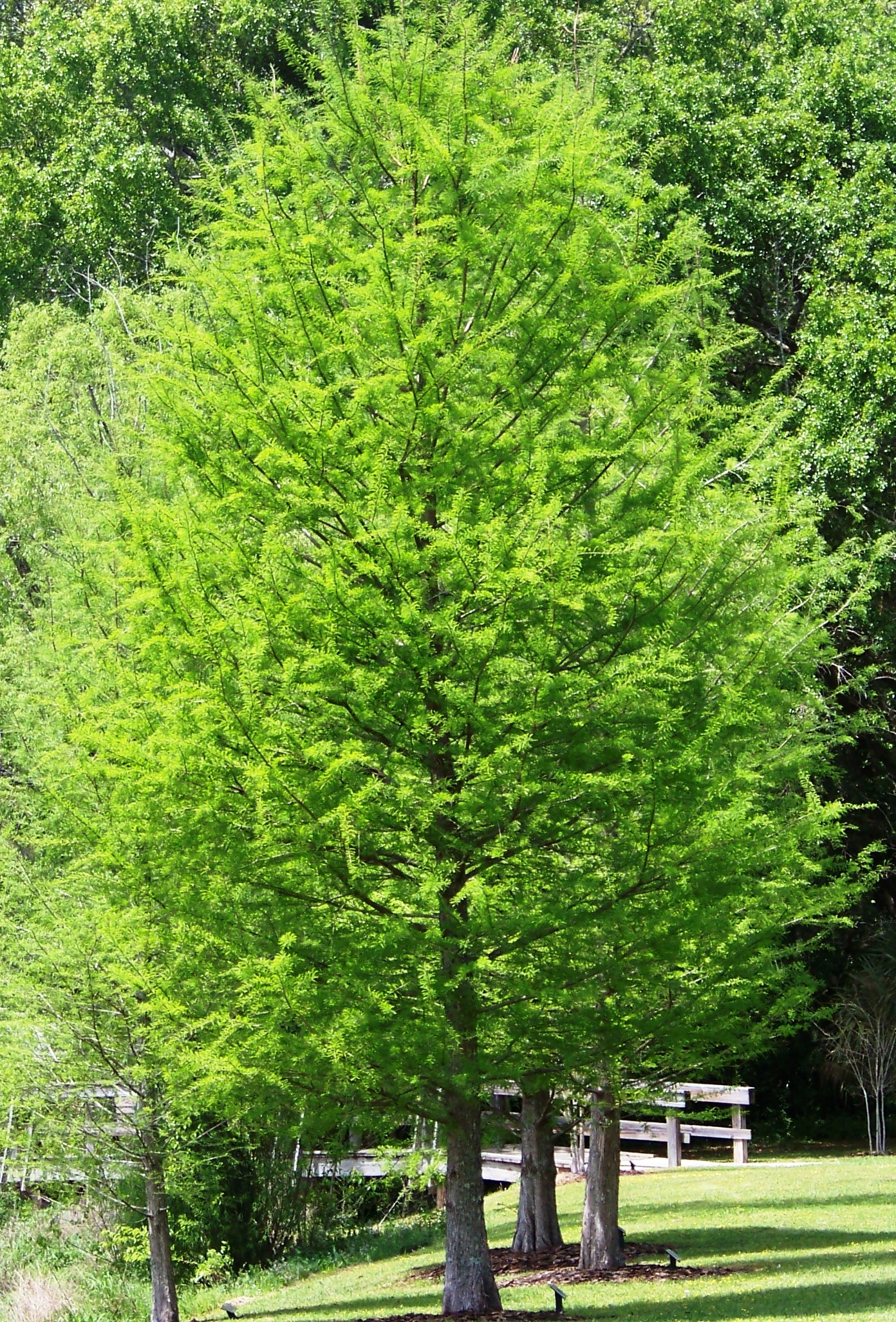
Waverly Larch Spring 0313
“In essence, shedding opens us to self transformation. Paradoxically, those of us who refuse such renewal will, sooner or later, be forced to undergo transformation anyway as a result of being broken or eroded by the world. Very often both occur at the same time: that is, we shed from within while being eroded from without” (Nepo).

Like immortality, transformation at any level exacts a choice for we are shedding the skin that has been familiar to ourselves as well as to the world. Often, the outer world reacts immediately to the loss of what was, rather than  responding to the new that is now.

There is no way that we ever prepare ourselves or anyone else for the outcome of shedding a worn skin for one that is new, unknown, and uncertain. Yet, if we do not shed what is no longer us, we lose “access to what is eternal” (Nepo). It is a choice, an immortal one, but a choice.

Shedding moment after moment to access the ever-expanding field of possibilities—the unknown—is a renewal the outer skin knows only from the inside out, as is the way of immortality.