Being Present in Healing

My recent trip to the American West was, among other things, a test of the holistic approach to disease that I have followed for the last 33 months. My approach is perhaps best described within Deepak Chopra’s definition of quantum healing:

“…the ability of one mode of consciousness (the mind) to spontaneously correct the mistakes in another mode of consciousness (the body). It is a completely self-enclosed process” (Quantum Healing).

Essentially, this mind-body consciousness is a type of “intelligence” (Chopra’s term) attempting to restore balance in a body that is diseased. It was this “intelligence” that made sense to me when I first read Chopra’s book in the early 1990s and again in 2010 when I removed myself from medical care.
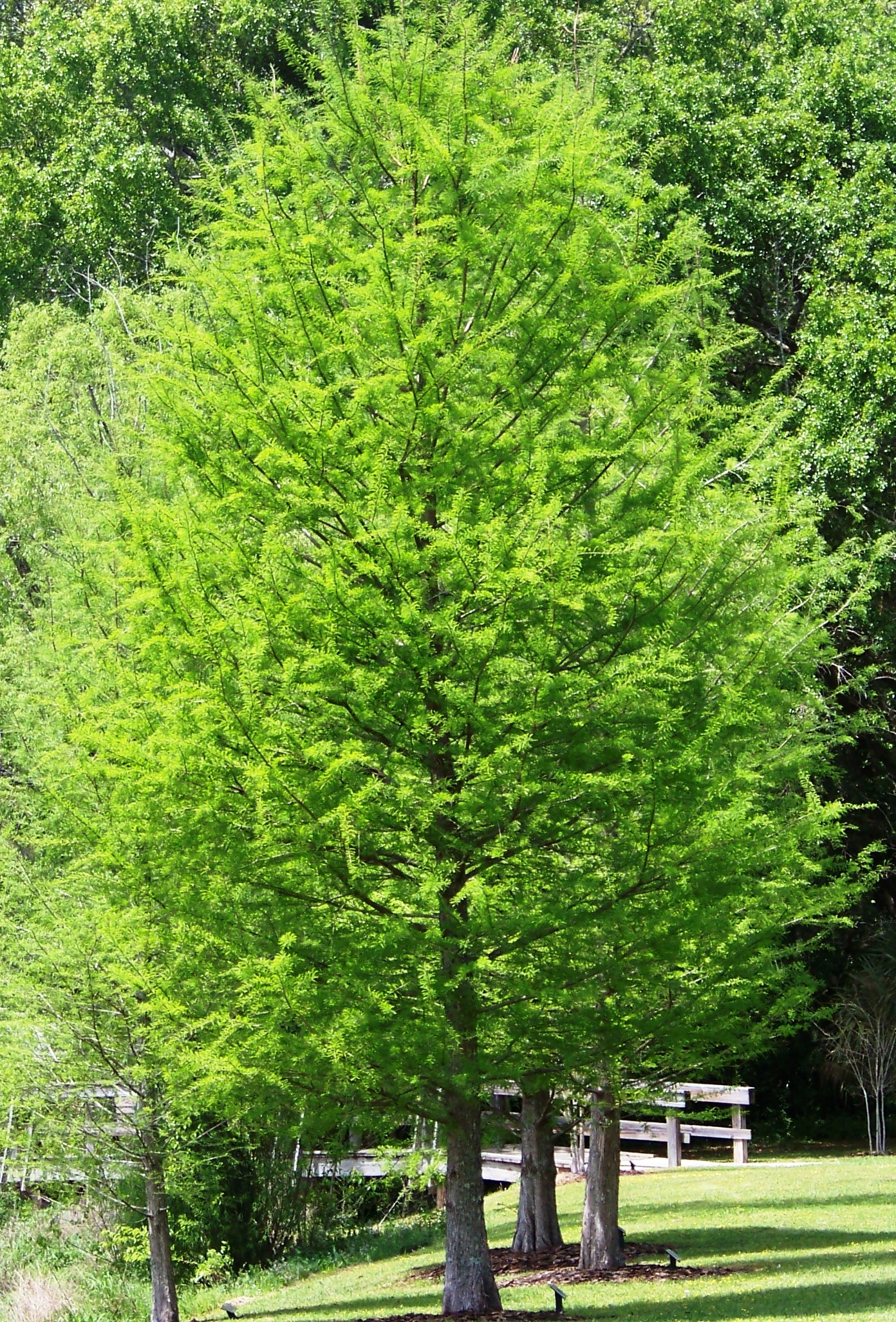
KMHuberImage
KMHuberImage

Undoubtedly, it takes a certain amount of desperation and frustration to walk away from medical science, which is not a route that Chopra, a medical physician, advocates. Rather, he argues that medical science can be a viable partner in working with the innate intelligence of the mind-body connection, with the following caveat:

A man-made drug is a stranger in a land where everyone else is blood kin. It can never share the knowledge that everyone else was born with” (Quantum Healing). In other words, every cell in our body has a kind of intelligence with specific tasks and abilities. All cells in the body work together, ever adjusting to what is occurring.

The inherent intelligence within the mind-body connection is one that medical science has yet to duplicate but it does not mean that medical science cannot assist us in our healing. It can and does–for many. Regardless, awareness of the mind-body intelligence can change our lives just as being aware that every decision we make and every thought we attach to affects our physical body directly and immediately.

That is where stress starts, and with increased stress comes imbalance, and when the imbalance is great enough, there is disease and yes, sometimes irreparable damage. The state of disease for anyone is unique but also may be integral to the individual’s purpose as Anita Moorjani suggests:

The reasons for…illness lie in [our] personal journey and are probably related to [our] individual purpose. I can now see that my disease was part of why I’m here, and whether I chose to live or die, I wouldn’t be any less magnificent” (Dying to be Me).

KMHuberImage
KMHuberImage

Disease as a state of health is how one has lived and continues to live. Just as lupus is not cancer—although in both the body is under attack and in both the autoimmune system plays a major role—directing disease is as unique to the individual as is the optimal level of health outcome.

What that outcome is and how long it may take is just as individualistic as is the degree of recovery. At the very least, an awareness of the inherent intelligence of the mind-body connection provides an alternative to  dealing with disease. At the very most, it can change drastically the course of a disease.

The reason why not everyone manages to take the healing process as far as they can go is that we differ drastically in our ability to mobilize it” (Chopra).

KMHuberImage
KMHuberImage

My experience with “incurable” disease is limited to lupus and Sjogren’s Syndrome, the current names for the disease that has been present in my body for at least 35 years. Some medical experts have told me autoimmune disease has been present since childhood. As I am now a sexagenarian, that’s a long time.

My last rheumatologist told me, “There’s just so much wrong with you and it’s been going on for so long.” That is probably still true for that rheumatologist and the entourage of doctors “on my case” but it was not true for me.

I was seriously ill, and I knew it, but I believe “when we get in touch with that infinite place within us–where we are Whole–then illness can’t remain in the body” (Dying to be Me). My intention is not to be smug or simplistic–nor am I speaking of mere positive thinking–my awareness of the inherent intelligence within my body-mind connection opened me to how I live as well as how I have lived. It gave me a place to begin some 33 months ago, and for me, it has meant drastic changes.

My life does not resemble the life I once knew, nor will it ever. It is not a life free of disease—not yet and maybe never will be–but it is a life aware of the possibilities in each moment I have. It is a life lived from within, and only now do I see the world as it really is, moment by moment, the only reality I ever have.
Thursday Tidbits: Digging Deep for “Meraki”

This week’s Thursday Tidbits considers meraki, a modern Greek word for that “extra something” we add to whatever we’re doing, no matter the task. Usually intangible and often inexplicable, meraki helps us immerse ourselves into whatever is at hand. We dig deep for meraki.

Over the last few weeks, I have had to reinvent my diet, in fact my entire daily way of being. Thanks to Prompts for the Promptless, I now have a word for it, meraki, which actually is often associated with cooking, that hard to identify ingredient or quality so essential to adapting to life.

Although I thought I was on a Slow Boat to Fitness, it seems it was not my boat at all. Last November, I began supplementing Meraki Momentmy diet with a few legumes, bread made from brown rice, and a few fruits. I was able to tolerate the extra carbohydrates but steadily the inflammation increased as did the discomfort. Only apples are still allowed.

At first, I thought it was the yoga so I modified my practice yet eventually, I had to stop. I continued with my walking but as the inflammation and discomfort increased, my distance lessened. Yet, after five months, I finally had a meraki moment.

Did I gain weight? Yes one day and no the next and then yes again, the usual roller coaster that has been my experience with the inflammation from degenerative arthritis and lupus. Overall, my weight did not change, which I attribute to the doshas of Ayurveda, of which I am kapha, mostly. Ayurveda eased me into my meraki moment regarding my food.

The ancient art of Ayurveda is not concerned with classifying carbohydrates, proteins, and fats but concentrates on the six tastes found in food: the hot tastes of pungent, sour, and salty; the cold tastes of bitter, astringent, and sweet. Those tastes carry different messages to the body and it reacts accordingly. Ayurveda is so much more than that but I am just beginning.

For me, Ayurveda provides a way to practice my meraki with maitri or loving-kindness as I let go of a diet that I enjoyed but did not provide my body the fuel it must have to fight inflammation and support my joints. I was looking outside myself for answers that were always within me:

If you look for the truth outside yourself,
It gets farther and farther away.
Today walking alone, I meet it everywhere I step.
It is the same as me, yet I am not it.
Only if you understand it in this way
Will you merge with the way things are.” ~ Tung-Shan ~

Meraki helps me listen to my body rather than sending it commands to which it cannot comply because it does not have the energy. A return to yoga is actually relieving some of the discomfort in my joints, and the walking is easier.

With meraki, which always involves one’s enthusiasm for life, I have added daily trips to the delightful blog, Zen flash, an online temple offering daily posts of solitary images and transcendent lines.  It is a part of my morning meditation practice but I also visit at other times to remember:

“Everyday life

is not divorced from

the Eternal State.

~~Sri Ramana Maharshi

In the spirit of Zen flash, this week’s video offers Schumann’s Opus 15 as a moment of merkai from me to you.

Thursday Tidbits are weekly posts that offer choice bits of information to celebrate our oneness with one another through our unique perspectives. It is how we connect, how we have always connected but in the 21st century, the connection is a global one.

On a Slow Boat to Fitness

“You may be a wonderful doodlekit” is the phrase that opened a February blog post a year ago, almost to the day. It was, of course, an unsolicited statement. In the year that has passed, I have not pursued whether or not I am or have ever been wonderful, a doodlekit or any combination of the two.

In that same February post, I considered my True Self versus my False Self (Mark Nepo) in light of having to cancel family travel plans and wondered whether I would ever be able physically to travel again. It remains a question but because of my progress this past year, there is a trip in the making. Whether it’s the first of many or the last, there is a trip.

KMHuberImage
KMHuberImage

In preparation, I have been increasing my physical activity, which is not to say the trip will require any rigorous hiking or extended walking. That is for most people it will not. For me, just being in airports will be an outing. Although I have made significant progress in mitigating my lupus and Sjogren’s syndrome symptoms, one of the reasons for my success is limited physical activity.

It is no exaggeration to say my exercise program began with walking around one room and then another, eventually graduating to short walks in a park with Cooper. My current recovery is in its third year, and now, my personal best is a thirty-minute walk, with most of my walks right at twenty minutes. Frankly, I’m delighted.

Heron on Turtle Row 0213
KMHuberImage

It may not seem like much but on my way to a level of health that is realistic after decades of disease, I appreciate progress in inches. As I have mentioned many times on this blog, the biggest advantage to chronic illness is that it keeps one physically in the moment, for no matter what occurs on one day, the next day dawns as if the previous day never existed. Frankly, I suspect that is true with or without disease but chronic illness provides a 24/7 mirror.

Having achieved a daily 15-20 minute walk for a month without any significant increase in inflammation or stress on my joints has me giddy with success. Now, I am attempting yoga. My introduction is through Peggy Cappy’s Yoga for People with Arthritis DVD. I highly recommend it.

While I have become accustomed to the fact that the line in the sand is in a different place every day, in my eagerness to begin every day anew, I have a tendency to be idealistic, my mantra in almost every project I attempt. Yoga is no different.

What I appreciate about the Cappy DVD is that it is divided into sections of different poses as well as warm-up exercises. In addition, there are great exercises for hands and fingers, perfect for anyone who uses any kind of electronic device. In the short time I have been doing these exercises, there has been a marked increase in my flexibility, so much so that I ignored the line in the sand.

Wood Stork at Waverly 0213
KMHuberImage

Rather than allow my body to adjust to the sitting poses and warm-up exercises, I went on to try the standing and sun salutation poses–Warrior One, Warrior Two and even Sitting Dog–within a few days my inflammation increased to a level I had not known in over a year. Not the fault of the DVD or any of the yoga poses just the False Self ignoring the True Self and each day’s line in the sand.

My bones and joints have taken a pounding for decades, first with one disease and then another, yet there is still an optimum level of health available to me. As Deepak Chopra says in Quantum Healing, chronic illness and aging have an effect on what that level of health will be. I see it as progress in inches but it is progress, nonetheless.

As I mark this first year of contemplating my True and False Selves, I have made enough progress to begin yoga, one pose at a time, and to attempt a cross-country trip as an avowed Uni-Tasker–one task, one moment. Maybe someday, a doodlekit….

Getting Physical

Sjogren’s Syndrome has had my attention these last few days. Sjogren’s affects gland secretion, which means there is a general dryness throughout the body. It is often in the company of lupus so it’s been a joint effort. However, I’m happy to report that I have remained more in the moment than not and am simply working through my symptoms—dry eyes, dry mouth, fatigue–as they make themselves available. It is intriguing.

In examining these two autoimmune issues, I focus on what is occurring throughout my physiology rather than considering cause and effect. This began two years ago when I walked away from traditional medicine, and with a little knowledge of quantum healing, I began creating a diet for myself that would not make me sicker. I needed a distraction and food, which had been such a comfort, seemed the logical choice.

It was a no-brainer to eat whole foods and eliminate processed/refined products but I discovered I could not tolerate all whole foods, especially carbohydrates. Ultimately, I stopped eating yeast, gluten, dairy, and soy but mostly, I stopped eating almost all sugars, including fruit. I ate meat and still do, infrequently, but I receive more than my required protein amount from almond butter, plain goat’s milk yogurt, eggs, broccoli and even almond cheese, just to name a few sources. I quickly discovered that getting enough protein is not an issue.

Mostly, I found myself engaged in an experiment for health and not a diagnosis for disease. My physiology became my laboratory. As my sugar and high carbohydrate intake dropped, my joint pain began to decrease. Yet, not all sugars are equal. For example, I tolerate apple cider vinegar but no other. When I discovered that apple cider vinegar is a main ingredient in Eden’s Organic Brown Mustard, I finally found my condiment. This mustard is a marvelous addition to any sandwich.

Bread proved elusive until I learned of Paleo Bread—almond and coconut are my preferences—yet another source of protein for me. While the bread is expensive,  a local health food store is providing me a great discount. The bread is a significant source of fiber, contains no refined starch and is extremely low in carbohydrates. Yes, it is an acquired taste but like my ever-changing physiology, my taste buds are not what they were.

I discovered that change at my 60th birthday dinner. The waiter brought a complimentary birthday chocolate sundae, which I ate because it was my birthday and because I wanted to see what reaction I would have. Immediately, I was overwhelmed by the taste–too sweet, too much. For the next few days, that taste stayed with me, mostly in the form of carbohydrate cravings. No one is immune to the physiology of them.

In response, I ate more almond butter and drank more chamomile tea (with Stevia) until my physiological system evened itself out. By the way, the only natural Stevia that I know of is SweetLeaf; all the others have either sugar or a sugar substitute in them. Every time I meet up with sugar, intentionally or no, my physiology alters significantly. This may have been true all my life or not. Doesn’t matter.  I discovered a connection.

In quantum healing, perfect health is an ideal, of course, but its heart is “…the junction point between mind and matter, the point where consciousness actually starts to have an effect” (Deepak Chopra). That junction point is when “…quantum healing moves away from external, high-technology methods toward the deepest core of the mind-body system. This core is where healing begins” (Chopra).

My experimenting with nutrition is only the beginning of my understanding quantum healing. Mine is an undertaking that many question to which I can only respond that for the first time in 30+ years I have a connection to my body that is not external or chemical. It is right for me. I still have Sjogren’s and lupus symptoms–no worse and perhaps no better–I haven’t paid attention to degree of discomfort for I have been busy in my physiology laboratory.

“The healing mechanism resides somewhere in this overall complexity, but it is elusive. There is no one organ of healing. How does the body know what to do when it is damaged, then? Medicine has no simple answer….A man-made drug is a stranger in a land where everyone else is blood kin. It can never share the knowledge that everyone else was born with” (Chopra).

Yet, I am not unrealistic, either. I do not believe I will attain the health of a sexagenarian who has generally taken good care of her emotional and physical needs. I was not that person for 58 of my 60 years; I am only that person now. Thus, whatever healing emerges is from an awareness born of the mind-body connection. For me, it is about appreciating the incredible complexity that is my physiology and doing everything I can to support my body in its never-ending quest to provide me health. I am much more careful in how I live.

Our physiology communicates mainly through pain or discomfort but it is in the examining of the communication that we gain a broader perspective of our physical self. Physically or emotionally, we do not operate well on deprivation. No living organism does. Quantum healing is going beyond physiology—cells, tissues, organs, and systems–to that mysterious “junction point between mind and matter” where healing begins.  It is intriguing.

(All Deepak Chopra quotes excerpted from Quantum Healing: Exploring the Frontiers of Mind/Body Medicine, New York: 1990, Bantam Books)

In the Gap

It is not exaggeration that for almost 60 years I have been a woman who lived outside of herself, meaning whatever I could not “fix” I suppressed, as if a reckoning would never come but, of course, it did.  Fiscally, physically, and spiritually bankrupt, life as I had known it ended, which really was a good thing.

It did mean I had to “go wild into my life” but as freeing as that is, it is not without its pitfalls. The discovery of my story revealed a raw power but knowing my story is only freeing if I am not attached to its outcome. If I am, I am doomed to repeat my own history. I am not without my moments of reliving past behavior but they are fewer.

Two weeks ago, I began accessing what Deepak Chopra calls the “gap between our thoughts” through meditation. Chopra says that in meditation, we access our baseline state of consciousness, in essence where we began. For years, I have touted meditation while my actual practice of it was not an actuality. When the Chopra Center offered a free, 21 day meditation challenge, I was not without my skepticism yet I knew I was ready to begin meditation.

No doubt that makes a difference but I am amazed at what meditation has provided me over these past two weeks. They have not been easy weeks for my lupus has been quite active but meditation has provided me another way to be with lupus. In accessing the gap between my thoughts, I am in the stillness, where my physical body connects with my consciousness.

“In the gap” is a tempting place to stay but the pull of physical existence is stronger. For me, meditation is not a ‘60s “trip” nor am I in some sort of trance. I am, however, in a place where my physical presence is lighter. Upon my return–and this happens every time–there is a physiological change in me, a release of tension that pervades my life more and more. Whatever physical discomfort I have been feeling, it is less.

Here’s what I think is happening: my pain is less because more and more I accept it as a part of my physical presence. I do not know that I have ever accepted lupus or any of the other names my dis-ease has accumulated. While it is taking me some time to realize fully that acceptance, the coincidence of reading Cheryl Strayed’s book as I began meditating with the Chopra Center is not lost on me. Both are tools for releasing the past and accepting what is by choosing to be present in each moment. When I am, there is a physiological change in me.

After 35 years of chronic illness, I am surprised but I also know that when I went knocking on the doors of the ancient traditions this time, I surrendered. That is an admission I never thought I would make much less post on the Internet but in accepting all of my story, lupus included, I surrendered to all I have been and all I have done, freeing me from the responses I have always made.

When I am present, the physiology of my body responds differently. I am not pulling from the past or tugging from the future for a response. My moment is not attached to any past baggage or any future “what ifs.” Situations are not free but my response to any of them, including lupus, is.

Being present is to reside in the unknown, “where the wild things are,” where creativity connects with consciousness. It takes practice, requires patience, its paths are many yet the moment is all we ever have, and it is enough.

Len Huber image

Spending My Days

Consider the essence of magic as the enchantment of the unknown, a paradox that in the words of the Tao is the “named and the nameless.” Magic appears throughout this blog so similarly to its appearance in my life or to borrow from Annie Dillard:  “How we spend our days is, of course, how we spend our lives.”

What if we spend our days creating and re-creating our lives as works of art rather than scheduling our lives by the hour, defining ourselves by the number of tasks we accomplish. Only late in my life did I come to this magic, this nuance of routine. Now, I spend my days in the experience of each moment where every minute is a way of life and not a moment on a timepiece or a task on a list.

I am not without day-to-day demands—mine is chronic illness—nor am I without the gifts that life’s demands provide, and chronic illness has its gifts, too. Of course, it took me more than thirty years to notice there were any gifts from any demands. We just don’t look for these gifts. We focus our attention only on the demands, maybe even calling attention to ourselves. Mark Nepo says “the threshold to all that’s extraordinary in life is when we devote ourselves to giving attention, not getting it. [That’s when] things come alive for us…[we] find our place in the beauty of things by the attention we can give.”

Perhaps the best measure of giving attention is how we live the routine of our days. Of late, I’ve been experimenting with routine in the larger context of creating a resilient life, which is, among other attributes, a work of art according to Dr. Symeon Rodger in The Five Pillars of Life. The process is a simple one. I record the moments of my day as they occur and not as a schedule of what must occur. There are requirements for each day—some specific tasks must be done–but there is not a plan. Within a week, I discovered a natural flow to how I spend my days as I watched them unfold, regardless of the interruptions and the unexpected. Most important, I discovered resilience and flow reside in the creative unknown.

Here is how that translates in my everyday life. The day-to-day unpredictability of my dis-ease as well as Cooper’s does not change nor does it require any more attention than juggling finances, doing the laundry, grocery shopping, writing—all requirements of my days. In focusing on each moment, I not only accomplish what is required but I complete tasks and chores that have been waiting for months. Furthermore, there is energy in everything I do as I immerse myself into each task and only that task. There is no multi-tasking for each moment belongs to itself completely. Not one day is like another nor is any day exhausting. I schedule nothing and record everything.

Melissa Bowersock Image
WANA Commons

I am quick “to soar with the oversoul”—Louisa May Alcott’s phrase regarding her father and the transcendentalists—and like Thoreau, I have built my “castles in the air” but few times in my life have I put “foundations beneath them” that did not crumble. Yet, in living a routine as a work of art and embracing the enchantment of the everyday, I have a foundation for my current castle in the recording of how I spend my days.

The role of voice recognition software  in my routine is nothing short of finding a new energy source.  Once I began using Dragon NaturallySpeaking, I realized how much physical energy I was expending in typing, a necessity for a writer but  one I had overlooked. Ironically, I had spent considerable time, money, and thought in creating a comfortable work space. I work from an adjustable bed that supports my entire body, and my laptop rests on a spacious tray designed for use with adjustable beds. I believed I had a comfortable way to continue writing, and it was just a matter of settling into a writing schedule but those were days devoid of enchantment and full of design.

There never was a consistent writing schedule, and increasingly, neuropathy limited the length of time that I could use a  keyboard. Finally, I took a three-week hiatus from blogging and from scheduling my days. I knew I would no longer write as I had–I didn’t know whether I would write–yet, I knew I would continue to create and re-create, and that was enough as I explored the moments of my days. Then, I discovered Dragon NaturallySpeaking, and in the initial moments of using the software, I knew life was about to change even more, and so it has. Within two days, there was also a marked decrease in my physical discomfort.

Dave R Farmer Image
WANA Commons

For me, dictating my thoughts is quite different from typing thoughts on a screen using keys on a keyboard. Dictating is sending thoughts through speech; typing is the tactile sensation of selecting keys to produce words. The awareness involved  in each process is completely different, and I am allowed another perspective on creating. I find the combination quite freeing. I focus on the writing before I bring it to the screen through my voice. Then, with my fingers on the keyboard, I edit and shape the words on the screen, creating and re-creating yet another perspective on the story of how I spend my days.

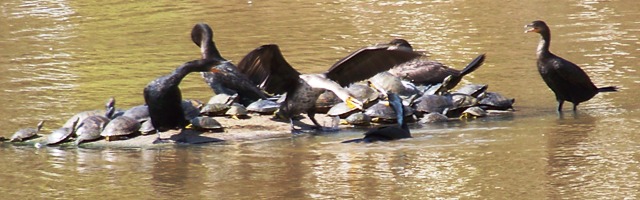
Turtle Row

Neuropathy has come to call so I am sitting out its visit on Turtle Row. It has become increasingly difficult for me to type–now referred to as “keyboarding”–so I am investigating voice recognition software, thanks to a very dear friend.

Fortunately, I am able to continue my study of ancient authentic traditions as well as the world of re-enchantment, introduced  by two of my readers. In particular, I am enjoying Thomas Moore’s The Re-Enchantment of Everyday Life and recommend it highly.

Of late, I have been remembering William Blake’s “Auguries of Innocence,” always appropriate when looking for the miraculous in the mundane. Here is its opening quatrain:

“To see a world in a grain of sand,
And a heaven in a wild flower,
Hold infinity in the palm of your hand,
And eternity in an hour.”

You may read the rest of the poem here but the enchantment of the opening quatrain is everlasting.

Regular posts will resume  June 3.

The Power of Story

Lupus is a creation of mine, its own story really, not one of which I am proud, as its writer, but I have been its source of life for the last 35 to 40 years, maybe even longer.

It is not possible to note the day my lupus gene switched to on nor is it possible to know why I have the gene or what activated it, if anything. It simply is. That part of the story has never mattered to me, even before I knew about the Tao or Zen.

It took me most of my life to understand I am not my lupus and that autoimmune disease is its own story, one steeped in imitation and deceit, usually disguised as flexibility and malleability. Separating what is the lupus story from all I am has been delicate and sometimes, seemingly impossible.

Through the Tao and Zen, I have come to believe my body is my soul having a physical experience, which gives me, a writer, the luxury of viewing lupus as story, a structure I do understand. In all the ways I have viewed lupus, it never occurred to me to view it as a story until very recently.

Lupus really does have plot points, conflict, a protagonist and an antagonist, all tools of my trade on my turf. I just may have the advantage here for the very first time.

In some ways, I have had a long life with lupus, if knowing lupus by other names counts. Lupus’ ability to mimic so many other illnesses along with my gullibility in believing one misdiagnosis after another are extraneous chapters but there is this: my heart never believed any of those labels.

In the lupus story, my heart is the protagonist and my brain or ego is the antagonist, the one that drives the conflict in every story, and all stories have an antagonist and a protagonist locked in a conflict box.

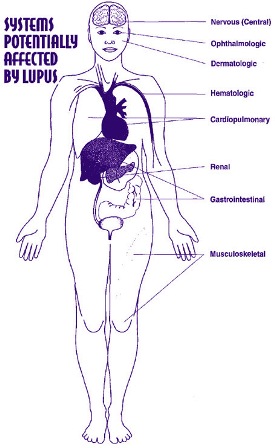
http://www.niams.nih.gov
Image Credit

As the lupus story opens, my immune system produces antinuclear antibodies to fight infection and viruses, just as it should, until we reach the first plot point: a normal immune system turns on itself and begins to attack the very body it defended for years, for no apparent reason.

This relentless war for the body continues for years under various guises–multiple sclerosis, migraines, mixed connective tissue disorder–until Sjogren’s wipes out the salivary glands to pave the way for lupus.

As we reach the midpoint of the lupus story, the brain discovers that it, too, is under attack and turns to the last bastion of hope, the open heart, the remaining connection to the spirit that animates the soul’s body.

I do know that in any story there is one more major plot point before the conclusion, and the lupus story is no different. I don’t know the last plot point nor do I know the conclusion but I have this: the structure of story has given me some of my first moments truly away from the physical battle, and I know I am so much more than the lupus story.

ROW80 Sunday Scheduling 

I finished reading The Night Circus by Erin Morgenstern and may write a review for an upcoming blog post; however a very fine writer, Stephanie Carmichael, wrote an excellent review that you may read here.  I cannot imagine what I could add to this review. The Night Circus is one of the best novels I have ever read and am considering purchasing it (I borrowed it from the library) as it is a book to read and re-read.

I continue to write at least 500 words a day, mostly nonfiction, and I reached my goal of scheduling blog posts so I am not writing to deadline on Sundays and Wednesdays. This next week will be the dismantling of my novel’s first draft, which I plan to have finished by April 22, 2012 as well as a rough outline of its scenes so I may begin “plotting” the novel’s major points. Unlike the lupus story, I actually do know how this story ends.

For the rest of this round, my goal is a weekly total of 2500 words, as I do not know how long it will take to plot the novel so I do not know when I will start the actual writing of the second draft. You may read more about my second Round of Words in 80 Days here.


Straw Dogs: Not the Movie

The fifth verse of the Tao Te Ching focuses on the temporal but equitable nature of existence in which we are but straw dogs.

“Heaven and earth are impartial; they see the 10,000 things as straw dogs. The sage is not sentimental; he treats all his people as straw dogs.”

It is a rather provocative statement of our role in the physical universe of the 21st century. It is not a comfortable image as straw dogs are too temporal, too much a reminder of  our brevity. Within the Tao Te Ching of the 6th century B.C., straw dogs have a role to play for a brief, shining moment, and then, they are gone, only to be followed by more straw dogs.

Impartial existence does not seem all that special.

Stephen Mitchell, a translator of the Tao, has written that “’straw dogs were ritual objects, venerated before the ceremony but afterward abandoned and trampled underfoot’” (as quoted in Wayne Dyer’s Change Your Thoughts, Change Your Life).

In the Urban Dictionary, a delightful resource, I found seven different meanings of straw dog including one who is “faithful” to snorting cocaine. To me, the Urban Dictionary definition most resembling Mitchell’s translation is “something that is made only to be destroyed”; the sample sentence uses a doll as an example of a straw dog.

My favorite Urban Dictionary straw dog definition is “a word that you interject anytime that you don’t know what word to use but want to make it sound like you’re smart.”  The sample sentence illustrates the definition completely in that a nuclear physics speech “seemed like a straw dog compared to other theorys (sic),” definition and example perfect for my pearl book.

Regardless of how many definitions I may find online and elsewhere, any and all of them underscore the temporal nature of the physical universe from a cocaine high to a venerated sacrifice to easing out of an uncomfortable situation by saying something silly. They all pass from existence, as the Tao, the Source of all things, knows:

“To him none are especially dear, nor is there anyone he disfavors.”

In appreciating the straw dogs of the  6th century B.C. within the experience of the 21st century A.D., it is possible to feel the forever of existence, the comfort in knowing that straw dogs follow straw dogs. “With impartial awareness, the sage genuinely sees the sacredness within all the straw dogs in this ceremony we call life” (Dyer). 

We are not special unless we all are special.

Imagine a world where all know and accept that existence is a gift for all to be opened, to be lived, and to be left for others.  What is special in each of us is our life force. Imagine if we stopped celebrating our separateness and revered our one moment of existence, straw dogs all.

ROW80 Sunday Summary

A brief, mid-week lupus flare limited my reading and writing but it was a brief flare, and I am grateful. I credit its brevity to my better diet (now a weight loss of 66 pounds), to my work with the Tao, to meditating, and to participating in ROW80. Anyone with chronic illness  or who is confined for any length of time, can appreciate how important it is to connect with life whenever possible. As a bit of a distraction, I concentrated on re-learning Twitter; fellow ROW80er Morgan Dragonwillow helped me with TweetDeck and when my brain fog cleared a bit, I re-read the Twitter segment of Kristen Lamb’s book We Are Not AloneWho knew a lupus flare could be so productive?

Am halfway into The Night Circus by Erin Morgenstern. For the first time since seeing the movie Toby Tyler (late 1950’s), I want to run away with a circus, especially one as magical as the Circus of Dreams. I enjoy Morgenstern’s wit and although the time structure is a bit wobbly–I had the same concern in The Time Traveler’s Wife–Morgenstern’s writing keeps me turning the pages.

If you want to read more about my ROW80 progress, please click here.

Paradox Practice

Wayne Dyer (Wikipedia photo)

I didn’t grow up practicing to be a paradox so when Wayne Dyer writes, “practice being a living, breathing paradox every moment of your life”* it seems a tad…paradoxical. Yet, my life of duality brought me only contrasts, opposites, comparisons and yes, judgment—all balancing acts of duality and not of the “paradoxical unity” that is the oneness of the Tao.

This I discover after almost 60 years of living but I do discover it.

More than thirty years of my life have been with lupus, an autoimmune disease that now actively lives with me permanently, unlike its earlier years of extended stays but then it had other names.   Truly, I understand “the name that can be named is not the eternal name.”

Regardless, lupus was made to order for practicing paradoxical unity.

For years, juggling balance, stressing no stress, and unlimiting limitations were my duality, uneven at best. The effort of trying to order my life out of chaos was like touching the wind. Yet, chaos, like every storm, has one, still eye that allows …”apparent duality while seeing the unity that is reality…[an] effortless action without attachment to outcome.”  By no longer focusing on outcome in my life with lupus, I replaced the trying and the effort with what is moment by moment.

Being requires a lot of presence–“duality is a mind game” that is always ready for a match–so I get a lot of paradox practice.

*Attribution: All quotations are excerpted from Wayne Dyer’s book, Change Your Thoughts, Change Your Life, Hay House, Inc., Carlsbad, CA, 2007.

ROW80 Wednesday Word Marking:

From January 2 until February 4, my goal was to write 250 words per day—as blog posts, fiction, or nonfiction–for an approximate total of 8250 words.

On February 4, I started the “30-minute” stretch in which I write for 30 minutes daily. So far, that has generated just over 3700 words, averaging about 900 words a day. It takes care of  a lot of my mind minutia so my other writing is more focused, and I fuss less.