Patience is…

…second to simplicity, according to sage Lao-tzu, sixth century B.C. author of the Tao Te Ching (Tao). Some sources cite the Tao as the second most translated work in history, preceded only by the Bible. As always, second place may or may not impress but what is impressive is that each of the Tao’s 81 sections (or 5000 Chinese characters) provides us with the constant contradictions inherent in life and then, most generously, offers us strategies within the Tao’s three central teachings–simplicity, patience, and compassion—for every moment we live.

That simplicity precedes patience is not difficult to appreciate. Before we can be, we must separate the strands of our life, acknowledging each strand unto itself as well as its relationship to every other strand. Patience emerges from the untangling but “the place of waiting is always trying and very difficult to live out…fear wants us to act too soon…patience, hard as it is, helps us outlast our preconceptions” (Mark Nepo).

If we practice patience rather than relying on a conditioned response—that which we have always known or done—our perception of what is possible changes completely. Within patience, the moment is fresh and free as in Moksha, a Sanskrit word meaning freedom or release. Deepak Chopra has referred to Moksha as “choiceless awareness,” in which the moment is emotionally free from the situation surrounding it.

In the freedom of Moksha, every moment is free because it is now, completely and fully present. Just as the strands separate to reveal simplicity, in Moksha, the present moment is removed from any future or past situation. The moment is free of any complication, of any condition. The moment is.

Like the moment, how we respond is free and fresh, separate from any situation that has established itself in the past or in the future. As long as we are completely present, we are as emotionally free as the moment. Essentially, we are not attached to the situation’s outcome– a central tenet of Buddhism—as yet another ancient tradition reveals itself within the practice of patience.

Yes, I am weaving in and out of the Vedas of Hinduism and the Tao of Taoism along with the Zen of Buddhism, an intricate weave of no beginning and no end. Continuously, I am startled by similarities—as if I were following the strands of the weave for the first time rather than following a familiar pattern—there is such crispness, freshness to this wondrous weave’s undulating eternity. There is such life in these traditions and thus, freedom.

Yet, the moments from my previous meandering among these traditions show themselves from time to time. There is unraveling yet to be done but the strands sort themselves as only memory can. It takes time but I wait for I know every moment I have is free as long as I have patience. It is rarely easy but with practice, patience increases.

“… When feeling urgent to find your place on this Earth…wait…and things as you fear them will, more often than not, shrink into the hard irreplaceable beauty of things as they are…of which you have no choice but to be a part” (Nepo).

And buried therein are the seeds of compassion.

(All Mark Nepo quotations are from The Book of Awakening

Looking Away

“‘In exchange for the promise of security, many people put a barrier between themselves and the adventures in consciousness that could put a whole new light on their personal lives.'” – – June Singer

Although I am not familiar with the work of Jungian analyst June Singer (1920-2004), I did discover a personal anecdote that reveals a woman who walked her talk. When asked her impression of the Internet, she responded: “`Well, I’ve just had my eightieth birthday, and I thought that if I don’t keep trying new things, I’m liable to get brain-dead. I thought, this will be a breeze! That’s what I thought.’”

Exactly!

A recent daily meditation with Mark Nepo introduced me to Singer, adding a Jungian dimension to my current consideration of archetypes within authentic ancient traditions. As one whose life has been characterized by rampant naïveté, I prefer “adventures in consciousness” over security any day. For me, curiosity is an integral component of consciousness and therein infinite.

As Heraclitus said, “No matter how long you probe and how far you look, you’ll never encounter the boundaries of the soul.” I find that immensely satisfying for “the pull into the truth of things is very strong” (Nepo) but it is not without its challenges, as the foray into the unknown has no consideration for what is safe or what is treasured. Consciousness just is, and it is ever expanding.

Consider how easy it is to look away—not to grow–to maintain the status quo in the hope that all we are and all we love stay the same. That’s the human being in us but our spirit, as the Isa Upanishad says, “’is swifter than the mind.'” Our spirit is always in motion whether we are or not; it provides a whole new light on our lives if only we will look.

According to the Buddhist teacher Chögyam Trungpa, if we deny our spirit by deliberately looking away from someone or something that we recognize as truth, it is “… a grave act of denying what is already conscious…a crime against the essence of things that costs us dearly” (Nepo). We attach to what we know, and we don’t let go. Paradoxically, by clinging to the “promise of security,” we risk all that we are and all that we love, for we deny the spirit of life, the only constant that creates and re-creates.

Sometimes, it is hard to know whether we are clinging to or letting go. Attachment is sticky in every way, requiring us to know our hearts before we act with our heads. There is such a gap between the two, it seems, for there are times when we look away in true innocence rather than deliberately avoiding a direction. It takes practice to recognize this “…inner knowing that determines whether we live like a dog at the end of our leash or whether we run free” (Nepo).

As one who believes in becoming a lake, I am grateful for my life of rampant naïveté, and I do not see that changing—ever.  On some days, I narrow the gap between heart and head but then, there are those other days that are not so clear.

Here is a suggested meditation from Nepo on narrowing the gap:

         “As you breathe slowly, try on the in-breath to sense your spirit. Feel where it is living in you.

“On the out breath, try to feel your place in the world, where you go through the days.

“As you breathe, keep sensing your spirit and feeling your place.

“Simply notice any difference and throughout your day look there.

“Your simple and honest looking will lessen the gap.”

Spending My Days

Consider the essence of magic as the enchantment of the unknown, a paradox that in the words of the Tao is the “named and the nameless.” Magic appears throughout this blog so similarly to its appearance in my life or to borrow from Annie Dillard:  “How we spend our days is, of course, how we spend our lives.”

What if we spend our days creating and re-creating our lives as works of art rather than scheduling our lives by the hour, defining ourselves by the number of tasks we accomplish. Only late in my life did I come to this magic, this nuance of routine. Now, I spend my days in the experience of each moment where every minute is a way of life and not a moment on a timepiece or a task on a list.

I am not without day-to-day demands—mine is chronic illness—nor am I without the gifts that life’s demands provide, and chronic illness has its gifts, too. Of course, it took me more than thirty years to notice there were any gifts from any demands. We just don’t look for these gifts. We focus our attention only on the demands, maybe even calling attention to ourselves. Mark Nepo says “the threshold to all that’s extraordinary in life is when we devote ourselves to giving attention, not getting it. [That’s when] things come alive for us…[we] find our place in the beauty of things by the attention we can give.”

Perhaps the best measure of giving attention is how we live the routine of our days. Of late, I’ve been experimenting with routine in the larger context of creating a resilient life, which is, among other attributes, a work of art according to Dr. Symeon Rodger in The Five Pillars of Life. The process is a simple one. I record the moments of my day as they occur and not as a schedule of what must occur. There are requirements for each day—some specific tasks must be done–but there is not a plan. Within a week, I discovered a natural flow to how I spend my days as I watched them unfold, regardless of the interruptions and the unexpected. Most important, I discovered resilience and flow reside in the creative unknown.

Here is how that translates in my everyday life. The day-to-day unpredictability of my dis-ease as well as Cooper’s does not change nor does it require any more attention than juggling finances, doing the laundry, grocery shopping, writing—all requirements of my days. In focusing on each moment, I not only accomplish what is required but I complete tasks and chores that have been waiting for months. Furthermore, there is energy in everything I do as I immerse myself into each task and only that task. There is no multi-tasking for each moment belongs to itself completely. Not one day is like another nor is any day exhausting. I schedule nothing and record everything.

Melissa Bowersock Image
WANA Commons

I am quick “to soar with the oversoul”—Louisa May Alcott’s phrase regarding her father and the transcendentalists—and like Thoreau, I have built my “castles in the air” but few times in my life have I put “foundations beneath them” that did not crumble. Yet, in living a routine as a work of art and embracing the enchantment of the everyday, I have a foundation for my current castle in the recording of how I spend my days.

The role of voice recognition software  in my routine is nothing short of finding a new energy source.  Once I began using Dragon NaturallySpeaking, I realized how much physical energy I was expending in typing, a necessity for a writer but  one I had overlooked. Ironically, I had spent considerable time, money, and thought in creating a comfortable work space. I work from an adjustable bed that supports my entire body, and my laptop rests on a spacious tray designed for use with adjustable beds. I believed I had a comfortable way to continue writing, and it was just a matter of settling into a writing schedule but those were days devoid of enchantment and full of design.

There never was a consistent writing schedule, and increasingly, neuropathy limited the length of time that I could use a  keyboard. Finally, I took a three-week hiatus from blogging and from scheduling my days. I knew I would no longer write as I had–I didn’t know whether I would write–yet, I knew I would continue to create and re-create, and that was enough as I explored the moments of my days. Then, I discovered Dragon NaturallySpeaking, and in the initial moments of using the software, I knew life was about to change even more, and so it has. Within two days, there was also a marked decrease in my physical discomfort.

Dave R Farmer Image
WANA Commons

For me, dictating my thoughts is quite different from typing thoughts on a screen using keys on a keyboard. Dictating is sending thoughts through speech; typing is the tactile sensation of selecting keys to produce words. The awareness involved  in each process is completely different, and I am allowed another perspective on creating. I find the combination quite freeing. I focus on the writing before I bring it to the screen through my voice. Then, with my fingers on the keyboard, I edit and shape the words on the screen, creating and re-creating yet another perspective on the story of how I spend my days.

Witness to Life

In this past week, a stunningly beautiful baby emerged from her mother’s womb; forty-eight hours earlier, a canine named Sam finally found the light that had eluded him all his life. One woman was the guide for both journeys.  I am reminded of the seventh verse of the Tao:

”Heaven is eternal–the earth endures. Why do heaven and earth last forever?  They do not live for themselves only. This is the secret of their durability. 

“For this reason the Sage puts himself last and so ends up ahead. He stays a witness to life, so he endures. 

“Serve the needs of others, and all your own needs will be fulfilled. Through selfless action, fulfillment is attained.”*

Dave R Farmer Image
WANA Commons

The woman serving as the guide for the baby’s birth and the canine’s death reminds me of the Sage, for she has always kept herself last. So well she understands that a new life has yet to experience all that physical existence can offer while a life at its end stands on the brink of what is beyond experience.

“Often the thing feared, once crossed, turns out to be an unexpected bridge from which we can see who we were and who we are becoming” (The Book of Awakening by Mark Nepo). Certainly, this is the sentiment shared by Sam’s veterinarian caretaker and guide to the bridge. Here, in her words, is a bit about Sam’s life as well as his death:

“Sam was truly a one person dog, and he had the potential to be dangerously aggressive toward other animals and people who made him uncomfortable. His aggression was most likely fear based, probably the result of prior experiences before he came to us [an animal sanctuary].

“When Sam did act out aggressively, it was intense, unpredictable and he truly could become very dangerous very quickly. But Sam wasn’t always aggressive.  In fact, he was actually quite affectionate, loving and trusting toward me. He always greeted me with a tail wag and never once did he act out aggressively. He and I had a relationship based on trust and respect, which ultimately made the decision to let him pass over the Rainbow Bridge that much harder for me.

“In addition to his potential for aggression, Sam was extremely storm phobic. Despite numerous attempts to help him–anti-anxiety medications, pheromone collars, and changes in housing–when the summer storms came through each year, Sam became uncontrollable from fear and anxiety. Even I wasn’t able to comfort him when he was at the height of his anxiety attacks.

“As Sam aged, his anxieties and fears became increasingly worse. He became more unpredictable and outwardly aggressive toward people simply walking by his kennel. He started to become destructive, had a wide-eyed and scared look about him, was excessively vocal at times, and occasionally seemed desperate to escape from his kennel.

“Sam continued to be affectionate and friendly toward me but it became apparent that Sam’s overall quality of life was deteriorating. He wasn’t happy. His fears and anxieties were getting the best of him. Our decision was incredibly difficult as Sam did not have anything ‘physically’ wrong with him. His body was still healthy but his mind was not. We made the very difficult decision to let Sam’s fears and worries finally be put to rest.

“After a scrumptious breakfast and spending some extra time with him, I reassured this handsome boy that everything would be okay and that he wouldn’t have to be scared ever again. I hugged him close and reassured him the whole time. He was clearly scared but he trusted me enough to know I was helping. Sam fell asleep quickly and quietly in my lap, and he finally appeared at peace.

“I have no doubt he knew I was helping him but letting him go was very difficult, more difficult than if there had been a physical, visible medical concern. The fact that Sam trusted me enough to hold him while he fell asleep meant a lot but also made it very difficult, yet for Sam, it was the best and only choice to be made.

“Three years ago, we made a commitment to keep Sam safe, happy, healthy and to protect him from fear and stress. By helping him to cross over the Rainbow Bridge, we feel that we held up our end of that deal. Rest in peace handsome boy. We hope that your troubled mind is finally able to be at peace and that you are once again able to enjoy just being a happy-go-lucky, care-free dog. You don’t have to be scared anymore.”


JM Randolph Image
WANA Commons

Both the death of the dog and the birth of the child are indirect experiences for me yet I am profoundly moved by each for they have in common a woman whom I admire and respect. I know I am fortunate in being able to call her friend. She is young enough to be my granddaughter but her wisdom is of the ages.

Some would say hers is an old soul—once, I ascribed to the notion of rating souls but for me, rankings disappeared with duality—this young veterinarian is acutely aware of her world, inner and outer. I doubt that she reads books on awareness or oneness nor do I remember her ever using those words. She just lives, keenly and completely. Her equanimity in listening to other perspectives, other points of view is rather remarkable. Yet, she is not always appreciated, initially.

Of course, Sam knew better. He trusted his friend to help him cross the bridge into an existence void of all he had known. Two days later, his friend gave birth to a baby, sweeping away the sadness of Sam’s absence but not his existence for the leaving and the arriving are always one for the witness to life.

*Tao translation from Wayne Dyer’s Change Your Thoughts, Change Your Life

A Resilient Life

In my studies this past week, I read a novel on death from a teenage perspective, began an introduction into traditional Chinese medicine, and watched a DVD on coincidence, all within the context of discovering a resilient life.

Melissa Bowersock Image
WANA Commons

Increasingly, my posts refer to a resilient life–not my phrase–by which I mean that in all of existence all happens simultaneously. For human beings, a resilient life requires a fully functioning mind-body organism to create and re-create one’s life as a work of art. Essentially, then, living a resilient life is everyone’s purpose as Dr. Symeon Rodger offers in The Five Pillars of Life. Dr. Rodger acknowledges that the idea of a resilient life  can be found in all of the authentic ancient traditions, although each ancient  tradition expresses the concept a bit differently.

Similarly, all of the ancient traditions embrace Seng Ts’an’s observation: “There’s no need to seek the truth—just put a stop to your opinions!” Not surprisingly, if you search for Seng Ts’an’s quote on the Internet, the top search results reveal the Buddhist monk’s words as status updates on various Facebook pages. And no, I did not investigate any of the search results, having more than enough opinions of my own to stop.

In that regard, I found another element critical to my understanding a resilient life–my daily routine–where routine is not a schedule of minutes but every minute is a way of life, a distinct  difference.  In essence, every moment is free, without attachment. Any qualifying baggage such as right or wrong is attached to those moments considered future or past but never in the moment that is. Of course, time-space is much, much more than this casual allusion but I had not considered every moment as unattached. It changes a lot.

I discovered this idea of every moment being free  from a Deepak Chopra’s DVD seminar, The Spontaneous Fulfillment of Desire. Chopra acknowledges that the concept of every moment as free has its origins in the “ancient traditions of wisdom,” what Dr. Rodger refers to as authentic ancient traditions. To me, the title of Chopra’s 2003 DVD belies the heart of the seven-hour seminar, which is better revealed in the DVD’s subtitle: Harnessing the Infinite Power of Coincidence.

Amber N West Image
WANA Commons

Speaking of, I discovered Chopra’s DVD at the local library after being notified that a novel for which I waiting was now available. Chopra’s DVD was on display near the library circulation desk, and once I was aware of the DVD’s existence, there was never a doubt I would check it out. This is the same morning I was writing an essay on Seng Ts’an’s quote on truth.

Moving ever backward into this same morning, I was not considering making a trip to the library at all. As I reviewed my work for the week, an email notice from the library showed up in my Inbox, advising that a book I had requested was available. I seized the moment and decided a drive to the library was in order, much to the delight of Cooper James.

It had been at least a month since I requested John Green’s The Fault in our Stars, a young adult novel about teenagers, cancer, and dying, not in any predictable order but the story is a good one. It explores the idea of life being a side effect of death, specifically how chronic illness warps not only life but the entire experience of death, how chronic illness might provide a single moment in which we believe not that we will cheat death but that we will come to it prepared. Yet more often than not, life ends mid sentence. Green writes with wit and grit—it is a novel I recommend–I found it to be a page turner.

I did not anticipate reading a novel as part of this week’s course in a resilient life any more than I anticipated watching a seminar on coincidence but I had hoped to discover a text on traditional Chinese medicine, and I did, The Web That Has No Weaver: Understanding Chinese Medicine by Ted J. Kaptchuk who is quick to explain: “The Chinese method is based on the idea that no single part can be understood except in its relation to the whole,” yet another expression of a resilient life.

Back From Turtle Row

Turtle Row

Not surprisingly, my daily reading of Mark Nepo’s The Book of Awakening guides me back from Turtle Row. It has been a restful stay but it is not my place.

As wondrous as the world is on Turtle Row—my current name for respite–it cannot pass as living fully. For respite, necessary as it may be, allows me to remove myself from the physical space that is my place on this planet.

In short, I am not a turtle, tempting though it may be. It seems such a fine existence, and it is, for turtles.

For some years now, I have been on a solitary search for awareness but my physical presence has been more of an afterthought, if considered at all. I did not ignore my physical self—I have lost a considerable amount of weight eating whole, mostly fresh, foods—I have done extensive research on autoimmune disease and have had considerable success with supplements, lifestyle changes, and diet.

I built my body up but its presence lagged; my solid, physical foundation was but a shadow. As usual, Nepo explains it best, “…the ways of others will fill the space we live in if we don’t fill that space with our own authentic presence.”

On Land After Turtle Row

In short, I became a turtle and believed such an existence would suffice. As I said, the view from Turtle Row is wondrous, and because I am not a turtle, I understand that I “do need to be here the way a cliff accepts a wave.” Not that I have to shout my presence or tax my body but within and without I must be whole, my consciousness complete.

I return to posting on this blog after a three-week hiatus. It has been a remarkable three weeks in every way. First and foremost, a heartfelt thanks for all the thoughtful comments and good wishes that you left on my last post. Although I did not post a response to your comments, please know I read your words frequently.

In addition, most of you know I am involved in a sixteen month course of study involving the major authentic ancient traditions, primarily Eastern Orthodox Christianity, Buddhism, and Taoism. Through these traditions, the course considers what it is it within us–physically, spiritually, emotionally—that gives us a way to change our lives, to build ourselves up by eliminating symptoms.

In short, the course does not encourage turtle behavior.

In the weeks to come, some of my posts will discuss what I am discovering. Mostly, I am reminded of William Stafford’s “A Ritual To Read To Each Other” as posted at writersalmanac.publicradio.org. in 2001.

A Ritual To Read To Each Other

If you don’t know the kind of person I am
and I don’t know the kind of person you are
a pattern that others made may prevail in the world
and following the wrong god home we may miss our star.

For there is many a small betrayal in the mind,
a shrug that lets the fragile sequence break
sending with shouts the horrible errors of childhood
storming out to play through the broken dyke.

And as elephants parade holding each elephant’s tail,
but if one wanders the circus won’t find the park,
I call it cruel and maybe the root of all cruelty
to know what occurs but not recognize the fact.

And so I appeal to a voice, to something shadowy,
a remote important region in all who talk:
though we could fool each other, we should consider—
lest the parade of our mutual life get lost in the dark.

For it is important that awake people be awake,
or a breaking line may discourage them back to sleep;
the signals we give—yes or no, or maybe—
should be clear: the darkness around us is deep.
William Stafford* 

And so, dear reader, we continue.

*“A Ritual To Read To Each Other,” by William Stafford from Stories That Could Be True: New and Collected Poems (Harper & Row).

“Do you Believe in Magic?”

These days, I find myself wrapped round story, magic, being—in any and every order—an entangled trio so reminiscent of a quantum entanglement known as “spooky action at a distance.”

It seems entanglement is the heart of this blog.

Becca Pugilsi Image
WANA Commons

The story I pursue is layered in the oneness of the 10,000 things of “the Way” (the Tao) that connects the consciousness of all always and simultaneously. That is the story of the human plane, I believe.

It is a story I want to know.

I have enrolled in a sixteen month course that offers a synthesis of the ancient traditions of the last 25 centuries including Buddhism, Taoism, and Christianity in its “original state,” meaning not according to St. Augustine of Hippo, a prospect much more exciting than it may seem. I may write a post on that but we are not there yet.

Dave R Farmer Image
WANA Commons

Perhaps a more practical way to consider the course is this: the predominant Western belief of “you are your rational mind” is lacking in magic and story, at the very least, and at its very worst, it is unsustainable dogma.

That is how I see the course, and while it is early in my study, I am impressed with its evidence-based emphasis, specifically that hypothesis is not fact.

The irony of my beginning this study as my lupus moves into its own story is not lost on me; I suspect irony is frequent when one leads with the heart and not with the head. Yet, to live with an open heart and to discover what that truly means–for there is not agreement upon it or about it—is to dive deep into the head-heart connection.

Mark Nepo writes that “with your head beneath your heart, you must stop doing….Time and time again, the head must be brought beneath the heart or the ego swells” (The Book of Awakening).

Consider the entanglement of placing the head under the heart, thereby creating the “voice” of the gut. Nepo calls it, “a truth of being for a truth of being.” The resonance of the gut is like a messenger rushing through every system of our being proclaiming a resilient, “I get it!”

And resilience is rather magical but it is not magical thinking. To me, resilience lies in remembering the distinction between believing and knowing. While believing is akin to knowing, what we believe often lies in faith but not always in fact. For fact, experience provides us evidence of all we come to know.

“By opening fully to our own experience, we can feel and see the resilience of life around us” (Nepo).

Amber N West Image
WANA Commons

Being completely within the experience of our life–being fully present—we experience what every other life form knows: living fully means denying nothing. Being present in every moment is to experience all the moment offers, a pure opportunity to be.

Being is the magical story that the natural world celebrates completely and constantly every moment. It is a story that plays out moment by moment, a real page turner.

For those of you who want to follow my ROW80 progress, you may view it here.

What Abundance Knows

How do we live with our hearts open? How do we use what is within us to bring together all that divides us? How do we, like the fifth verse of the Tao Te Ching suggests, “…offer our treasures to everyone”?

And the Tao means everyone, not just those we love/like, for living with an open heart is all-encompassing. It is difficult to open ourselves to what a person feels when that person’s beliefs are so separate from ours yet abundance knows no separateness only wholeness.

Unconditional Love Experts

It requires a larger vision whose origin may be right in front of us.

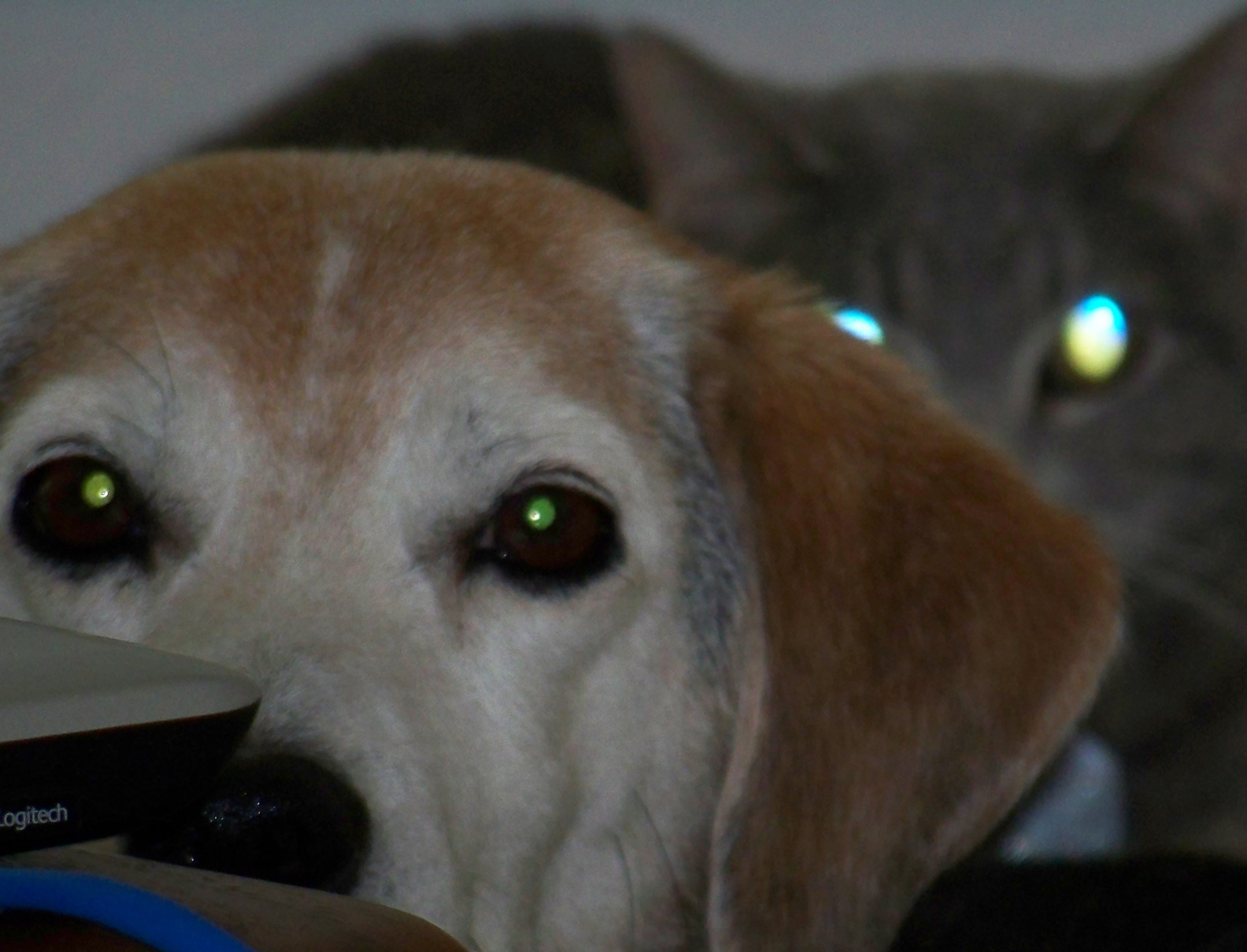
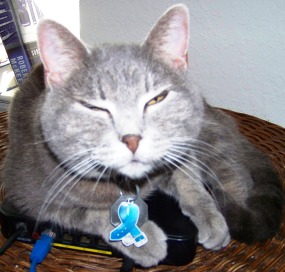
Often I offer the thoughts of Mark Nepo and Wayne Dyer but honestly, when it comes to abundance and unconditional love, I turn to beagle Cooper James and EmmaRose, a grey-blue dilute kitty of 5.5 pounds whose one word name was decided by a paw-press on the “Enter” key.

The three of us are an illustration of what was separate that is now whole.

How we lived before does not define us nor does it measure who we are. Those are years separate from us, now. As a feline, EmmaRose is 44, canine Cooper is 57, and as the human, I am sixty; what we measure is what we are together, and in that, our differences are minute.

Blanket Mountains

Our one-bedroom apartment is all we need and in some ways, more than we ever had. EmmaRose moves about the apartment most, rearranging throw rugs, curling up in what have become known as the Blanket Mountains of the living room, playing pine cone shuffle with cones Cooper and I brought her from one of our fall outings. EmmaRose is not a traveler outside the apartment–she enjoys her solitude–Cooper and I provide her her time on a daily basis.

"Why now?"

We all share the bedroom—the adjustable, queen-sized bed supports canine and human arthritic joints—EmmaRose’s preferred spot is on the computer modem that rests on the round, wicker bedside table, darkening with age. The table provides EmmaRose the perfect distance to meow in my ear—at least a couple of hours before dawn–if she has seen her reflection in the bottom of her food dish in the dark.

"Yes, Dr. Mac?"

Like many canines, Cooper is food-motivated and as a beagle, he is indiscriminate in what he eats, resulting in a daily antacid prescribed by Dr. Mac.

When the three of us could still eat tacos without major digestive upset for the human and the canine, we each had our favorite ingredient: Cooper scarfed cheddar cheese shavings; EmmaRose preferred powdered corn tortilla bits; meat and lettuce were for the human.

EmmaRose has never noted the absence of our taco dinners but it has been hard on Cooper and me. About a month ago, we gave into our cravings and purchased one taco; Cooper wanted more, as always; EmmaRose was not in the mood for tacos that night; as for me, I cannot imagine a time I will want another taco ever.

Having food and shelter is something we have always shared amicably, perhaps because all three of us have been as close to homelessness as we ever want to be. For Cooper and EmmaRose, euthanasia was near; for me, life was a series of question marks for some time.

What if

We learned to re-frame our lives, not looking back at what we no longer have nor looking to what we fear but rather through it, moment by moment—together. Cooper and EmmaRose seem better at facing fear than I but in watching what they give to one another as well as to me, reciprocating is effortless.

Every vision starts somewhere.

I suspect the force that is all life, whether the form is matter or antimatter, sees wholeness not separateness, offers treasure without condition—imagine.

ROW80 Wednesday Word Marking

 I am re-framing my writing goals. This round, I am concentrating on revising the original draft of my novel, based on the kernel idea I developed in a writing workshop. You can view what I have to say about that here.

I did manage to write a little more than a thousand words (1,068) on how the new version of the novel will read, in particular what it will mean for many of the characters. It is a fascinating process, for me.

Straw Dogs: Not the Movie

The fifth verse of the Tao Te Ching focuses on the temporal but equitable nature of existence in which we are but straw dogs.

“Heaven and earth are impartial; they see the 10,000 things as straw dogs. The sage is not sentimental; he treats all his people as straw dogs.”

It is a rather provocative statement of our role in the physical universe of the 21st century. It is not a comfortable image as straw dogs are too temporal, too much a reminder of  our brevity. Within the Tao Te Ching of the 6th century B.C., straw dogs have a role to play for a brief, shining moment, and then, they are gone, only to be followed by more straw dogs.

Impartial existence does not seem all that special.

Stephen Mitchell, a translator of the Tao, has written that “’straw dogs were ritual objects, venerated before the ceremony but afterward abandoned and trampled underfoot’” (as quoted in Wayne Dyer’s Change Your Thoughts, Change Your Life).

In the Urban Dictionary, a delightful resource, I found seven different meanings of straw dog including one who is “faithful” to snorting cocaine. To me, the Urban Dictionary definition most resembling Mitchell’s translation is “something that is made only to be destroyed”; the sample sentence uses a doll as an example of a straw dog.

My favorite Urban Dictionary straw dog definition is “a word that you interject anytime that you don’t know what word to use but want to make it sound like you’re smart.”  The sample sentence illustrates the definition completely in that a nuclear physics speech “seemed like a straw dog compared to other theorys (sic),” definition and example perfect for my pearl book.

Regardless of how many definitions I may find online and elsewhere, any and all of them underscore the temporal nature of the physical universe from a cocaine high to a venerated sacrifice to easing out of an uncomfortable situation by saying something silly. They all pass from existence, as the Tao, the Source of all things, knows:

“To him none are especially dear, nor is there anyone he disfavors.”

In appreciating the straw dogs of the  6th century B.C. within the experience of the 21st century A.D., it is possible to feel the forever of existence, the comfort in knowing that straw dogs follow straw dogs. “With impartial awareness, the sage genuinely sees the sacredness within all the straw dogs in this ceremony we call life” (Dyer). 

We are not special unless we all are special.

Imagine a world where all know and accept that existence is a gift for all to be opened, to be lived, and to be left for others.  What is special in each of us is our life force. Imagine if we stopped celebrating our separateness and revered our one moment of existence, straw dogs all.

ROW80 Sunday Summary

A brief, mid-week lupus flare limited my reading and writing but it was a brief flare, and I am grateful. I credit its brevity to my better diet (now a weight loss of 66 pounds), to my work with the Tao, to meditating, and to participating in ROW80. Anyone with chronic illness  or who is confined for any length of time, can appreciate how important it is to connect with life whenever possible. As a bit of a distraction, I concentrated on re-learning Twitter; fellow ROW80er Morgan Dragonwillow helped me with TweetDeck and when my brain fog cleared a bit, I re-read the Twitter segment of Kristen Lamb’s book We Are Not AloneWho knew a lupus flare could be so productive?

Am halfway into The Night Circus by Erin Morgenstern. For the first time since seeing the movie Toby Tyler (late 1950’s), I want to run away with a circus, especially one as magical as the Circus of Dreams. I enjoy Morgenstern’s wit and although the time structure is a bit wobbly–I had the same concern in The Time Traveler’s Wife–Morgenstern’s writing keeps me turning the pages.

If you want to read more about my ROW80 progress, please click here.

Shedding

Change is on the horizon, as always, but at times, it seems palpable even audible. Change is on the horizon rumbles from my gut and I know its knell will summon until I shed my skin. Even my morning meditation  from Mark Nepo’s Book of Awakening is entitled “Shedding”:

“…when we cease to shed what’s dead in us in order to soothe the fear of others, we remain partial. When we cease to surface our most sensitive skin simply to avoid conflict with others, we remove ourselves from all that is true” (Nepo).

Cooper on a bye-bye

I smile as I read “…such renewal will, sooner or later, [force us] to undergo transformation anyway” (Nepo).

I am so grateful for metaphor, for synchronicity yet still I squirm as my mind nudges close to the word surrender, never an easy concept for me. However, I am able to admit that less and less, control seems necessary so I settle in with regenerate and rebirth. I breathe.

In this way, we begin our day, and Cooper is ready for “bye-bye in the car.”

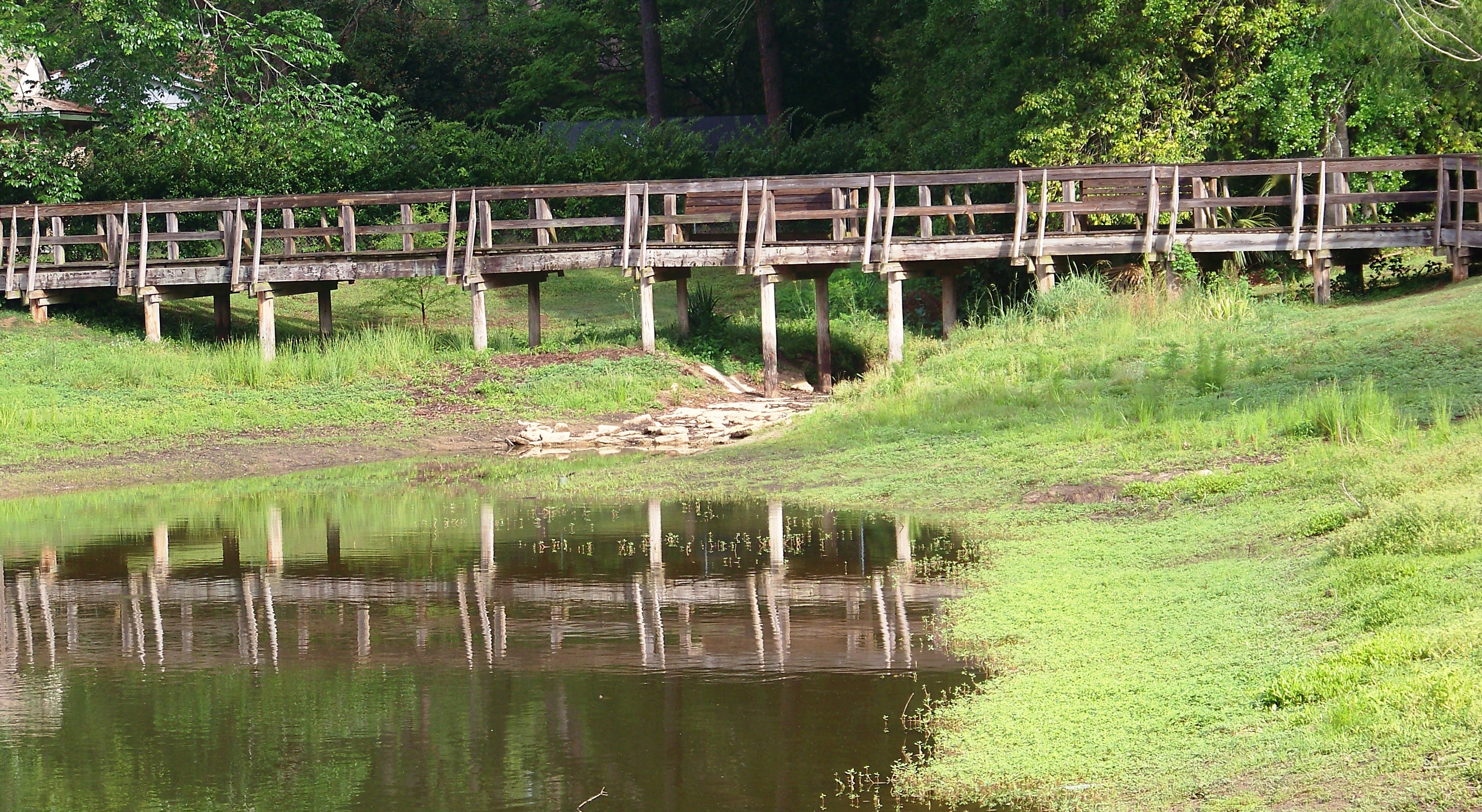
My meditation stays with me as I drive us to a new park, one we had “scouted” last winter. Quiet pond with a bridge, Ponderosa pines, live oaks, dogwood– each so grand in its own being– together they are a choir  for all seasons.

We are excited to explore, for the park and day are fresh with promise, with scents for both of us. Cooper sets his snout to tracking scent after scent as I make sure scent is all he finds. Cooper keeps me present, as do most beagles, I suspect.

Together, we stare at a lumbering turtle making its way from the pond, lifting one foot and then another, its shell shifting with each step, adjusting as necessary, purpose in motion, a rhythm steady and sure.

Cooper takes us here and there until he tires, which he does rather quickly these days so he takes us to a bench, not uncommon for him. Early on in our relationship, he indicated a fondness for benches, and while he no longer jumps up to sit beside me or in my lap, he is content to rest against my foot, making sure I stay.

I sit back and my morning meditation of shedding and renewal returns amidst this spring splendor. Everywhere, everything is coming to life as Cooper snores.

Just beyond us, there is a large black and yellow garter snake making its way away–sleek and sure—a symbol of eternity, of transformation and healing that so freely sheds its skin for life’s renewal, inviting the risk that comes with wearing a new skin.

There is a lifetime in this moment, as always.

ROW80 Wednesday Summary 

Sometimes, all I have to do is  consider the word goal and my entire being rises up in rebellion. My ego tells me—pretty much nonstop– goals are contradictory to the Tao and being, all nonsense but then what else is the ego?

April 4, 2012 is the start date for my second round of ROW80 goals, and they are located on a separate page that you may view here. In many ways, these goals are a new skin for me.