Flare or Fog, It Matters Not

“Don’t pursue your passion. Be it” was Anita Moorjani’s response to a Hay House interviewer’s request for one bit of advice for everyone. The interview was months ago but the words stayed with me, like distant notes of a tune I almost recognized.

The words dropped in and out of my attention, showing up when I least suspected them. About ten days ago, the lupus flare I thought was on the wane gained new life, joined by the light of Sjogren’s syndrome.

It has been four years, maybe even five, since I have known the light of a Sjogren’s flare so it took me a while to recognize it. Sjogren’s attacks the body’s moisture glands–the exocrine system that produces tears and saliva—the primary symptoms are dry eyes, dry mouth, and fatigue. Even with the use of prescription medication, my salivary glands were destroyed years ago.

For me, Sjogren’s has always meant debilitating fatigue but in tandem with lupus, the brain fog and joint pain are in high evidence. I have to be careful not to give them too much credit because they will take it and more. They can seem insatiable.

Foliage Waverly 0713

For me, any kind of flare is a flash of light within a fog for the brighter the flare, the thicker the fog. I sense the energy of the flare but the fog is just as intense; for the past ten days, it has been flare and fog, quite fatiguing.

Still, Anita Moorjani’s words wandered in and out of my days for passion is the energy of this flaring duo. As the fog began to lift and the energy of the flare remained, the question emerged: what if I stop pursuing my passion? There is still sufficient fog but the question is clear enough to be considered.

I am not given to labeling passion, not in my later years anyway, but the gift of such flares is to be in life fully, letting one moment go for the next. Each moment presents its infinite possibilities, if we will allow it to reveal itself.

“To access the state of allowing, the only thing I had to do was be myself. I realize that all those years, all I ever had to do was be myself, without judgment or feeling that I was flawed” (Anita Moorjani, Dying to be Me).

KMHuberImages
KMHuberImages

Perhaps, being one’s passion is a mere matter of showing up for every moment mindfully, whether in fog or in flare matters not. It is a thought that enters my mind but I push it away in favor of sleep. It revisits me in my next morning’s meditation; I am tired and take a while before sitting meditation but I sit for my usual hour.

The morning is as it has been for over two weeks–overcast, humid, and rain seems imminent–but as my morning meditation ends, there is not yet rain and as often happens, I have more energy after meditation.

I decide to go in search of Lake Miccosukee, something that has crossed my mind from time to time but the moment never seemed to suit. The morning is still early, hazy with humidity, and I am a bit foggy myself so we are a perfect fit.

Driving down canopy roads of Live Oaks, crape myrtles bloom beneath the oak boughs as does the delicate mimosa. Many consider the mimosa a weed for it grows quickly anywhere, offering feathery blossoms in a fan like wave. I admire the mimosa’s tenacity to bloom, to return time and again, only to be chopped down. Nature is perpetually passionate.

Arriving at Lake Miccosukee, I have the boat dock all to myself for a moment, unbelievably good fortune and an omen for the rest of my day. Miccosukee is a prairie lake. Sometimes, it’s a prairie and other times it’s a lake, too, but always aquatic plants are abundant.

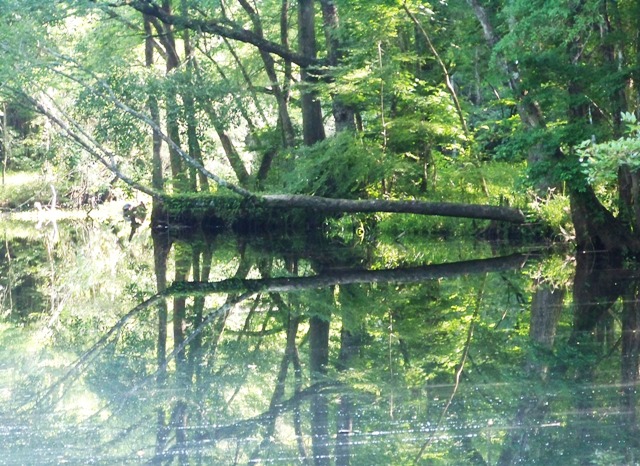
Prairie Lake 0713

I have grown used to lakes controlled by sinkholes, coming or going, either way works. In this moment, Lake Miccosukee is a floating prairie, and it occurs to me that here is yet another version of the island of vegetation from The Life of Pi. Imagine that.

I am already tired but it has been another marvelous hour. Would that all mornings were just like this one but if they were, this one would not be what it was, its own. I am learning the practice of being one’s passion, allowing the day to unfold, be it in flare or fog. It matters not.

“When coming out of sitting, don’t think that you’re coming out of meditation, but that you are only changing postures. If you reflect in this way, you will have peace. Wherever you are, you will have this attitude of practice with you constantly. You will have a steady awareness within yourself. The heart of the path is quite easy. There’s no need to explain anything at length. Let go of like and dislike and let things be. That’s all that I do in my own practice.

~Ajahn Chah~ 

Again, thanks for all of your warm wishes and kind words as I sit within the flare of this fog. My plan is to post weekly, whether it is a Sunday Something or a Thursday Tidbit but I am letting nature be my guide.

Thursday Tidbits: Into the Past for the Present

This week’s Thursday Tidbits considers the past through the lens of the present, as seen through my recent visit to the American Civil War site of the Battle of Natural Bridge, fought on March 6, 1865.

“To dwell in the here and now does not mean you never think about the past, or responsibly plan for the future. The idea is simply not to allow yourself to get lost in regrets about the past or worries about the future. If you are firmly grounded in the present moment, the past can be an object of inquiry, the object of your mindfulness and concentration. You can attain many insights by looking into the past, but you are still grounded in the present moment.”
~ Thich Nhat Hanh ~

KMHuberImages
KMHuberImages

Grounded in the present moment, standing on the invading side of the battle site breastworks, caught up in the radiance of a June morning 148 years later, the breastworks and I overlook a river bend, surrounded by dogwoods. We are the anomalies.

I am conscious of lives long past and I am just as aware that my presence, my literal and figurative footprint, is already mingling among those memories. Such is presence among the past.
Gadsden County Grays 0613

Memory is always tinted, whatever the reason we recall a moment. What comes to us is tinged, softened around the edges, imprecise. No moment ever plays out exactly as it occurred for we are, and it was.

Each moment we have is a one-time shot whose existence is preserved precisely in the past. The mindful inquiry into the past acknowledges the tinted lens, whether it is the close-up of a personal memory or the wide-angle view of history.

So on a radiant June morning, a still life study in green and light, I tread the dew of a battle site. Although trained as a historian, battles and war are not stories that interest me, yet it is history that has brought me here.
Lest We Forget 0613

The old woman whose story I am writing discovered a part of her past that stumped me, and this battle site is as physically close to the old woman’s past as I can get. Her connection to the Civil War recalled my initial discovery of the Battle of Natural Bridge.

When I first moved to Florida, I lived near battle fortifications that local legend associates with the natural bridge battle but history has proven otherwise.  I always found the legend a great story, and after two years of walking by those fortifications on a daily basis, local legend became my version of the battle.

Now, over a decade later, it is not hard to understand how my fondness for the legend worked its way into the old woman’s story. Yet, the legend did not serve her story but history seems to, so far.
Morning at Natural Bridge Battle 0613

As I look across the still waters of the St. Marks River, I am grateful the old woman’s story has brought me to the actual battle site. It has made for a lovely morning and a memory grounded in the present, an object for inquiry again and again.

Also accompanying me that morning and in the writing of this post was Samuel Barber’s “Adagio for Strings.” I hope you enjoy the music and the images. Both are worth the status of memory.

Thursday Tidbits are weekly posts that offer choice bits of information to celebrate our oneness with one another through our unique perspectives. It is how we connect, how we have always connected but in the 21st century, the connection is a global one.

On-Again, Off-Again Buddhism

Waiting 0613Dukkha is the first of the Four Noble Truths in Buddhism and is usually translated as suffering, a concept that has always appealed to me about as much as the phrase falling apart, hence my on-again, off-again nearly thirty-year relationship with Buddhism.

Yet, it is to Buddhism that I always return, rather like everywhere I go there I am for as the Buddha said, “I teach only one thing: suffering and the cessation of suffering” (Pema Chödrön, How to Meditate: A Practical Guide).

While dukkha is the word the Buddha is said to have used for suffering, dukkha has more than one level. The first level concerns mostly our physical bodies and ultimately the fact that we die. This kind of suffering involves “outer discomforts” and is considered ordinary.

The second level of suffering pertains more to our stress/anxiety in accepting that nothing stays the same, no matter how hard we might try to make it so. This is the “dukkha produced by change.”
Taking Off 0613

The third level of suffering is often referred to as the “dukkha of conditioned states,” translated as “dissatisfaction” or “never satisfied.” Pema Chödrön explains:

“Dukkha is kept alive by being continually dissatisfied with the reality of the human condition, which means being continually dissatisfied with the fact that pleasant and unpleasant situations are part and parcel of life.”

Over the decades, it has actually become apparent that if I accept each moment as it occurs— the dukkha of conditioned states—the first two levels of suffering fade away, which is not to say accepting impermanence is easy.

Bloom of Peace 0613
KMHuberImages

For any level of dukkha, meditation helps us strip away our storylines, our drama from any pain or emotion we are feeling. Meditation takes us into the energy of our suffering so whether or not we can do anything about the circumstances, we can decide whether or not to suffer.

If we accept that we fall apart and come together all through our lives, we begin to practice compassion, first with ourselves and later with all those circumstances beyond our control. Because we are human, we are not always compassionate but every time, we have the choice to return to compassion. It is our inner version of war and peace.

In a comment on my initial post on falling apart, Ann E. Michael was kind enough to remind me of these lines from “The Second Coming,” Yeats’ often quoted poem on the aftermath of World War I:

“Things fall apart; the centre cannot hold;
Mere anarchy is loosed upon the world,
The blood-dimmed tide is loosed, and everywhere
The ceremony of innocence is drowned….”
~William Butler Yeats~

Every time I read Yeats or other World War I poets, I am reminded WWI was the war to end all wars, as if any war ever could. When we are at war with ourselves, we must remember that having compassion with ourselves is where peace begins for everyone.

All three levels of dukkha wend their way through our lives: physical pain, decay, and death claim each one; life will not stay the same for anyone; the constant impermanence of life is the human condition.

The Buddha taught, “I teach only one thing: suffering and the cessation of suffering.” Perhaps I always return to Buddhism because it is neither pessimistic nor optimistic but rather, things fall apart and come together again. Dukkha really is up to me.

In a Free Fall Flare

My regular Thursday and Sunday posts have been rather irregular for I remain in a free fall flare or the state of still falling apart, which is not to say it is not enlightening for it is.

As a dear friend pointed out, a flare is a flash of light, and this recent lupus flare is full of light for me. It is not so much a matter of physical or emotional discomfort but more a matter of “nowness” as Chögyam Trungpa Rinpoche calls it:

“The way to relax, or rest the mind in nowness, is through the practice of meditation.

“In meditation you take an unbiased approach.

You let things be as they are, without judgment, and in that way you yourself learn to be.”
Chögyam Trungpa Rinpoche

nowness 0513

I, myself, learning to be is what this flare feels like, if not quite a true free fall at least in constant motion. Sometimes, the flare feels like a game of pinball, silver-steeled balls bumping up against this teaching only to zip over to that tradition and back up to yet another healing alternative–all disappearing only to re-emerge.

No doubt that sounds rather scattered and perhaps unpleasant but it does not feel that way. Frankly, it feels like heightened awareness for unlike the game of pinball, I am allowed to sit in the energy of each moment and explore it through the practice of meditation.

“Sitting meditation opens us to each and every moment of our life. Each moment is totally unique and unknown….

“This very moment, free of conceptual overlay, is completely unique. It is absolutely unknown.

“We’ve never experienced this very moment before, and the next moment will not be the same as the one we are in now.

“Meditation teaches us how to relate to life directly, so that we can truly experience the present moment, free from conceptual overlay.”
(Pema Chödrön, How to Meditate: A Practical Guide)

Eyes Open 0513

In the eyes open meditation that Pema Chödrön is describing, we separate the storyline or thoughts–the conceptual overlay– from the energy of the emotion or sensation we are feeling. In essence, we are open to it.

I am new to the eyes open meditation that Pema Chödrön advocates and first tried it during the online retreat offered by the Omega Institute. In eyes open meditation, the gaze is downward but the head is erect and one is constantly aware of what is occurring in the present moment.

“Open the eyes, because it furthers this idea of wakefulness. We are not meditating in hopes of going further into sleep, so to speak.

“We are not internalizing. This isn’t a transcendental type of meditation where you’re trying to go to special states of consciousness.

“Rather, we meditate to become completely open to life— and to all the qualities of life or anything that might come along”
(Pema Chödrön, How to Medicate: A Practical Guide).

Relating to life directly 0513

Meditating with my eyes open was not as difficult as I thought it might be, even the first time, but then, I have the advantage of being in a flare, of being in a flash of light. In a flare, it is obvious that the gift of any moment of discomfort is present moment awareness.

Beyond the flare, practicing this wakeful kind of meditation at the start of my day prepares me for the post-meditation moments. Sitting meditation isn’t always comfortable and neither is life but meditation helps us sit down into the shifting emotional energy that flows through our daily lives.

We learn to go deep, beneath the conceptual overlay or storyline, to the energy of our emotions, of our pain. When we sit within the energy of our pain, we see into the state of us. There, we begin to heal—to suffer less—for we accept the alternating pain and pleasure that is the nature of our human condition, part and parcel. We, ourselves, learn to be.

Thank you for reading my blog. It matters a great deal to me that you do.

Right Down the Middle

KMHuberImage; St. Mark's Wildlife Refuge; Florida; USA

I often think of present moment awareness as a matter of balance, and whenever I think of balance, I think of Buddha nature: “The reason everything looks beautiful is because it is out of balance, but its background is always in perfect harmony” (Shunryu Suzuki).

The background balance of Buddha nature is the source of the infinite possibilities available to us in every moment we have. Our lives are up-and-down, in and out, and all the while, the balance of Buddha nature holds it together while we try this and that.

There are many names for Buddha nature— the web that has no weaver, God, Allah, the Tao— and underlying them all is impermanence, the pain and pleasure of existence. All the great traditions offer ways to accept impermanence, for if we can wrap ourselves around the idea that change is what offers us opportunities, we can live in the moment for all that we are.

There is no one way to present moment awareness but all the great traditions encourage living life fully present.  They offer prayer and meditation as tools but only we can find our middle way for balance is uniquely personal.

Thick of it 0313

Yet, the nature of impermanence is that balance requires constant adjustment. Just when we think we have found balance, a way to live that accounts for most possibilities, something changes. Sometimes, everything changes or at least seems that way.

Those are the moments of greatest opportunity but they often require everything of us. Our emotions rage. These are not moments to be passed off in positive platitudes or repressed in any way. These are moments to explore the energy beneath the emotion. Present moment awareness plunges us into the energy without the thought.

Many of the traditions define emotion as raw energy with thought or a story attached to it. Usually, many stories emerge with our emotions. It is the stories that bubble up and we attach to them. Before we know it, our thoughts have removed us from the rawness of what is occurring.

The result is we either stuff the emotion away or devise a strategy to control what we are feeling but regardless, we do not immerse ourselves in the rawness but impermanence is the nature of existence, so we will get another opportunity. What present moment awareness offers is a way to wake up and be in the rawness.

Single Path 0313

It is not surprising that we are resistant to being in the moment for it means accepting the unknown, yet we do not doubt that life is unpredictable.  We want a certain amount of unpredictability in our lives but we do not want to be uncomfortable.

When something outside our regular routine occurs, we get unsettled, and we struggle for balance. Whether the occurrence is as minor as not being able to get a cup of coffee or if it is life-changing, accepting impermanence as the nature of our lives gives us the power to deal with change. It is not approval of any event but acceptance of impermanence.

“So this place of meeting our edge, of accepting the present moment and the unknown, is a very powerful place for the person who wishes to awaken and open their heart and mind…it is what propels us toward transformation…the present moment is the fuel for your personal journey” (Pema Chödrön).

Meditation and prayer are two, sustainable fuel resources and always available. We begin within so that we may be all we want to be to the world. In finding our unique middle way, we awaken our hearts and minds to the ways of the world, able to adjust to its constant flux.

Thursday Tidbits: The Way to Fall Apart

This week’s Thursday Tidbits post considers retreat as a meditative withdrawal and as the idea of falling apart. As Pema Chödrön says, “Everything that comes together at some time falls apart.” Ours is to experience pain and pleasure–usually alternating but not always–for the nature of existence is impermanence.

Recently, I attended an online retreat offered by the Omega Institute, featuring Pema Chödrön. The retreat covered the four marks of existence–impermanence, egolessness, suffering, and peace–during the first minutes of the retreat, Chodron referred to the four as the facts of life. I felt a familiar stirring.

KMHuberimage
KMHuberimage

I had been drawn to the retreat from the moment the invitation arrived in my email box, about 72 hours prior to the event’s first session. I was not aware of having any connection to the Omega Institute, which is not to say I did not but is to say I do not remember a connection. Still don’t.

Serendipitous email or no, the retreat affirmed my suspicion that I was, indeed, falling apart again–health, writing, life–but the initial session on impermanence revealed how adept I had become at avoiding falling apart. That was an unexpected moment yet it was obvious I had been creating various bubbles of escape for some time. No wonder they felt so familiar, so comfortable.

You might think all my posts about allowing bubbles to float up and through us while remaining in present moment awareness might have had some effect on me other than escaping with the bubbles. They did, ultimately.

A few months ago when I started reading Pema Chödrön’s books, I chose The Places That Scare You over When Things Fall Apart. I felt a familiar stirring of avoidance when I made my selection but convinced myself I needed to read the former title–for what reason now escapes me.

Not surprisingly, the phrase that I kept hearing in the online retreat was “when things fall apart,” more by participants than by Pema Chödrön. That was not surprising, either.

“Things falling apart is a kind of testing and also a kind of healing. We think that the point is to pass the test or to overcome the problem, but the truth is that things don’t really get solved. They come together and they fall apart. And they come together again and fall apart again. It’s just like that. The healing comes from letting there be room for all of this to happen: room for grief, for relief, for misery, for joy” (When Things Fall Apart).

The words falling apart have always been difficult for me. I eschew vulnerability in the same breath that I advocate an open mind and open heart; however, I do know “strength does not come from a bubble of safety” (Chödrön).

Waverly gazebo 0513
KMHuberImage

My bubble burst within the first few minutes of listening to Pema Chödrön, and my tears streamed right along with the video; Chödrön is quite a wit so my tears were from laughter as well as from the pain of recognition. It was a great way to fall apart, actually.

Nothing has changed and everything has changed. I am still dealing with a significant lupus flare and adjusting my life accordingly; as always, diet, meditation, and yoga figure prominently. For me, it is not a matter of being less but a matter of being more, just as I am, which is new.

If I avoid the discomfort that is part of being alive, I am living in a bubble. Bubbles burst; it is their nature. If I open to both the pleasure and the pain of life, I am vulnerable but strength resides in accepting that things fall apart and come together. It is the nature of existence.

*****

Thursday Tidbits are weekly posts that offer choice bits of information to celebrate our oneness with one another through our unique perspectives. It is how we connect, how we have always connected but in the 21st century, the connection is a global one.

Being Present in Healing

My recent trip to the American West was, among other things, a test of the holistic approach to disease that I have followed for the last 33 months. My approach is perhaps best described within Deepak Chopra’s definition of quantum healing:

“…the ability of one mode of consciousness (the mind) to spontaneously correct the mistakes in another mode of consciousness (the body). It is a completely self-enclosed process” (Quantum Healing).

Essentially, this mind-body consciousness is a type of “intelligence” (Chopra’s term) attempting to restore balance in a body that is diseased. It was this “intelligence” that made sense to me when I first read Chopra’s book in the early 1990s and again in 2010 when I removed myself from medical care.

KMHuberImage
KMHuberImage

Undoubtedly, it takes a certain amount of desperation and frustration to walk away from medical science, which is not a route that Chopra, a medical physician, advocates. Rather, he argues that medical science can be a viable partner in working with the innate intelligence of the mind-body connection, with the following caveat:

A man-made drug is a stranger in a land where everyone else is blood kin. It can never share the knowledge that everyone else was born with” (Quantum Healing). In other words, every cell in our body has a kind of intelligence with specific tasks and abilities. All cells in the body work together, ever adjusting to what is occurring.

The inherent intelligence within the mind-body connection is one that medical science has yet to duplicate but it does not mean that medical science cannot assist us in our healing. It can and does–for many. Regardless, awareness of the mind-body intelligence can change our lives just as being aware that every decision we make and every thought we attach to affects our physical body directly and immediately.

That is where stress starts, and with increased stress comes imbalance, and when the imbalance is great enough, there is disease and yes, sometimes irreparable damage. The state of disease for anyone is unique but also may be integral to the individual’s purpose as Anita Moorjani suggests:

The reasons for…illness lie in [our] personal journey and are probably related to [our] individual purpose. I can now see that my disease was part of why I’m here, and whether I chose to live or die, I wouldn’t be any less magnificent” (Dying to be Me).

KMHuberImage
KMHuberImage

Disease as a state of health is how one has lived and continues to live. Just as lupus is not cancer—although in both the body is under attack and in both the autoimmune system plays a major role—directing disease is as unique to the individual as is the optimal level of health outcome.

What that outcome is and how long it may take is just as individualistic as is the degree of recovery. At the very least, an awareness of the inherent intelligence of the mind-body connection provides an alternative to  dealing with disease. At the very most, it can change drastically the course of a disease.

The reason why not everyone manages to take the healing process as far as they can go is that we differ drastically in our ability to mobilize it” (Chopra).

KMHuberImage
KMHuberImage

My experience with “incurable” disease is limited to lupus and Sjogren’s Syndrome, the current names for the disease that has been present in my body for at least 35 years. Some medical experts have told me autoimmune disease has been present since childhood. As I am now a sexagenarian, that’s a long time.

My last rheumatologist told me, “There’s just so much wrong with you and it’s been going on for so long.” That is probably still true for that rheumatologist and the entourage of doctors “on my case” but it was not true for me.

I was seriously ill, and I knew it, but I believe “when we get in touch with that infinite place within us–where we are Whole–then illness can’t remain in the body” (Dying to be Me). My intention is not to be smug or simplistic–nor am I speaking of mere positive thinking–my awareness of the inherent intelligence within my body-mind connection opened me to how I live as well as how I have lived. It gave me a place to begin some 33 months ago, and for me, it has meant drastic changes.

My life does not resemble the life I once knew, nor will it ever. It is not a life free of disease—not yet and maybe never will be–but it is a life aware of the possibilities in each moment I have. It is a life lived from within, and only now do I see the world as it really is, moment by moment, the only reality I ever have.

Shedding: An Act of Immortality

KMHuberImage
KMHuberImage

Spring knows many faces but regardless, it is renewal, a restoring to existence. Present moment awareness is like spring in that each moment is new, unattached to any outcome, full of the breath of infinite possibilities.

Each moment sheds itself for the next, an ongoing renewal of life, our own cycle of the seasons, our own glimpse into immortality, if we are willing to embrace the unknown and let go of the known.

Shedding is a term I learned from Mark Nepo’s Book of Awakening; he is a great teller of stories for he knows their power. One of the early stories of humans shedding their skin comes from the North Borneo Dusuns who believe when “God finished creating the world, He announced that ‘Whoever is able to cast off his skin shall not die’” (Nepo).

Stories of immortality evolve around the inevitable change involved in choice.

The Melanesians of the New Hebrides offer a story of such a choice (Nepo). In the beginning, humans shed their aged skins for the new skin of youth, as is the way of immortality.

One day, as an old woman cast her skin into the river, she noticed that it caught on a branch downstream. The woman returned to her home in her new skin. Her child, however, wailed inconsolably for the mother’s old, familiar skin. The woman returned to the river to retrieve her skin and live in it, as is the way of mortality.

In the twenty-first century, we know our physical bodies undergo a lifetime of transformation, a sloughing of old cells for new, whether we are spiritual beings having a human experience or mere mortals seeking a spiritual experience.

Perhaps present moment awareness mirrors our ongoing physical shedding of our cells. Transformation, it seems, will out.
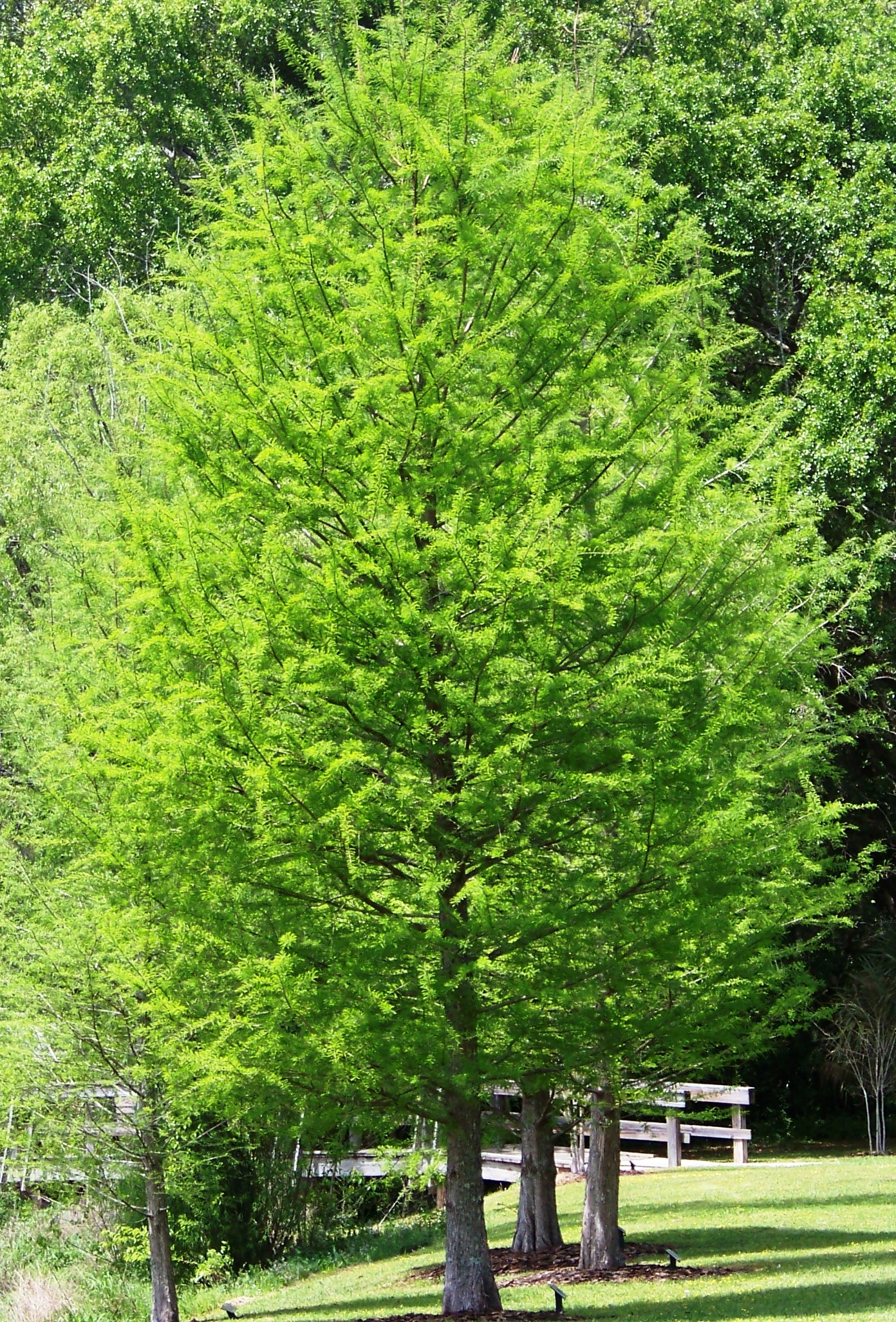
Waverly Larch Spring 0313
“In essence, shedding opens us to self transformation. Paradoxically, those of us who refuse such renewal will, sooner or later, be forced to undergo transformation anyway as a result of being broken or eroded by the world. Very often both occur at the same time: that is, we shed from within while being eroded from without” (Nepo).

Like immortality, transformation at any level exacts a choice for we are shedding the skin that has been familiar to ourselves as well as to the world. Often, the outer world reacts immediately to the loss of what was, rather than  responding to the new that is now.

There is no way that we ever prepare ourselves or anyone else for the outcome of shedding a worn skin for one that is new, unknown, and uncertain. Yet, if we do not shed what is no longer us, we lose “access to what is eternal” (Nepo). It is a choice, an immortal one, but a choice.

Shedding moment after moment to access the ever-expanding field of possibilities—the unknown—is a renewal the outer skin knows only from the inside out, as is the way of immortality.

Thursday Tidbits: The Zen of Kitchen Tasks and Meditating Cats

This week’s Thursday Tidbits post considers Zen as revealed through meditating cats and kitchen tasks, the everyday of  Zen spirituality.

“Zen does not confuse spirituality with thinking about God while one is peeling potatoes. Zen spirituality is just to peel the potatoes.”

Alan Watts

Perhaps more than I should admit, Zen spirituality is a constant in my kitchen, which is not to say that I am able to tend to the task at hand completely, far too often not. Rather, as I am chopping onion I consider what the next moment might offer. Rarely, do I consider the onion.

EmmaRose in MeditationKMHuberImage
EmmaRose in Meditation
KMHuberImage

Often my musing ranges far beyond the physical plane–my own private “soaring with the over-soul*–rather than considering the outcome for the onion, usually mere mush.

At best, I might be considering whether I will scramble eggs or shred lettuce for a salad; both are dictated by the state of the onion and just how far my thoughts have strayed.

It is scrambled eggs if I am envisioning the next scene in my old woman novel but the salad may be saved if I have only strayed to whether or not laundry needs to be done. The answer to that is always the same, a crisp, clear “no.”

Every time I immerse myself in the Zen spirituality of the mundane, I discover something new. It never fails. To be fair, when my thoughts are anywhere but the task at hand, there are also discoveries, including the best tasting cup of coffee is made from the proper proportions of both water and coffee.

Regardless of the outcome, discovery expands the moment to its brim. There was a time that a burnt coffee carafe or hot, coffee-colored water dismayed me, and although I may greet those moments in resignation, I am able to see them in their own Zen spirituality.

Living with animals has taught me more about Zen spirituality than any other resource, including kitchen tasks. This week’s video, courtesy of ZenFlash, features just over a minute of cats meditating, which I found illustrative of Zen but not the kind of meditation that feline EmmaRose has taught me.

EmmaRose has always been a meditating cat but not with any kind of object, especially round and especially large, as she tops the scale at five-and-one-half pounds. For EmmaRose, small, round objects are for batting and chasing into obscure areas invisible to human eyes. She prefers meditating at the window, which she does daily, and she considers the panes carefully.

Choosing Her PaneKMHuberImage
Choosing Her Pane
KMHuberImage

Often, squirrels are visible from the right pane while the left side might offer a darting, lime-green lizard–EmmaRose seems to sense the season for lizard viewing–the middle pane offers the most sun on any day. Whatever these moments provide EmmaRose, she is at her window to discover anew each day.

Who is to say whether or not she “soars with the over-soul”* for she has the light of day, which may offer a squirrel or the infrequent lizard as well.

I and my onion can only aspire.

Thursday Tidbits are weekly posts that offer choice bits of information to celebrate our oneness with one another through our unique perspectives. It is how we connect, how we have always connected but in the 21st century, the connection is a global one.

*Soaring with the over-soul” is from a satirical essay Louisa May Alcott wrote regarding her father’s involvement with 19th century transcendentalism. 

Joy Without the Hangover

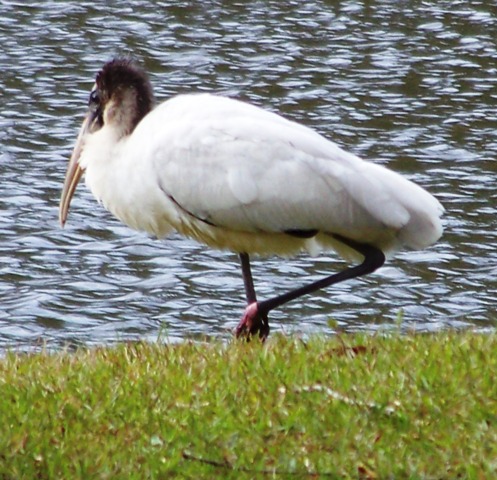
Stork and Joy 0313
KMHuberImage

The “trust in our fresh, unbiased nature brings us unlimited joy– happiness is completely devoid of clinging and craving. This is the joy of happiness without a hangover” (Pema Chödrön, The Places That Scare You, 2009).

To experience the unlimited joy of every moment, we trust the innate goodness of our open heart. Joy is no more an adrenaline rush than it is an attempt to keep a moment from passing, no hanging on or yearning allowed, only gratitude. It is a matter of equanimity in all matters in all moments.

In revisiting Buddhism through Pema Chödrön, I am reminded of just how basic joy is and just how difficult. As Einstein said, “Everything should be made as simple as possible, but not simpler.” Nowhere is this more evident than in practicing the “four limitless qualities” of joy, equanimity, love, and compassion where ego never dares to tread.

In this past week, I knew moments of suffering in the Buddhist sense–any feeling or action outside the four limitless qualities–I also knew moments of happiness. In either, I did not want the hangover of holding onto the happiness or avoiding the suffering. I just wanted to be.

KMHuberImage
KMHuberImage

Unexpected as the events were, I practiced staying and not straying from each moment, difficult as it was. Equanimity in any moment—trying to remain unbiased—allows us to receive what each moment offers. We look within ourselves to our open heart for our compassionate response.

In opening ourselves to our own worth, each of us finds our way “to the truth that we have always been warriors living in a sacred world” (Chödrön). Within our truth is “the ongoing experience of limitless joy” if we will just trust ourselves within that experience.

At the beginning joy is just a feeling that our own situation is workable. We stop looking for a more suitable place to be” (Chödrön). When we stop looking outside for what is inside us, we immerse ourselves in reality. No matter what is occurring, we are alive, and we rejoice in all that we have and all that we are for “it is easy to miss our own good fortune” (Chödrön).

The practice of unlimited joy is our life’s work in every moment we have. “Rejoicing in ordinary things is not sentimental or trite. It actually takes guts… Everything we see, hear, taste, and smell has the power to strengthen and uplift us” (Chödrön). All we have to do is show up and be amazed, moment by moment.

Sunday Anhingas 0313
KMHuberImage

As unique as each one of us is, we are all connected in our suffering and happiness of our everyday lives, our source of unlimited joy.  “In a nutshell, when life is pleasant, think of others. When life is a burden, think of others. If this is the only training we ever remember to do, it will benefit us tremendously and everyone else as well” (Chödrön).

Our connection with one another is the expression of our love for the unlimited joy inherent in life, in whatever way it is served to us. We keep life simple, as it is, and not simpler, making it something it is not.

This simple way of training with pleasure and pain allows us to use what we have, wherever we are, to connect with other people. It engenders on-the-spot bravery, which is what it will take to heal ourselves and our brothers and sisters on the planet” (Chödrön).

To face every moment with equanimity is not always possible but doing the best we can with what we have lessens any hangover and increases unlimited joy.