In the Moment

Reading up on Ramps

Cooper and I are ramping up—and down–our daily outings.

As always, he is unruffled when being requires an expansion of our routine.  If I am honest, my “Beagle Boy” is an exemplar of being, a trait that has run strong in the beagles I have known and one to which I aspire.

Cooper is progressing through another aging phase as his vertebral disks join his joints in degenerating—it is a condition we share–heightened by the dripping, Florida humidity that hails spring’s slide into summer, silent but steady. It is a fully body experience for both of us.

A week ago, Cooper’s front legs gave way as he stumbled, searching for a way to stay standing. His back legs held while both front legs were indecisive when it came to a simultaneous up or down.

We had not met this moment before.

Cooper kept calm—clearly, an anthropomorphic observation on my part–for an animal’s survival instinct is to cloak injury or weakness. I like to think I played my part in the deception as I kept talking in a tone he knows.

The moment seemed to require it.

Most of Cooper’s vocal responses are like a lilt, whether as a question, agreement, or his observations irrespective of mine. Infrequently, he sighs a low, gravelly moan that seems to signify resignation as well as contentment.

In this moment on the ground, however, he offered no comment.

Rather, he focused on breathing that was not panting, and I found myself breathing with him. We were in no hurry as we were within the confines of our apartment complex, and we had a sunset if we needed it, which we didn’t. Eventually, Cooper’s legs found themselves and a familiar rhythm, although forever changed.

For awhile, we confined ourselves to the area just outside our apartment, which is woefully inadequate. A day without an outing to a park or at least a ride in the car is like a day that never seems to start, as if we are willing to let it pass us by. Admittedly, that is how it feels to me, but if I read Cooper’s keening correctly, he concurs.

He is his own beagle, a definite advantage in being, as is having a portable canine ramp.

Can I Drive?

Cooper has always used the ramp to stroll onto our adjustable Tempur-Pedic bed, which sits too high for any access with ease. The ramp is also adjustable, shrinking to half its size and sporting a side carrying handle.

With medication and rest, Cooper stabilized. We moved into our next moment.

I carried the ramp outside and secured it while Cooper “waited” just inside the apartment door, trusting in the fact that he was wearing his harness, which was actually attached to his leash–both good signs. Yet ever aware, he kept his nose to the door, only backing off to let me proclaim that “bye-bye” was a go–Beagle Boy found his grin, again.

Even with disk disease and deteriorating joints, Cooper strives for the handsome gait that has all but left him. In seeing his ramp with his car for the first time, he took that in stride as well—allowing me to guide him in—bearing the grace of the being he is.

Once in the car, I buckled us into our seats.  With hand and paw on the gear shift, we moved into yet another moment.

For those of you who want to follow my ROW80 progress, you may view it here.

“Do you Believe in Magic?”

These days, I find myself wrapped round story, magic, being—in any and every order—an entangled trio so reminiscent of a quantum entanglement known as “spooky action at a distance.”

It seems entanglement is the heart of this blog.

Becca Pugilsi Image
WANA Commons

The story I pursue is layered in the oneness of the 10,000 things of “the Way” (the Tao) that connects the consciousness of all always and simultaneously. That is the story of the human plane, I believe.

It is a story I want to know.

I have enrolled in a sixteen month course that offers a synthesis of the ancient traditions of the last 25 centuries including Buddhism, Taoism, and Christianity in its “original state,” meaning not according to St. Augustine of Hippo, a prospect much more exciting than it may seem. I may write a post on that but we are not there yet.

Dave R Farmer Image
WANA Commons

Perhaps a more practical way to consider the course is this: the predominant Western belief of “you are your rational mind” is lacking in magic and story, at the very least, and at its very worst, it is unsustainable dogma.

That is how I see the course, and while it is early in my study, I am impressed with its evidence-based emphasis, specifically that hypothesis is not fact.

The irony of my beginning this study as my lupus moves into its own story is not lost on me; I suspect irony is frequent when one leads with the heart and not with the head. Yet, to live with an open heart and to discover what that truly means–for there is not agreement upon it or about it—is to dive deep into the head-heart connection.

Mark Nepo writes that “with your head beneath your heart, you must stop doing….Time and time again, the head must be brought beneath the heart or the ego swells” (The Book of Awakening).

Consider the entanglement of placing the head under the heart, thereby creating the “voice” of the gut. Nepo calls it, “a truth of being for a truth of being.” The resonance of the gut is like a messenger rushing through every system of our being proclaiming a resilient, “I get it!”

And resilience is rather magical but it is not magical thinking. To me, resilience lies in remembering the distinction between believing and knowing. While believing is akin to knowing, what we believe often lies in faith but not always in fact. For fact, experience provides us evidence of all we come to know.

“By opening fully to our own experience, we can feel and see the resilience of life around us” (Nepo).

Amber N West Image
WANA Commons

Being completely within the experience of our life–being fully present—we experience what every other life form knows: living fully means denying nothing. Being present in every moment is to experience all the moment offers, a pure opportunity to be.

Being is the magical story that the natural world celebrates completely and constantly every moment. It is a story that plays out moment by moment, a real page turner.

For those of you who want to follow my ROW80 progress, you may view it here.

The Night Circus: A Review

amazon.com image

In The Night Circus, Erin Morgenstern spins a tale that is magical in its prose and practical in its illusions. To me, it is as fine a debut novel as can be found.

Morgenstern’s prose is poetry mostly and not without wit. Her novel’s structure is a marvel, perhaps a study in magic itself for Le Cirque des Reves—the Circus of Dreams—arrives and departs without notice, opening only at midnight and closing at dawn.

The dream circus is a world of black and white with wafts of caramel weaving in and out of striped tents that offer moments of awe and acts unknown, swirling round an extraordinary love story, truly a circus for any rêveur.

There is the Wishing Tree where every wish is a light always lit; there is the illusionist who appears and disappears as if she were born to it;  there is the Labyrinth that will take you up and down, sideways, or to the top of your world.

If you are fortunate, perhaps chosen is a better word, you may receive a silver pass to the Circus of Dreams for the rest of your life. It is a tempting way to live for every tent tells a story within a story as “there are many kinds of magic,” seemingly unending.

The Night Circus opens in 1885, near the midnight of the 19th century and closes in 1903, just after the dawn of the 20th century. Anything and everything seems possible, as the planet is still more dream than reality so there are stories yet to tell, and what is more magical than a story in which so much seems to happen all on its own.

If you read The Night Circus, do pay attention to time and its relationship to permanence or endurance but if you lose track of time— and you probably will but you won’t mind—remember this:

“The whole of Le Cirque des Reves is formed by series of circles. Perhaps it is a tribute to the origin of the word “circus,” deriving from the Greek kirkos meaning circle, or ring. There are many such nods to the phenomenon of the circus in a historical sense, though it is hardly a traditional circus. Rather than a single tent with rings enclosed within, this circus contains clusters of tents like pyramids, some large and others quite small. They are set within circular paths, contained within a circular fence. Looping and continuous.”

As I have mentioned previously, Stephanie Carmichael, a fine writer, wrote a review of The Night Circus that captures its essence completely, and I hope you take a moment to read Stephanie’s review found here.

(All excerpts are from Erin Morgenstern’s The Night Circus, Thorndike ME: Center Point Large Print edition by arrangement with Doubleday, 2011.)


ROW80 Wednesday Words

This ROW80 round is one of continuous goal revision for me yet challenge is growth, even if my vision is a bit cloudy at the moment. However, I am considering not writing fiction for I suspect I am a better reader and editor than a storyteller when it comes to fiction.

As for nonfiction, I do have a lifelong love affair with the essay and seem to pursue that form more than storytelling. It is not the first time I have met this issue but I do believe it is the first time I may have to choose. Yet, I write, which is what is important to me. My revised goals are:

Write 500 words per day, write a regular blog at least once a week, and complete the ROW80 check-ins on Sunday and Wednesday.

So far, the revision feels comfortable.

The Power of Story

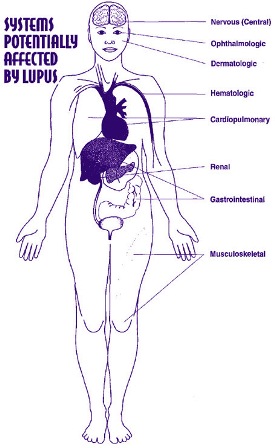
Lupus is a creation of mine, its own story really, not one of which I am proud, as its writer, but I have been its source of life for the last 35 to 40 years, maybe even longer.

It is not possible to note the day my lupus gene switched to on nor is it possible to know why I have the gene or what activated it, if anything. It simply is. That part of the story has never mattered to me, even before I knew about the Tao or Zen.

It took me most of my life to understand I am not my lupus and that autoimmune disease is its own story, one steeped in imitation and deceit, usually disguised as flexibility and malleability. Separating what is the lupus story from all I am has been delicate and sometimes, seemingly impossible.

Through the Tao and Zen, I have come to believe my body is my soul having a physical experience, which gives me, a writer, the luxury of viewing lupus as story, a structure I do understand. In all the ways I have viewed lupus, it never occurred to me to view it as a story until very recently.

Lupus really does have plot points, conflict, a protagonist and an antagonist, all tools of my trade on my turf. I just may have the advantage here for the very first time.

In some ways, I have had a long life with lupus, if knowing lupus by other names counts. Lupus’ ability to mimic so many other illnesses along with my gullibility in believing one misdiagnosis after another are extraneous chapters but there is this: my heart never believed any of those labels.

In the lupus story, my heart is the protagonist and my brain or ego is the antagonist, the one that drives the conflict in every story, and all stories have an antagonist and a protagonist locked in a conflict box.

http://www.niams.nih.gov
Image Credit

As the lupus story opens, my immune system produces antinuclear antibodies to fight infection and viruses, just as it should, until we reach the first plot point: a normal immune system turns on itself and begins to attack the very body it defended for years, for no apparent reason.

This relentless war for the body continues for years under various guises–multiple sclerosis, migraines, mixed connective tissue disorder–until Sjogren’s wipes out the salivary glands to pave the way for lupus.

As we reach the midpoint of the lupus story, the brain discovers that it, too, is under attack and turns to the last bastion of hope, the open heart, the remaining connection to the spirit that animates the soul’s body.

I do know that in any story there is one more major plot point before the conclusion, and the lupus story is no different. I don’t know the last plot point nor do I know the conclusion but I have this: the structure of story has given me some of my first moments truly away from the physical battle, and I know I am so much more than the lupus story.

ROW80 Sunday Scheduling 

I finished reading The Night Circus by Erin Morgenstern and may write a review for an upcoming blog post; however a very fine writer, Stephanie Carmichael, wrote an excellent review that you may read here.  I cannot imagine what I could add to this review. The Night Circus is one of the best novels I have ever read and am considering purchasing it (I borrowed it from the library) as it is a book to read and re-read.

I continue to write at least 500 words a day, mostly nonfiction, and I reached my goal of scheduling blog posts so I am not writing to deadline on Sundays and Wednesdays. This next week will be the dismantling of my novel’s first draft, which I plan to have finished by April 22, 2012 as well as a rough outline of its scenes so I may begin “plotting” the novel’s major points. Unlike the lupus story, I actually do know how this story ends.

For the rest of this round, my goal is a weekly total of 2500 words, as I do not know how long it will take to plot the novel so I do not know when I will start the actual writing of the second draft. You may read more about my second Round of Words in 80 Days here.


What Abundance Knows

How do we live with our hearts open? How do we use what is within us to bring together all that divides us? How do we, like the fifth verse of the Tao Te Ching suggests, “…offer our treasures to everyone”?

And the Tao means everyone, not just those we love/like, for living with an open heart is all-encompassing. It is difficult to open ourselves to what a person feels when that person’s beliefs are so separate from ours yet abundance knows no separateness only wholeness.

Unconditional Love Experts

It requires a larger vision whose origin may be right in front of us.

Often I offer the thoughts of Mark Nepo and Wayne Dyer but honestly, when it comes to abundance and unconditional love, I turn to beagle Cooper James and EmmaRose, a grey-blue dilute kitty of 5.5 pounds whose one word name was decided by a paw-press on the “Enter” key.

The three of us are an illustration of what was separate that is now whole.

How we lived before does not define us nor does it measure who we are. Those are years separate from us, now. As a feline, EmmaRose is 44, canine Cooper is 57, and as the human, I am sixty; what we measure is what we are together, and in that, our differences are minute.

Blanket Mountains

Our one-bedroom apartment is all we need and in some ways, more than we ever had. EmmaRose moves about the apartment most, rearranging throw rugs, curling up in what have become known as the Blanket Mountains of the living room, playing pine cone shuffle with cones Cooper and I brought her from one of our fall outings. EmmaRose is not a traveler outside the apartment–she enjoys her solitude–Cooper and I provide her her time on a daily basis.

"Why now?"

We all share the bedroom—the adjustable, queen-sized bed supports canine and human arthritic joints—EmmaRose’s preferred spot is on the computer modem that rests on the round, wicker bedside table, darkening with age. The table provides EmmaRose the perfect distance to meow in my ear—at least a couple of hours before dawn–if she has seen her reflection in the bottom of her food dish in the dark.

"Yes, Dr. Mac?"

Like many canines, Cooper is food-motivated and as a beagle, he is indiscriminate in what he eats, resulting in a daily antacid prescribed by Dr. Mac.

When the three of us could still eat tacos without major digestive upset for the human and the canine, we each had our favorite ingredient: Cooper scarfed cheddar cheese shavings; EmmaRose preferred powdered corn tortilla bits; meat and lettuce were for the human.

EmmaRose has never noted the absence of our taco dinners but it has been hard on Cooper and me. About a month ago, we gave into our cravings and purchased one taco; Cooper wanted more, as always; EmmaRose was not in the mood for tacos that night; as for me, I cannot imagine a time I will want another taco ever.

Having food and shelter is something we have always shared amicably, perhaps because all three of us have been as close to homelessness as we ever want to be. For Cooper and EmmaRose, euthanasia was near; for me, life was a series of question marks for some time.

What if

We learned to re-frame our lives, not looking back at what we no longer have nor looking to what we fear but rather through it, moment by moment—together. Cooper and EmmaRose seem better at facing fear than I but in watching what they give to one another as well as to me, reciprocating is effortless.

Every vision starts somewhere.

I suspect the force that is all life, whether the form is matter or antimatter, sees wholeness not separateness, offers treasure without condition—imagine.

ROW80 Wednesday Word Marking

 I am re-framing my writing goals. This round, I am concentrating on revising the original draft of my novel, based on the kernel idea I developed in a writing workshop. You can view what I have to say about that here.

I did manage to write a little more than a thousand words (1,068) on how the new version of the novel will read, in particular what it will mean for many of the characters. It is a fascinating process, for me.

Straw Dogs: Not the Movie

The fifth verse of the Tao Te Ching focuses on the temporal but equitable nature of existence in which we are but straw dogs.

“Heaven and earth are impartial; they see the 10,000 things as straw dogs. The sage is not sentimental; he treats all his people as straw dogs.”

It is a rather provocative statement of our role in the physical universe of the 21st century. It is not a comfortable image as straw dogs are too temporal, too much a reminder of  our brevity. Within the Tao Te Ching of the 6th century B.C., straw dogs have a role to play for a brief, shining moment, and then, they are gone, only to be followed by more straw dogs.

Impartial existence does not seem all that special.

Stephen Mitchell, a translator of the Tao, has written that “’straw dogs were ritual objects, venerated before the ceremony but afterward abandoned and trampled underfoot’” (as quoted in Wayne Dyer’s Change Your Thoughts, Change Your Life).

In the Urban Dictionary, a delightful resource, I found seven different meanings of straw dog including one who is “faithful” to snorting cocaine. To me, the Urban Dictionary definition most resembling Mitchell’s translation is “something that is made only to be destroyed”; the sample sentence uses a doll as an example of a straw dog.

My favorite Urban Dictionary straw dog definition is “a word that you interject anytime that you don’t know what word to use but want to make it sound like you’re smart.”  The sample sentence illustrates the definition completely in that a nuclear physics speech “seemed like a straw dog compared to other theorys (sic),” definition and example perfect for my pearl book.

Regardless of how many definitions I may find online and elsewhere, any and all of them underscore the temporal nature of the physical universe from a cocaine high to a venerated sacrifice to easing out of an uncomfortable situation by saying something silly. They all pass from existence, as the Tao, the Source of all things, knows:

“To him none are especially dear, nor is there anyone he disfavors.”

In appreciating the straw dogs of the  6th century B.C. within the experience of the 21st century A.D., it is possible to feel the forever of existence, the comfort in knowing that straw dogs follow straw dogs. “With impartial awareness, the sage genuinely sees the sacredness within all the straw dogs in this ceremony we call life” (Dyer). 

We are not special unless we all are special.

Imagine a world where all know and accept that existence is a gift for all to be opened, to be lived, and to be left for others.  What is special in each of us is our life force. Imagine if we stopped celebrating our separateness and revered our one moment of existence, straw dogs all.

ROW80 Sunday Summary

A brief, mid-week lupus flare limited my reading and writing but it was a brief flare, and I am grateful. I credit its brevity to my better diet (now a weight loss of 66 pounds), to my work with the Tao, to meditating, and to participating in ROW80. Anyone with chronic illness  or who is confined for any length of time, can appreciate how important it is to connect with life whenever possible. As a bit of a distraction, I concentrated on re-learning Twitter; fellow ROW80er Morgan Dragonwillow helped me with TweetDeck and when my brain fog cleared a bit, I re-read the Twitter segment of Kristen Lamb’s book We Are Not AloneWho knew a lupus flare could be so productive?

Am halfway into The Night Circus by Erin Morgenstern. For the first time since seeing the movie Toby Tyler (late 1950’s), I want to run away with a circus, especially one as magical as the Circus of Dreams. I enjoy Morgenstern’s wit and although the time structure is a bit wobbly–I had the same concern in The Time Traveler’s Wife–Morgenstern’s writing keeps me turning the pages.

If you want to read more about my ROW80 progress, please click here.

Shedding

Change is on the horizon, as always, but at times, it seems palpable even audible. Change is on the horizon rumbles from my gut and I know its knell will summon until I shed my skin. Even my morning meditation  from Mark Nepo’s Book of Awakening is entitled “Shedding”:

“…when we cease to shed what’s dead in us in order to soothe the fear of others, we remain partial. When we cease to surface our most sensitive skin simply to avoid conflict with others, we remove ourselves from all that is true” (Nepo).

Cooper on a bye-bye

I smile as I read “…such renewal will, sooner or later, [force us] to undergo transformation anyway” (Nepo).

I am so grateful for metaphor, for synchronicity yet still I squirm as my mind nudges close to the word surrender, never an easy concept for me. However, I am able to admit that less and less, control seems necessary so I settle in with regenerate and rebirth. I breathe.

In this way, we begin our day, and Cooper is ready for “bye-bye in the car.”

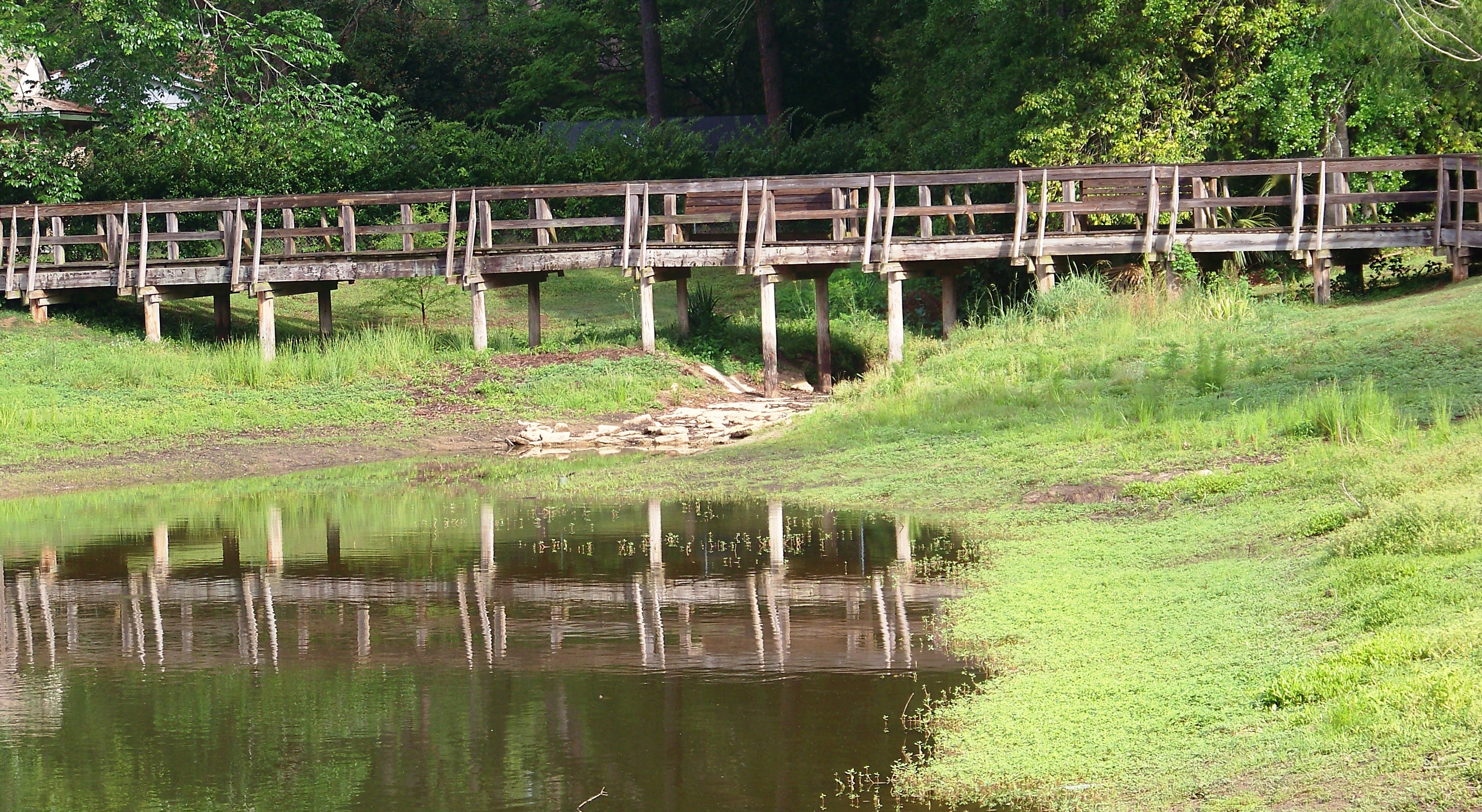
My meditation stays with me as I drive us to a new park, one we had “scouted” last winter. Quiet pond with a bridge, Ponderosa pines, live oaks, dogwood– each so grand in its own being– together they are a choir  for all seasons.

We are excited to explore, for the park and day are fresh with promise, with scents for both of us. Cooper sets his snout to tracking scent after scent as I make sure scent is all he finds. Cooper keeps me present, as do most beagles, I suspect.

Together, we stare at a lumbering turtle making its way from the pond, lifting one foot and then another, its shell shifting with each step, adjusting as necessary, purpose in motion, a rhythm steady and sure.

Cooper takes us here and there until he tires, which he does rather quickly these days so he takes us to a bench, not uncommon for him. Early on in our relationship, he indicated a fondness for benches, and while he no longer jumps up to sit beside me or in my lap, he is content to rest against my foot, making sure I stay.

I sit back and my morning meditation of shedding and renewal returns amidst this spring splendor. Everywhere, everything is coming to life as Cooper snores.

Just beyond us, there is a large black and yellow garter snake making its way away–sleek and sure—a symbol of eternity, of transformation and healing that so freely sheds its skin for life’s renewal, inviting the risk that comes with wearing a new skin.

There is a lifetime in this moment, as always.

ROW80 Wednesday Summary 

Sometimes, all I have to do is  consider the word goal and my entire being rises up in rebellion. My ego tells me—pretty much nonstop– goals are contradictory to the Tao and being, all nonsense but then what else is the ego?

April 4, 2012 is the start date for my second round of ROW80 goals, and they are located on a separate page that you may view here. In many ways, these goals are a new skin for me.

Go for the Metaphor

Eleven days ago, I stopped blogging regularly on Wednesdays and Sundays and my mind shutdown, leaving me alone with my ego.  It had been years since that had happened, and I did not want to go there, again.

And so I begin my second Round of Words in 80 days, the writing challenge that knows I have a life and probably has similar suspicions about my ego. Wayne Dyer refers to ego as “Edging God Out,” and when it comes to God, I’m with Joseph Campbell:

Joseph Campbell
newworldlibrary.com image

 “God is a metaphor for that which transcends all levels of intellectual thought. It’s as simple as that” (PBS Power of Myth Series with Bill Moyers).

It is always advantageous to define one’s terms succinctly, if possible, and if not, find others who can and do.

Our fearless ROW80 leader, Kait Nolan, provided an initial inspirational post for her ROW80 ranks of writers.  In particular, Kait dispelled a popular fallacy for many writers: if writing were their full-time job, writers would write as many as three or four novels a year, at the very least.

Once again,  ego spins falsely into fantasy.

Before I retired to writing, I, had that fantasy, which faded–frankly, on my first day– with full-time watching of Turner Classic Movies, then PBS, then British television, simply seductive. While some movie/television gazing can be considered studying the craft of scene and dialogue, reading and actual writing are closer to the grindstone.

As a writer and a human being—at times, known to be one and the same—my ego chatters constantly but I want the metaphor, aware  that I cannot know what transcends all intellectual thought but I can contemplate.

Frankly, ROW80 is what got me pursuing metaphor, in a most practical way. When I began round one in January, I was determined to publish a Sunday and Wednesday blog post for the entire round.

I did.

However, success has consequences, often overlooked in the glow of self-satisfaction, but for every action, there is a reaction.

The amount of time I spent writing blog posts, thinking about blog posts, and trying to have a week’s worth of posts written so I would not be always writing to deadline took on a life of its own, admittedly, a life bigger than screen gazing but it was not the metaphor.

So, here I am writing this post on the afternoon of April 2, the deadline for my first post of the second round of ROW80, battling my ego that says, “Post a couple goals. By Wednesday, you’ll be organized.”

No, I’m following fearless leader Kait Nolan:

“I want to help you develop that discipline and establish those good habits in your everyday life.  I want to help you take YOURSELF seriously as a writer, treat YOURSELF as a professional, so that bracket of time you can devote to writing, be it an hour or a day, becomes set in your mind as Writing Time–something you protect with the fierceness of a honey badger.”

See what happens when you go for the metaphor?

ROW80 Goal Posting

I have a separate blog page for the precise accounting of my R0W80 goals and updates, although I will probably  include a summary on main blog posts. Frankly, I can decide that later but for now, here we go:

Writing and Reading

Writing: Beginning April 4, 2012, write 500 words five days a week on my current manuscript. Word counts will be updated every Wednesday starting April 11, 2012.

Reading: Beginning April 4, 2012, read at least 50 pages every night to re-establish my reading routine. Am currently reading The Night Circus by Erin Morgenstern. Beginning Sunday, April 8, 2012, I will comment on my reading progress each Sunday.

Blog Posts

By Sunday, April 15, 2012, I will have at least one week’s posts written and scheduled so I am not writing to deadline. 

Honey badger, honey badger….

Stirring the Pot

“To let knowledge produce troubles, and then use knowledge to prepare against them, is like stirring water in hopes of making it clear.” Lao-Tzu
(Tao, Verse 87 as quoted in Mark Nepo’s Book of Awakening)

So very like “stirring the pot” was my initial reaction to this verse of the Tao as memories of harsh words—felt and returned—stirred one unkind pot after another. Never once did I think to take it off the stove nor did I imagine knowledge in any way other than as a glorious fount, effervescent, pure, dependable.

How sure I was of so much and so many–then.

Now, I appreciate knowledge within the context of creativity—the act of imagining—one of the greatest gifts life offers, requiring only an open heart.

As I begin my third act, words remain a major force in my life; I am so curious about so much. More than ever, I write, something I never quite accomplished with all the pot stirring although writing was my constant goal.

“Feeling unworthy or insecure, we create a goal, in hopes that achieving this will make us feel good about ourselves. Then we’re off scheming for success, preparing against failure, stirring the water, hoping it will go clear” (Nepo, Book of Awakening).

Seventeen years ago, my goal was to write a novel, which I managed amid much pot stirring. Always, I spoke of the experience with false fondness. I wrote 80,000+ words, allowing myself to tread water in any current of thought.

Natasha Hanova Image
WANA Commons

Frankly, I felt quite good about myself, proud even, for accomplishing my goal. To be honest, every year since writing that original draft, I tried one writing goal after another, stirring and stirring.

One of my favorite far afield attempts was to collaborate on an inspirational book of vignettes with the actual working title of Rising to the Occasion When You Can’t. Outside of considerable pot stirring for three years, our hearts were not open to a word we wrote.

From time to time, I returned to the goal of revising the 380+ page manuscript word by word—certainly a worthwhile goal within the first year of its writing—but at seventeen years later, it was time to take the pot off the stove.

“The mind is a spider that, if allowed, will tangle everything and then blame the things it clings to for the web it wants to be free of. I have done this with dreams of greatness and hopes of love, wanting so badly to see myself clearly in the water, while I kept stirring and stirring” (Nepo, Book of Awakening).

As I mentioned in my last few blog posts, I am yet again working with this first novel draft. Pursuing knowledge within experience, I stirred myself into a month-long, writing workshop. After so many years of empty goal-gazing, it took most of the workshop for the waters to still.

Truly, I did not recognize the actual moment the waters cleared. It was a gradual realization that I no longer was “scheming for success” or weaving any web. Frankly, my sediment sunk.

It was clear that I “don’t have to be finished in order to be whole” (Nepo) as a writer or as a human being. So, for the first time in seventeen long years, I saw the draft of my novel for what it is: the story of a moment passed, completely. Its worth is immeasurable.

With waters clear, I write.

Note: I am publishing only one post this week but will resume publishing two posts per week beginning Monday. As always, feel free to comment or Email me! your comments.

Comment Choice

Image from themacfeed.com

It seems last Sunday’s blog on silence coincided with the implementation of some “comment updates” from WordPress, the hosting company for this blog. I chose WordPress for its theme diversity and low cost but mainly for its ease in connecting with other social networks.

A blog that deals with Oneness and being is about connecting so hosting my blog with WordPress did and does make sense. It also makes sense that there will be missed connections, from time to time. On Monday, some readers wanting to leave a comment received this message:

That email address is associated with an existing WordPress.com (or Gravatar.com) account. Please click the back button in your browser and then log in to use it.

No one has to register with or log in to my actual blog to comment;  however, my blog has always required an email address (never revealed) and a name to accompany all comments. If I didn’t, anonymous responses could conceivably rival spam contributions so on my blog, one must create an identity to comment.

Identity seems to be at the core of the recent comment update issue, although I do not pretend to understand the technology of it so I may be completely wrong.  However, it does appear that in order to leave a comment on my blog now, readers must sign in with an existing social media account (Facebook, Twitter, Yahoo, etc.) or create an account with WordPress.

Image from playthink.wordpress.com

This is the ether so remember that  updates/changes to what I just wrote are always just a breath away, if that far.

As this blog is also about one boomer being–I have an appreciation for and history of questioning authority so I do “get” why some readers are upset—I support every reader who does not want to sign in with any of their existing accounts or create an account with WordPress in order to comment.

For me, blogging is all about community and finding ways to support each other. Yes, I am nauseatingly optimistic almost all of the time but just the fact that we can have a global conversation about commenting or not commenting is a positive for all of us. Here’s an alternative way to comment on my blog:

Under Contact in the right hand column on my home page (Oneness),  please click on Email me!  to send  your comments.

As I do with all comments, I will review, respond (if appropriate), and I will post your comment just as if you had submitted it in the comment section. Please provide a name that you like as your identity. It may even be your own.

“So rather than giving energy to…perceived misfortunes, [I look to] the Tao…inexhaustible…the ancestor of it all…living infinitely” (Wayne Dyer).

“Wisdom is knowing I am nothing,
love is knowing I am everything,
and between the two my life moves.”

Nisargadatta Maharaj


Round One of Round of Words Final Tally
 

The first round of Round of Words in 80 days ends tomorrow, and round two begins April 2. ROW80 helps writers bring their writing into their real lives, no more goal-gazing or sighing. ROW80 helps writers establish realistic goals that may be revised as many times as any manuscript. All one needs is a blog and a love of writing.

I was skeptical about ROW80 but if nothing else, I launched a blog, the writing of which requires way more than I anticipated. Furthermore, I saw my writing as it really is, which is not exactly how it was playing in my head or through my heart.  Now, I know what is possible so thank you  to the ROW80 community of writers who post their progress on Sundays and Wednesdays.

My beginning goals were modest—write at least 250 words per day, write a blog post twice a week, do something with a 17-year-old manuscript. I made it hard for me to fail, for once.

I progressed from 250 words per day to 30-minute stretches and to a daily average of 900 words. In these last few weeks, I am comfortably writing over 1,000 words per day. The type of writing includes technical, nonfiction, fiction, and blog posts but in this first round, I excluded technical and nonfiction writing from my word count. Total fiction and blog post word count is 23,639. Total technical and nonfiction word count is 14,000-18,000.

As a writer who was not writing except for an occasional spurt, I am more than pleased. What ROW80 reveals is that it does not take a great deal of time to generate words. With words come ideas and better words, clearer thought.

My manuscript is in shreds but its core, kernel idea is intact, which is more than I expected. The story is completely different as am I– seventeen years later–but the story’s idea is as fresh as always.

ROW80 Round Two on deck.