Walking Waverly in All its Wonder

KMHuberImages
KMHuberImages

It has been twelve weeks since I added a regular yoga practice to my life and ceased my daily, morning walks. The change was a gift from lupus. There have been few days that I did not participate in a full yoga flow and only a day or two that I did not practice at least one pose.

The gifts of yoga have been many and continue to come but I miss walking Waverly, a park I have come to know in all seasons. It is a trusted place. Admittedly, during most yoga sessions memories of Waverly drop in and out.

I hoped to return and have.

It is still too soon to tell whether or not a daily walk may return to my regular regimen but that I was able to walk all around the pond means Waverly is still a possibility from time to time. As often happens at Waverly, it was a walk of wonder for the wildlife is rich and varied. I like to think my return was noticed.

As the images reveal, all of the usual suspects came out, if not to say hello at least to give me a glance. I was especially thrilled to see this creature, whom I have only glimpsed twice before. On this day, there was patience for a portrait.Fox pose 1013

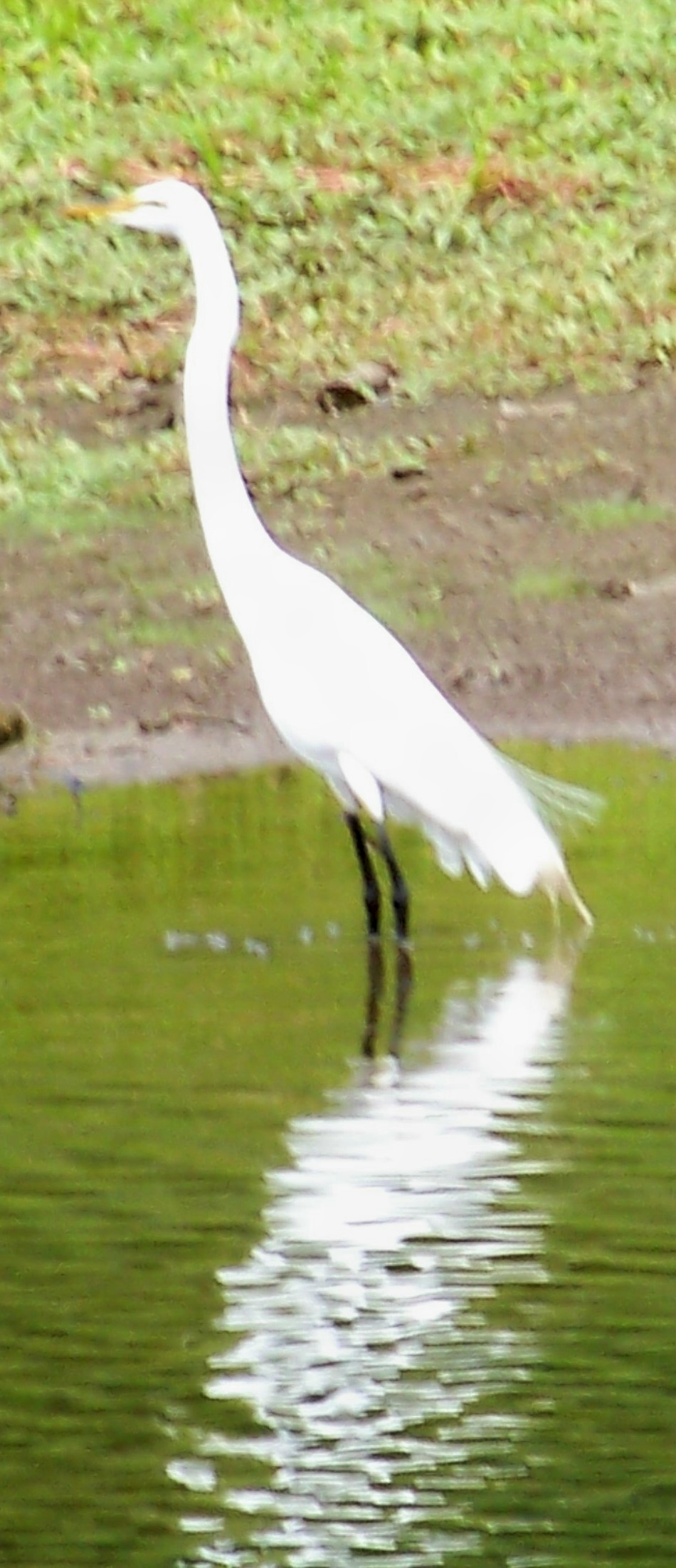
Turtle Row is especially populous on this bright fall morning with all sizes welcome. Snowy egrets walk water’s edge, sampling the bounty of the pond. As I cross the bridge, the falling leaves crackle as they catch a crisp, momentary breeze.

In every direction is awe for the seeing, and I gawk. After some time I realize I have assumed Mountain Pose or Tadasana: spine straight, knees together with toes pointed in slightly to even my stance, head lifted in full appreciation of just being at Waverly.
Snowy Egret in fall 1013

Among the many gifts of yoga is learning to move mindfully, neither straining nor restraining the body but moving according to its level of flexibility.  Yoga is my dialogue with my physical self; each movement opens my body to response. I have come to recognize the sensation of the flow of my own energy, my own Waverly.

In the real Waverly, my steps are deliberate—once I would have characterized them as slow—sinew connects muscle to bone in simultaneous stride, a mind-body connection. There is a light awareness of sensation with every breath, with every step.

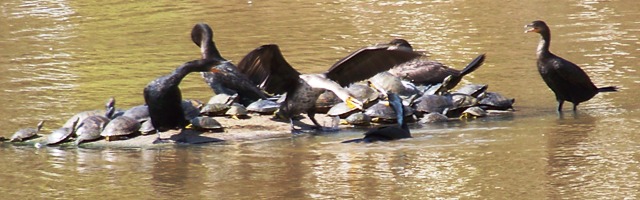
Turtle Row in fall 1013

It is a familiar, meditative energy that I have come to appreciate for it is present in a moment of monkey mind or one of being with nature. Such a meditative state always serves, highlighting the sensation of the physical self as the mind drops in thought after thought.

Walking Waverly, I open to its energy, swinging my arms and flexing my fingers just because I can. Images of past yoga sessions drop in and out of my walk, as if to remind me of the first time I felt warmth coursing up and down my legs. It is the energy of life.

I remember that I have not always acknowledged the energy of my life. Just because I was able to walk did not mean I was mindful of my body movement in any regard. It is possible I am receiving another chance despite decades of inattention to my physical self other than to constantly demand of it.

So on this morning as I walk Waverly again, I am mindful of the wonder in every step.
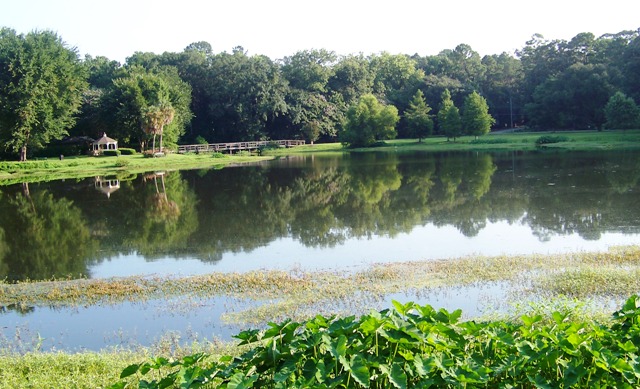
Waverly shade 1013

The Laying Away of the Dark

Such a morning this has been, beginning in the promise of darkness, for rising before dawn is to witness the laying away of the dark for the light.

I sit meditation, as I do every morning; I have come to rely on this hour of silence. This morning is not a sitting of insight but of “monkey mind,” one thought tumbling on top of another. It is a busy stillness. When the timer goes off, I mutter something to the effect of “that was difficult—again.”

Yet, something nags so I sit a moment in review. Ah, yoga dropped in near the end of my sitting, specifically my Peggy Cappy Easy Yoga for Arthritis DVD. I have owned it for three years; so far, it has been mostly a good intention.
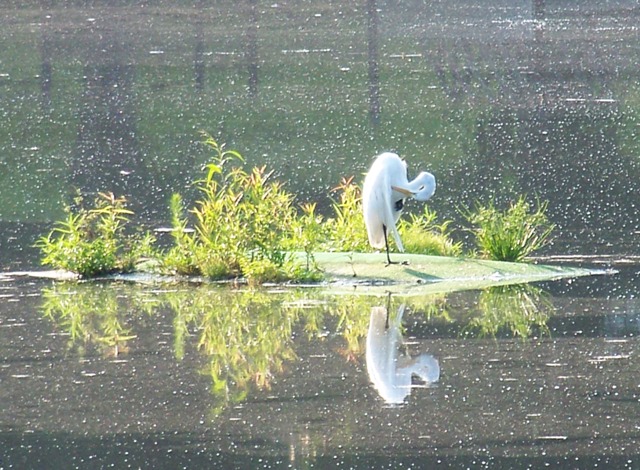
Waverly Preening 0813

The yoga DVD dropped in during a moment of open awareness meditation, meaning my focus was on neither emotion nor sensation but on pause, a true gap between thoughts, before the emotion returned.

For some time now I have been sitting with the feeling of bittersweet, for the sensations of loss and gratitude swirl just beyond me. In this particular morning, I am in search of its energy but eddies of distraction, proven pools of fear, bring me to the surface of my breath, entangled in old story lines.

Once again, I do not reach the pure energy at the core of bittersweet.  It has been like this for a while, this sitting or almost sitting with bittersweet. In open awareness, I sense the light of the day, and in drops the thought of the yoga DVD.

It is not a surprise for one of the effects of this last lupus flare is a significant reduction in my physical activity, in particular taking my beloved morning walk. It is still a possibility but it is not benefitting me, as it once did. My joints ache to stretch but not to pound the ground, no matter the distance. In fact, I have spent the last two days recovering from a stroll around Waverly Pond.

And just as the Waverly story line started up, my meditation timer went off. That is what I remember from my morning’s sitting.

She Who Must Not Be DisturbedThe day is now more light than dark but there is not yet a sunrise. Feline EmmaRose is sitting meditation in the bedroom doorway. She Who Must Not Be Disturbed knows I will remain in the bedroom until otherwise directed.

As I have rested for two days, there is no body rebellion this morning. The physical stillness of sitting meditation is always a physical boon, for in meditation the body is allowed to awaken gradually. The yoga DVD is next to the decade-old television set. There is nothing for it except to insert the disc.
Waverly Posing 0813

I am familiar with most of the yoga poses, and Peggy Cappy encourages individual adaptation, much like Pema Chodron suggests meditation position adaptation. Yet, foremost in my mind is to stop the yoga poses at the first sign of discomfort. The thought is reminiscent of my early days with meditation.

For the first time in three years, I participate in the entire yoga session. As with the first time I stayed sitting meditation, I do not note the length of time nor its passing.

As I look out my bedroom window, the sun is high in the sky, shimmering off the leaves of the willow. An aquamarine vine snakes its way along the lower limb of a Ponderosa pine, reaching for the willow.

I remember many mornings, distant now but not really that long ago, when morning meditation was hit and miss, anything but integral to beginning the day. Then, I was determined to make each day fit my plan, and each day began with a morning walk. I smile.

A familiar feeling of surrender washes over me, embraced with total acceptance. The darkness of loss gives way to gratitude for mornings such as these.

KMHuberImages
KMHuberImages

On a Slow Boat to Fitness

“You may be a wonderful doodlekit” is the phrase that opened a February blog post a year ago, almost to the day. It was, of course, an unsolicited statement. In the year that has passed, I have not pursued whether or not I am or have ever been wonderful, a doodlekit or any combination of the two.

In that same February post, I considered my True Self versus my False Self (Mark Nepo) in light of having to cancel family travel plans and wondered whether I would ever be able physically to travel again. It remains a question but because of my progress this past year, there is a trip in the making. Whether it’s the first of many or the last, there is a trip.

KMHuberImage
KMHuberImage

In preparation, I have been increasing my physical activity, which is not to say the trip will require any rigorous hiking or extended walking. That is for most people it will not. For me, just being in airports will be an outing. Although I have made significant progress in mitigating my lupus and Sjogren’s syndrome symptoms, one of the reasons for my success is limited physical activity.

It is no exaggeration to say my exercise program began with walking around one room and then another, eventually graduating to short walks in a park with Cooper. My current recovery is in its third year, and now, my personal best is a thirty-minute walk, with most of my walks right at twenty minutes. Frankly, I’m delighted.

Heron on Turtle Row 0213
KMHuberImage

It may not seem like much but on my way to a level of health that is realistic after decades of disease, I appreciate progress in inches. As I have mentioned many times on this blog, the biggest advantage to chronic illness is that it keeps one physically in the moment, for no matter what occurs on one day, the next day dawns as if the previous day never existed. Frankly, I suspect that is true with or without disease but chronic illness provides a 24/7 mirror.

Having achieved a daily 15-20 minute walk for a month without any significant increase in inflammation or stress on my joints has me giddy with success. Now, I am attempting yoga. My introduction is through Peggy Cappy’s Yoga for People with Arthritis DVD. I highly recommend it.

While I have become accustomed to the fact that the line in the sand is in a different place every day, in my eagerness to begin every day anew, I have a tendency to be idealistic, my mantra in almost every project I attempt. Yoga is no different.

What I appreciate about the Cappy DVD is that it is divided into sections of different poses as well as warm-up exercises. In addition, there are great exercises for hands and fingers, perfect for anyone who uses any kind of electronic device. In the short time I have been doing these exercises, there has been a marked increase in my flexibility, so much so that I ignored the line in the sand.

Wood Stork at Waverly 0213
KMHuberImage

Rather than allow my body to adjust to the sitting poses and warm-up exercises, I went on to try the standing and sun salutation poses–Warrior One, Warrior Two and even Sitting Dog–within a few days my inflammation increased to a level I had not known in over a year. Not the fault of the DVD or any of the yoga poses just the False Self ignoring the True Self and each day’s line in the sand.

My bones and joints have taken a pounding for decades, first with one disease and then another, yet there is still an optimum level of health available to me. As Deepak Chopra says in Quantum Healing, chronic illness and aging have an effect on what that level of health will be. I see it as progress in inches but it is progress, nonetheless.

As I mark this first year of contemplating my True and False Selves, I have made enough progress to begin yoga, one pose at a time, and to attempt a cross-country trip as an avowed Uni-Tasker–one task, one moment. Maybe someday, a doodlekit….

Final Days of 59

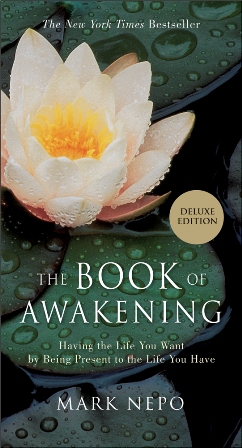
“… Transformation always involves the falling away of things we have relied on, and we are left with the feeling that the world as we know it is coming to an end, because it is” (Mark Nepo, The Book of Awakening).

This past February, I wrote a post about some unexpected milestones at age 59 ½. At the time, I was struck by the synchronicity. Still am. As this is my final week at age 59, I decided to revisit those milestones before I step into my sixth decade, one that promises even more transformation.

KM Huber Image

I have continued to lose weight beyond the 59 ½ pounds of February; I am down 69 pounds with another fifteen-twenty to lose but no more than that. My eating habits have not changed in the past six months but my taste buds have adjusted to other options, and I enjoy eating again. I found millet-buckwheat bread made with chicory root and without refined starch, absolutely critical for me.  Almond butter sandwiches are now a staple. While my future remains gluten, yeast, sugar, dairy and soy free, my grocery list items are crisp and fresh.

In my last week as a fifty-nine-year-old, I am in better health than I was at 58, sans an arsenal of allopathic medicine. I remain convinced that Eastern medicine– Ayurveda and Chinese–has a better understanding of autoimmune disease. Ted J. Kaptchuk’s The Web That Has No Weaver is an excellent overview of traditional Chinese medicine, and I am searching for a similar Ayurveda text. Until I find it, I am enjoying Deepak Chopra’s Perfect Health, an informative volume regarding Ayurveda traditions.  This Tuesday, I have my first meeting with a practitioner of Eastern medicine.

KM Huber Image

But in these final days of my 59th year, it is my writing that is undergoing the greatest transformation. My numbers alone are major personal milestones.  I no longer publish blog posts twice a week as I did in February but on June 2, I began writing the initial draft of a nonfiction manuscript. Currently, I am producing over 9200 words per week on this manuscript alone. At my 59 ½ milestone, my word count was 9800 words for the entire month of February.

While I do not write for a specific word or page count, numbers gauge a manuscript’s size so I knew the end of the nonfiction manuscript was close: currently, it is 330 pages or just over 91,000 words. But even before I tallied the numbers, synchronicity had come to call; what Deepak Chopra calls “a quantum leap of creativity…a relinquishing of the known for the unknown.” And like milestones, coincidence comes wrapped in the ordinary.

In February, I included my participation in ROW 80 as part of my regular blog posts.  Frequently, I discussed the initial draft of a novel that I wrote seventeen years ago; in some blog posts I’d opt for rewriting the novel and in other posts I’d refer to the novel as a life once lived. Rather than letting go, I was very like the speaker in Linda Pastan’s poem, “Ethics,” unable to decide whether to save the old woman or the painting.

So, I signed up for an online workshop, Conflict and Idea with Bob Mayer, and learned about “kernel idea.” I have not been the same since so I consider it my toehold in the unknown, a piece of a milestone.

Bob says that the kernel idea is what initially inspires the writing of a novel–it is the Alpha and Omega of a book–it starts and completes the creative process but here is the key point: the story that you write may and probably does change but the kernel idea of a book does not, ever.

KM Huber Image

During the course of the workshop, I came to understand that the “kernel idea” for my novel was not the story I had written. The kernel idea had not changed but the story I wrote moved away from the idea within the first 100 pages. Finally, I realized what I was hanging onto for seventeen years—my kernel idea and 100 pages—yet, it took me a while to understand just what that might mean but when I did, it felt like a “quantum leap of creativity.” Still does.

Thus, as I started writing a new nonfiction book—my current manuscript–I discovered the way to tell the story of my original kernel idea. Maybe the years sorted themselves, maybe I was letting go of what no longer serves but with transformation there is also revelation. In letting  go of a seventeen-year-old-story that no longer served, I discovered the kernel idea for a new nonfiction book.

“When faced with great change—in self, in relationship, in our sense of calling–we somehow must take in all that has enclosed, nurtured and incubated us so when the new life is upon us, the old is within us” (Nepo).

Spending My Days

Consider the essence of magic as the enchantment of the unknown, a paradox that in the words of the Tao is the “named and the nameless.” Magic appears throughout this blog so similarly to its appearance in my life or to borrow from Annie Dillard:  “How we spend our days is, of course, how we spend our lives.”

What if we spend our days creating and re-creating our lives as works of art rather than scheduling our lives by the hour, defining ourselves by the number of tasks we accomplish. Only late in my life did I come to this magic, this nuance of routine. Now, I spend my days in the experience of each moment where every minute is a way of life and not a moment on a timepiece or a task on a list.

I am not without day-to-day demands—mine is chronic illness—nor am I without the gifts that life’s demands provide, and chronic illness has its gifts, too. Of course, it took me more than thirty years to notice there were any gifts from any demands. We just don’t look for these gifts. We focus our attention only on the demands, maybe even calling attention to ourselves. Mark Nepo says “the threshold to all that’s extraordinary in life is when we devote ourselves to giving attention, not getting it. [That’s when] things come alive for us…[we] find our place in the beauty of things by the attention we can give.”

Perhaps the best measure of giving attention is how we live the routine of our days. Of late, I’ve been experimenting with routine in the larger context of creating a resilient life, which is, among other attributes, a work of art according to Dr. Symeon Rodger in The Five Pillars of Life. The process is a simple one. I record the moments of my day as they occur and not as a schedule of what must occur. There are requirements for each day—some specific tasks must be done–but there is not a plan. Within a week, I discovered a natural flow to how I spend my days as I watched them unfold, regardless of the interruptions and the unexpected. Most important, I discovered resilience and flow reside in the creative unknown.

Here is how that translates in my everyday life. The day-to-day unpredictability of my dis-ease as well as Cooper’s does not change nor does it require any more attention than juggling finances, doing the laundry, grocery shopping, writing—all requirements of my days. In focusing on each moment, I not only accomplish what is required but I complete tasks and chores that have been waiting for months. Furthermore, there is energy in everything I do as I immerse myself into each task and only that task. There is no multi-tasking for each moment belongs to itself completely. Not one day is like another nor is any day exhausting. I schedule nothing and record everything.

Melissa Bowersock Image
WANA Commons

I am quick “to soar with the oversoul”—Louisa May Alcott’s phrase regarding her father and the transcendentalists—and like Thoreau, I have built my “castles in the air” but few times in my life have I put “foundations beneath them” that did not crumble. Yet, in living a routine as a work of art and embracing the enchantment of the everyday, I have a foundation for my current castle in the recording of how I spend my days.

The role of voice recognition software  in my routine is nothing short of finding a new energy source.  Once I began using Dragon NaturallySpeaking, I realized how much physical energy I was expending in typing, a necessity for a writer but  one I had overlooked. Ironically, I had spent considerable time, money, and thought in creating a comfortable work space. I work from an adjustable bed that supports my entire body, and my laptop rests on a spacious tray designed for use with adjustable beds. I believed I had a comfortable way to continue writing, and it was just a matter of settling into a writing schedule but those were days devoid of enchantment and full of design.

There never was a consistent writing schedule, and increasingly, neuropathy limited the length of time that I could use a  keyboard. Finally, I took a three-week hiatus from blogging and from scheduling my days. I knew I would no longer write as I had–I didn’t know whether I would write–yet, I knew I would continue to create and re-create, and that was enough as I explored the moments of my days. Then, I discovered Dragon NaturallySpeaking, and in the initial moments of using the software, I knew life was about to change even more, and so it has. Within two days, there was also a marked decrease in my physical discomfort.

Dave R Farmer Image
WANA Commons

For me, dictating my thoughts is quite different from typing thoughts on a screen using keys on a keyboard. Dictating is sending thoughts through speech; typing is the tactile sensation of selecting keys to produce words. The awareness involved  in each process is completely different, and I am allowed another perspective on creating. I find the combination quite freeing. I focus on the writing before I bring it to the screen through my voice. Then, with my fingers on the keyboard, I edit and shape the words on the screen, creating and re-creating yet another perspective on the story of how I spend my days.

The Power of Story

Lupus is a creation of mine, its own story really, not one of which I am proud, as its writer, but I have been its source of life for the last 35 to 40 years, maybe even longer.

It is not possible to note the day my lupus gene switched to on nor is it possible to know why I have the gene or what activated it, if anything. It simply is. That part of the story has never mattered to me, even before I knew about the Tao or Zen.

It took me most of my life to understand I am not my lupus and that autoimmune disease is its own story, one steeped in imitation and deceit, usually disguised as flexibility and malleability. Separating what is the lupus story from all I am has been delicate and sometimes, seemingly impossible.

Through the Tao and Zen, I have come to believe my body is my soul having a physical experience, which gives me, a writer, the luxury of viewing lupus as story, a structure I do understand. In all the ways I have viewed lupus, it never occurred to me to view it as a story until very recently.

Lupus really does have plot points, conflict, a protagonist and an antagonist, all tools of my trade on my turf. I just may have the advantage here for the very first time.

In some ways, I have had a long life with lupus, if knowing lupus by other names counts. Lupus’ ability to mimic so many other illnesses along with my gullibility in believing one misdiagnosis after another are extraneous chapters but there is this: my heart never believed any of those labels.

In the lupus story, my heart is the protagonist and my brain or ego is the antagonist, the one that drives the conflict in every story, and all stories have an antagonist and a protagonist locked in a conflict box.

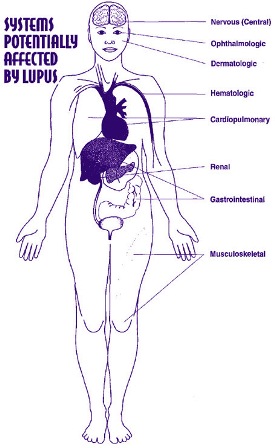
http://www.niams.nih.gov
Image Credit

As the lupus story opens, my immune system produces antinuclear antibodies to fight infection and viruses, just as it should, until we reach the first plot point: a normal immune system turns on itself and begins to attack the very body it defended for years, for no apparent reason.

This relentless war for the body continues for years under various guises–multiple sclerosis, migraines, mixed connective tissue disorder–until Sjogren’s wipes out the salivary glands to pave the way for lupus.

As we reach the midpoint of the lupus story, the brain discovers that it, too, is under attack and turns to the last bastion of hope, the open heart, the remaining connection to the spirit that animates the soul’s body.

I do know that in any story there is one more major plot point before the conclusion, and the lupus story is no different. I don’t know the last plot point nor do I know the conclusion but I have this: the structure of story has given me some of my first moments truly away from the physical battle, and I know I am so much more than the lupus story.

ROW80 Sunday Scheduling 

I finished reading The Night Circus by Erin Morgenstern and may write a review for an upcoming blog post; however a very fine writer, Stephanie Carmichael, wrote an excellent review that you may read here.  I cannot imagine what I could add to this review. The Night Circus is one of the best novels I have ever read and am considering purchasing it (I borrowed it from the library) as it is a book to read and re-read.

I continue to write at least 500 words a day, mostly nonfiction, and I reached my goal of scheduling blog posts so I am not writing to deadline on Sundays and Wednesdays. This next week will be the dismantling of my novel’s first draft, which I plan to have finished by April 22, 2012 as well as a rough outline of its scenes so I may begin “plotting” the novel’s major points. Unlike the lupus story, I actually do know how this story ends.

For the rest of this round, my goal is a weekly total of 2500 words, as I do not know how long it will take to plot the novel so I do not know when I will start the actual writing of the second draft. You may read more about my second Round of Words in 80 Days here.