In Stillness, the World Awakens

It is still dark on this new day but what was night—despair–gives way to the light that is the hope of the new.

In some parts of the world, this particular day has already spent its light but where I live, the light only now gently overtakes the dark. It is my first moment of a day, fresh and unique.

I press the button to adjust the bed to a sitting position to begin meditating.  On more days than not, feline EmmaRose, all 5.5 pounds of her, makes herself comfortable on my soft belly.

Relating to life directly 0513

We begin together. She purrs, kneads my stomach, and then lies down to sleep or to stare out the bedroom window. I focus on my breath–in and out, in and out–I stare into the darkness as it becomes light.

I breathe my way into stillness as the world around me awakens. My body recognizes the opening of our daily dialogue.

A mind scan of my body reveals the concrete block stiffness from the previous day but as yet no pain stirs only tingling and numbness in my thumbs and index fingers. I begin there.

Tingling turns into the familiar electrical “bzzt” in the tip of my right thumb, then the left as well. Another “bzzt” charges through my right thumb and then through both index fingers.

I take a deep breath in an attempt to release my thumbs and fingers from the buzzing but the breath seems off, stale. My focus is on thought and not on breathing. Quickly, I attempt to exhale what I have not yet breathed in.

Storm Clouds 081913

For a while now I have been aware of this futile attempt to suppress a breath, as if I could. I breathe in fully this time so I may release completely  the fear that it is: my doubt of regaining the full strength of my thumbs and fingers.

As the fear breath goes through my upper body, its weakness seems to increase as does the stiffness in my legs. Only when it has traveled my body am I able to exhale fully what has no substance ever, fear.

Once again, I am one with my breath—in and out–as I sense each finger and then my thumbs until warmth flows through both hands releasing the  electrical “bzzt.” Stillness softens the stiffness of my upper body as it warms to the day.

Winter Solstice Skies 1214

The pain in my right leg announces itself. It is a frequent caller so there is no fear as I focus on the pain, searching it out with my breath—in and out—until I reach its core.

We “sit” together for as long as it takes for the stillness to make its way through every cell of my body. I never know the precise moment that it stills, only that it does.

Now, it is the mind’s turn, a movie all its own.

A fragment of a Louise Erdrich quote is first to float through, something about  sitting under an apple tree to “listen to the apples falling all around…in heaps, wasting their sweetness. Tell yourself that you tasted as many as you could.”

In the stillness, an entire world awakens around me in this day that is now bursting with light, inviting me to partake in all I can as I am able. It is a gift to taste the sweetness of a new breath and in gratitude, let it go as it must.

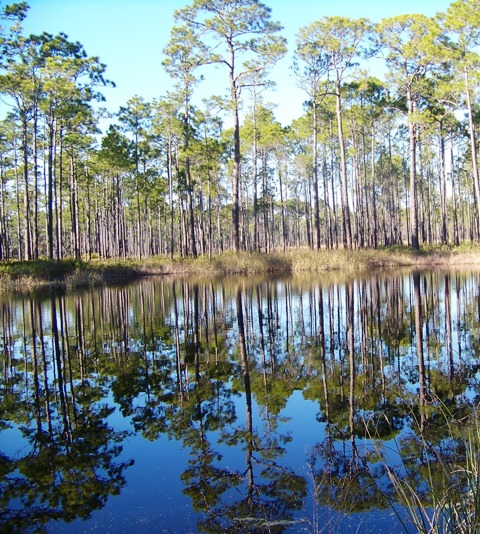
ocean pine 0215

Feline EmmaRose decides to stir, sometimes to bathe but other times, just to get on with her day. And as happens more often than not, her movement coincides with the ding of the timer silencing the stillness.

I try to hold it, of course, but like the breath, it, too, must leave. And in response, my body sends signals from everywhere, announcing this issue or that. I am ready to taste the apples of this day, to savor as much sweetness as I am able.

As long as you are breathing, there is more right with

you than wrong with you no matter what is wrong.

Jon Kabat-Zinn
The Highest Good: No Fight, No Blame

Without a fight, there is no blame. This basic truth can be found in the Tao te Ching—no fight: no blame—as well as in the major texts of many spiritual traditions. Blame seems that integral to the human experience.

In last week’s post I chose the phrase aflame with blame as a reference to its incendiary nature. It is quick to flame, this blame, although it is not a trait with any substance.

Whatever person or event we blame is not what causes us to suffer (Byron Katie). Blame is a distraction, and it is easy to get caught up in its mindset.

We suffer when we hold onto a mindset; in a blind stance, we dig in for a last stand. Mindset is a misguided attempt to avoid the inevitable.

Nothing ever goes away until it teaches us

what we need to know

Pema Chödrön

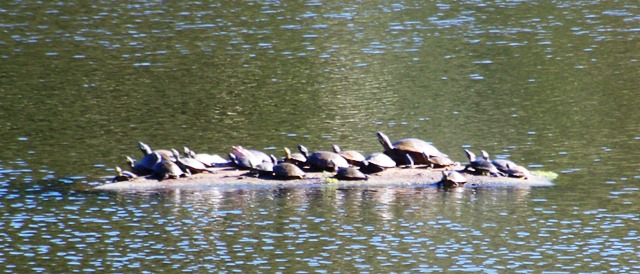
 Turtle Row in fall 1013

It would be hard, maybe impossible, to provide an example of a life experience that does not teach us for in every moment there is something to be learned. At a certain point in life, each of us becomes aware that what breaks us open is what we need to make us whole again.

It is how we learn. It is hard to accept, at least for me.

But time and again, I have realized this one lesson: when I open myself to learning rather than blaming and struggling against, I find the highest good in any situation. The flames of blame and the smoke of striving fade away.

Often, I turn to the teachings of the Tao (in translation) for I treasure its basic truths. Such reflections soothe and instruct every time I return. I am refreshed.

Water gives life to the ten thousand things and does not strive

(Tao, Verse 8)

And like water, the highest good is life-giving, “flowing in places men reject and so is like the Tao”  (Verse 8). All we need to remember is that water will flow—even through rock–rather than reject the route.

The highest good never rejects us, either, even when we do our best to shape what will not be shaped. There is no blame, no fight, no mindset.

Chronic illness is my greatest teacher, as I have mentioned many times. Even in my more difficult moments, I am more aligned with learning than striving, which is not to say I do not have some fiery moments of blame throwing. They are not as frequent.

I find it easier to recognize and to dismantle a mindset, and to do it with self-care and love. After all, a mindset deflates quickly for it is only made of air. And once I breathe it in, I can breathe it out.

Mindset is only a thought no matter how often it may appear. In my experience, mindsets return for they have unimaginable power IF they are allowed to attach and become unassailable belief.

We can learn from observing a mindset if we let it go for what it is. That is the way to keep learning rather than to continue struggling. I find hope in impermanence no matter how many times I meet similar situations. It makes the highest good in any situation seem not only possible but realistic.

We are more like water, wanting life for all and strife for no one. It is ours to flow, like water through rock if we must, open to the ten thousand things and like the Tao rejecting none.

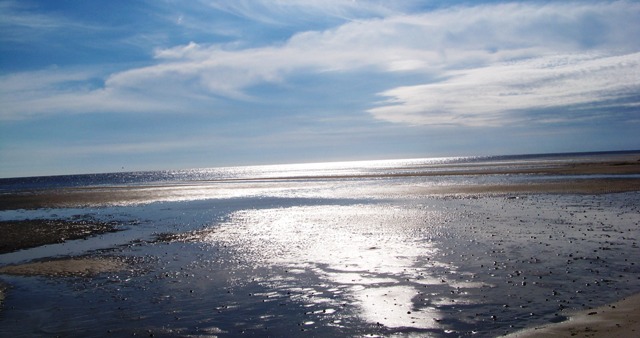
High Tide St Marks 0214


Unplugged to Get Rewired

At Rest 0215

This image is of EmmaRose in her favorite place—in her plush and if necessary, heated bed–practicing her favorite pastime. If you live with a feline, you are constantly reminded how integral sleep is to life.

It is the way sentient beings unplug and get rewired, which is what EmmaRose and I have been doing for almost a fortnight. It is her daily way to unplug regularly.

I am, however, a slow learner yet I have another constant teacher, just as dedicated—autoimmune disease, lupus in particular and in a lesser role, Sjogren’s syndrome.  This is my sea to sail.

Not too long ago, I wrote a post about not unplugging, not ever coming to shore. I believed I could bully my way through any tempest—I was that kind of sailor–but that is not the law of the sea nor is it true self care. It is dangerous sailing, selfish and thoughtless.

large waves 0215

Self care is never a selfish act—it is simply good stewardship

of the only gift I have,

the gift I was put on earth to offer others.

Parker Palmer

Good stewardship requires a daily course adjustment of how to offer my gift without the dualistic thinking of there is only one way. Dualism exacts quite a price for in choosing one way, another way is excluded. Better to steer between the two for balance. They are within the same sea, co-existing with one another.

I was reminded of the inherent imbalance in dualistic thinking as I came across a lively Facebook group discussion on healthcare, specifically alternative versus traditional medicine. Here healthcare is a civil war with both groups firmly entrenched in their respective camps.

There is no one and only one way to health for all but for each of us there is a way to our best health. It may be a balance of both camps or it may lie more within traditional rather than alternative medicine or vice versa.

But without the benefit of learning what each camp offers, there is no balanced approach to one’s best health. In balance is wholeness and without it, we are aflame with blame. Our essence is diminished.

I do not haunt these discussion healthcare boards as I once did but I am reminded of my own imbalance in my approach to my best health. I am fortunate in having experienced the benefits of both camps but I do not know that I have expressed that in a broader perspective.

Sun and Sand 1013

And while my preference for traditional Chinese medicine (TCM) remains the course I steer, it is not without the benefits of traditional medicine. For traditional medicine continues to teach me about the western perspective on autoimmune disease. In turn, that perspective broadens my TCM options.

Wholehearted living is not a onetime choice.

It is a process. In fact, I believe it

is the journey of a lifetime.

Brene Brown

Good stewardship just may the journey of a lifetime, easy to drift off course or become becalmed. And then, there are the storms of life, much like the one I am in now, tossed about, swamped from time to time, but not run aground or sunk.

Some who read this blog also know chronic illness. We sail a similar sea as we chart our course anew for storm or to catch the wind for full sail. When we dock for a rest, we learn from our days at sea. We share our catch.

We know what we offer is the best we have to give, and that it only lasts a short time. We also know the impermanence of the sea requires we open our sails to the wind when and as it is given, and when it is denied to rest with a steady hand on the tiller.

Here are some of my favorite resources: Toni Bernhard’s How to Be Sick seems a guide for any storm as is Jan Chozen Bays, M.D.’s Mindful Eating. And through every storm I practice meditation and a gentle yoga flow.

Till we meet again.

Every Day 0215

Looking into Nature’s Mirror and Finding Grace

Waverly Larch Spring Nubs 0313The cycle of seasons is nature’s mirror, ours for the viewing. Mostly, we celebrate a new season but not always the length of time nature takes to make the change.

We assign spring a date, anticipating an event that may or may not arrive as assigned. Arrival is always a mystery. In a moment of grace, nature unfolds in its own time, in its own way.

“I do not at all understand the mystery of grace—only that it meets us where we are and does not leave us where it found us.” Anne Lamott

I do not understand the mystery, either, but I am content for the experience of it. All I do know is that grace transforms. And like spring, it is its own mystery.

Grace flows with the majesty of a meandering river. Part of its mystery is the gradual eroding of its course, without beginning or end. We do not know the precise moment we are transformed. We only know that we are.

In grace, we do not wallow or stagnate but discover and re-discover the spring of our lives not so much as to re-live but to be reborn in yet another season.

Spring is not a one-time event.

Grace moves us to deeds we once thought impossible. In each spring of our life, we emerge anew. Grace allows us to bare ourselves as we are—to take the risk again—to meet each new spring we are allowed.

We are given only one body to grow but we have the gift of grace to transform, to meet yet another spring. Our seasons cycle within our hearts, bold with the opportunity each affords.

We need not remain wrapped in winter, blanketed in its protective shell. Like nature, ours is not to stagnate or to wallow but to transform from a winter’s day into a spring’s blossom. It is the way of grace.

The bud opens, and life begins anew, yet again. There is grace in this falling away of one season for another, a radical change replete with uncertainty.

As we are revealed so are we seen. Grace unlocks our softness.

A Day in Search of the Theory of Everything

I am at the point in my life where I can appreciate every day of the week as just another day.  I keep plans to a minimum. It keeps me open to just what any day can bring.

Every once in a while, a day does take on a life of its own. Often, when there is a plan involved. So it was with last Monday and my plan to see the movie, The Theory of Everything.

The day began like any other Monday as I perused my WordPress reader for a #MondayMusing post to share on my Twitter feed. The first post I read–Core Spirit–made an indirect reference to the Theory of Everything.

Far and Away 0315

It is a thoughtful essay on consciousness, in particular the differences between the scientific perspective and the spiritual experience. These differences are centuries old.

To me, science confines itself to the natural world, what it can prove/observe.  Those in the spiritual community—poets, philosophers, religions—confine themselves to the experience of just being alive.

In the Core Spirit essay, scientists seek to define the natural world; the spiritual seek “communion” with it. Yet, it is a world we all share. That we have unique and different perspectives should serve to broaden understanding—fuel curiosity—ultimately, it still divides rather than informs.

As for the Theory of Everything explaining all the laws of nature and accounting for all that has ever happened? The essay ends with: “Einstein said that knowing this equation would be reading the mind of God” (Core Spirit).

Closer 0215

To my mind, agreement upon that equation will not come readily but then I am one who immerses herself in the wonder of the moment. Science may  find the equation; some say it already has. For me, science only adds to the awe.

I was pleased at the coincidence of coming across the post on the day I planned to see the movie about the Theory of Everything.

I checked the movie’s show time once more before leaving but paid no attention to the movie theatre location. That, I was sure I knew.

When I arrived at the third movie theatre location, I was told the movie is now out on DVD. The movie theatre employee looked at me askance, of course, but she did have to make a phone call to discover that information. We both learned something.

If I had read the complete movie listing, I would have discovered the fourth location where the movie was, indeed, playing at that specific time, out on DVD or no.

Of course, it was too late to drive to that location. I was not dismayed. There might be a day to see the movie but it was not that day.

Perfect Shell 0514

Once home, I checked my email. Within the last twenty minutes, I had received an email from the Washington Post, asking to re-publish “Learning Zen from a Beagle,” my post about a blind beagle showing me the way.

Had I gone to see The Theory of Everything, I would have missed being available for a back and forth email session with the Post editor. I would have missed this moment in my life. Maybe, I would have missed everything now unfolding.  Maybe not.

As for my next plan to see The Theory of Everything, my name is in the local library queue. On another day, my name will come up. Who knows what will unfold.

 * * *

For a thoughtful and concise post on the equation and the Theory of Everything, here is Matthew Wright’s “How Stephen Hawking Reconciled the Irreconcilable.”

For a considered discussion on consciousness, here is “The Akashic Field and Consciousness.”

If you are interested, here is the link to the Washington Post’s republication of “How My Blind Beagle Taught Me Zen.”

Upon Closer Reflection, Comfort in Chaos

Last week, I wrote of finding balance and the ongoing shifting of left and right until balance arrives of its own accord. Osho refers to this as a “graceful” shifting, which for me it has never been.

Rather, it has been a struggle, one worth taking on but very like sitting in a cave of chaos. I have not found grace there—not yet—but I discovered comfort, thanks to reader comments on last week’s post.

Comfort comes from accepting that balance is in constant motion. It is impermanent. When I start to squirm, I know I have shifted too far one way. It is time to let go and begin to swing back.

Balance is not identifying with left or right because in balance, I am both. Standing in the middle of a moment is mindful, and I have all the time I need.

Closer Reflection 0215

I experience moments I wish would stay forever. There are others I am convinced will never leave but being alive is being in motion as no moment ever stays. Life touches us—painfully, indescribably, unbelievably–myriad experiences ever in motion.

It’s chaotic. And it seems I have found comfort in that.

The reason everything looks beautiful is
because it is out of balance,
but its background is always in perfect harmony.

This is how everything exists
in the realm of Buddha nature, losing its balance
against a background of perfect balance.

~Shunryu Suzuki~

In looking at past posts, variations of the Suzuki quote appear in one form or another at least annually, sometimes more. Yet, this year is different. Why? I have a physical sense of balance.

Regular readers know I recently explored northern Florida with a dear friend. We covered over 500 miles in four days, which for a person with lupus is too much sustained activity. I am grateful for every moment, and yes, I was exhausted.

I am used to the routine of resting that usually follows such an outing. I  break from life, including blogging and writing. I shift from full days of activity to days of complete inactivity. Always, that has been the way.

Not. This. Time.

Peeking 0215

I do not remember consciously thinking of Suzuki’s “perfect balance of existence” but it seems my subconscious decided to trust it. I shifted my resources, not gracefully but gradually, with a certain awareness of the ever-changing balance in each moment.

Oh, there were moments of despair but they were brief, not worthy of support. I could not rouse myself to give in, give up, and wait. There was no life in that.

Rather, I immersed myself in each day, looking to the balance available to me. I communicated with my pain—sensing its signals—without struggling but with shifting.

When I went to my acupuncture appointment, my meridians overflowed with energy. An acupuncture point full of Qi (energy) signals stagnation; the needle is the stimulation to release it.

Point after point, Dr. Gold’s needles provided relief. I did not want that treatment to end–the release was that deep and that immediate. When I arrived, my overall pain level was a solid 8, my knees a 10. The treatment reduced my overall pain to a 3; in some locations, the pain was gone.

Resting came easier as did my sleep. My level of body energy, no longer trapped, shifted to the daily balance available. The body is graceful when allowed to do its work in its own way.

Acupuncture opened me to trusting the chaotic nature of balance. It is not the nature of balance or mine to stagnate. Ours is to be in the constant chaos.

My readers’ comments opened me to just how exceptional that is. Thank you, dear readers.

Every Day 0215

Maintaining Moderation Requires Graceful Shifting

For me, moderation is elusive. I struggle for balance—the measure of moderation—at times, my struggling is painful.  When I become aware of pain, however, is when I cease suffering from it. I aim for even on the day I have rather than going in search of the day I want.

[When] balance comes of its own accord…

[it] has tremendous beauty and grace.

You have not forced it, it has simply come.

By moving gracefully to the left,

to the right, in the middle,

slowly a balance comes to you

because you remain so unidentified.

~Osho~

Osho’s words remind me of Michael Singer’s observer: “There is nothing more important to true growth than realizing that you are not the voice of the mind. You are the one who hears it” (The Untethered Soul).

I find his image of the observer quite helpful in finding the balance in any moment but especially in those where I am on the edge of right or dropping off far left.  As the observer, I have an immediate distance and thus, a broader perspective much like what happens in writing.

The thoughts are in my mind and with my fingers on the keyboard I search for consonants and vowels to create a physical representation of the thought.

The distance between the ever evolving thought and its concrete representation—the word(s)—moves me closer to the center. I am not identifying with the left or the right as I move to the center–not always with grace, I admit.

ocean pine 0215

That may be the overall process of moderation—each of us has our unique way with it—and at one time or another, we struggle with it. Why? We have to let go of what we have to receive what we are given. To me, that is the grace of moderation.

It means keeping the “big picture” in mind.  Whether we are discussing diet, climate change, or the world future generations will inherit. And that’s difficult to do. In terms of global issues, the big picture now looming is an ominous one.

In seeking a balance for a better world—finding moderation—we have to change the way we live, maybe even who we are. Balance—the measure of moderation—is a constant shift, an adjustment to the world as it currently exists. That will determine the world that is yet to come.

Often, the task feels overwhelming, especially if we anticipate a future we cannot know or gnash our teeth over a past that cannot be changed. All we have is the moment to gracefully move a little left or right to maintain our balance.

We begin with observing the life we know best–our own—ever aware of doing no harm to no thing, to no one. Then, we move gracefully to the right or to the left as life comes at us only to leave us. And when we leave, ultimately, both left and right are increased rather than diminished.

The Beauty of Being is the Truth of a Woman

This week, I am participating in August McLaughlin’s Beauty of a Woman Blog Fest (IV). It is an honor to support boaw-logo-2015-originalAugust in her tireless work to help women recognize how remarkably beautiful they are—just as they are.

The beauty of a woman is in her having the freedom to be who she is, free to evolve as the unique human she was born to be.

The unfolding of the beauty of a woman knows no barriers for it is within her body to give life, should she choose. In this, she is one with the earth.

Yet, the world of a woman is not equal in opportunity or access. That we still cannot find equanimity in the most basic difference between human beings—gender—speaks volumes about where we are and how far we have to go.

If we cannot equally support men and women in their pursuit of living their truth–and what else is beauty–how we can possibly eliminate the other labels that diminish each one of us?

We are one, each of us a unique thread, our own blend of beauty that is our moment in the tapestry of existence. That the beauty of a woman unfolds with all other human beings is the only opportunity she ever needs.

Perhaps beauty is the key to the door of equality that we cannot seem to unlock. Far too often beauty has been seen as a barrier rather than as an avenue to equanimity.

I died for beauty, but was scarce
Adjusted in the tomb,
When one who died for truth was lain
In an adjoining room.

He questioned softly why I failed?
“For beauty,” I replied.
“And I for truth, -the two are one;
We brethren are,” he said.

And so, as kinsmen met a night,
We talked between the rooms,
Until the moss had reached our lips,
And covered up our names.

~Emily Dickinson~

We are one in our humanness more than we are separate. Unique, yes, but we are not diminished by each other. Rather, we are truly increased. Our truth is our beauty—our path.

As of yet, we are not comfortable in our beauty so we cannot lie down with our truth. We are not yet on the path of equanimity but that we have not given up is to our credit.

To realize the full potential of humanity is to see the beauty in every woman as her truth, her unique contribution to the worldwide web of human beings.  There is no one path for everyone but for everyone there is a path.

Once you realize that the road is the goal and that you are always on the road, not to reach a goal, but to enjoy its beauty and its wisdom, life ceases to be a task and becomes natural and simple, in itself an ecstasy.

~ Sri Nisargadatta Maharaj ~

In the ecstasy of life lies equanimity.

Path in Mic 0713

(The Blog Fest runs  through March 1, 2015. You can read other blog fest posts here. )

Testament of Friendship

The past ripples round me. It is a time of reflection—one last look—before I let go. In reflection is the unchanged past but looking through the eyes of the present, I am changed.

kmhuberimage

Sometimes, it feels like we are not remembering as fully as we might those loved ones who have died. It is the nature of life to evolve, one experience after another, changing us as we learn to live with the love from loss.

We cling to our memories. Our reluctance in letting go is as physical as it is emotional. It is a mind and body hold. Our cells store the emotion of a memory, often as pain. In letting go of the emotion, we release pain. The cell is changed.

Our body and mind are what we eat and how we meet each moment we live. In letting go, it is not that we love less but that we love completely.

My recent blog posts have been awash in memory. One post was about finding anger long forgotten; the other remembered the Zen master who taught me acceptance. That the anger has been denied longer than acceptance learned does not surprise me.

Both posts lead me to this one as this week marks one year that my beloved friend died of endometrial cancer. Our friendship spanned more than half a century. We grew up in the Rocky Mountains and eventually we both moved east, she to the north and I to the south.

I still think of her as frequently as I did when she was alive. Often, I have to remind myself there are no more conversations for us. I search my memory for the conversations we did have. They are a comfort and sometimes, I learn something new.

Weather in weather 0314

I was not able to be at the celebration of her life service but her partner sent me a DVD of images and music that completely captures her life. I have lost count of the number of times I have watched it, especially in the early months.

Always, I stop the DVD at one particular image. It is a long quotation, in her handwriting, regarding friendship. It is the opening and ending sentences that stay with me. It opens as:

Never cast aside your friends if by any possibility you can retain them. We are the weakest of spendthrifts if we let one friend drop off through inattention, or let one push away another, or if we hold aloof from one for petty jealousy, or heedless slights or roughness….

This was not how she talked but it is how she lived. It took me a while to locate a source for the quote. The words have changed a bit over the centuries—language evolves with us–but the meaning is unchanged.

We accept our shortcomings and our strengths, knowing that sometimes one becomes the other. We lean less on distinctions and more on acceptance.

And while I never knew the quote before Maurya’s death, it is what I have now, a testament of friendship for the life I still have to live, as the closing line of the quote reminds me:

It is easy to lose a friend but a new one will not come for the calling nor make up for the old one.

(Mother’s Magazine)

I do not know that she ever lost a friend. And yes, the diversity of her friendships is a rich legacy. I am changed by her death but more so by the way she lived. I hold close this testament of friendship for the years left to me, for the life I have yet to know.

We meet today.
We will meet again tomorrow.
We will meet at the source every moment.
We meet each other in all forms of life.

Thich Nhat Hanh

In letting go, I find forever.

Sun and Sand 1013

Learning Zen from a Beagle

Humans have to work at equanimity for often there is a well-established mindset that stifles openness. Mindset often closes the door on mindfulness. There is, however, an enviable equanimity—evenness—that we associate with dogs. They can meet a moment with all they have and let it go.

If you can sit quietly after difficult news; if in financial downturns you remain perfectly calm; if you can see your neighbors travel to fantastic places without a twinge of jealousy; if you can happily eat whatever is put on your plate; if you can fall asleep after a day of running around without a drink or a pill; if you can always find contentment just where you are:

you are probably a dog.

Jack Kornfield

 A Lamp in the Darkness: Illuminating the Path Through Difficult Times

My mindset in reading the Kornfield quote was, “Great! A pithy, Zen quote about how to meet difficult moments.” Well, it is and it is not—such is the nature of Zen. Mostly, however, I thought of a dog named Gumby.

First Days 0708A beagle mix–maybe dachshund, maybe rat terrier, maybe neither–Gumby was mostly black and tan with a bit of white on her chest. Long-legged yet petite.

I was thinking of the evening when diabetes claimed her sight. We were on our walk with Gumby determining our route, as always.

In an instant, her long legs searched wildly for the sidewalk that seemed to have disappeared. Yet, she did not stop but kept going until she found her stride again.

That evening and every walk thereafter, she decided our route by beagling– scent memory.  She walked me miles—some days as many as five—I followed, trusting her to take us where we needed to go.

Blind but completely present, Gumby walked me into the world so I could see it as it is. It was not the world I wanted but it was the world we were in. We walked, every day and every night for two-and-a-half years.

We even appeared on the evening news as concerned residents regarding a dangerous cross walk. Gumby’s blindness went unremarked. Few ever noticed she was mostly blind, unless they looked directly into her clouded eyes. And even then, who could be sure?  Gumby remembered 011812

But if any light ever entered her eyes it was in listening to Puccini’s La Boheme. Whether it was a “Live at the Met” radio performance on a Saturday afternoon or from a CD, we sat through all four acts together every time.

She came to me as an older dog with few teeth—hence the name, Gumby–I never knew the origin of her love for classical music or opera.  It ceased to matter how she had once lived before her life with me.

She taught me to meet the moment with whatever I happen to have wherever I might happen to be. She took me many miles through many difficult moments. Years later, I am changed and unchanged.

I still sit through all four acts of La Boheme, completely present in its story, as if for the first time. It was my favorite opera before I knew Gumby but now each performance is a new experience. Was it her favorite opera? That has ceased to matter as well. It was the only opera in which we sat together in meditative stillness.

Mindset comes from experience, our memory of a time past. But sometimes, with enough time and space, we can reflect on difficult moments, returning to the unchanged as the changed being we are.

I took her beagling. She taught me Zen.