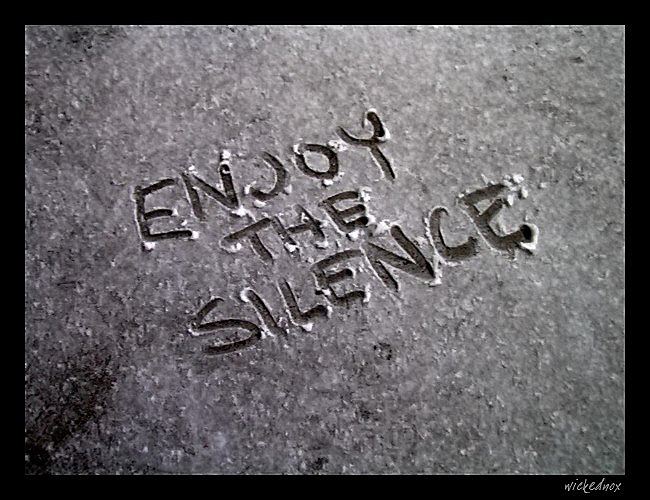
Patience is…

…second to simplicity, according to sage Lao-tzu, sixth century B.C. author of the Tao Te Ching (Tao). Some sources cite the Tao as the second most translated work in history, preceded only by the Bible. As always, second place may or may not impress but what is impressive is that each of the Tao’s 81 sections (or 5000 Chinese characters) provides us with the constant contradictions inherent in life and then, most generously, offers us strategies within the Tao’s three central teachings–simplicity, patience, and compassion—for every moment we live.

That simplicity precedes patience is not difficult to appreciate. Before we can be, we must separate the strands of our life, acknowledging each strand unto itself as well as its relationship to every other strand. Patience emerges from the untangling but “the place of waiting is always trying and very difficult to live out…fear wants us to act too soon…patience, hard as it is, helps us outlast our preconceptions” (Mark Nepo).

If we practice patience rather than relying on a conditioned response—that which we have always known or done—our perception of what is possible changes completely. Within patience, the moment is fresh and free as in Moksha, a Sanskrit word meaning freedom or release. Deepak Chopra has referred to Moksha as “choiceless awareness,” in which the moment is emotionally free from the situation surrounding it.

In the freedom of Moksha, every moment is free because it is now, completely and fully present. Just as the strands separate to reveal simplicity, in Moksha, the present moment is removed from any future or past situation. The moment is free of any complication, of any condition. The moment is.

Like the moment, how we respond is free and fresh, separate from any situation that has established itself in the past or in the future. As long as we are completely present, we are as emotionally free as the moment. Essentially, we are not attached to the situation’s outcome– a central tenet of Buddhism—as yet another ancient tradition reveals itself within the practice of patience.

Yes, I am weaving in and out of the Vedas of Hinduism and the Tao of Taoism along with the Zen of Buddhism, an intricate weave of no beginning and no end. Continuously, I am startled by similarities—as if I were following the strands of the weave for the first time rather than following a familiar pattern—there is such crispness, freshness to this wondrous weave’s undulating eternity. There is such life in these traditions and thus, freedom.

Yet, the moments from my previous meandering among these traditions show themselves from time to time. There is unraveling yet to be done but the strands sort themselves as only memory can. It takes time but I wait for I know every moment I have is free as long as I have patience. It is rarely easy but with practice, patience increases.

“… When feeling urgent to find your place on this Earth…wait…and things as you fear them will, more often than not, shrink into the hard irreplaceable beauty of things as they are…of which you have no choice but to be a part” (Nepo).

And buried therein are the seeds of compassion.

(All Mark Nepo quotations are from The Book of Awakening

Witness to Life

In this past week, a stunningly beautiful baby emerged from her mother’s womb; forty-eight hours earlier, a canine named Sam finally found the light that had eluded him all his life. One woman was the guide for both journeys.  I am reminded of the seventh verse of the Tao:

”Heaven is eternal–the earth endures. Why do heaven and earth last forever?  They do not live for themselves only. This is the secret of their durability. 

“For this reason the Sage puts himself last and so ends up ahead. He stays a witness to life, so he endures. 

“Serve the needs of others, and all your own needs will be fulfilled. Through selfless action, fulfillment is attained.”*

Dave R Farmer Image
WANA Commons

The woman serving as the guide for the baby’s birth and the canine’s death reminds me of the Sage, for she has always kept herself last. So well she understands that a new life has yet to experience all that physical existence can offer while a life at its end stands on the brink of what is beyond experience.

“Often the thing feared, once crossed, turns out to be an unexpected bridge from which we can see who we were and who we are becoming” (The Book of Awakening by Mark Nepo). Certainly, this is the sentiment shared by Sam’s veterinarian caretaker and guide to the bridge. Here, in her words, is a bit about Sam’s life as well as his death:

“Sam was truly a one person dog, and he had the potential to be dangerously aggressive toward other animals and people who made him uncomfortable. His aggression was most likely fear based, probably the result of prior experiences before he came to us [an animal sanctuary].

“When Sam did act out aggressively, it was intense, unpredictable and he truly could become very dangerous very quickly. But Sam wasn’t always aggressive.  In fact, he was actually quite affectionate, loving and trusting toward me. He always greeted me with a tail wag and never once did he act out aggressively. He and I had a relationship based on trust and respect, which ultimately made the decision to let him pass over the Rainbow Bridge that much harder for me.

“In addition to his potential for aggression, Sam was extremely storm phobic. Despite numerous attempts to help him–anti-anxiety medications, pheromone collars, and changes in housing–when the summer storms came through each year, Sam became uncontrollable from fear and anxiety. Even I wasn’t able to comfort him when he was at the height of his anxiety attacks.

“As Sam aged, his anxieties and fears became increasingly worse. He became more unpredictable and outwardly aggressive toward people simply walking by his kennel. He started to become destructive, had a wide-eyed and scared look about him, was excessively vocal at times, and occasionally seemed desperate to escape from his kennel.

“Sam continued to be affectionate and friendly toward me but it became apparent that Sam’s overall quality of life was deteriorating. He wasn’t happy. His fears and anxieties were getting the best of him. Our decision was incredibly difficult as Sam did not have anything ‘physically’ wrong with him. His body was still healthy but his mind was not. We made the very difficult decision to let Sam’s fears and worries finally be put to rest.

“After a scrumptious breakfast and spending some extra time with him, I reassured this handsome boy that everything would be okay and that he wouldn’t have to be scared ever again. I hugged him close and reassured him the whole time. He was clearly scared but he trusted me enough to know I was helping. Sam fell asleep quickly and quietly in my lap, and he finally appeared at peace.

“I have no doubt he knew I was helping him but letting him go was very difficult, more difficult than if there had been a physical, visible medical concern. The fact that Sam trusted me enough to hold him while he fell asleep meant a lot but also made it very difficult, yet for Sam, it was the best and only choice to be made.

“Three years ago, we made a commitment to keep Sam safe, happy, healthy and to protect him from fear and stress. By helping him to cross over the Rainbow Bridge, we feel that we held up our end of that deal. Rest in peace handsome boy. We hope that your troubled mind is finally able to be at peace and that you are once again able to enjoy just being a happy-go-lucky, care-free dog. You don’t have to be scared anymore.”


JM Randolph Image
WANA Commons

Both the death of the dog and the birth of the child are indirect experiences for me yet I am profoundly moved by each for they have in common a woman whom I admire and respect. I know I am fortunate in being able to call her friend. She is young enough to be my granddaughter but her wisdom is of the ages.

Some would say hers is an old soul—once, I ascribed to the notion of rating souls but for me, rankings disappeared with duality—this young veterinarian is acutely aware of her world, inner and outer. I doubt that she reads books on awareness or oneness nor do I remember her ever using those words. She just lives, keenly and completely. Her equanimity in listening to other perspectives, other points of view is rather remarkable. Yet, she is not always appreciated, initially.

Of course, Sam knew better. He trusted his friend to help him cross the bridge into an existence void of all he had known. Two days later, his friend gave birth to a baby, sweeping away the sadness of Sam’s absence but not his existence for the leaving and the arriving are always one for the witness to life.

*Tao translation from Wayne Dyer’s Change Your Thoughts, Change Your Life

A Resilient Life

In my studies this past week, I read a novel on death from a teenage perspective, began an introduction into traditional Chinese medicine, and watched a DVD on coincidence, all within the context of discovering a resilient life.

Melissa Bowersock Image
WANA Commons

Increasingly, my posts refer to a resilient life–not my phrase–by which I mean that in all of existence all happens simultaneously. For human beings, a resilient life requires a fully functioning mind-body organism to create and re-create one’s life as a work of art. Essentially, then, living a resilient life is everyone’s purpose as Dr. Symeon Rodger offers in The Five Pillars of Life. Dr. Rodger acknowledges that the idea of a resilient life  can be found in all of the authentic ancient traditions, although each ancient  tradition expresses the concept a bit differently.

Similarly, all of the ancient traditions embrace Seng Ts’an’s observation: “There’s no need to seek the truth—just put a stop to your opinions!” Not surprisingly, if you search for Seng Ts’an’s quote on the Internet, the top search results reveal the Buddhist monk’s words as status updates on various Facebook pages. And no, I did not investigate any of the search results, having more than enough opinions of my own to stop.

In that regard, I found another element critical to my understanding a resilient life–my daily routine–where routine is not a schedule of minutes but every minute is a way of life, a distinct  difference.  In essence, every moment is free, without attachment. Any qualifying baggage such as right or wrong is attached to those moments considered future or past but never in the moment that is. Of course, time-space is much, much more than this casual allusion but I had not considered every moment as unattached. It changes a lot.

I discovered this idea of every moment being free  from a Deepak Chopra’s DVD seminar, The Spontaneous Fulfillment of Desire. Chopra acknowledges that the concept of every moment as free has its origins in the “ancient traditions of wisdom,” what Dr. Rodger refers to as authentic ancient traditions. To me, the title of Chopra’s 2003 DVD belies the heart of the seven-hour seminar, which is better revealed in the DVD’s subtitle: Harnessing the Infinite Power of Coincidence.

Amber N West Image
WANA Commons

Speaking of, I discovered Chopra’s DVD at the local library after being notified that a novel for which I waiting was now available. Chopra’s DVD was on display near the library circulation desk, and once I was aware of the DVD’s existence, there was never a doubt I would check it out. This is the same morning I was writing an essay on Seng Ts’an’s quote on truth.

Moving ever backward into this same morning, I was not considering making a trip to the library at all. As I reviewed my work for the week, an email notice from the library showed up in my Inbox, advising that a book I had requested was available. I seized the moment and decided a drive to the library was in order, much to the delight of Cooper James.

It had been at least a month since I requested John Green’s The Fault in our Stars, a young adult novel about teenagers, cancer, and dying, not in any predictable order but the story is a good one. It explores the idea of life being a side effect of death, specifically how chronic illness warps not only life but the entire experience of death, how chronic illness might provide a single moment in which we believe not that we will cheat death but that we will come to it prepared. Yet more often than not, life ends mid sentence. Green writes with wit and grit—it is a novel I recommend–I found it to be a page turner.

I did not anticipate reading a novel as part of this week’s course in a resilient life any more than I anticipated watching a seminar on coincidence but I had hoped to discover a text on traditional Chinese medicine, and I did, The Web That Has No Weaver: Understanding Chinese Medicine by Ted J. Kaptchuk who is quick to explain: “The Chinese method is based on the idea that no single part can be understood except in its relation to the whole,” yet another expression of a resilient life.

The Night Circus: A Review

amazon.com image

In The Night Circus, Erin Morgenstern spins a tale that is magical in its prose and practical in its illusions. To me, it is as fine a debut novel as can be found.

Morgenstern’s prose is poetry mostly and not without wit. Her novel’s structure is a marvel, perhaps a study in magic itself for Le Cirque des Reves—the Circus of Dreams—arrives and departs without notice, opening only at midnight and closing at dawn.

The dream circus is a world of black and white with wafts of caramel weaving in and out of striped tents that offer moments of awe and acts unknown, swirling round an extraordinary love story, truly a circus for any rêveur.

There is the Wishing Tree where every wish is a light always lit; there is the illusionist who appears and disappears as if she were born to it;  there is the Labyrinth that will take you up and down, sideways, or to the top of your world.

If you are fortunate, perhaps chosen is a better word, you may receive a silver pass to the Circus of Dreams for the rest of your life. It is a tempting way to live for every tent tells a story within a story as “there are many kinds of magic,” seemingly unending.

The Night Circus opens in 1885, near the midnight of the 19th century and closes in 1903, just after the dawn of the 20th century. Anything and everything seems possible, as the planet is still more dream than reality so there are stories yet to tell, and what is more magical than a story in which so much seems to happen all on its own.

If you read The Night Circus, do pay attention to time and its relationship to permanence or endurance but if you lose track of time— and you probably will but you won’t mind—remember this:

“The whole of Le Cirque des Reves is formed by series of circles. Perhaps it is a tribute to the origin of the word “circus,” deriving from the Greek kirkos meaning circle, or ring. There are many such nods to the phenomenon of the circus in a historical sense, though it is hardly a traditional circus. Rather than a single tent with rings enclosed within, this circus contains clusters of tents like pyramids, some large and others quite small. They are set within circular paths, contained within a circular fence. Looping and continuous.”

As I have mentioned previously, Stephanie Carmichael, a fine writer, wrote a review of The Night Circus that captures its essence completely, and I hope you take a moment to read Stephanie’s review found here.

(All excerpts are from Erin Morgenstern’s The Night Circus, Thorndike ME: Center Point Large Print edition by arrangement with Doubleday, 2011.)


ROW80 Wednesday Words

This ROW80 round is one of continuous goal revision for me yet challenge is growth, even if my vision is a bit cloudy at the moment. However, I am considering not writing fiction for I suspect I am a better reader and editor than a storyteller when it comes to fiction.

As for nonfiction, I do have a lifelong love affair with the essay and seem to pursue that form more than storytelling. It is not the first time I have met this issue but I do believe it is the first time I may have to choose. Yet, I write, which is what is important to me. My revised goals are:

Write 500 words per day, write a regular blog at least once a week, and complete the ROW80 check-ins on Sunday and Wednesday.

So far, the revision feels comfortable.

Shedding

Change is on the horizon, as always, but at times, it seems palpable even audible. Change is on the horizon rumbles from my gut and I know its knell will summon until I shed my skin. Even my morning meditation  from Mark Nepo’s Book of Awakening is entitled “Shedding”:

“…when we cease to shed what’s dead in us in order to soothe the fear of others, we remain partial. When we cease to surface our most sensitive skin simply to avoid conflict with others, we remove ourselves from all that is true” (Nepo).

Cooper on a bye-bye

I smile as I read “…such renewal will, sooner or later, [force us] to undergo transformation anyway” (Nepo).

I am so grateful for metaphor, for synchronicity yet still I squirm as my mind nudges close to the word surrender, never an easy concept for me. However, I am able to admit that less and less, control seems necessary so I settle in with regenerate and rebirth. I breathe.

In this way, we begin our day, and Cooper is ready for “bye-bye in the car.”

My meditation stays with me as I drive us to a new park, one we had “scouted” last winter. Quiet pond with a bridge, Ponderosa pines, live oaks, dogwood– each so grand in its own being– together they are a choir  for all seasons.

We are excited to explore, for the park and day are fresh with promise, with scents for both of us. Cooper sets his snout to tracking scent after scent as I make sure scent is all he finds. Cooper keeps me present, as do most beagles, I suspect.

Together, we stare at a lumbering turtle making its way from the pond, lifting one foot and then another, its shell shifting with each step, adjusting as necessary, purpose in motion, a rhythm steady and sure.

Cooper takes us here and there until he tires, which he does rather quickly these days so he takes us to a bench, not uncommon for him. Early on in our relationship, he indicated a fondness for benches, and while he no longer jumps up to sit beside me or in my lap, he is content to rest against my foot, making sure I stay.

I sit back and my morning meditation of shedding and renewal returns amidst this spring splendor. Everywhere, everything is coming to life as Cooper snores.

Just beyond us, there is a large black and yellow garter snake making its way away–sleek and sure—a symbol of eternity, of transformation and healing that so freely sheds its skin for life’s renewal, inviting the risk that comes with wearing a new skin.

There is a lifetime in this moment, as always.

ROW80 Wednesday Summary 

Sometimes, all I have to do is  consider the word goal and my entire being rises up in rebellion. My ego tells me—pretty much nonstop– goals are contradictory to the Tao and being, all nonsense but then what else is the ego?

April 4, 2012 is the start date for my second round of ROW80 goals, and they are located on a separate page that you may view here. In many ways, these goals are a new skin for me.

Silence is a Response

Life is loud, the constant chatter of a unified life. The more we connect with each other, the more we learn about ourselves. Yet, there are moments when a silent response may benefit us most.

We live with the daily fallout of nonsense that has been increasing over the last two decades but in the last two years, the social and political climate of the planet has completely changed. Hot spots are everywhere. Frankly, we do not know what to do so we text what we do not know.

In this immediate world, an emoticon or single parentheses with a colon is acceptable but the larger fallacy in all this chatter is oranges become apples and then later, as needed, apples turn into oranges. There isn’t a logical fallacy that is out-of-bounds.

I offer this: silence is a sound response preferable to the chatter of logical fallacies. There is nothing new in the virtue of silence but as we reach across, up, down and around the globe, we are connecting with all we can be, and the possibilities are endless.

mairedubhtx.wordpress.com image

How we connect with one another in the ether seeps into our physical relationships, particularly those conversations of the heavy heart, the ones that thud: conversations we no longer want to have much less start; conversations that reveal a truth we never saw until we realize it was there always. Revelation and resonance are pure, often painful.

In a recent blog post, Sabrina Reber tells us: “Understand that when we resonate ‘strongly’ with the pain and suffering in others, it is a reflection of our own inner pain that has not been healed. STRONG REACTIONS to anything outside ourselves are always a reflection of our own inner turmoil.”

Other people are mirrors for us, even when we look away–keep the chatter on them–as we tweet or text a response to relieve our own discomfort.

“When you find yourself having a strong reaction to an external issue ~ STOP. Turn it around and say ~ ‘this is my stuff.’ This is your place of POWER ~ because you are accepting responsibility for yourself/your emotions/your feelings/your vibration ~ and only then will you be able to tap into the underlying truth of the issue so you can create change” (Reber).

A response is a thoughtful decision including whether or not to respond. There is so much chatter in the outer world  but if we listen silently and allow our egos to chatter, judge or interpret inside our heads, then we’ll know whether or not to respond but even better, we will know what to respond.

Silence is a straightforward action, and the fact that silence is a possibility for each one of us in every moment at a cost we determine is the very power we seek in chatter.

Truly, “it is time for us to stop expecting someone outside of ourselves to make the changes on this planet we so desire to see. Our power for change revolves around the SELF……one person at a time” (Reber).

Rhythm of ROW80 Sunday Scheduling:

This week, we examine conflict in the Idea and Conflict workshop with Bob Mayer.  As he says, it will be a challenge. This past week, I struggled with the kernel idea of my novel, which is clearer but not quite there. The kernel idea exercises require the writer to peel back layer after layer of story. It’s quite rigorous, and I have spent about five hours a day with variations on the exercise. In the process, I am writing a lot of back story.

Beyond my workshop writing, I am generating at least 1,000 words per day  for blog posts as well as some creative nonfiction. In this regard, I have exceeded my original word count of writing 250 words per day in this first round of ROW80.

Shakespeare’s Sister Still

goodreads image

“It would have been impossible, completely and entirely, for any woman to have written the plays of Shakespeare in the age of Shakespeare.” These are Virginia Woolf’s words from a series of lectures she delivered at Cambridge University in October, 1928. They were published In 1929 as  A Room of One’s Own. 

In later decades, “Shakespeare’s Sister” found a life of its own as an excerpted essay* in various anthologies. My own discovery of Woolf’s work was over three decades ago, and I am grateful for her transcendent sentences.

Woolf creates her imaginary Judith Shakespeare within William Shakespeare’s generally accepted circumstances. As is often true, similar circumstances are no guarantee of similar outcomes even when one’s mother is an heiress, as was true for William and the imaginary Judith.

The grammar-schooled William “was, it was well known, a wild boy who poached rabbits, perhaps shot a deer, and had, rather sooner than he should have done, to marry a woman in the neighborhood, who bore him a child rather quicker than was right. That escapade sent him to seek his fortune in London. He had, it seemed, a taste for the theatre” (p. 8).

Daily nebraskan.com image

While William’s stage career began by “holding horses at the stage door,” it wasn’t long before William was center stage, “living at the hub of the universe.” He even managed to meet the queen.

Judith, equally curious and imaginative but not schooled—no  Horace or Virgil for her—did learn to read and even found a book or two, perhaps even one of William’s, until she was found out by her parents.

“They would have spoken sharply but kindly, for they were substantial people who knew the conditions of life for a woman and loved their daughter… [They] told her to mend the stockings or mind the stew and not moon about with books and papers” (p. 8).

Yet, Judith went on reading and started scribbling a line or two as she was near a marriageable age, seventeen. Upon discovering that she was betrothed to a “wool-stapler’s son, [she] cried out that marriage was hateful to her, and for that she was severely beaten by her father,” which did not produce the desired results in Elizabethan England any more than it does in the 21st century.

Father Shakespeare then offered Judith “a chain of beads or a fine petticoat…there were tears in his eyes. How could she disobey him? How could she break his heart?

“The force of [Judith’s] own gift alone drove her to it. [She] let herself down by a rope one summer’s night and took the road to London…she had the quickest fancy, a gift like her brother’s…she had a taste for the theatre” but she was sent away from the stage door (p. 8).

ehow-co-uk image

Actually, Judith was laughed away by the stage manager who told her “no woman…could possibly be an actress. He hinted—you can imagine what. She could get no training in her craft. Could she even seek her dinner in a tavern or roam the streets at midnight?

“[Judith’s] genius was for fiction and [she] lusted to feed abundantly upon the lives of men and women and the study of their ways…for she was very young, oddly like Shakespeare the poet in her face” (p. 9).

Judith was turned away, time and again, until an “actor-manager” took pity on her and her dreams of theatre. Soon, Judith was with child and without marriage.

Sadly, Judith killed herself “one winter’s night and lies buried at some cross-roads…that, more or less is how the story would run…if a woman in Shakespeare’s day had had Shakespeare’s genius” Woolf conjectured, almost a century ago (p. 9).

In 2012, we are still asking: “…who shall measure the heat and violence of the poet’s heart when caught and tangled in a woman’s body.”
*All excerpts from “Shakespeare’s Sister,” by Virginia Woolf are from Eight Modern Essayists, 5th edition, St. Martin’s Press, 1990.

ROW80 Wednesday Word Marking:

My word total for January is 8250 with my goal of writing at least 250 words per day; in February, I began writing in 30-minute stretches to focus my writing and the word total for the month is 9814;  in March, my current word total is 3838.  My total Round of Words so far is 21,902, which is a raw total, meaning a lot of free writing/brainstorming yet meeting my goal of writing consistently. I generate an additional 1200 to 2000 words per week as blogs, fiction, and nonfiction.

Bob Mayer’s Idea and Conflict Workshop is life-changing, and I mean that sincerely. I can honestly say I have not been this excited about writing in years. There is true joy in my work.

A Unified Life

It is not frequently the “world is too much” with me but too much always means a matter of words.

These are days of careless and thoughtless words thrown around the world in a nanosecond and forgotten just as immediately, as if a word once released is never more.

KM Huber Image

Every word reveals its writer, as Wayne Dyer demonstrates in his work with the Tao: “Live a unified life” and forego the “mind game” of duality, that “propensity to compartmentalize everything as good or bad, right or wrong.” Ah, the slippery slope of duality.

I take this viewpoint or that one, keeping each in its box, opposites, while I allow myself the luxury of weighing right vs. left, considering women vs.  men, contemplating yin-yang.

I name it balance but my heart knows it as judgment unexpressed but held. I am a lifelong hair-splitter within myself as well as with the world. At times, both are too much with me.

I am a true believer in finding common ground on any issue—no matter how insignificant that spot of ground may be, I know it exists–often, I am tenacious beyond popularity with left or right, no or yes, yet it keeps me just shy of duality. Dyer offers this: “eliminating opposites paradoxically unifies them.”

Imagine that as a political viewpoint in a discussion of  the role of government for the individual, for an entire country, especially when our planet is so pendulous, left-right, right-left, right-wrong. Words and more words, this word heard, that word ignored, a lie believed, a truth buried.

It’s a squawking sky of words where a good offense is the next day’s defense, and no one remembers to ask whether the sky is falling for the sky is full of flying words.

“…notice an opportunity to defend or explain yourself and choose not to. Instead, turn within and sense the texture of misunderstanding…just be with what is.” 

These Wayne Dyer words clear the sky for me on any day. The moment is all we ever have and it’s more than enough to “just be.” In order to clear the sky, I have to remove “me” from the words so I can see their meaning, their context, how they come together and when. Then, I can hear them.

“The world is too much with us, late and soon,” Mr. Wordsworth, as it always has been.

Amanda Stephan Image
WANA Commons

Rhythm of ROW80 Sunday Scheduling:

This past week, I started a month-long workshop with Bob Mayer on Idea and Conflict. For the rest of this round of ROW80, I will work with the kernel idea and conflict box of  a story that may actually become a novel.

Daily, I write for at least 30 minutes, often longer, generating at least 1,000 words per day  for blog posts as well as some creative nonfiction. In this regard, I have exceeded my word count for this first round of ROW80.

All Wayne Dyer excerpts are from Change Your Thoughts, Change Your Life, second verse of the Tao.

Being Lily

“Originally, the word power meant able to be.
In time, it was contracted to mean to be able.
We suffer the difference” (Mark Nepo, Book of Awakening).

In a world weary and wary of power, I doubt the distinction that comes from rearranging words—even contracting them—is noted when we  consider our power, inner or outer, globally or individually. Usually, we find power and ourselves lacking, somehow; “…the wish for more always issues from a sense of lack” (Nepo).

Yet, there are times when lack results in abundance sans want and wishing. I think of Lily, a dog story of joy ever after because with Lily, lack is always more.

A white-muzzled, chocolate lab kind of canine, Lily found herself at a county animal shelter; she was too old to care for, she was too fat, her hips were bad. Lily lacked everything she needed to continue her life as it was so she began a new life, incrementally.

Second Chance Farms Inc. Photo

First, there was Underdog Foundation whose main operations are not in the area Lily lived nor is Underdog usually contacted about dogs like Lily. Underdog provides funds for various rescue operations but it is not involved in any physical rescue nor does it have its own facility so  Lily found her  funding but no place to be.

Yet, home was always near. Lily was in a county shelter that was part of the network of Second Chance Farms’ sanctuary. The sanctuary takes in older animals of almost all species, offering them forever home for the rest of their lives. Lily would live with dogs, cats, a tortoise, ducks, chickens, a horse named River, two goats, a donkey, and at that time, an opossum.

But with Lily, there was still more.

Second Chance Farms Inc. Photo

In under two weeks and entirely unexpectedly, Lily met and fell in love with her permanent foster parents who also care for cats, dogs and horses. At first, Lily slept a lot, as always, but her new life moved fast. With her human mom, Lily learned about her barn, her horses and having all around  romps in the barnyard grass. Her personality perked.

Lily was no longer quiet about life. Eagerly, she showed her humans that she could howl like a wolf, if needed, yet with a little eye contact, she was just as capable of carrying on a conversation, of sorts, with humans.  Lily being Lily, she ascended to alpha dog in her canine pack of three.

Second Chance Farms Inc. Photo

Lily’s family travels quite a bit. In particular, her humans are serious college football fans. In less than six months and in time for her first football season, Lily shed the weight that had been too much for her age and for her hips. She was on her way to a victorious season of football trips, especially the pre-game activities inside and outside the family RV.

When it came time for an extended family wedding, Lily attended, of course, and was included in the official wedding photos. In her first year of so many firsts, Lily’s world of canine and human contact is ever more. Lily no longer lacks for family, for care, for life in any way, a true alpha dog of her canine and human pack.

It’s the kind of story that takes us out of lack into what is best in all of us, canine or human. Lily, lacking all except her ability to be, created a chance for humans to prove they are able, always, to be more.

Christmas, 2011 (SCF photo)

And that is powerful.

Rhythm of ROW80 Sunday Scheduling:

This week, I begin a month-long workshop with Bob Mayer on Idea and Conflict. For the rest of this round of ROW80, I will work with the idea of my current manuscript so I may actually turn the story into a novel.

Daily, I write for at least 30 minutes, often longer, generating at least 1,000 words per day  for blog posts as well as some creative nonfiction.

Dear Reader

themacfeed.com image

Today, I came up with a tag line for my blog: A Boomer Being. It’s on the left hand side of the screen, beneath KM Huber’s Blog. My belief in Oneness and my attempts at Being are the basis for this blog but you, Dear Reader, are its heart.

Thank you for visiting my blog—whether it’s your first time and last time or whether you’re a regular—in that moment, we connect in ways we may never realize. That is “spooky action at a distance.”

My blog has been up for less than two months, and your incredible response warms my heart, truly. In fact, you’ve changed my life, and I mean that with all my heart.

If you blog or participate in social media, you know the fear of “pressing” your words into print. Chagrin, terror loom. You really can’t take those words back. Oh, you can delete a published blog page or a comment and never hear about it but here’s a hint: commit the word cache to memory. I promise you at least one pair of eyes found your words, knows what you tried to take back.

Technology just may force us into being thoughtful and patient, qualities we do well when we are them. Magnanimity is a  marvelous  human trait that is not used as frequently as it might be but blogging and writing in the ether give new meaning to being in the moment.

Welcome to the world of the open heart: the 21st century.

impactlab.com image

There is a revolution going on across the globe every minute of every day. We are seeing ourselves as we’ve never seen ourselves, and it’s a bit of a shock, which revelation always is. There seems no place to hide but there never was is what we are discovering.

As an aging feminist and boomer, I was born to revolution; as an aging writer, I know I am living in a golden age of words still being arranged and rearranged but language is within the Oneness that connects us all.

Dave R Farmer
WANA Commons

At almost sixty, I am categorized as a boomer by virtue of my age but I really am a hippie, still. Yet being, really being, is new to me after six decades of a lot of doing–and not always well. Now, living moment by moment, I am not rushing anywhere anymore for anyone. Frankly, it is all I can do to be for the rest of my life—it’s that compelling.

Some label life as spirit being human, and it just may be, but life is an experience that we take in and let go, usually unevenly, especially the letting go part.

But maybe now that we reach round the world any time we want to, we will open our hearts to each other completely. Certainly, it seems we can, Dear Reader, although I did not believe it two months ago.

You, Dear Reader, showed me all is possible, and for you, I blog.

ROW80 Wednesday Word Marking:

From January 2 until February 4, my goal was to write 250 words per day—as blog posts, fiction, or nonfiction–for an approximate total of 8250 words.

Beginning February 4, I started the “30-minute” stretch in which I write for 30 minutes. So far, that has generated just over 9,800 words, almost half of those words will see another format. I generate another 1200 to 2000 words per week as blogs, fiction, and nonfiction.

I achieved my goal of returning to writing regularly.  Now, the 30 minute stretches have found focus as drafts of future blogs, eliminating the time crunch of making the Sunday and Wednesday press deadlines. My goal is to schedule my all my blogs so I am not on “deadline” ever.  For this round of ROW80, I am just over 20, 800 words.  I am so pleased that I am writing regularly.

I signed up for Bob Mayer’s Idea and Conflict Workshop that begins March 3.  With this workshop, I will finally start putting together pieces of  a story I’ve had for sometime–my first write-through of a novel seventeen years ago.  Structurally, I never considered it a novel–it’s always been an exploration of my writing process–I knew there were some strong pieces without a true story. With this workshop, I’ll test my idea, which means I have a novel to write, and I am excited.