Silence is a Response

Life is loud, the constant chatter of a unified life. The more we connect with each other, the more we learn about ourselves. Yet, there are moments when a silent response may benefit us most.

We live with the daily fallout of nonsense that has been increasing over the last two decades but in the last two years, the social and political climate of the planet has completely changed. Hot spots are everywhere. Frankly, we do not know what to do so we text what we do not know.

In this immediate world, an emoticon or single parentheses with a colon is acceptable but the larger fallacy in all this chatter is oranges become apples and then later, as needed, apples turn into oranges. There isn’t a logical fallacy that is out-of-bounds.

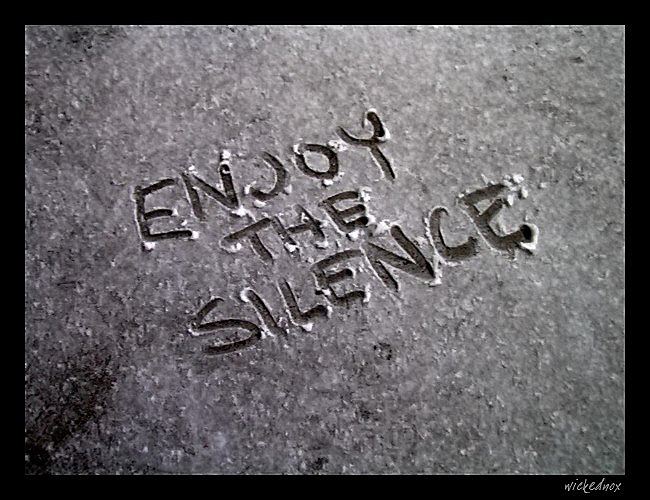
I offer this: silence is a sound response preferable to the chatter of logical fallacies. There is nothing new in the virtue of silence but as we reach across, up, down and around the globe, we are connecting with all we can be, and the possibilities are endless.
mairedubhtx.wordpress.com image

How we connect with one another in the ether seeps into our physical relationships, particularly those conversations of the heavy heart, the ones that thud: conversations we no longer want to have much less start; conversations that reveal a truth we never saw until we realize it was there always. Revelation and resonance are pure, often painful.

In a recent blog post, Sabrina Reber tells us: “Understand that when we resonate ‘strongly’ with the pain and suffering in others, it is a reflection of our own inner pain that has not been healed. STRONG REACTIONS to anything outside ourselves are always a reflection of our own inner turmoil.”

Other people are mirrors for us, even when we look away–keep the chatter on them–as we tweet or text a response to relieve our own discomfort.

“When you find yourself having a strong reaction to an external issue ~ STOP. Turn it around and say ~ ‘this is my stuff.’ This is your place of POWER ~ because you are accepting responsibility for yourself/your emotions/your feelings/your vibration ~ and only then will you be able to tap into the underlying truth of the issue so you can create change” (Reber).

A response is a thoughtful decision including whether or not to respond. There is so much chatter in the outer world  but if we listen silently and allow our egos to chatter, judge or interpret inside our heads, then we’ll know whether or not to respond but even better, we will know what to respond.

Silence is a straightforward action, and the fact that silence is a possibility for each one of us in every moment at a cost we determine is the very power we seek in chatter.

Truly, “it is time for us to stop expecting someone outside of ourselves to make the changes on this planet we so desire to see. Our power for change revolves around the SELF……one person at a time” (Reber).

Rhythm of ROW80 Sunday Scheduling:

This week, we examine conflict in the Idea and Conflict workshop with Bob Mayer.  As he says, it will be a challenge. This past week, I struggled with the kernel idea of my novel, which is clearer but not quite there. The kernel idea exercises require the writer to peel back layer after layer of story. It’s quite rigorous, and I have spent about five hours a day with variations on the exercise. In the process, I am writing a lot of back story.

Beyond my workshop writing, I am generating at least 1,000 words per day  for blog posts as well as some creative nonfiction. In this regard, I have exceeded my original word count of writing 250 words per day in this first round of ROW80.

Shakespeare’s Sister Still

goodreads image

“It would have been impossible, completely and entirely, for any woman to have written the plays of Shakespeare in the age of Shakespeare.” These are Virginia Woolf’s words from a series of lectures she delivered at Cambridge University in October, 1928. They were published In 1929 as  A Room of One’s Own. 

In later decades, “Shakespeare’s Sister” found a life of its own as an excerpted essay* in various anthologies. My own discovery of Woolf’s work was over three decades ago, and I am grateful for her transcendent sentences.

Woolf creates her imaginary Judith Shakespeare within William Shakespeare’s generally accepted circumstances. As is often true, similar circumstances are no guarantee of similar outcomes even when one’s mother is an heiress, as was true for William and the imaginary Judith.

The grammar-schooled William “was, it was well known, a wild boy who poached rabbits, perhaps shot a deer, and had, rather sooner than he should have done, to marry a woman in the neighborhood, who bore him a child rather quicker than was right. That escapade sent him to seek his fortune in London. He had, it seemed, a taste for the theatre” (p. 8).

Daily nebraskan.com image

While William’s stage career began by “holding horses at the stage door,” it wasn’t long before William was center stage, “living at the hub of the universe.” He even managed to meet the queen.

Judith, equally curious and imaginative but not schooled—no  Horace or Virgil for her—did learn to read and even found a book or two, perhaps even one of William’s, until she was found out by her parents.

“They would have spoken sharply but kindly, for they were substantial people who knew the conditions of life for a woman and loved their daughter… [They] told her to mend the stockings or mind the stew and not moon about with books and papers” (p. 8).

Yet, Judith went on reading and started scribbling a line or two as she was near a marriageable age, seventeen. Upon discovering that she was betrothed to a “wool-stapler’s son, [she] cried out that marriage was hateful to her, and for that she was severely beaten by her father,” which did not produce the desired results in Elizabethan England any more than it does in the 21st century.

Father Shakespeare then offered Judith “a chain of beads or a fine petticoat…there were tears in his eyes. How could she disobey him? How could she break his heart?

“The force of [Judith’s] own gift alone drove her to it. [She] let herself down by a rope one summer’s night and took the road to London…she had the quickest fancy, a gift like her brother’s…she had a taste for the theatre” but she was sent away from the stage door (p. 8).

ehow-co-uk image

Actually, Judith was laughed away by the stage manager who told her “no woman…could possibly be an actress. He hinted—you can imagine what. She could get no training in her craft. Could she even seek her dinner in a tavern or roam the streets at midnight?

“[Judith’s] genius was for fiction and [she] lusted to feed abundantly upon the lives of men and women and the study of their ways…for she was very young, oddly like Shakespeare the poet in her face” (p. 9).

Judith was turned away, time and again, until an “actor-manager” took pity on her and her dreams of theatre. Soon, Judith was with child and without marriage.

Sadly, Judith killed herself “one winter’s night and lies buried at some cross-roads…that, more or less is how the story would run…if a woman in Shakespeare’s day had had Shakespeare’s genius” Woolf conjectured, almost a century ago (p. 9).

In 2012, we are still asking: “…who shall measure the heat and violence of the poet’s heart when caught and tangled in a woman’s body.”
*All excerpts from “Shakespeare’s Sister,” by Virginia Woolf are from Eight Modern Essayists, 5th edition, St. Martin’s Press, 1990.

ROW80 Wednesday Word Marking:

My word total for January is 8250 with my goal of writing at least 250 words per day; in February, I began writing in 30-minute stretches to focus my writing and the word total for the month is 9814;  in March, my current word total is 3838.  My total Round of Words so far is 21,902, which is a raw total, meaning a lot of free writing/brainstorming yet meeting my goal of writing consistently. I generate an additional 1200 to 2000 words per week as blogs, fiction, and nonfiction.

Bob Mayer’s Idea and Conflict Workshop is life-changing, and I mean that sincerely. I can honestly say I have not been this excited about writing in years. There is true joy in my work.

A Unified Life

It is not frequently the “world is too much” with me but too much always means a matter of words.

These are days of careless and thoughtless words thrown around the world in a nanosecond and forgotten just as immediately, as if a word once released is never more.

KM Huber Image

Every word reveals its writer, as Wayne Dyer demonstrates in his work with the Tao: “Live a unified life” and forego the “mind game” of duality, that “propensity to compartmentalize everything as good or bad, right or wrong.” Ah, the slippery slope of duality.

I take this viewpoint or that one, keeping each in its box, opposites, while I allow myself the luxury of weighing right vs. left, considering women vs.  men, contemplating yin-yang.

I name it balance but my heart knows it as judgment unexpressed but held. I am a lifelong hair-splitter within myself as well as with the world. At times, both are too much with me.

I am a true believer in finding common ground on any issue—no matter how insignificant that spot of ground may be, I know it exists–often, I am tenacious beyond popularity with left or right, no or yes, yet it keeps me just shy of duality. Dyer offers this: “eliminating opposites paradoxically unifies them.”

Imagine that as a political viewpoint in a discussion of  the role of government for the individual, for an entire country, especially when our planet is so pendulous, left-right, right-left, right-wrong. Words and more words, this word heard, that word ignored, a lie believed, a truth buried.

It’s a squawking sky of words where a good offense is the next day’s defense, and no one remembers to ask whether the sky is falling for the sky is full of flying words.

“…notice an opportunity to defend or explain yourself and choose not to. Instead, turn within and sense the texture of misunderstanding…just be with what is.” 

These Wayne Dyer words clear the sky for me on any day. The moment is all we ever have and it’s more than enough to “just be.” In order to clear the sky, I have to remove “me” from the words so I can see their meaning, their context, how they come together and when. Then, I can hear them.

“The world is too much with us, late and soon,” Mr. Wordsworth, as it always has been.

Amanda Stephan Image
WANA Commons

Rhythm of ROW80 Sunday Scheduling:

This past week, I started a month-long workshop with Bob Mayer on Idea and Conflict. For the rest of this round of ROW80, I will work with the kernel idea and conflict box of  a story that may actually become a novel.

Daily, I write for at least 30 minutes, often longer, generating at least 1,000 words per day  for blog posts as well as some creative nonfiction. In this regard, I have exceeded my word count for this first round of ROW80.

All Wayne Dyer excerpts are from Change Your Thoughts, Change Your Life, second verse of the Tao.

Center of the Universe

You are not the center of the universe” is a pivotal line in my unpublished novel, written eighteen years ago. Actually, Center of the Universe was the novel’s real working title, which I do not believe I have never told anyone until now but I’m old and every day, my memory is kinder. For most of my novel’s years, I called it Spirit Song or a still favorite phrase, In-Between Dances.

dachsundlove.blogspot.com image

Anti-Spoiler: At no time in this post or any other post will you be subjected to excerpts from any novel or story I may write. This blog may  look at the 10,000 things of the Tao but my novel or story excerpts are excluded.  My writing has its place, which is not my blog.

“Center of the universe” was an unusual concept in the early 1990s  for me and for the small, coal mining community where I lived. Amazingly, I played a pivotal role in that community for a short period of time, if not as the center of the community, it was close enough for me forever. It doesn’t take much in a small community.

Fresh from a university setting, I was teaching the  basic composition course for the community college outreach program. The course was required for anyone pursuing an associate degree but I did not let that hold me back. I launched my (and the community’s) writing life with Natalie Goldberg’s Writing Down the Bones. Zen Buddhism completely captured my heart; I was so in love.

Edgar Allan Poe Wikipedia Image

Everywhere I looked, there was analogy after analogy. In teaching Poe’s “Fall of the House of Usher,” a classic story of sentience, I nearly brought to life the house’s  weeping walls and the Tao of 10,000 things. I was ingenuousness personified. At best, I only knew half of what I thought I knew but I tossed all my sentience out there.

It stuck.

For the next few years, former students liked to introduce me as: “This is (My Name), and she thinks this chair has feelings.” Yes, a chair was offered to a somewhat startled, formerly secure person. It kept people on their feet, and for a moment, made me the center of the universe. Only now do I appreciate how truly amazing those years were.

By the time I began writing my novel in 1994, I had pulled away from the community and in all fairness, it had pulled away from me, too. We had reason to separate—it seems fair to say we had forgotten our sentient selves—it is so long ago who knows whether  there was any reason left in any of us. We just were.

Regardless, my novel was about finding community again; I wanted to discover where we had gone so wrong, all of us. Somewhere after 60,000 words, my protagonist was informed: “You are not the center of the Universe.” Truly, I remember the moment.

As a writer, I recognized the importance of the sentence but as a human being, I sensed enlightenment, albeit briefly. It would take another seventeen years to fully appreciate the center of the universe but there was light, and toward that, I moved.

In 2011, I read Stephen Hawking’s books—Grand Design and A Briefer History of Time—and learned of the multiverse, a considerable blow to my centered universe–momentarily–for I found the joy of quantum entanglement and Oneness. The reality of joy is once you experience it, you move in that direction always. Dark just does not have the same hold in Oneness.

genamason.wordpress.com image

However, Oneness translates hard for a writer, sometimes.

While I had known for a while—sixteen years, eleven months, and twenty days—that I might glean only dribs and drabs from my first attempt at a novel, I always believed I had the center of the universe. Not so. Seems it really was a bit of fiction.  And there was something even worse: my center of the universe was a Little Darling, in writing, a death knell.

True to form, I kept silent about my Little Darling. Perhaps I hoped I would forget there was a multiverse–I promise you there is real merit in this possibility–yet, sentient human or no, once the heart knows, it knows.

Yesterday, my universe imploded, victim of  my first assignment in a writing workshop: write the idea of my novel in one sentence of 25 words or less. Surprisingly, I managed to find a sentence, not a cogent one, but the center of the universe was gone.

Note: For one of the best explanations about Little Darlings and how to get help for this alarmingly prevalent addiction, please read Piper Bayard and Kristen Lamb, proud sponsors of Little Darlings Anonymous.

ROW80 Wednesday Word Marking:

My word total for January was 8250 with my goal of writing at least 250 words per day; in February, I began writing in 30-minute stretches to focus my writing and the word total for the month is 9814;  in March, my current word total is 2118.  My total Round of Words so far is 21,182, which is a raw total, meaning a lot of free writing/brainstorming with a goal of writing consistently, which I have accomplished. I generate an additional 1200 to 2000 words per week as blogs, fiction, and nonfiction.

For the remaining days of this ROW80, I am focusing on scheduling my blogs so I am not on “deadline” ever or always on deadline.  Oneness is confusing in this regard.

Bob Mayer’s Idea and Conflict Workshop  is just incredible, and I mean that sincerely. I can honestly say I have not been this excited about writing in years. There is true joy in my work.

Being Lily

“Originally, the word power meant able to be.
In time, it was contracted to mean to be able.
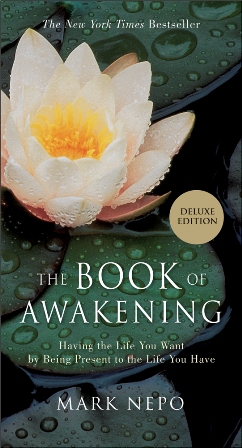
We suffer the difference” (Mark Nepo, Book of Awakening).

In a world weary and wary of power, I doubt the distinction that comes from rearranging words—even contracting them—is noted when we  consider our power, inner or outer, globally or individually. Usually, we find power and ourselves lacking, somehow; “…the wish for more always issues from a sense of lack” (Nepo).

Yet, there are times when lack results in abundance sans want and wishing. I think of Lily, a dog story of joy ever after because with Lily, lack is always more.

A white-muzzled, chocolate lab kind of canine, Lily found herself at a county animal shelter; she was too old to care for, she was too fat, her hips were bad. Lily lacked everything she needed to continue her life as it was so she began a new life, incrementally.

Second Chance Farms Inc. Photo

First, there was Underdog Foundation whose main operations are not in the area Lily lived nor is Underdog usually contacted about dogs like Lily. Underdog provides funds for various rescue operations but it is not involved in any physical rescue nor does it have its own facility so  Lily found her  funding but no place to be.

Yet, home was always near. Lily was in a county shelter that was part of the network of Second Chance Farms’ sanctuary. The sanctuary takes in older animals of almost all species, offering them forever home for the rest of their lives. Lily would live with dogs, cats, a tortoise, ducks, chickens, a horse named River, two goats, a donkey, and at that time, an opossum.

But with Lily, there was still more.

Second Chance Farms Inc. Photo

In under two weeks and entirely unexpectedly, Lily met and fell in love with her permanent foster parents who also care for cats, dogs and horses. At first, Lily slept a lot, as always, but her new life moved fast. With her human mom, Lily learned about her barn, her horses and having all around  romps in the barnyard grass. Her personality perked.

Lily was no longer quiet about life. Eagerly, she showed her humans that she could howl like a wolf, if needed, yet with a little eye contact, she was just as capable of carrying on a conversation, of sorts, with humans.  Lily being Lily, she ascended to alpha dog in her canine pack of three.

Second Chance Farms Inc. Photo

Lily’s family travels quite a bit. In particular, her humans are serious college football fans. In less than six months and in time for her first football season, Lily shed the weight that had been too much for her age and for her hips. She was on her way to a victorious season of football trips, especially the pre-game activities inside and outside the family RV.

When it came time for an extended family wedding, Lily attended, of course, and was included in the official wedding photos. In her first year of so many firsts, Lily’s world of canine and human contact is ever more. Lily no longer lacks for family, for care, for life in any way, a true alpha dog of her canine and human pack.

It’s the kind of story that takes us out of lack into what is best in all of us, canine or human. Lily, lacking all except her ability to be, created a chance for humans to prove they are able, always, to be more.

Christmas, 2011 (SCF photo)

And that is powerful.

Rhythm of ROW80 Sunday Scheduling:

This week, I begin a month-long workshop with Bob Mayer on Idea and Conflict. For the rest of this round of ROW80, I will work with the idea of my current manuscript so I may actually turn the story into a novel.

Daily, I write for at least 30 minutes, often longer, generating at least 1,000 words per day  for blog posts as well as some creative nonfiction.

Dear Reader

themacfeed.com image

Today, I came up with a tag line for my blog: A Boomer Being. It’s on the left hand side of the screen, beneath KM Huber’s Blog. My belief in Oneness and my attempts at Being are the basis for this blog but you, Dear Reader, are its heart.

Thank you for visiting my blog—whether it’s your first time and last time or whether you’re a regular—in that moment, we connect in ways we may never realize. That is “spooky action at a distance.”

My blog has been up for less than two months, and your incredible response warms my heart, truly. In fact, you’ve changed my life, and I mean that with all my heart.

If you blog or participate in social media, you know the fear of “pressing” your words into print. Chagrin, terror loom. You really can’t take those words back. Oh, you can delete a published blog page or a comment and never hear about it but here’s a hint: commit the word cache to memory. I promise you at least one pair of eyes found your words, knows what you tried to take back.

Technology just may force us into being thoughtful and patient, qualities we do well when we are them. Magnanimity is a  marvelous  human trait that is not used as frequently as it might be but blogging and writing in the ether give new meaning to being in the moment.

Welcome to the world of the open heart: the 21st century.

impactlab.com image

There is a revolution going on across the globe every minute of every day. We are seeing ourselves as we’ve never seen ourselves, and it’s a bit of a shock, which revelation always is. There seems no place to hide but there never was is what we are discovering.

As an aging feminist and boomer, I was born to revolution; as an aging writer, I know I am living in a golden age of words still being arranged and rearranged but language is within the Oneness that connects us all.

Dave R Farmer
WANA Commons

At almost sixty, I am categorized as a boomer by virtue of my age but I really am a hippie, still. Yet being, really being, is new to me after six decades of a lot of doing–and not always well. Now, living moment by moment, I am not rushing anywhere anymore for anyone. Frankly, it is all I can do to be for the rest of my life—it’s that compelling.

Some label life as spirit being human, and it just may be, but life is an experience that we take in and let go, usually unevenly, especially the letting go part.

But maybe now that we reach round the world any time we want to, we will open our hearts to each other completely. Certainly, it seems we can, Dear Reader, although I did not believe it two months ago.

You, Dear Reader, showed me all is possible, and for you, I blog.

ROW80 Wednesday Word Marking:

From January 2 until February 4, my goal was to write 250 words per day—as blog posts, fiction, or nonfiction–for an approximate total of 8250 words.

Beginning February 4, I started the “30-minute” stretch in which I write for 30 minutes. So far, that has generated just over 9,800 words, almost half of those words will see another format. I generate another 1200 to 2000 words per week as blogs, fiction, and nonfiction.

I achieved my goal of returning to writing regularly.  Now, the 30 minute stretches have found focus as drafts of future blogs, eliminating the time crunch of making the Sunday and Wednesday press deadlines. My goal is to schedule my all my blogs so I am not on “deadline” ever.  For this round of ROW80, I am just over 20, 800 words.  I am so pleased that I am writing regularly.

I signed up for Bob Mayer’s Idea and Conflict Workshop that begins March 3.  With this workshop, I will finally start putting together pieces of  a story I’ve had for sometime–my first write-through of a novel seventeen years ago.  Structurally, I never considered it a novel–it’s always been an exploration of my writing process–I knew there were some strong pieces without a true story. With this workshop, I’ll test my idea, which means I have a novel to write, and I am excited.

True or False Self

You may be a wonderful doodlekit…,” a possibility I had not considered, ever. I was, however, considering what Mark Nepo calls the “never-ending task of deciding to whom we entrust our life: our True or False Self.”

But before I deliberated on “doodlekit”—whatever or whoever that might be—Cooper provided a possibility for my current struggle with my two selves, True or False.

Mark Nepo and Mira threeintentions.com

Like any sensible being—canine or otherwise—Cooper is omnipresent to life in the now. In my last post, Trailblazing, I wrote about Cooper being ill and my glimpse of the road to the Rainbow Bridge or my False Self interjecting what may be but not what is.

In this moment in northern Florida, the humidity has dropped to 38% from over 90% and temperatures are high 40s with wind. It’s a cold, dry day, the kind that favors Cooper’s health, and he’s for it.

Dog ramp in tow, out the door we go for our ride. I open the hatch of my Toyota Scion. Cooper waits for me to stretch out the ramp and put it into place before he completely clears the ramp, as if he were a pup again, soaring  into the back of the Scion. With wide open grin, he turns and walks down the ramp. He is still Cooper; his dream still is “going bye-bye in the car” as we always have.

We take our usual front seats–I drive–before I can put the key into the ignition, Cooper licks my face for more than a few minutes. Once we settle into driving, Cooper places his paw on my hand, a dog having his day. Being human, I can only think of how hard my False Self works to prevent what may be.

We arrive at Guyte McCord Park for our daily stroll.

Again, I remember my morning’s meditation with Nepo and Carl Jung. In a dream, Jung works ceaselessly to clear a path to nowhere and to no purpose, it seems, until he reaches a cabin in a clearing, whereupon he drops his tools, and enters through its open door. He sees a being kneeling in front of a simple altar. Soon, he realizes he is seeing himself and “…that his life of cutting a path was this being’s dream.”  He has cleared the path to his True Self, his soul.

Cooper and I stop to sit awhile in a favorite area. He checks out scent. I stay with my two selves, True or False; I think we’re onto something.

Other than these daily park outings, I am no longer able to travel. This has been true for the last three years, not bad after more than thirty years of living with lupus.  Honestly, I’m still discovering what an extraordinary gift my life is but I seem to explore it only within my soul.

Dave R Farmer Image
WANA Commons

My False Self—the one that works so hard at fixing/preventing what may be—recently agreed to extensive family travel plans, relying once again on a way of life that no longer is but may be????

For two months, I thrashed through one form of fear or another over this trip: worry, stress, irritability, stress, sadness, stress—seeking any way it might be, any way except facing my True Self.

Not content with a Cooper leap of faith or a Jungian dream, my False Self screamed, stomped and swore until my online Scrabble partner (everyone should have a Scrabble partner of such equanimity) suggested I consider a drink or two, wondering whether it “would hurt that much?” Oh, out of the Chat wisdom of Scrabble partners….

KM Huber Image

I met myself not with drink but with an open heart for what is and no longer for what was. It hurt, all, but the air is clear, now.

A cold, canine muzzle nudges the limp leash handle loosely hanging from my fingers. Cooper is ready to go “bye-bye in the car,” as always.

A wonderful doodlekit? Who knows?

Rhythm of ROW80 Sunday Scheduling:

The 30-minute writing stretches have improved the overall quality of the “words I keep.” The exercise provides a way to think through material for blog posts as well as novel scenes.

As Gene Lempp mentioned in his blog today, none of this writing happens without patience. In that spirit, this week I am establishing a writing routine specific to my blog posts. I’m finding that it’s too much of a Sunday-Wednesday “time crunch” to produce quality posts. So, beginning this week, I will have two blog posts in final draft form by each Sunday.

I continue to work on my novel, using Larry Brooks’ Story Engineering and Kristen Lamb’s concept critique.  Last Saturday, I submitted an overview of the novel to my concept critique group and received excellent comments. I will work some with scenes and plots points as possible this week. This is the first substantial writing progress I’ve made in the last four years.

Trailblazing

Guyte McCord Park

Cooper has taken up trailblazing, unusual for just-content-to-be-Cooper but Guyte McCord Park —an environmentally sensitive hideaway of creeks, ponds, and bridges—brings out the explorer in everyone. In the last few days, however, Cooper and I discovered a different trail, the one that ends at the Rainbow Bridge. I recognized it right away, and I’m marking our every step.

Eleventh Birthday 011812

Cooper has disc disease—some liver issues as well–there are meds to keep him comfortable so he has time before he crosses his last bridge. Even as an older dog of eleven, Cooper has enjoyed reasonably good health, other than taking a daily Pepcid for most of this last year. Essentially, Cooper views the world in terms of how edible it is, often deciding to take a chance. This lifelong habit seems to have caught up with him.

Appropriately, his previous owner named him Snoop but it was his handsome gait that captured my eye so I searched for a name that rhymed with Snoop and came up with Cooper. He honestly took to it, as if no longer being called Snoop could gloss over his goat-like tendencies. Cooper has always relied on subterfuge—sometimes enlisting his lifelong partner, feline EmmaRose—my rather distracted way of going through life has been a pure positive for him.

Lifelong Partners

With every animal that enters my life—especially the old ones now that I, too, am old—it feels as if we were made for each other but being older is better in so many ways. It means we dispense with the silliness of youth that plagues almost every species, and we concentrate on what matters: food, naps as necessary, “bye-bye in the car.”

Every time Cooper hears those words, joy just fills him, especially his happy ears;  one darts sideways and curls just as the other shoots straight up to flap over. Who knew joy could be like that. I’ve never captured it on camera for I cannot say the words to him without meaning them nor can I make him wait after I’ve said them.

Cooper goes everywhere with me, not much of an exaggeration, for if Cooper can’t go where I’m going, I truly consider whether I want to go. Often, I don’t go. To be honest, most of my social activity is online as my own physical activity is restricted, yet my reclusive human nature is well suited to animal life, especially canines and felines.

As long as Cooper can go along for the ride, he’s happy wherever we go. A stroll in the park is a bit more of a bonus than going to the grocery store but first and foremost, he just loves to ride in the car. Cooper would ride across the panhandle of Florida every day, with infrequent potty breaks. It might be the only time where food would not be a priority…it means that much to him.

Cooper watches the world one window at a time; these days, he rides in the back of  my Toyota Scion. When he could still ride in the passenger seat, he’d sometimes put his paw on my hand. I miss that but to keep him riding, I use his dog ramp, which makes it so easy for him to walk up and into the back of the car. With the back seat down, he has a comforter, pillows and a small bed, which he rearranges from time to time.

Conversational Cooper

We listen to classical music, which suits us both, as it allows conversation, although we don’t converse a lot. Mostly, I try to remember where we’re going or what I need to pick up at the store because my  list is still on the pad of paper. Sometimes, vocalizing items helps, often not. Cooper is always ready to respond with his brown Beagle eyes—I’m learning to look for them in the rearview mirror—he’s mostly mystified that any being could go on so but he is quite capable of relaying, “what were you thinking?”

Infrequently, Cooper initiates a conversation. He’s one for tonal nuance, that Cooper, so I am mindful of my tone, not so much with what I say. I have heard him bark just once, in response to an unusually harsh rapping at the front door, but Cooper was abashed by his behavior, as if he never meant to let that happen. We’ve never discussed it.

Like any canine, Cooper lives life moment to moment, adjusting, always ready to ride. It is comforting that he will have a long last ride to Second Chance Farms when the Rainbow Bridge is the only bridge we have left. But in this moment, he is sleeping, snuggled against me, and we are as we have always been.

ROW80 Wednesday Word Marking:

From January 2 until February 4, my goal was to write 250 words per day—as blog posts, fiction, or nonfiction–for an approximate total of 8250 words.

Beginning February 4, I started the “30-minute” stretch in which I write for 30 minutes. So far, that has generated just over 9,300 words, averaging about 900 words a day and now the writing is for longer than 30 minutes. It still takes care of the mind minutia so my other writing is more focused. I am still “keeping” between 250 and 300 words beyond those 900, which means with ROW80, I am just over 20, 300 words. For me, these numbers are really something.

Imperfect Reader

In her debut novel, Perfect Reader, Maggie Pouncey does a fine job with a protagonist who irritates within a plot that invites.  Twenty-something Flora Dempsey is so thoroughly dislikeable I had to keep reading to find out what she’d do next, all the while hopeful she might at least let go of her snobbery but Pouncey knows how to take readers to their limits and does not disappoint.

Flora as snob fits in well with the granola, privileged college community of Darwin to which she returns after the death of her father, Lewis Dempsey. A former president of Darwin College, Lewis Dempsey was a literary critic of some repute and devotee of Hardy, but  Lewis’ pure and constant love of language as illustrated in Reader as Understander–where the perfect reader puts aside life experience to experience only the words on the page–is the work that defines his professional life.

In retirement, Lewis turns to poetry, providing his perfect reader, Flora, a handwritten manuscript of  his poems, which she decides  not to read. When Lewis dies, Flora inherits a bit of wealth, including the house in Darwin, and she is named Literary Executor, forcing her to confront the poems along with her father’s late in life lover. And so, the story begins.

Author Pouncey is never cliché or sentimental but relies on wit and the subtlety it requires. My  favorite minor character is Joan Dempsey, ex-wife of Lewis and mother of Flora. All that Lewis is, Joan Dempsey is not as Pouncey draws us into a Thanksgiving dinner conversation between mother and daughter:

Joan “…was incensed about `Bible thumpers’ sprouting up all over the country in the guise of politicians, `like a plague of idiots’….

“`Every day there’s some new denialist denying the existence of some atrocity—there never was a Holocaust…there’s no such thing as global warming….If it doesn’t work for your agenda, say it never happened…how do you take that next step of actually believing the whopper—denying history, denying science?’”

In response, Joan Dempsey takes to writing a blog, The Responsible Anarchist, that “…attracts a healthy group of readers, some of them, admittedly, insane—who else was Googling the word anarchist?” (pp. 107-08). I read for these moments and to mark Flora’s progress, of course,  but always hopeful for Joan’s return.

My only complaint with the novel are infrequent, hazy references to characters I don’t remember ever meeting. Perhaps it’s just a characteristic of my older mind but I still require firm footing for any character that has a name and therefore a raison d’être.

A perfect reader I am not for what speaks to me in this novel– more than I care to admit–is Pouncey’s portrayal of the “Pompous Circumstance” of the academic world I adored. As this novel so beautifully illustrates, the world of Darwin is and always has been attainable by and for the very few. Making the grade involves social status as much as being awarded the diploma, something I’d forgotten, until I looked for the luster, long dulled, and now, a way I will never be.

Perfect Reader reminded me of much I once believed important, and it was refreshing to remember, imperfect reader that I am. As for author Maggie Pouncey, she tells a truth as perfectly as she knows how, which is all any reader ever asks.
Quoted material from Perfect Reader, a novel, by Maggie Pouncey, New York: Pantheon Books, 2010. 

Rhythm of ROW80 Sunday Scheduling:

The 30-minute writing stretches have improved the overall quality of the “words I keep.” The exercise provides a way to think through material for blog posts as well as novel scenes.

Last week I started writing out the concept of my already drafted novel, using Larry Brooks’ Story Engineering and Kristen Lamb’s concept critique.  On Saturday, I submitted an overview of the novel to my concept critique group and am still making scene notes. Plan to finish scenes and plots points this week. This is the first substantial progress I’ve made with my novel in the last four years.

Doing the Tao with Dyer: being, not doing

Nepo morning meditation continues


An Unexpected Milestone

This time of year is one of anniversaries for me: it’s been just over a year since Gumby died and Cooper and EmmaRose arrived; it’s been two years since life turned upside down physically, fiscally, and spiritually. I am 59 ½ years old, which I recognized only after this morning’s weigh-in showed me less 59 ½ pounds, an unexpected milestone.

I had planned to write about weight today, in particular because I read August McLaughlin’s absorbing story about bulimia and anorexia. Weight issues—fat or thin—produce the kind of sadness that asks, “`does dirt have calories?’” Those were August McLaughlin’s first words as she found herself face down on the ground, dirt in her mouth, her body nearly spent. Of all the thin or fat stories I have read or heard, of all the books, tapes, and videos on nutrition I bought to discover why eating/living this way will work or won’t, this young woman’s courageous story gave me all I ever needed to know.

Although I am not aware of ever thinking about dirt in the context of calories, I do know the agony of abusing food. For 58 years, I ate as I pleased, favoring bread or cheese of any kind–same with fruit and meat. Surprisingly, I don’t remember not liking brussel sprouts, broccoli or spinach (my first spinach was from a Del Monte can a la Popeye). I don’t think I ever met a drop of alcohol I didn’t enjoy but gin and vodka martinis have always topped my list followed by all beer and any wine.

Gumby and me 2008

I am of German-Russian descent—farmers mostly—even at my best, I have a solid look about me. For the better part of the last twenty years, I walked at least three miles a day, which pretty much stopped in 2008 as my profile picture with Gumby demonstrates. By August 2010, I added another 33 pounds.

I was still taking prescription medication for my lupus, for my depression, for my degenerative disc disease, for my thyroid—I sought treatment for diseases–I dismissed being in second stage kidney failure, and I ignored extensive blood test results that showed “remarkable” food sensitivities to wheat, dairy, and yeast. Later, when I actually read the results, I saw signs of sensitivity to soy, to gluten, to sugar, all of which came to pass.

Food had begun to reject me, a life of food abuse was making me allergic to myself. That was my dirt.

I could continue consuming gluten, yeast, starches, sugar, dairy and remain dangerously ill physically, accompanied by spiraling slides into the slough of despond for weeks, even months or start “eating to live,” somewhat like Dr. Joel Fuhrman suggests but without starchy vegetables, mushrooms, or beans—too many carbs, maybe for always, same for all grains.

Within a year, I dropped 50 pounds as well as all medications, staying within a 50-53 pound loss for almost six months. I discovered my body does know how much weight it needs and that exercise plays a role but not in weight loss, not really. Exercise does benefit my body but what I eat is what I weigh, and that’s been most hard to learn.

Two weeks ago, I noticed my hip bone, at first in alarm because it’s been so long since I’d seen it—it’s still amply cushioned but it’s really there–my small fingers are not slender but they seem to have length; although a jiggling wattle is a fact, there is a definite shape to my face, even emerging cheekbones.

By the end of last week, I had lost 5 ½ pounds (my scale is most precise, not allowing me a whole pound when it’s only half), then a pound, then three until 59 ½ pounds gone, a total pounds number I hadn’t seen in over fifteen years.

I won’t say the scale is my friend—even in my Pollyanna world that’s a bit much–yet I do not mind weighing myself every morning, and today, it meant a milestone.

ROW80 Wednesday Word Marking:

From January 2 until February 4, my goal was to write 250 words per day—as blog posts, fiction, or nonfiction–for an approximate total of 8250 words.

Beginning February 4, I started the “30-minute” stretch in which I write for 30 minutes. So far, that has generated just over 6,444 words, averaging about 900 words a day and now the writing is for longer than 30 minutes. It still takes care of the mind minutia so my other writing is more focused. I am still “keeping” between 250 and 300 words beyond those 900, which means with ROW80, I am now over 17,300 words. On days like today, numbers really please.