Spending My Days

Consider the essence of magic as the enchantment of the unknown, a paradox that in the words of the Tao is the “named and the nameless.” Magic appears throughout this blog so similarly to its appearance in my life or to borrow from Annie Dillard:  “How we spend our days is, of course, how we spend our lives.”
What if we spend our days creating and re-creating our lives as works of art rather than scheduling our lives by the hour, defining ourselves by the number of tasks we accomplish. Only late in my life did I come to this magic, this nuance of routine. Now, I spend my days in the experience of each moment where every minute is a way of life and not a moment on a timepiece or a task on a list.

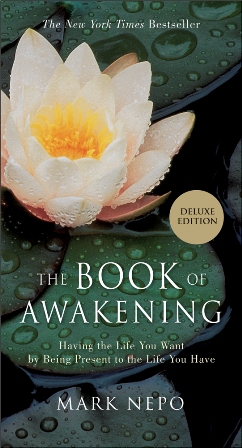
I am not without day-to-day demands—mine is chronic illness—nor am I without the gifts that life’s demands provide, and chronic illness has its gifts, too. Of course, it took me more than thirty years to notice there were any gifts from any demands. We just don’t look for these gifts. We focus our attention only on the demands, maybe even calling attention to ourselves. Mark Nepo says “the threshold to all that’s extraordinary in life is when we devote ourselves to giving attention, not getting it. [That’s when] things come alive for us…[we] find our place in the beauty of things by the attention we can give.”

Perhaps the best measure of giving attention is how we live the routine of our days. Of late, I’ve been experimenting with routine in the larger context of creating a resilient life, which is, among other attributes, a work of art according to Dr. Symeon Rodger in The Five Pillars of Life. The process is a simple one. I record the moments of my day as they occur and not as a schedule of what must occur. There are requirements for each day—some specific tasks must be done–but there is not a plan. Within a week, I discovered a natural flow to how I spend my days as I watched them unfold, regardless of the interruptions and the unexpected. Most important, I discovered resilience and flow reside in the creative unknown.

Here is how that translates in my everyday life. The day-to-day unpredictability of my dis-ease as well as Cooper’s does not change nor does it require any more attention than juggling finances, doing the laundry, grocery shopping, writing—all requirements of my days. In focusing on each moment, I not only accomplish what is required but I complete tasks and chores that have been waiting for months. Furthermore, there is energy in everything I do as I immerse myself into each task and only that task. There is no multi-tasking for each moment belongs to itself completely. Not one day is like another nor is any day exhausting. I schedule nothing and record everything.

Melissa Bowersock Image
WANA Commons

I am quick “to soar with the oversoul”—Louisa May Alcott’s phrase regarding her father and the transcendentalists—and like Thoreau, I have built my “castles in the air” but few times in my life have I put “foundations beneath them” that did not crumble. Yet, in living a routine as a work of art and embracing the enchantment of the everyday, I have a foundation for my current castle in the recording of how I spend my days.

The role of voice recognition software  in my routine is nothing short of finding a new energy source.  Once I began using Dragon NaturallySpeaking, I realized how much physical energy I was expending in typing, a necessity for a writer but  one I had overlooked. Ironically, I had spent considerable time, money, and thought in creating a comfortable work space. I work from an adjustable bed that supports my entire body, and my laptop rests on a spacious tray designed for use with adjustable beds. I believed I had a comfortable way to continue writing, and it was just a matter of settling into a writing schedule but those were days devoid of enchantment and full of design.

There never was a consistent writing schedule, and increasingly, neuropathy limited the length of time that I could use a  keyboard. Finally, I took a three-week hiatus from blogging and from scheduling my days. I knew I would no longer write as I had–I didn’t know whether I would write–yet, I knew I would continue to create and re-create, and that was enough as I explored the moments of my days. Then, I discovered Dragon NaturallySpeaking, and in the initial moments of using the software, I knew life was about to change even more, and so it has. Within two days, there was also a marked decrease in my physical discomfort.

Dave R Farmer Image
WANA Commons

For me, dictating my thoughts is quite different from typing thoughts on a screen using keys on a keyboard. Dictating is sending thoughts through speech; typing is the tactile sensation of selecting keys to produce words. The awareness involved  in each process is completely different, and I am allowed another perspective on creating. I find the combination quite freeing. I focus on the writing before I bring it to the screen through my voice. Then, with my fingers on the keyboard, I edit and shape the words on the screen, creating and re-creating yet another perspective on the story of how I spend my days.


Turtle Row

Neuropathy has come to call so I am sitting out its visit on Turtle Row. It has become increasingly difficult for me to type–now referred to as “keyboarding”–so I am investigating voice recognition software, thanks to a very dear friend.

Fortunately, I am able to continue my study of ancient authentic traditions as well as the world of re-enchantment, introduced  by two of my readers. In particular, I am enjoying Thomas Moore’s The Re-Enchantment of Everyday Life and recommend it highly.

Of late, I have been remembering William Blake’s “Auguries of Innocence,” always appropriate when looking for the miraculous in the mundane. Here is its opening quatrain:

“To see a world in a grain of sand,
And a heaven in a wild flower,
Hold infinity in the palm of your hand,
And eternity in an hour.”

You may read the rest of the poem here but the enchantment of the opening quatrain is everlasting.

Regular posts will resume  June 3.

The Power of Story

Lupus is a creation of mine, its own story really, not one of which I am proud, as its writer, but I have been its source of life for the last 35 to 40 years, maybe even longer.

It is not possible to note the day my lupus gene switched to on nor is it possible to know why I have the gene or what activated it, if anything. It simply is. That part of the story has never mattered to me, even before I knew about the Tao or Zen.

It took me most of my life to understand I am not my lupus and that autoimmune disease is its own story, one steeped in imitation and deceit, usually disguised as flexibility and malleability. Separating what is the lupus story from all I am has been delicate and sometimes, seemingly impossible.

Through the Tao and Zen, I have come to believe my body is my soul having a physical experience, which gives me, a writer, the luxury of viewing lupus as story, a structure I do understand. In all the ways I have viewed lupus, it never occurred to me to view it as a story until very recently.

Lupus really does have plot points, conflict, a protagonist and an antagonist, all tools of my trade on my turf. I just may have the advantage here for the very first time.

In some ways, I have had a long life with lupus, if knowing lupus by other names counts. Lupus’ ability to mimic so many other illnesses along with my gullibility in believing one misdiagnosis after another are extraneous chapters but there is this: my heart never believed any of those labels.

In the lupus story, my heart is the protagonist and my brain or ego is the antagonist, the one that drives the conflict in every story, and all stories have an antagonist and a protagonist locked in a conflict box.

http://www.niams.nih.gov
Image Credit

As the lupus story opens, my immune system produces antinuclear antibodies to fight infection and viruses, just as it should, until we reach the first plot point: a normal immune system turns on itself and begins to attack the very body it defended for years, for no apparent reason.

This relentless war for the body continues for years under various guises–multiple sclerosis, migraines, mixed connective tissue disorder–until Sjogren’s wipes out the salivary glands to pave the way for lupus.

As we reach the midpoint of the lupus story, the brain discovers that it, too, is under attack and turns to the last bastion of hope, the open heart, the remaining connection to the spirit that animates the soul’s body.

I do know that in any story there is one more major plot point before the conclusion, and the lupus story is no different. I don’t know the last plot point nor do I know the conclusion but I have this: the structure of story has given me some of my first moments truly away from the physical battle, and I know I am so much more than the lupus story.

ROW80 Sunday Scheduling 

I finished reading The Night Circus by Erin Morgenstern and may write a review for an upcoming blog post; however a very fine writer, Stephanie Carmichael, wrote an excellent review that you may read here.  I cannot imagine what I could add to this review. The Night Circus is one of the best novels I have ever read and am considering purchasing it (I borrowed it from the library) as it is a book to read and re-read.

I continue to write at least 500 words a day, mostly nonfiction, and I reached my goal of scheduling blog posts so I am not writing to deadline on Sundays and Wednesdays. This next week will be the dismantling of my novel’s first draft, which I plan to have finished by April 22, 2012 as well as a rough outline of its scenes so I may begin “plotting” the novel’s major points. Unlike the lupus story, I actually do know how this story ends.

For the rest of this round, my goal is a weekly total of 2500 words, as I do not know how long it will take to plot the novel so I do not know when I will start the actual writing of the second draft. You may read more about my second Round of Words in 80 Days here.


True or False Self

You may be a wonderful doodlekit…,” a possibility I had not considered, ever. I was, however, considering what Mark Nepo calls the “never-ending task of deciding to whom we entrust our life: our True or False Self.”

But before I deliberated on “doodlekit”—whatever or whoever that might be—Cooper provided a possibility for my current struggle with my two selves, True or False.

Mark Nepo and Mira threeintentions.com

Like any sensible being—canine or otherwise—Cooper is omnipresent to life in the now. In my last post, Trailblazing, I wrote about Cooper being ill and my glimpse of the road to the Rainbow Bridge or my False Self interjecting what may be but not what is.

In this moment in northern Florida, the humidity has dropped to 38% from over 90% and temperatures are high 40s with wind. It’s a cold, dry day, the kind that favors Cooper’s health, and he’s for it.

Dog ramp in tow, out the door we go for our ride. I open the hatch of my Toyota Scion. Cooper waits for me to stretch out the ramp and put it into place before he completely clears the ramp, as if he were a pup again, soaring  into the back of the Scion. With wide open grin, he turns and walks down the ramp. He is still Cooper; his dream still is “going bye-bye in the car” as we always have.

We take our usual front seats–I drive–before I can put the key into the ignition, Cooper licks my face for more than a few minutes. Once we settle into driving, Cooper places his paw on my hand, a dog having his day. Being human, I can only think of how hard my False Self works to prevent what may be.

We arrive at Guyte McCord Park for our daily stroll.

Again, I remember my morning’s meditation with Nepo and Carl Jung. In a dream, Jung works ceaselessly to clear a path to nowhere and to no purpose, it seems, until he reaches a cabin in a clearing, whereupon he drops his tools, and enters through its open door. He sees a being kneeling in front of a simple altar. Soon, he realizes he is seeing himself and “…that his life of cutting a path was this being’s dream.”  He has cleared the path to his True Self, his soul.

Cooper and I stop to sit awhile in a favorite area. He checks out scent. I stay with my two selves, True or False; I think we’re onto something.

Other than these daily park outings, I am no longer able to travel. This has been true for the last three years, not bad after more than thirty years of living with lupus.  Honestly, I’m still discovering what an extraordinary gift my life is but I seem to explore it only within my soul.

Dave R Farmer Image
WANA Commons

My False Self—the one that works so hard at fixing/preventing what may be—recently agreed to extensive family travel plans, relying once again on a way of life that no longer is but may be????

For two months, I thrashed through one form of fear or another over this trip: worry, stress, irritability, stress, sadness, stress—seeking any way it might be, any way except facing my True Self.

Not content with a Cooper leap of faith or a Jungian dream, my False Self screamed, stomped and swore until my online Scrabble partner (everyone should have a Scrabble partner of such equanimity) suggested I consider a drink or two, wondering whether it “would hurt that much?” Oh, out of the Chat wisdom of Scrabble partners….

KM Huber Image

I met myself not with drink but with an open heart for what is and no longer for what was. It hurt, all, but the air is clear, now.

A cold, canine muzzle nudges the limp leash handle loosely hanging from my fingers. Cooper is ready to go “bye-bye in the car,” as always.

A wonderful doodlekit? Who knows?

Rhythm of ROW80 Sunday Scheduling:

The 30-minute writing stretches have improved the overall quality of the “words I keep.” The exercise provides a way to think through material for blog posts as well as novel scenes.

As Gene Lempp mentioned in his blog today, none of this writing happens without patience. In that spirit, this week I am establishing a writing routine specific to my blog posts. I’m finding that it’s too much of a Sunday-Wednesday “time crunch” to produce quality posts. So, beginning this week, I will have two blog posts in final draft form by each Sunday.

I continue to work on my novel, using Larry Brooks’ Story Engineering and Kristen Lamb’s concept critique.  Last Saturday, I submitted an overview of the novel to my concept critique group and received excellent comments. I will work some with scenes and plots points as possible this week. This is the first substantial writing progress I’ve made in the last four years.

An Unexpected Milestone

This time of year is one of anniversaries for me: it’s been just over a year since Gumby died and Cooper and EmmaRose arrived; it’s been two years since life turned upside down physically, fiscally, and spiritually. I am 59 ½ years old, which I recognized only after this morning’s weigh-in showed me less 59 ½ pounds, an unexpected milestone.

I had planned to write about weight today, in particular because I read August McLaughlin’s absorbing story about bulimia and anorexia. Weight issues—fat or thin—produce the kind of sadness that asks, “`does dirt have calories?’” Those were August McLaughlin’s first words as she found herself face down on the ground, dirt in her mouth, her body nearly spent. Of all the thin or fat stories I have read or heard, of all the books, tapes, and videos on nutrition I bought to discover why eating/living this way will work or won’t, this young woman’s courageous story gave me all I ever needed to know.

Although I am not aware of ever thinking about dirt in the context of calories, I do know the agony of abusing food. For 58 years, I ate as I pleased, favoring bread or cheese of any kind–same with fruit and meat. Surprisingly, I don’t remember not liking brussel sprouts, broccoli or spinach (my first spinach was from a Del Monte can a la Popeye). I don’t think I ever met a drop of alcohol I didn’t enjoy but gin and vodka martinis have always topped my list followed by all beer and any wine.

Gumby and me 2008

I am of German-Russian descent—farmers mostly—even at my best, I have a solid look about me. For the better part of the last twenty years, I walked at least three miles a day, which pretty much stopped in 2008 as my profile picture with Gumby demonstrates. By August 2010, I added another 33 pounds.

I was still taking prescription medication for my lupus, for my depression, for my degenerative disc disease, for my thyroid—I sought treatment for diseases–I dismissed being in second stage kidney failure, and I ignored extensive blood test results that showed “remarkable” food sensitivities to wheat, dairy, and yeast. Later, when I actually read the results, I saw signs of sensitivity to soy, to gluten, to sugar, all of which came to pass.

Food had begun to reject me, a life of food abuse was making me allergic to myself. That was my dirt.

I could continue consuming gluten, yeast, starches, sugar, dairy and remain dangerously ill physically, accompanied by spiraling slides into the slough of despond for weeks, even months or start “eating to live,” somewhat like Dr. Joel Fuhrman suggests but without starchy vegetables, mushrooms, or beans—too many carbs, maybe for always, same for all grains.

Within a year, I dropped 50 pounds as well as all medications, staying within a 50-53 pound loss for almost six months. I discovered my body does know how much weight it needs and that exercise plays a role but not in weight loss, not really. Exercise does benefit my body but what I eat is what I weigh, and that’s been most hard to learn.

Two weeks ago, I noticed my hip bone, at first in alarm because it’s been so long since I’d seen it—it’s still amply cushioned but it’s really there–my small fingers are not slender but they seem to have length; although a jiggling wattle is a fact, there is a definite shape to my face, even emerging cheekbones.

By the end of last week, I had lost 5 ½ pounds (my scale is most precise, not allowing me a whole pound when it’s only half), then a pound, then three until 59 ½ pounds gone, a total pounds number I hadn’t seen in over fifteen years.

I won’t say the scale is my friend—even in my Pollyanna world that’s a bit much–yet I do not mind weighing myself every morning, and today, it meant a milestone.

ROW80 Wednesday Word Marking:

From January 2 until February 4, my goal was to write 250 words per day—as blog posts, fiction, or nonfiction–for an approximate total of 8250 words.

Beginning February 4, I started the “30-minute” stretch in which I write for 30 minutes. So far, that has generated just over 6,444 words, averaging about 900 words a day and now the writing is for longer than 30 minutes. It still takes care of the mind minutia so my other writing is more focused. I am still “keeping” between 250 and 300 words beyond those 900, which means with ROW80, I am now over 17,300 words. On days like today, numbers really please.

Paradox Practice

Wayne Dyer (Wikipedia photo)

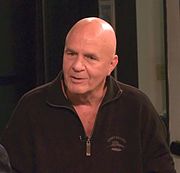
I didn’t grow up practicing to be a paradox so when Wayne Dyer writes, “practice being a living, breathing paradox every moment of your life”* it seems a tad…paradoxical. Yet, my life of duality brought me only contrasts, opposites, comparisons and yes, judgment—all balancing acts of duality and not of the “paradoxical unity” that is the oneness of the Tao.

This I discover after almost 60 years of living but I do discover it.

More than thirty years of my life have been with lupus, an autoimmune disease that now actively lives with me permanently, unlike its earlier years of extended stays but then it had other names.   Truly, I understand “the name that can be named is not the eternal name.”

Regardless, lupus was made to order for practicing paradoxical unity.

For years, juggling balance, stressing no stress, and unlimiting limitations were my duality, uneven at best. The effort of trying to order my life out of chaos was like touching the wind. Yet, chaos, like every storm, has one, still eye that allows …”apparent duality while seeing the unity that is reality…[an] effortless action without attachment to outcome.”  By no longer focusing on outcome in my life with lupus, I replaced the trying and the effort with what is moment by moment.

Being requires a lot of presence–“duality is a mind game” that is always ready for a match–so I get a lot of paradox practice.

*Attribution: All quotations are excerpted from Wayne Dyer’s book, Change Your Thoughts, Change Your Life, Hay House, Inc., Carlsbad, CA, 2007.

ROW80 Wednesday Word Marking:

From January 2 until February 4, my goal was to write 250 words per day—as blog posts, fiction, or nonfiction–for an approximate total of 8250 words.

On February 4, I started the “30-minute” stretch in which I write for 30 minutes daily. So far, that has generated just over 3700 words, averaging about 900 words a day. It takes care of  a lot of my mind minutia so my other writing is more focused, and I fuss less.