Comment Choice

Image from themacfeed.com

It seems last Sunday’s blog on silence coincided with the implementation of some “comment updates” from WordPress, the hosting company for this blog. I chose WordPress for its theme diversity and low cost but mainly for its ease in connecting with other social networks.

A blog that deals with Oneness and being is about connecting so hosting my blog with WordPress did and does make sense. It also makes sense that there will be missed connections, from time to time. On Monday, some readers wanting to leave a comment received this message:

That email address is associated with an existing WordPress.com (or Gravatar.com) account. Please click the back button in your browser and then log in to use it.

No one has to register with or log in to my actual blog to comment;  however, my blog has always required an email address (never revealed) and a name to accompany all comments. If I didn’t, anonymous responses could conceivably rival spam contributions so on my blog, one must create an identity to comment.

Identity seems to be at the core of the recent comment update issue, although I do not pretend to understand the technology of it so I may be completely wrong.  However, it does appear that in order to leave a comment on my blog now, readers must sign in with an existing social media account (Facebook, Twitter, Yahoo, etc.) or create an account with WordPress.

Image from playthink.wordpress.com

This is the ether so remember that  updates/changes to what I just wrote are always just a breath away, if that far.

As this blog is also about one boomer being–I have an appreciation for and history of questioning authority so I do “get” why some readers are upset—I support every reader who does not want to sign in with any of their existing accounts or create an account with WordPress in order to comment.

For me, blogging is all about community and finding ways to support each other. Yes, I am nauseatingly optimistic almost all of the time but just the fact that we can have a global conversation about commenting or not commenting is a positive for all of us. Here’s an alternative way to comment on my blog:

Under Contact in the right hand column on my home page (Oneness),  please click on Email me!  to send  your comments.

As I do with all comments, I will review, respond (if appropriate), and I will post your comment just as if you had submitted it in the comment section. Please provide a name that you like as your identity. It may even be your own.

“So rather than giving energy to…perceived misfortunes, [I look to] the Tao…inexhaustible…the ancestor of it all…living infinitely” (Wayne Dyer).

“Wisdom is knowing I am nothing,
love is knowing I am everything,
and between the two my life moves.”

Nisargadatta Maharaj


Round One of Round of Words Final Tally
 

The first round of Round of Words in 80 days ends tomorrow, and round two begins April 2. ROW80 helps writers bring their writing into their real lives, no more goal-gazing or sighing. ROW80 helps writers establish realistic goals that may be revised as many times as any manuscript. All one needs is a blog and a love of writing.

I was skeptical about ROW80 but if nothing else, I launched a blog, the writing of which requires way more than I anticipated. Furthermore, I saw my writing as it really is, which is not exactly how it was playing in my head or through my heart.  Now, I know what is possible so thank you  to the ROW80 community of writers who post their progress on Sundays and Wednesdays.

My beginning goals were modest—write at least 250 words per day, write a blog post twice a week, do something with a 17-year-old manuscript. I made it hard for me to fail, for once.

I progressed from 250 words per day to 30-minute stretches and to a daily average of 900 words. In these last few weeks, I am comfortably writing over 1,000 words per day. The type of writing includes technical, nonfiction, fiction, and blog posts but in this first round, I excluded technical and nonfiction writing from my word count. Total fiction and blog post word count is 23,639. Total technical and nonfiction word count is 14,000-18,000.

As a writer who was not writing except for an occasional spurt, I am more than pleased. What ROW80 reveals is that it does not take a great deal of time to generate words. With words come ideas and better words, clearer thought.

My manuscript is in shreds but its core, kernel idea is intact, which is more than I expected. The story is completely different as am I– seventeen years later–but the story’s idea is as fresh as always.

ROW80 Round Two on deck.

Shakespeare’s Sister Still

goodreads image

“It would have been impossible, completely and entirely, for any woman to have written the plays of Shakespeare in the age of Shakespeare.” These are Virginia Woolf’s words from a series of lectures she delivered at Cambridge University in October, 1928. They were published In 1929 as  A Room of One’s Own. 

In later decades, “Shakespeare’s Sister” found a life of its own as an excerpted essay* in various anthologies. My own discovery of Woolf’s work was over three decades ago, and I am grateful for her transcendent sentences.

Woolf creates her imaginary Judith Shakespeare within William Shakespeare’s generally accepted circumstances. As is often true, similar circumstances are no guarantee of similar outcomes even when one’s mother is an heiress, as was true for William and the imaginary Judith.

The grammar-schooled William “was, it was well known, a wild boy who poached rabbits, perhaps shot a deer, and had, rather sooner than he should have done, to marry a woman in the neighborhood, who bore him a child rather quicker than was right. That escapade sent him to seek his fortune in London. He had, it seemed, a taste for the theatre” (p. 8).

Daily nebraskan.com image

While William’s stage career began by “holding horses at the stage door,” it wasn’t long before William was center stage, “living at the hub of the universe.” He even managed to meet the queen.

Judith, equally curious and imaginative but not schooled—no  Horace or Virgil for her—did learn to read and even found a book or two, perhaps even one of William’s, until she was found out by her parents.

“They would have spoken sharply but kindly, for they were substantial people who knew the conditions of life for a woman and loved their daughter… [They] told her to mend the stockings or mind the stew and not moon about with books and papers” (p. 8).

Yet, Judith went on reading and started scribbling a line or two as she was near a marriageable age, seventeen. Upon discovering that she was betrothed to a “wool-stapler’s son, [she] cried out that marriage was hateful to her, and for that she was severely beaten by her father,” which did not produce the desired results in Elizabethan England any more than it does in the 21st century.

Father Shakespeare then offered Judith “a chain of beads or a fine petticoat…there were tears in his eyes. How could she disobey him? How could she break his heart?

“The force of [Judith’s] own gift alone drove her to it. [She] let herself down by a rope one summer’s night and took the road to London…she had the quickest fancy, a gift like her brother’s…she had a taste for the theatre” but she was sent away from the stage door (p. 8).

ehow-co-uk image

Actually, Judith was laughed away by the stage manager who told her “no woman…could possibly be an actress. He hinted—you can imagine what. She could get no training in her craft. Could she even seek her dinner in a tavern or roam the streets at midnight?

“[Judith’s] genius was for fiction and [she] lusted to feed abundantly upon the lives of men and women and the study of their ways…for she was very young, oddly like Shakespeare the poet in her face” (p. 9).

Judith was turned away, time and again, until an “actor-manager” took pity on her and her dreams of theatre. Soon, Judith was with child and without marriage.

Sadly, Judith killed herself “one winter’s night and lies buried at some cross-roads…that, more or less is how the story would run…if a woman in Shakespeare’s day had had Shakespeare’s genius” Woolf conjectured, almost a century ago (p. 9).

In 2012, we are still asking: “…who shall measure the heat and violence of the poet’s heart when caught and tangled in a woman’s body.”
*All excerpts from “Shakespeare’s Sister,” by Virginia Woolf are from Eight Modern Essayists, 5th edition, St. Martin’s Press, 1990.

ROW80 Wednesday Word Marking:

My word total for January is 8250 with my goal of writing at least 250 words per day; in February, I began writing in 30-minute stretches to focus my writing and the word total for the month is 9814;  in March, my current word total is 3838.  My total Round of Words so far is 21,902, which is a raw total, meaning a lot of free writing/brainstorming yet meeting my goal of writing consistently. I generate an additional 1200 to 2000 words per week as blogs, fiction, and nonfiction.

Bob Mayer’s Idea and Conflict Workshop is life-changing, and I mean that sincerely. I can honestly say I have not been this excited about writing in years. There is true joy in my work.

Center of the Universe

You are not the center of the universe” is a pivotal line in my unpublished novel, written eighteen years ago. Actually, Center of the Universe was the novel’s real working title, which I do not believe I have never told anyone until now but I’m old and every day, my memory is kinder. For most of my novel’s years, I called it Spirit Song or a still favorite phrase, In-Between Dances.

dachsundlove.blogspot.com image

Anti-Spoiler: At no time in this post or any other post will you be subjected to excerpts from any novel or story I may write. This blog may  look at the 10,000 things of the Tao but my novel or story excerpts are excluded.  My writing has its place, which is not my blog.

“Center of the universe” was an unusual concept in the early 1990s  for me and for the small, coal mining community where I lived. Amazingly, I played a pivotal role in that community for a short period of time, if not as the center of the community, it was close enough for me forever. It doesn’t take much in a small community.

Fresh from a university setting, I was teaching the  basic composition course for the community college outreach program. The course was required for anyone pursuing an associate degree but I did not let that hold me back. I launched my (and the community’s) writing life with Natalie Goldberg’s Writing Down the Bones. Zen Buddhism completely captured my heart; I was so in love.

Edgar Allan Poe Wikipedia Image

Everywhere I looked, there was analogy after analogy. In teaching Poe’s “Fall of the House of Usher,” a classic story of sentience, I nearly brought to life the house’s  weeping walls and the Tao of 10,000 things. I was ingenuousness personified. At best, I only knew half of what I thought I knew but I tossed all my sentience out there.

It stuck.

For the next few years, former students liked to introduce me as: “This is (My Name), and she thinks this chair has feelings.” Yes, a chair was offered to a somewhat startled, formerly secure person. It kept people on their feet, and for a moment, made me the center of the universe. Only now do I appreciate how truly amazing those years were.

By the time I began writing my novel in 1994, I had pulled away from the community and in all fairness, it had pulled away from me, too. We had reason to separate—it seems fair to say we had forgotten our sentient selves—it is so long ago who knows whether  there was any reason left in any of us. We just were.

Regardless, my novel was about finding community again; I wanted to discover where we had gone so wrong, all of us. Somewhere after 60,000 words, my protagonist was informed: “You are not the center of the Universe.” Truly, I remember the moment.

As a writer, I recognized the importance of the sentence but as a human being, I sensed enlightenment, albeit briefly. It would take another seventeen years to fully appreciate the center of the universe but there was light, and toward that, I moved.

In 2011, I read Stephen Hawking’s books—Grand Design and A Briefer History of Time—and learned of the multiverse, a considerable blow to my centered universe–momentarily–for I found the joy of quantum entanglement and Oneness. The reality of joy is once you experience it, you move in that direction always. Dark just does not have the same hold in Oneness.

genamason.wordpress.com image

However, Oneness translates hard for a writer, sometimes.

While I had known for a while—sixteen years, eleven months, and twenty days—that I might glean only dribs and drabs from my first attempt at a novel, I always believed I had the center of the universe. Not so. Seems it really was a bit of fiction.  And there was something even worse: my center of the universe was a Little Darling, in writing, a death knell.

True to form, I kept silent about my Little Darling. Perhaps I hoped I would forget there was a multiverse–I promise you there is real merit in this possibility–yet, sentient human or no, once the heart knows, it knows.

Yesterday, my universe imploded, victim of  my first assignment in a writing workshop: write the idea of my novel in one sentence of 25 words or less. Surprisingly, I managed to find a sentence, not a cogent one, but the center of the universe was gone.

Note: For one of the best explanations about Little Darlings and how to get help for this alarmingly prevalent addiction, please read Piper Bayard and Kristen Lamb, proud sponsors of Little Darlings Anonymous.

ROW80 Wednesday Word Marking:

My word total for January was 8250 with my goal of writing at least 250 words per day; in February, I began writing in 30-minute stretches to focus my writing and the word total for the month is 9814;  in March, my current word total is 2118.  My total Round of Words so far is 21,182, which is a raw total, meaning a lot of free writing/brainstorming with a goal of writing consistently, which I have accomplished. I generate an additional 1200 to 2000 words per week as blogs, fiction, and nonfiction.

For the remaining days of this ROW80, I am focusing on scheduling my blogs so I am not on “deadline” ever or always on deadline.  Oneness is confusing in this regard.

Bob Mayer’s Idea and Conflict Workshop  is just incredible, and I mean that sincerely. I can honestly say I have not been this excited about writing in years. There is true joy in my work.

Dear Reader

themacfeed.com image

Today, I came up with a tag line for my blog: A Boomer Being. It’s on the left hand side of the screen, beneath KM Huber’s Blog. My belief in Oneness and my attempts at Being are the basis for this blog but you, Dear Reader, are its heart.

Thank you for visiting my blog—whether it’s your first time and last time or whether you’re a regular—in that moment, we connect in ways we may never realize. That is “spooky action at a distance.”

My blog has been up for less than two months, and your incredible response warms my heart, truly. In fact, you’ve changed my life, and I mean that with all my heart.

If you blog or participate in social media, you know the fear of “pressing” your words into print. Chagrin, terror loom. You really can’t take those words back. Oh, you can delete a published blog page or a comment and never hear about it but here’s a hint: commit the word cache to memory. I promise you at least one pair of eyes found your words, knows what you tried to take back.

Technology just may force us into being thoughtful and patient, qualities we do well when we are them. Magnanimity is a  marvelous  human trait that is not used as frequently as it might be but blogging and writing in the ether give new meaning to being in the moment.

Welcome to the world of the open heart: the 21st century.

impactlab.com image

There is a revolution going on across the globe every minute of every day. We are seeing ourselves as we’ve never seen ourselves, and it’s a bit of a shock, which revelation always is. There seems no place to hide but there never was is what we are discovering.

As an aging feminist and boomer, I was born to revolution; as an aging writer, I know I am living in a golden age of words still being arranged and rearranged but language is within the Oneness that connects us all.

Dave R Farmer
WANA Commons

At almost sixty, I am categorized as a boomer by virtue of my age but I really am a hippie, still. Yet being, really being, is new to me after six decades of a lot of doing–and not always well. Now, living moment by moment, I am not rushing anywhere anymore for anyone. Frankly, it is all I can do to be for the rest of my life—it’s that compelling.

Some label life as spirit being human, and it just may be, but life is an experience that we take in and let go, usually unevenly, especially the letting go part.

But maybe now that we reach round the world any time we want to, we will open our hearts to each other completely. Certainly, it seems we can, Dear Reader, although I did not believe it two months ago.

You, Dear Reader, showed me all is possible, and for you, I blog.

ROW80 Wednesday Word Marking:

From January 2 until February 4, my goal was to write 250 words per day—as blog posts, fiction, or nonfiction–for an approximate total of 8250 words.

Beginning February 4, I started the “30-minute” stretch in which I write for 30 minutes. So far, that has generated just over 9,800 words, almost half of those words will see another format. I generate another 1200 to 2000 words per week as blogs, fiction, and nonfiction.

I achieved my goal of returning to writing regularly.  Now, the 30 minute stretches have found focus as drafts of future blogs, eliminating the time crunch of making the Sunday and Wednesday press deadlines. My goal is to schedule my all my blogs so I am not on “deadline” ever.  For this round of ROW80, I am just over 20, 800 words.  I am so pleased that I am writing regularly.

I signed up for Bob Mayer’s Idea and Conflict Workshop that begins March 3.  With this workshop, I will finally start putting together pieces of  a story I’ve had for sometime–my first write-through of a novel seventeen years ago.  Structurally, I never considered it a novel–it’s always been an exploration of my writing process–I knew there were some strong pieces without a true story. With this workshop, I’ll test my idea, which means I have a novel to write, and I am excited.

Imperfect Reader

In her debut novel, Perfect Reader, Maggie Pouncey does a fine job with a protagonist who irritates within a plot that invites.  Twenty-something Flora Dempsey is so thoroughly dislikeable I had to keep reading to find out what she’d do next, all the while hopeful she might at least let go of her snobbery but Pouncey knows how to take readers to their limits and does not disappoint.

Flora as snob fits in well with the granola, privileged college community of Darwin to which she returns after the death of her father, Lewis Dempsey. A former president of Darwin College, Lewis Dempsey was a literary critic of some repute and devotee of Hardy, but  Lewis’ pure and constant love of language as illustrated in Reader as Understander–where the perfect reader puts aside life experience to experience only the words on the page–is the work that defines his professional life.

In retirement, Lewis turns to poetry, providing his perfect reader, Flora, a handwritten manuscript of  his poems, which she decides  not to read. When Lewis dies, Flora inherits a bit of wealth, including the house in Darwin, and she is named Literary Executor, forcing her to confront the poems along with her father’s late in life lover. And so, the story begins.

Author Pouncey is never cliché or sentimental but relies on wit and the subtlety it requires. My  favorite minor character is Joan Dempsey, ex-wife of Lewis and mother of Flora. All that Lewis is, Joan Dempsey is not as Pouncey draws us into a Thanksgiving dinner conversation between mother and daughter:

Joan “…was incensed about `Bible thumpers’ sprouting up all over the country in the guise of politicians, `like a plague of idiots’….

“`Every day there’s some new denialist denying the existence of some atrocity—there never was a Holocaust…there’s no such thing as global warming….If it doesn’t work for your agenda, say it never happened…how do you take that next step of actually believing the whopper—denying history, denying science?’”

In response, Joan Dempsey takes to writing a blog, The Responsible Anarchist, that “…attracts a healthy group of readers, some of them, admittedly, insane—who else was Googling the word anarchist?” (pp. 107-08). I read for these moments and to mark Flora’s progress, of course,  but always hopeful for Joan’s return.

My only complaint with the novel are infrequent, hazy references to characters I don’t remember ever meeting. Perhaps it’s just a characteristic of my older mind but I still require firm footing for any character that has a name and therefore a raison d’être.

A perfect reader I am not for what speaks to me in this novel– more than I care to admit–is Pouncey’s portrayal of the “Pompous Circumstance” of the academic world I adored. As this novel so beautifully illustrates, the world of Darwin is and always has been attainable by and for the very few. Making the grade involves social status as much as being awarded the diploma, something I’d forgotten, until I looked for the luster, long dulled, and now, a way I will never be.

Perfect Reader reminded me of much I once believed important, and it was refreshing to remember, imperfect reader that I am. As for author Maggie Pouncey, she tells a truth as perfectly as she knows how, which is all any reader ever asks.
Quoted material from Perfect Reader, a novel, by Maggie Pouncey, New York: Pantheon Books, 2010. 

Rhythm of ROW80 Sunday Scheduling:

The 30-minute writing stretches have improved the overall quality of the “words I keep.” The exercise provides a way to think through material for blog posts as well as novel scenes.

Last week I started writing out the concept of my already drafted novel, using Larry Brooks’ Story Engineering and Kristen Lamb’s concept critique.  On Saturday, I submitted an overview of the novel to my concept critique group and am still making scene notes. Plan to finish scenes and plots points this week. This is the first substantial progress I’ve made with my novel in the last four years.

Doing the Tao with Dyer: being, not doing

Nepo morning meditation continues


Dimensions of Creativity

“Creativity may be our Last Line of Defense” is the title of Gary Gauthier’s intriguing and well-written post that appeared on Sonia Medeiros’ blog this past Friday. For me, Gauthier’s consideration of creativity as our last defense in an increasingly technological world of  decreasing human tasks was not only sobering but a bit of a surprise. I realized I had only considered creativity from the human perspective. What about other dimensions?

Gizmodo.com image

Like Gauthier, I was quite taken with the performance of Watson, the IBM computer, on Jeopardy!  last Valentine’s Day. While some of Watson’s responses proved that human nuance is still a bit beyond a computer’s creativity, Watson won the knowledge rounds speedily and decisively.

I do not fear human or literary Watsons, I believe in them.

Gauthier also cited technology capable of creating journalism articles once “the facts” are provided. There are software programs for creating screenplays, novels, and probably just about any kind of writing for there is nothing new under the sun, which we’ve known at least since Ecclesiastes, probably before.

Time is relative and maybe so is creativity.

Until the 21stcentury, creativity has been a human component; truthfully, we don’t completely comprehend any dimension–yet. We’re not even completely convinced how our own human parts work but we know the sum of us is quite amazing. So, when it comes to creativity in technology, are we trying to simulate/emulate being human or are we vying for being perfect, which some would argue we already are.

greggbraden.com

What constitutes creativity? Is it the life force that animates a neutrino or a gnat as easily as a human? There is an argument that the life force in any dimension fights for every possible moment of existence, which seems pretty perfect already, creative even.

As for what creativity may mean for the 21st century, I came across this quote from Gregg Braden, a computer geologist who writes about the relationship between science and spirituality:

“For those who can embrace the learning curve of our past without judgment, the future becomes the palate for new industry, new jobs, new forms of expression, and new communities based upon sustainable ways of thinking, living, and being in our world” (Gregg Braden, Letter to the Community).

Poe Wikipedia Image
Edgar Allan Poe Wikipedia Image

For me, the source of all being is in matter and anti-matter; is in Einstein’s quantum entanglement of “spooky action at a distance”; is in Edgar Allan Poe’s sentient story, “The Fall of the House of Usher.” Maybe creativity is less a line of defense and more a bridge between humanity and all that is not.

Rhythm of ROW80 Sunday Scheduling:

The 30-minute writing stretches have improved the quality and number of  “words I keep.” The exercise provides a way to think through material for blog posts as well as novel scenes. In short, it’s creating much needed distance from the initial excitement of writing.

This week, I start writing the concept of my already drafted novel based upon Larry Brooks’ Story Engineering and Kristen Lamb’s concept critique.

Doing the Tao with Dyer away from duality, perhaps

Nepo morning meditation continues

“Once More to the Lake”

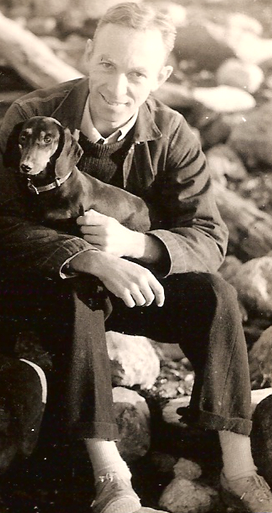
E B White (Wikipedia photo)

“Once More to the Lake” is a 1941 essay by E.B. White in which he returns to a Maine lake, revisiting childhood memories that are “precious and worth saving.” The essay is among the finest ever written; here  is my favorite paragraph in any writing anywhere:

“It seemed to me, as I kept remembering all this, that those times and those summers had been infinitely precious and worth saving. There had been jollity and peace and goodness. The arriving (at the beginning of August) had been so big a business in itself, at the railway station the farm wagon drawn up, the first smell of the pine-laden air, the first glimpse of the smiling farmer, and the great importance of the trunks and your father’s enormous authority in such matters, and the feel of the wagon under you for the long ten-mile haul, and at the top of the last long hill catching the first view of the lake after eleven months of not seeing this cherished body of water. The shouts and cries of the other campers when they saw you, and the trunks to be unpacked, to give up their rich burden…. Peace and goodness and jollity.”*

Always, White’s words return me to the lake that is my life, no matter when or where I am.

This time, it is 1985, on the last day of the last year I taught at the University of Wyoming. Alone, I sit in an empty classroom, with its beige, cracked-plaster walls—the rows of laminated desks stretched into an elongated square—I am 33, giddy in my belief that I am leaving teaching to write,  whatever it may mean. By 1989, it means part-time teaching in a college outreach program for a trio of towns in southwestern Wyoming—less than 3,000 total population—whose “jollity, peace, and goodness” still occupy me. With these students, I write in restaurants, in classes, in homes, returning again and again to White’s lake. It is the richest writing of my life with a Parker fountain pen—the cheapest but best my money can buy—scrawling in spiral notebooks of red covers and silver spines in the low light of a scrawny chandelier until 1991.

Some 21 years later, my writing unpacked, I return with White once more to the lake.

*“Once More to the Lake,” E.B. White in Eight Modern Essayists, 5th Edition, St. Martin’s Press, New York: 1990 (page 83).

ROW80 Wednesday Word Marker:

Since January 2, I aimed for writing 250 daily words that I could keep—as blog posts, fiction, or nonfiction–so far, I have approximately 7500 words.

“It Tells You.”

“You don’t tell it. It tells you.”  I included these two sentences in my reply to a comment on last Wednesday’s post, Goal-Gazing. The discussion was around writing and what it evokes in us, from the slough of despond to joy and every emotion in-between. All agreed writing is worth it.

Joan Didion, nndb.com image

Hours beyond the blog and out of the electronic ether entirely, the sentences return to me, just a tad tenacious. They belong to Joan Didion and are from her 1976 “Why I Write” essay.

“It tells you.”
“You don’t tell it.

I’m used to sorting and shuffling through my mind for “lines I like” but of late, I find my recollection is not always the original order of occurrence. I consult my well-used copy of William Smart’s Eight Modern Essayists, fifth edition, a resident of my writer’s bag until the end of the 20thcentury, now a bookshelf retiree to ease its spine.

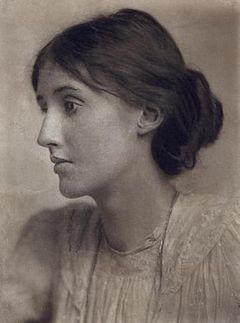
Virginia Woolf, Wikipedia image

I open the book to a heavily underlined passage from Virginia Woolf’s “Professions for Women,” her 1931 speech to The Women’s Service League:

“…for it is a very strange thing that people will give you a motor car if you will tell them a story. It is still a stranger thing that there is nothing so delightful in the world as telling stories…” (Page 12).

I consider finding the part about the Persian cat but I turn pages instead, remembering I may forget what I started. Didion’s one-line paragraphs return, as if on cue, but with the additional phrase of nota bene (note well), and I remember that the phrase precedes the paragraphs. 

“It tells you.
“You don’t tell it.”

At that point, I reach page 241 and read: “the arrangement of the words matters…[it] tells you what is going on in the picture.” I have believed this all my writing life—still do—moreover, Didion’s two, one-line paragraphs were a mantra for me—still are–nota bene to self.

Rhythm of ROW80 Sunday Scheduling:

  • Alternating short fiction, novel, and blog posts as daily writing
  • Doing the Tao with Dyer
  • Nepo morning meditation continues